A practical guide on how to practice blog writing

Stevia Putri

Katelin Teen
Last edited January 20, 2026
Writing is a skill, not some magical talent you're born with. Just like learning an instrument or a new language, it takes dedicated practice to get good at it. A lot of new bloggers hit a wall because their writing feels a bit bland, unstructured, or just isn't connecting with readers. This can lead to a nasty case of impostor syndrome and make it tough to build any real momentum.
The good news is that anyone can become a better writer. This guide is your no-fluff overview of the most effective ways to practice and improve your blog writing, from nailing the basics to using modern tools to get ahead. We'll explore how traditional practice can be boosted with tools that show you what high-quality content looks like from the start, such as the eesel AI blog writer, which generates complete, SEO-optimized articles in minutes.
What is blog writing practice and why does it matter?
When we talk about "blog writing practice," we don't just mean hitting "publish" as often as possible. That's part of it, for sure, but real practice is about intentionally getting better in a few key areas: clarity, voice, structure, and SEO. It’s about treating each piece of content as a chance to be a little better than the last.
So, why put in all this effort? The payoff is huge.
First, it builds confidence. The more you write and edit with a clear goal, the less you’ll stare at a blank screen wondering what to say. Writer's block is often just a fear of not being good enough, and practice is the perfect antidote.
Second, it helps you develop a unique voice. Anyone can list facts, but your voice is what makes people come back to your blog. It's the secret ingredient that turns casual readers into a loyal audience. Practice gives you the space to figure out what that voice actually sounds like.
Third, you learn to create real value for the reader. At its core, that’s what successful content is all about. Practice teaches you to anticipate your audience's questions, solve their problems, and present information in a way that's easy to digest. This is the bedrock of any solid content marketing strategy.
Finally, you get faster. As you build these writing muscles, the whole process, from idea to outline to final draft, becomes smoother. You spend less time second-guessing and more time creating.
Foundational tips for improving your core writing skills
Before you can write amazing, personality-packed content, you need to get the fundamentals down. Think of these as the building blocks that every successful blogger has mastered.
Read and analyze other blogs
You can’t become a great writer without being a great reader. But this isn't about casually scrolling through your favorite blogs; it's about active analysis.
Pick a few blogs in your niche that you admire and take them apart to see what makes them so good. Look closely at their headlines: what makes them so clickable? How do their intros hook you right away? Pay attention to sentence structure, paragraph length, and how they use images and formatting to break up the text. Try to pinpoint their writing voice. Is it witty and humorous, or authoritative and direct? How does that tone connect with their audience? Analyzing how top-ranking posts are structured is one of the best ways to understand what works.
Outline and structure your thoughts
An outline is the blueprint for your blog post. It’s the single best way to avoid rambling and ensure your thoughts flow logically. Trying to write a post without one is like trying to build a house without a plan: it's going to get messy.
Start by drafting a bullet outline. With an outline, you break down your topic into relevant digestible sections. Then start filling in information one bullet point (heading) after the other. You want to do this in the same helpful, friendly manner you’d provide vocal guide to a tourist.

Start by mapping out your main headings (H2s) and subheadings (H3s) based on your topic research. This skeleton gives your post a solid structure. Most writing guides agree that a classic intro-body-conclusion format works well for blogs, but with a twist: your conclusion should always push the reader to do something next with a clear call to action. Taking the time to outline first actually saves a ton of time during the writing phase because you’re not trying to figure out what to say next, you’re just filling in the blanks.
Write a "crappy" first draft
Perfectionism is the enemy of progress. If you try to write a perfect sentence every single time, you'll never finish a paragraph. The solution? Give yourself permission to write a messy, imperfect, "crappy" first draft.
Don't stress yourself out or add pressure to write the perfect post in one go. It won't happen and tbh, it shouldn't. Remember that you can always edit a draft but if you don't have anything to edit, you aren't making progress. So just empty your thoughts and get all your points out on the screen.
The whole point is to get all your ideas out of your head and onto the page without stopping to edit or second-guess yourself. This technique, sometimes called a "brain dump," helps you build momentum while silencing that nagging internal critic. It's a freeing process that keeps the ideas flowing. Just remember the golden rule: you can always edit a bad page, but you can't edit a blank one.
Edit and critique your work
Let's be real: the real writing happens during the editing process. Your first draft is just the raw material; editing is where you shape it into something sharp, clear, and powerful. This cyclical process is a core part of effective practice.
Start by proofreading for the obvious stuff like grammar and spelling errors. You can use tools like Grammarly to help catch mistakes and suggest better phrasing. Next, be ruthless about cutting unnecessary words. Hunt down adverbs (like "really" or "very") and passive sentences ("the blog post was written by me") and swap them for more direct, active language ("I wrote the blog post"). Finally, read your entire post out loud. It might feel a bit weird, but it's the fastest way to catch awkward phrasing and spots where the conversational flow just feels off.
Advanced techniques for finding your unique voice
Once you've got the fundamentals locked down, it's time for the fun part: injecting your personality into your writing. This is how you go from being just another content creator to someone your readers know, like, and trust.
Develop a consistent brand voice
Your voice is your blog's personality. It's the consistent tone and style that makes your content instantly recognizable as yours. The easiest way to find it is to write conversationally, as if you're explaining the topic to a friend over coffee. Using contractions (like it's, you're, and can't) is a simple trick that helps your writing sound more natural and less like a textbook.
Don't be afraid to share your opinions. Your unique take is what adds value and separates you from the dozens of other articles on the same topic. A good exercise is to define 3-5 words that describe your ideal tone (e.g., helpful, witty, direct, empathetic) and keep them in mind every time you sit down to write.
Use storytelling and personal examples
Facts and data are great for informing your readers, but stories are what connect with them on a human level. Weaving narratives and personal examples into your posts makes them far more memorable and relatable.
You don't have to be a master storyteller. Just use personal anecdotes to illustrate a point. For example, instead of just saying "outlining is important," share a quick story about a time you didn't outline and the messy post that resulted. You can also share case studies or examples from your own experience to make abstract concepts feel more tangible. A simple problem-action-result story structure is all you need to make any topic more engaging.
Set writing assignments for different mediums
One of the best ways to practice and grow is to step outside your comfort zone. If you only ever write one type of article, your skills can start to get stale.
Challenge yourself with different kinds of blog posts. If you normally write how-to guides, try a listicle or a product review. Each format requires a slightly different approach to structure and tone, forcing you to stretch your writing muscles. You can also practice by writing for other platforms, like crafting a punchy post for LinkedIn or writing a guest article for another blog in your industry. This forces you to adapt your style for a new audience, which is an incredibly valuable skill.
Leveraging AI to practice blog writing faster
Modern AI tools have completely changed the game for content creators. When used the right way, they can be an incredible partner for practicing, improving, and scaling your writing skills much faster than you could on your own.
How AI helps beyond text generation
The smart way to think about AI isn't as a shortcut to skip practice, but as a tool to make your practice more efficient. It's like having a tireless sparring partner available 24/7.
Stuck for ideas? Use AI to brainstorm a dozen different angles for a single topic. Not sure how to structure your post? Ask it to generate a few different outlines. Wrote a sentence that feels a little clunky? Have the AI rephrase it in five different ways to see what works best. It can help you break through writer's block and explore creative avenues you might not have considered otherwise.
Using the eesel AI blog writer as a learning tool
The quality of your AI practice partner matters. The eesel AI blog writer is specifically designed to produce complete, high-quality content that's built to rank in search engines, making it the perfect model to learn from.
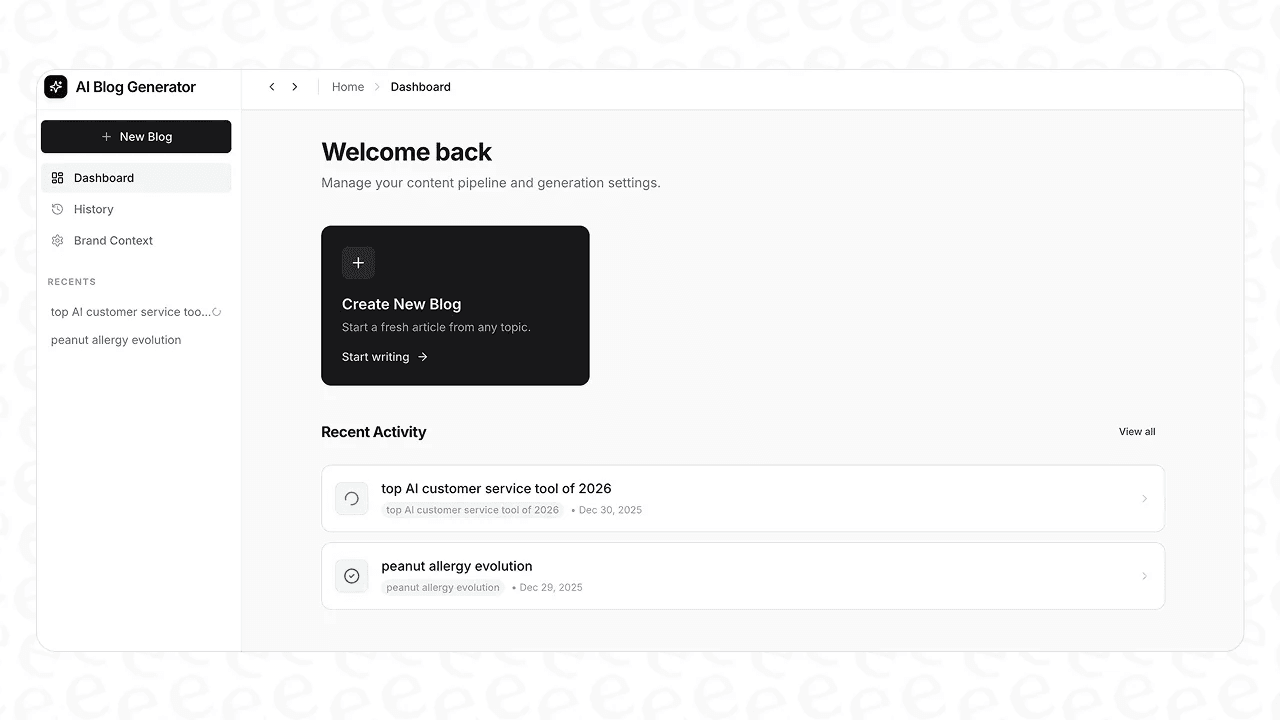
Here's how you can use it to level up your skills:
- Analyze a professional structure: Just enter a keyword and watch how eesel AI generates a fully-formed, SEO-optimized post. Study its use of headings, where it places keywords, and how it incorporates links. It's like getting a ready-made blueprint for a successful article.
- Learn media integration: A great blog post is more than just text. See how the tool automatically includes assets like images, infographics, and even relevant Reddit quotes. This teaches you to think visually and incorporate social proof into your writing.
- Understand a human-like tone: Unlike generic AI tools that spit out robotic text, the eesel AI blog writer has been refined to produce a genuinely human tone. It provides a high-quality example of engaging, conversational writing that you can learn from and adapt to your own voice.
- Study context-aware research: For a comparison post, it will automatically pull in pricing data. For a product review, it finds technical specs. This shows you what deeply researched content looks like without you having to spend hours digging for it yourself.
Best of all, it's free to try. You can generate your first post and use it as a professional template to guide your own practice sessions.
Understand the limitations of generic AI
It's important to know that not all AI tools are created equal for practice. To get the most out of an AI learning partner, look for tools designed to create structured, long-form content. Some general-purpose AI models may produce content that is less detailed or lacks a clear blog post structure, which might not be the best model for learning. It's also wise to be aware that AI can sometimes generate incorrect information. Using a tool that provides well-researched, structured examples will lead to more effective practice and help you develop a better understanding of what makes content successful.
Watching experienced bloggers break down their process can also provide valuable insights. For a visual guide on what makes a blog successful, the team at Ahrefs offers some excellent, data-backed tips that align with the foundational practices we've discussed.
The path to becoming a better blogger
Becoming a better blogger isn't a mystery; it's a process. The fastest way to improve is through a smart combination of foundational practice (outlining, editing), voice development (storytelling, finding your style), and leveraging powerful AI tools to show you the way.
But the single most important ingredient is consistency. Every post you outline, write, and edit is another rep. It's another chance to practice your craft and get just a little bit better. Keep showing up, keep practicing, and you'll be amazed at how far you can go.
Ready to see what a complete, publish-ready post looks like? Generate your first blog for free and use it as a guide to kickstart your practice today.

Frequently Asked Questions
Share this article

Article by
Stevia Putri
Stevia Putri is a marketing generalist at eesel AI, where she helps turn powerful AI tools into stories that resonate. She’s driven by curiosity, clarity, and the human side of technology.