How to outsource blog writing: A strategic guide

Stevia Putri

Stanley Nicholas
Last edited January 20, 2026
Expert Verified

We all know that creating great blog content consistently is a huge time commitment. It's essential for growth, but who has the time to research, write, and edit when you're already swamped? This is why many people turn to outsourcing. It’s a smart move to reclaim your time, leverage expert skills, and scale your content marketing.
For a long time, outsourcing meant you had two choices: find a freelancer or sign a big check for an agency. But things are different now. Advanced AI platforms have emerged as a third option. Instead of being just another tool, solutions like the eesel AI blog writer function more like an AI teammate you can bring on board, one that gets up to speed on your business in minutes, not weeks.
The modern approach: Outsourcing to an AI teammate
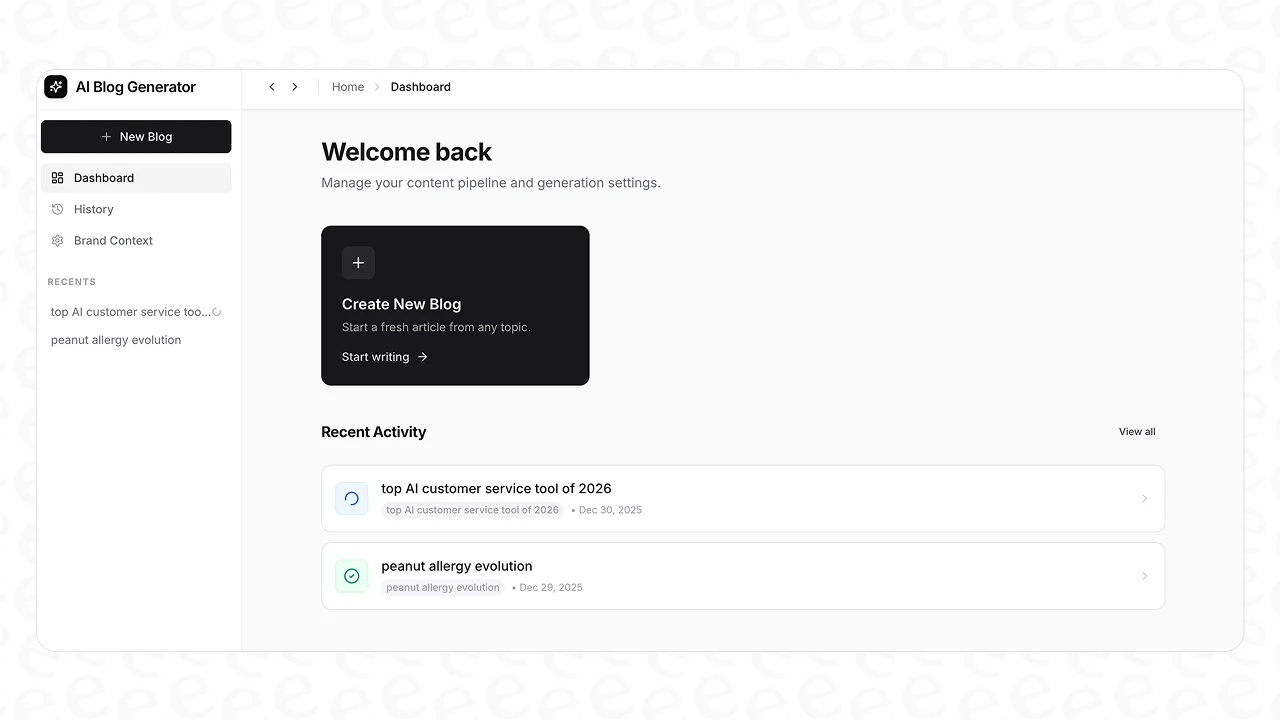
When you think about outsourcing to AI, you might picture a clunky, robotic first draft. That's not how it works anymore. Today, it's about handing off the entire process to an efficient teammate that can take a simple idea and turn it into a finished article. It’s less about fiddling with a tool and more about working with an AI that gets the context, like the eesel AI blog writer.
How AI-powered outsourcing works
The process is surprisingly simple. You give it a keyword or topic and your website URL, and in a few minutes, it produces a complete, SEO-optimized article.
And by "complete," we really mean it. You get everything you need to hit publish, including a catchy intro, a logical heading structure, well-researched content, a conclusion, and even an FAQ section.
This approach eliminates the usual back-and-forth you have with a writer. You don't have to write detailed briefs or go through endless revisions. Just provide the topic, and the AI takes care of the rest.
Key features of AI blog writers
This is a key difference compared to general-purpose chatbots, which typically focus on generating text. You're still responsible for fact-checking, finding images, and making it all look presentable.
A dedicated AI blog writer does more of the work for you by including things you'd normally have to outsource to different people:
- Context-aware research: The AI understands the type of blog it's writing. If it’s a comparison post, it will automatically look for information like pricing data. It also adds external citations to back up its claims and give your article more authority.
- Automatic assets: You don't need to hire a separate graphic designer. The platform generates its own AI images, infographics, and tables to break up the text and make your post more visually appealing.
- Social integration: To add a human touch and some social proof, the tool automatically finds and embeds relevant YouTube videos and real quotes from Reddit threads related to your topic.
Scalability and cost considerations with AI
Let’s talk about the numbers. The cost of hiring writers or agencies can increase significantly, especially if you want to publish more than a couple of articles a month. An AI-powered approach completely changes the financial picture. For instance, the eesel AI blog writer starts at $99 for 50 blog posts. Yes, you read that right.
It's a model designed for scale. We used this exact tool to grow our own blog here at eesel, jumping from 700 to 750,000 daily impressions in just three months by publishing over 1,000 posts. It’s also completely free to try, so you can check out the quality for yourself without any commitment.
Traditional blog writing outsourcing methods
While AI provides a powerful new way to get content produced, the traditional methods are still around. It’s good to understand how they work and what you're trading off in terms of cost, time, and quality.
Hiring freelance writers
This is what most people picture when they think of outsourcing. You find individual writers on platforms like Upwork or through your network and pay them to write articles.
- Pros: The main benefit is the potential for deep subject matter expertise. If you find the right person, you can get high-quality content and have a direct line of communication for feedback. You’re in full control.
- Challenges: Finding, vetting, and managing writers can be time-consuming. Quality can be inconsistent, making it a challenge to source reliable talent. Costs are also variable. Rates on Upwork might be $15–$40 per hour, but experienced writers can charge $125–$200 per post or more. Scaling this model can become expensive, and ensuring brand voice consistency across multiple writers requires ongoing effort.

Partnering with a content agency
If you have a larger budget, you can hire a content marketing agency. They usually handle the entire process for you, from strategy and writing to editing and promotion.
- Pros: It's a hands-off solution. You get a team of professionals and a consistent publishing schedule without having to manage the day-to-day tasks.
- Challenges: A primary consideration is cost, with monthly retainers often ranging from $3,500 to over $15,000. A single blog post can cost between $400 and $2,500. Contracts may offer less flexibility for adjusting content volume. Communication is often channeled through an account manager, which can slow down the process, and agency writers may not always have the deep niche expertise a business requires.
Using licensed content
A less common option is to license content, which means you pay to republish articles from other websites on your own blog.
- Pros: It’s quick, simple, and can give your site some borrowed authority by associating it with a known publisher.
- Challenges: This method has specific considerations for content marketing. Since the content is not original, it doesn't contribute to building your brand's unique authority. From an SEO standpoint, it’s not optimized for your specific keywords or audience, which can limit its ranking potential. You also cannot edit the content to mention your product, include your data, or add a relevant call-to-action.
Choosing your outsourcing strategy
You have three main options for outsourcing your blog writing: a modern AI teammate, a traditional freelance writer, or a full-service agency. Each offers a different mix of cost, control, and convenience.
Freelancers offer a high degree of control, though they require active management. Agencies provide a convenient, full-service solution at a higher price point. Modern AI platforms present a different balance, offering scalability and affordability with less direct management.
To get a better sense of how others are approaching this, it can be helpful to see a real-world breakdown. The video below offers practical advice on outsourcing your content creation, covering the steps from finding writers to managing the workflow effectively.
This video offers practical advice on outsourcing your content creation, covering the steps from finding writers to managing the workflow effectively.
For businesses that want to publish high-quality content at scale while managing their budget, an AI-powered approach is a strong option. It offers a fast and cost-effective way to turn content marketing into an engine for growth.
Ready to see what the future of content outsourcing looks like? You can generate your first publish-ready blog post with the eesel AI blog writer for free and see just how easy it can be.
Frequently Asked Questions

Share this post
Article by
Stevia Putri
Stevia Putri is a marketing generalist at eesel AI, where she helps turn powerful AI tools into stories that resonate. She’s driven by curiosity, clarity, and the human side of technology.