How to optimize content for featured snippets

Katelin Teen
Last edited January 15, 2026
You know that box at the very top of Google that gives you a direct answer to your question? That's "Position 0," and it's probably the most valuable piece of real estate on the internet. It's called a featured snippet, and landing your content there is like getting a VIP pass to the front of the line. It's Google's way of telling the world you've got the best, most straightforward answer.
So, why should you care? For starters, about 12.3% of all search queries have a featured snippet, which means millions of chances to leapfrog your competition. And with Google's new AI Overviews rolling out, the need for clear, well-structured answers is only growing. It's what both people and algorithms want.
Understanding the different types of featured snippets
Paragraph snippets (the definition box)
This is the most common type you'll see. It’s that tidy little box giving a concise, direct answer to "what is," "who is," or "why is" questions. They are usually a short paragraph, typically around 40-55 words long. The whole idea is to get straight to the point.
List snippets (ordered and unordered)
When a search asks for steps or a list of things, Google often pulls a list snippet. You’ll see ordered (numbered) lists for step-by-step guides like recipes or how-to instructions. Unordered (bulleted) lists pop up for things that don't need a specific sequence, like a list of benefits or tools. Just remember, Google usually only shows up to eight items in the list, so being concise is important.
Table snippets
If you're looking for data, prices, or comparisons, you'll probably see a table snippet. Google is great at pulling structured data directly from a webpage and putting it into a clean table. The most common formats are tables with 5 rows and 2 or 3 columns, so structuring your data this way can give you a leg up.
Video snippets
Sometimes, the best answer isn't text. For certain queries, Google will feature a specific clip from a video (usually from YouTube) that directly answers the user's question. This happens a lot with "how-to" searches where watching someone do something is way more helpful than reading about it.
Foundational strategies for winning featured snippets
Okay, now that you know the different snippet types, let’s get into the groundwork. Before you even think about formatting a single paragraph, you need a solid SEO foundation. Trying to get a featured snippet without these basics is like trying to build a house on sand, it just won't hold up.
Find keywords that already have featured snippets
The simplest way to start is by targeting keywords that Google already shows a snippet for. This is a clear signal that Google thinks the query needs a quick, direct answer. You can use SEO tools like Ahrefs to find snippet opportunities. Just filter your organic keywords to see which ones trigger a featured snippet that you don't currently own. That's your hit list.
Target long-tail and question-based keywords
Think about how you search for things. You probably type in full questions, don't you? Your customers do, too. An Ahrefs study found that most featured snippets are triggered by long-tail keywords, which are just longer, more specific search phrases. A great place to find these is in Google's "People Also Ask" (PAA) section. These are actual questions people are asking, and they are prime targets for snippet optimization. Answering them directly in your content is a really effective strategy.
Put a direct answer immediately after the question (40–60 words). Use numbered lists or bullets when the query implies steps or options. Match the snippet type already ranking (list, paragraph, table). Use clear H2/H3 questions that mirror the query. Avoid fluff before the answer explain *after*. Snippets reward clarity and structure, not keyword density.

Ensure your page ranks on the first page
This one is a big deal. It's non-negotiable. According to that same Ahrefs study, a whopping 99.58% of all featured snippets come from pages that are already ranking in the top 10. So, if your page is stuck on page two or three, your chances of snagging a snippet are pretty much zero. This means all your basic SEO work, like building backlinks, making sure your site is mobile-friendly, and writing quality content, is absolutely essential.
How to optimize for specific snippet formats
Once your SEO fundamentals are solid, you can start tweaking your content to match the specific snippet formats. This is where you make it super easy for Google to find, understand, and feature your answer.
Optimizing for paragraph snippets
This is all about being direct. The best way to go after a paragraph snippet is to create a clear heading that asks the question, like "What is [Your Keyword]?" Then, right after that heading, write a clean, concise answer between 40 and 55 words. Start the sentence with "[Keyword] is..." and keep the tone objective and informational. No fluff, just the facts.
Optimizing for list snippets
For step-by-step guides or lists, structure is key. Use clear, descriptive headings for each item (e.g., "Step 1: Do this," "Step 2: Do that"). Google is smart enough to pull these headings and turn them into a numbered list snippet. You can also use proper HTML list tags (
- for numbered lists and
- for bullet points). This gives Google a crystal-clear map of your content's structure.
Optimizing for table snippets
If you want to win a table snippet, you need to give Google a table. It's pretty much that simple. Google rarely builds a table from scratch out of unstructured text. Instead, it looks for a clean, well-formatted HTML
on your page and just lifts it directly. So if you have data, pricing, or comparison points, put them in a simple table.| Snippet Type | Key Optimization Tactic |
|---|---|
| Paragraph | Place a concise 40-55 word definition directly under a relevant heading. |
| List | Use clear, sequential headings (H2, H3) for steps or proper HTML list tags (
|
| Table | Format your data in a clean HTML tag on the page.
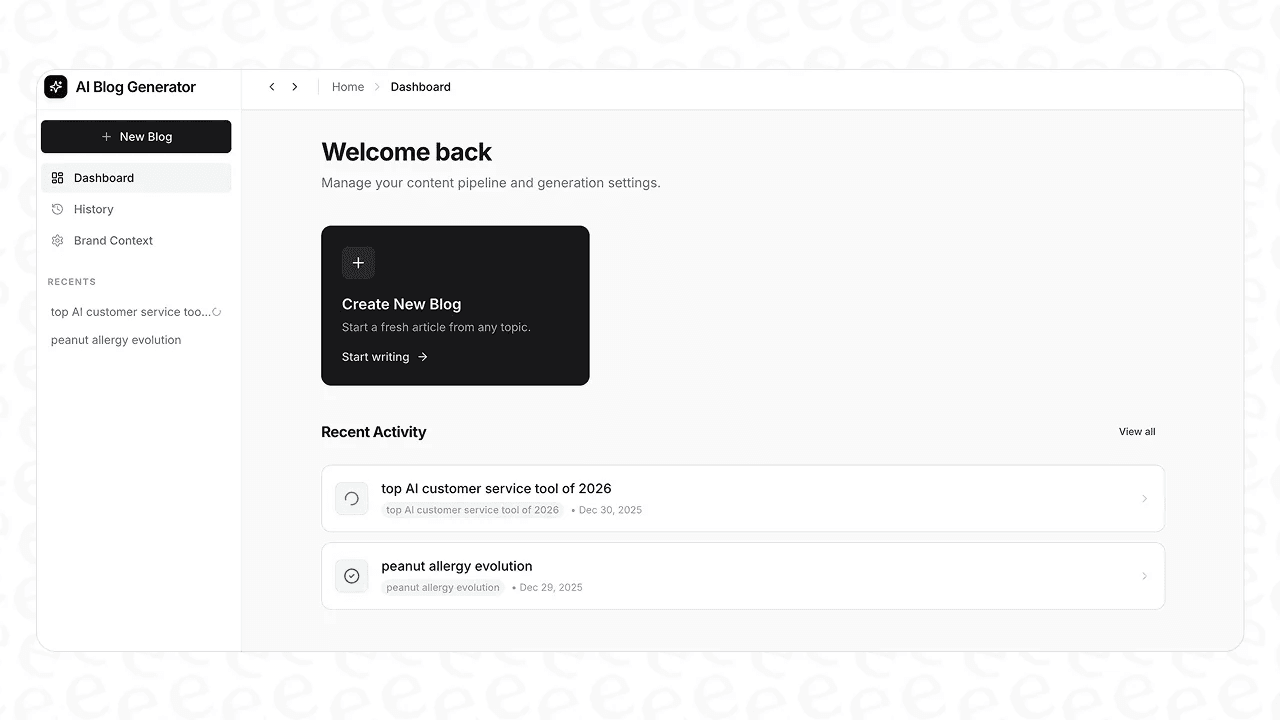
Scaling your snippet strategy with eesel AIOkay, so you know what to do. But here’s the catch: doing all of this by hand is a massive time sink. Researching keywords, structuring every article just right, building tables, and keeping hundreds of pages updated is practically a full-time job. It's really tough to do at scale. This is where a tool like the eesel AI blog writer can make a huge difference. It's built to handle the heavy lifting, so you can scale up your content plan without burning out. Generate perfectly structured content for any snippet typeInstead of manually formatting every single post, eesel AI generates articles that are already organized for snippets. It creates content with the clear headings, direct answers, short paragraphs, and logical flow that Google is looking for. It can even generate data tables automatically, so you can target those valuable table snippets without touching a line of HTML. Optimize for SEO and AI Overviews simultaneouslyThe content generated by eesel AI isn't just optimized for traditional SEO; it's also built for Answer Engine Optimization (AEO). This means it creates the kind of clear, authoritative, and well-structured content that does well in both classic featured snippets and the new AI-powered search results. You're essentially future-proofing your content strategy. Automatically include assets perfect for visual snippetsGood content is more than just text. The eesel AI blog writer automatically creates and embeds AI-generated images, infographics, and tables right into your article. This not only makes your content more engaging for readers but also gives Google more assets to pull from for visual snippets and image packs. Target multiple long-tail keywords in one articleRemember all those "People Also Ask" questions? The eesel AI blog writer helps with this by automatically including FAQ sections and integrating real, relevant quotes from Reddit forums. This approach naturally answers dozens of related long-tail queries within a single article, seriously increasing your chances of capturing multiple featured snippets from just one piece of content. For a more visual guide on how these strategies come together, this video provides a step-by-step walkthrough on finding and optimizing for featured snippets. A strategic approach to featured snippetsWinning featured snippets isn't some mysterious secret, it's a science. It boils down to finding the right keyword opportunities, really understanding what the user wants, and structuring your content with total clarity. While the search results page will keep changing with things like AI Overviews, one thing will stay the same: search engines will always reward high-quality, well-formatted content that gives people direct answers. The real challenge is doing it consistently and at scale. Manually optimizing every single article just isn’t sustainable if you want to grow fast. Don't let formatting slow you down. Start creating content that's built to rank in Position 0. Try the eesel AI blog writer for free and generate your first snippet-optimized article in minutes. |

Frequently Asked Questions
Share this article

Article by
Katelin Teen
Katelin is an operations specialist at eesel where she uses her psychology training and education experience to optimize B2B SaaS processes. Outside of work, she unwinds with story-driven games, writing, and keeping up with latest tech innovations.
