

Let's be honest: Wikipedia is one of the most powerful and trusted websites on the internet. Landing a backlink from it is a huge win for your SEO and makes your brand look incredibly credible.
But getting that link is tough. Wikipedia has notoriously strict editors and guidelines, so you can't just drop your link and call it a day. The good news? It's definitely possible if you go about it the right way, focusing on actually making Wikipedia better. This guide will walk you through a clear, step-by-step overview of how to earn those coveted links by being a genuinely helpful contributor.
What are Wikipedia backlinks and why do they matter?
A Wikipedia backlink is simply a link from a Wikipedia page to your website. You'll usually find these in the "References" section at the bottom of an article, where sources are cited to back up the information presented.
Now, you might hear that these links are "nofollow." That's true, which means they don't directly pass on "link juice" or SEO authority in the traditional sense. So, why bother? Because their indirect value is massive.
Sorry for the grave digging, but just a note that a link from Wikipedia has still value. But not as you said when it's random. If you have valuable content that you want your visitors to see. If it's relevant to the Wikipedia page, it's worth adding. But note that it has to be relevant and useful for Wikipedia readers, not some random post written by a copywriter or generated by AI. So it may not have SEO value but still, have marketing value.

Here’s why they still matter a ton:
- Authority and Trust: Getting a link from Wikipedia is like getting a stamp of approval from one of the internet's most respected sources. Search engines notice when highly trusted sites link to you. Being cited on an encyclopedia basically tells Google you're an authority on a topic.
- Referral Traffic: Wikipedia articles rank for a mind-boggling number of keywords. A single link can send a steady stream of highly engaged, relevant visitors to your site for years to come.
- Brand Recognition: When people see your brand cited as a source on Wikipedia, it instantly positions you as an expert in your field. It builds credibility that money can't buy.
- Secondary Link Generation: This is a big one. Journalists, bloggers, and content creators often use Wikipedia as a starting point for their research. When they see your site listed as a source, they might link to it in their own articles, earning you more "dofollow" backlinks without any extra effort.
Three strategies for getting Wikipedia backlinks
The secret to successful link building on Wikipedia isn't about sneaking in promotional links. It's about finding legitimate opportunities to improve the encyclopedia. Your goal should always be to add value first. The backlink is just the natural result of doing good work.
Let's break down the three main strategies for finding these opportunities.
Find and replace dead links
"Link rot" is what Wikipedia calls it when a link in a citation no longer works. It's a huge problem for an encyclopedia that relies on verifiable sources, so Wikipedia actively encourages editors to fix these dead links.
This is probably the most straightforward way to get your foot in the door. You’re not just adding a link; you're helping moderators clean up the site and improve an article's quality.
Here’s the plan: Find an article in your niche with a "[dead link]" tag. Use a tool like the Wayback Machine to see what the original linked content was about. Then, create a resource on your own site that's even better and more up-to-date. Finally, edit the Wikipedia page to replace the dead link with your updated one.
Fix broken links
This is slightly different from a dead link. A broken link might be a simple typo in the URL, or it could point to a page that now shows a 404 error on an otherwise active website. The strategy is often called broken link building, and it works just as well on Wikipedia.
The process is similar: find a broken link, figure out what it was supposed to point to, and create content on your site that serves the same purpose. Then, you can edit the Wikipedia article and suggest your link as the fix.
Pro tip
If a link is broken on Wikipedia, there's a good chance other websites are linking to that same broken URL. You can plug that broken URL into a backlink checker to find a whole list of other sites you can reach out to for even more link-building opportunities.
Add new citations
This method is a bit more advanced but can have a huge payoff. It involves finding articles that have "[citation needed]" tags or identifying spots where a claim is made without any source to back it up.
This is your chance to contribute brand-new, verifiable information to the article and cite your own high-quality content as the source. The key here is that your content has to be of high quality. It needs to meet Wikipedia's tough standards for reliable sources. Think original research, a super comprehensive guide, or unique data that genuinely adds something new and valuable to the topic.
How to create Wikipedia-worthy content with eesel AI
The biggest hurdle in this whole process is creating content that meets Wikipedia's strict editorial standards. Your content can't be promotional. It needs to be factual, neutral, well-researched, and comprehensive, almost like scholarly works. This is where most people get stuck.
A tool like the eesel AI blog writer can be a huge help here. Instead of just giving you a rough draft, it creates publish-ready, deeply researched articles that are perfect for being used as citation sources.
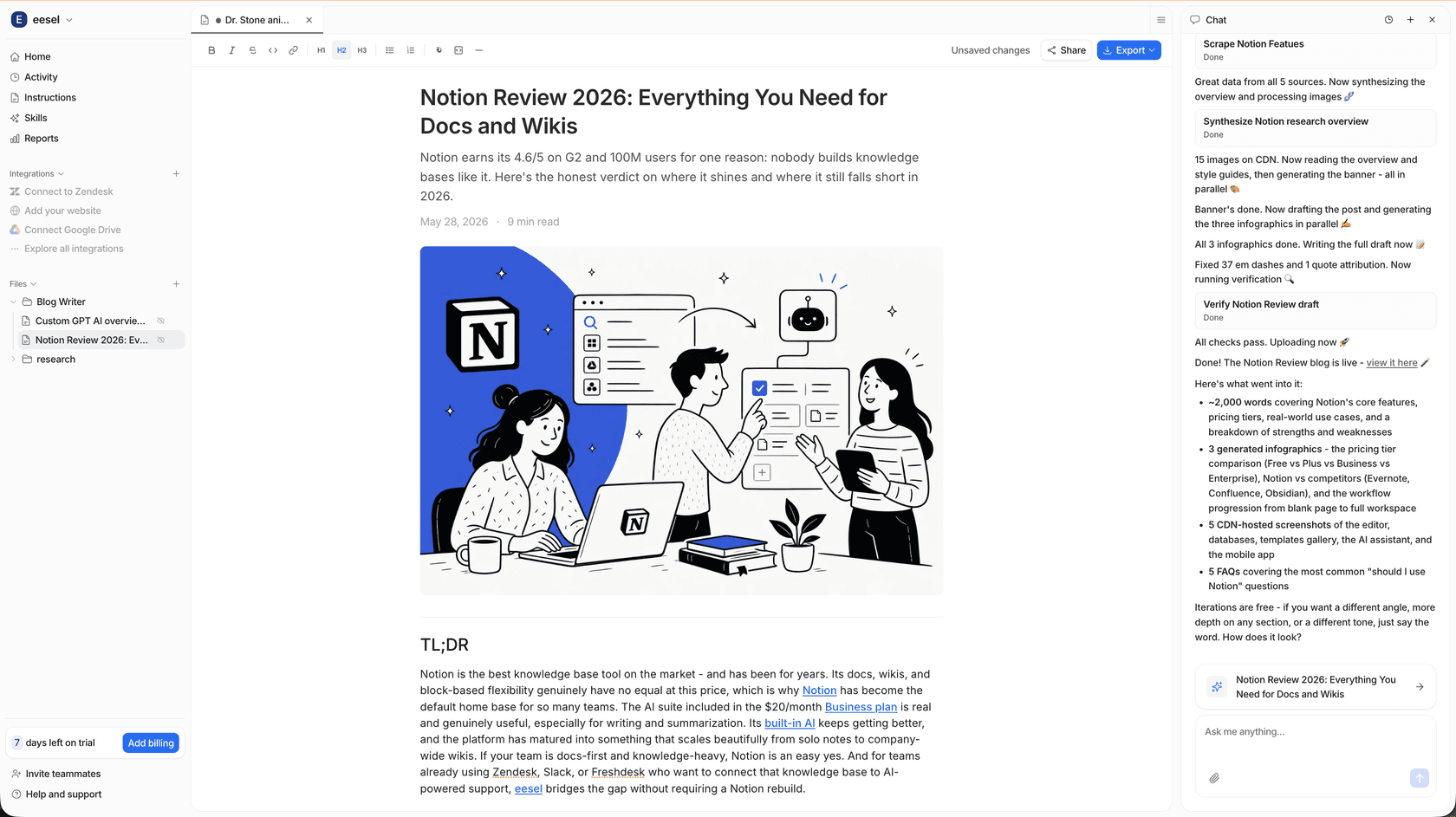
Here's how the eesel AI blog writer helps you create content that Wikipedia editors will actually respect:
- Deep Research with Citations: This isn't your average AI summary. The eesel AI blog writer performs context-aware research and can automatically add external citations to its articles. This is a massive help in meeting Wikipedia's verifiability requirements from the get-go.
- Neutral and Authoritative Tone: You can set the tone of your article to "Educational" or "Technical." This ensures the content is written in the formal, encyclopedic style that Wikipedia expects, avoiding any salesy or overly casual language.
- Automatic Citable Assets: The tool doesn't just write text; it also generates assets like tables, charts, and infographics. These data-rich visuals are perfect for citing and add a ton of value to a Wikipedia article, making your contribution much harder to ignore.
Using a tool like the eesel AI blog writer frees you up to focus on the strategic part of finding link opportunities while feeling confident that the content you're creating meets the high bar for quality.
A step-by-step guide to getting Wikipedia backlinks
Ready to give it a shot? Here’s a clear, actionable guide to contributing ethically and effectively without getting your edits deleted.
Step 1: Create a credible Wikipedia account
First things first: you need to look like a good-faith contributor, not a spammer trying to score a quick link.
Actionable steps:
- Create a personal account on Wikipedia. Avoid using your brand name or anything that sounds promotional as your username.
- Don't start adding links right away. Wait a few days and make 5–10 small, helpful edits on pages related to your industry. This could be as simple as fixing typos, correcting grammar, or clarifying a sentence. This builds a positive edit history and shows the moderators you're there to help.
Step 2: Find relevant link opportunities
Now it's time to hunt for opportunities. Google search operators are your best friend here. Just type these into the search bar:
- "site:wikipedia.org "your keyword" "dead link""
- "site:wikipedia.org "your keyword" "citation needed""
Replace "your keyword" with a term relevant to your business, and you'll get a list of Wikipedia pages ripe with opportunities.
You can also use Wikipedia's built-in "What links here" tool (found in the sidebar on any article) to see how important a page is and discover other related articles you might be able to contribute to.
Step 3: Add your link with a clear summary
Once you've found your opportunity and created your awesome content, it's time to make the edit. According to Wikipedia's guidelines, external links should not be in the article body, so you’ll be adding your link as a reference using "" tags.
The most important part of this step is the "Edit summary." This is a small text box where you explain why you made the change. This is your chance to justify your contribution to the moderators. A good summary is clear and to the point.
For example:
- "Replaced dead link with an active, updated source on the topic."
- "Added a citation from a recent study to support the claim about X."
What to avoid:
- Never add promotional language. Don't say "our great new blog post."
- Don't add your link to irrelevant articles. It has to be a perfect fit.
- Don't remove other valid sources just to make room for your own link.
Step 4: Monitor your contribution
Your work isn't done once you hit "Publish changes." All edits are reviewed by volunteer editors, and sometimes, they get reverted (deleted).
Check the page's "View history" tab to see if your edit was reversed and, if so, read the moderator's note to understand why. If you genuinely believe your contribution was valuable and was removed unfairly, don't just add it back. Instead, go to the article's "Talk" page and start a polite discussion to make your case.
For those who prefer a visual walkthrough, this video provides some excellent hands-on tips for finding opportunities and making edits that stick.
Improve Wikipedia first, earn the backlink second
Getting a backlink from Wikipedia is a marathon, not a sprint. It requires patience and, most importantly, a contributor-first mindset.
If you remember one thing from this guide, let it be this: your primary goal should always be to add genuine value and make Wikipedia a better resource. The backlink is simply a byproduct of that effort, not the objective itself. And the whole process starts with having content that is truly encyclopedic in quality.
Ready to create content that's citable, authoritative, and ready for Wikipedia? Try the eesel AI blog writer for free and generate your first article in minutes.