How to generate compliance friendly content

Stevia Putri

Katelin Teen
Last edited January 19, 2026
Let's be honest, nobody in marketing gets excited about compliance. It usually feels like a roadblock, a maze of legal jargon designed to slow down your content pipeline. But ignoring it can be an incredibly expensive mistake.
Consider this: global non-compliance fines hit $14 billion recently. If that number doesn't grab your attention, maybe this will: the actual cost of dealing with a compliance issue is, on average, 2.65 times higher than the cost of just getting it right in the first place. The main challenge for any modern business is balancing the need to publish content quickly with the absolute necessity of making sure it's accurate and follows all the rules.
What is compliance friendly content?
When you hear "compliance," your mind probably jumps to lawyers and dense legal documents. But "compliance friendly content" is a much broader idea. It's about creating content that lines up with three key areas: legal regulations, industry standards, and your own internal brand policies. Think of it as a set of guardrails that keep your content accurate, trustworthy, and out of trouble.
- Legal and Regulatory Compliance: This is the big one. It's about following the actual laws of the land. Depending on your industry and where you operate, this could mean adhering to data privacy laws like GDPR, following the SEC Marketing Rule if you're in financial services, or meeting HIPAA requirements in healthcare. These aren't suggestions; they're mandatory.
- Industry-Specific Standards: Every industry has its own set of unwritten (and sometimes written) rules. For example, financial institutions have strict advertising standards and need to include specific FDIC disclosures about deposit insurance. These standards are designed to protect consumers and ensure a level playing field.
- Internal and Brand Compliance: This is all about staying true to your own company. It means sticking to your established tone of voice, making sure all product information is factually correct, and following your own ethical guidelines. This is what maintains your brand’s integrity and ensures every piece of content feels like it came from you.
Ultimately, creating compliant content isn't just about dodging fines. It's about building and maintaining trust with your customers, partners, and the public. When people know they can rely on what you say, you build a foundation for long-term relationships.
The challenges of manual checks for compliance friendly content
If you’re still relying on a purely manual process to review content, you know the pain. It's slow, expensive, and not sustainable when you’re trying to keep up with the demands of digital marketing. The traditional back-and-forth between marketing, legal, and product teams is full of friction.
Inefficient workflows as a content bottleneck
That feeling of your content being stuck in "legal review" for days? It's a massive drain on resources. A recent study found that 79% of marketers say the review and approval process is just too long and complicated. This constant friction doesn’t just slow things down; it burns through your budget. In fact, some estimates show that the labor costs and rework associated with manual compliance checks can eat up as much as 30% of a marketing budget. That's money that could be spent on actual marketing, not just checking it.
Overconfidence and the risk of human error
Here’s a tricky situation. The same experts you rely on can sometimes be the biggest risk. A surprising 82% of marketers believe their own expertise means they don't really need a formal compliance review anymore. While confidence is great, it can lead to unintentional mistakes, especially when you're juggling multiple campaigns and tight deadlines.
This risk gets bigger as you scale up your content production. Your compliance team is likely stretched thin already. Another study revealed that 85% of compliance professionals feel reviews would be much more efficient if they didn't have to spend their time constantly re-checking the same basic rules and guidelines. Human error is bound to happen, and a manual process provides plenty of opportunities for it to slip through.
The challenge of changing regulations
Regulations aren't set in stone. They evolve, and keeping up is a full-time job. Take the SEC's Marketing Rule, which was significantly updated in 2022. Suddenly, financial marketers had to learn and apply a whole new set of standards.
This constant change puts teams in a tough spot. You either become overly cautious, stripping your content of anything interesting (or effective), or you risk plowing ahead and unknowingly violating a new rule. Neither option is good for business. Relying on your team to manually track every regulatory update across every market is a recipe for problems.
Can generic AI help generate compliance friendly content?
So, if manual checks are broken, can't we just use AI to fix it? It's a tempting thought. Fire up a tool like ChatGPT, give it a prompt, and get a draft in seconds. The problem is, while these general-purpose AI models are great for speed, they can introduce significant compliance challenges.
Speed vs. risk in content generation
Tools like ChatGPT are fantastic for brainstorming, outlining, and getting a first draft on the page. They can break through writer's block and give you a solid starting point.
But when it comes to creating content that needs to be accurate, secure, and compliant, that speed comes with some serious hidden risks. These tools are built on massive, public datasets. They don't know your business, your industry's specific rules, or your brand’s voice. They're guessing, and sometimes they guess wrong.
The risks associated with context-free AI
Using a generic AI for compliance-sensitive content can be unreliable because the model lacks specific, verified information about your business. Here’s why:
- Lack of Specific Knowledge: A generic AI has zero awareness of your internal brand guidelines, the nuances of your product features, or the specific regulations that govern your industry. It can't tell you if a claim is approved by your legal team or if your product description is up-to-date.
- "Hallucinations" and Factual Inaccuracies: This is a big one. AI models are known to "hallucinate," which means they can generate incorrect information. They can invent statistics, create fake quotes, and even cite non-existent legal cases. In the now-famous Mata v. Avianca case, a lawyer submitted a legal brief full of fake judicial opinions generated by ChatGPT, leading to sanctions from a federal judge.
regulatory folks we spoke to were quite against this. they (except for a couple people) do not want ai to be auto drafting everything for reasons like hallucination, lack of nuance, and poor strategy when writing regulatory documents.

Here's a quick comparison of how different content creation methods stack up:
| Feature | Manual Creation | Generic AI (e.g., ChatGPT) | Context-Aware AI (e.g., eesel AI) |
|---|---|---|---|
| Speed | Slow | Fast | Very Fast |
| Compliance Risk | Moderate | High | Low |
| Brand Consistency | High | Low | High |
| Factual Accuracy | Moderate | Low | High (Grounded in your data) |
| Data Security | High | Low (Public models) | High (Private, secure) |
How to generate compliance friendly content with the eesel AI blog writer
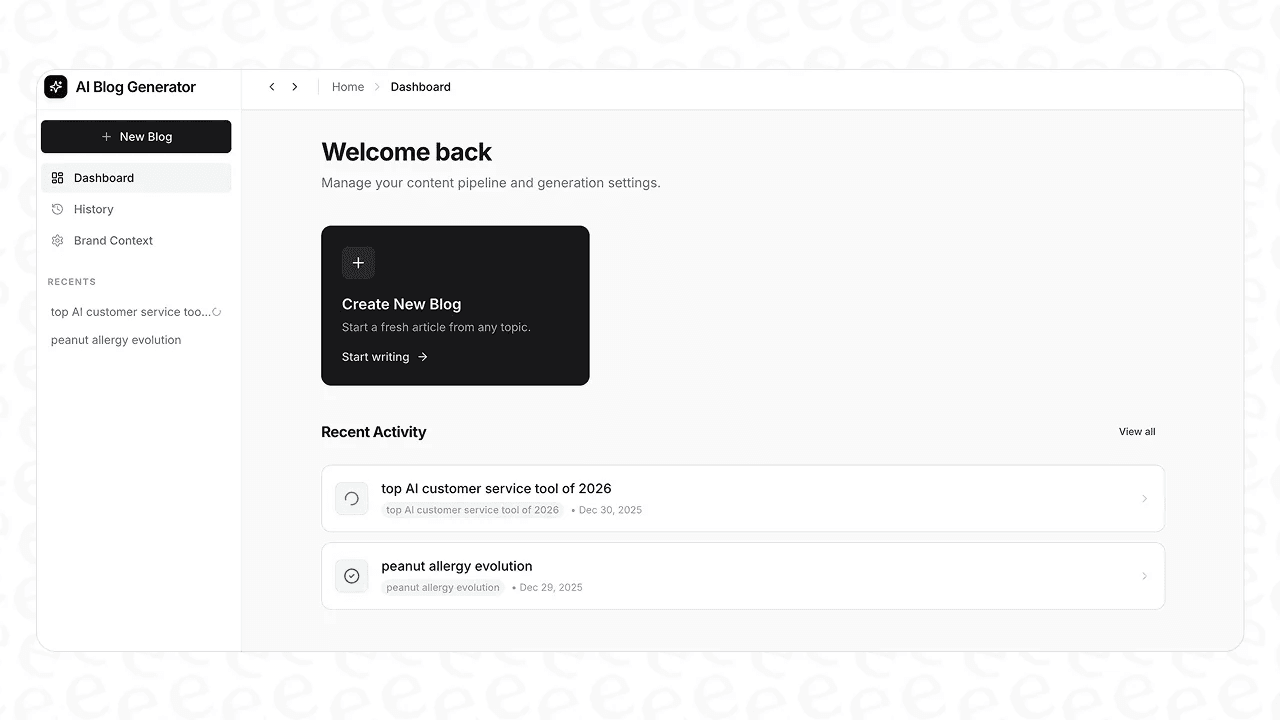
So, what's the solution? You need the speed of AI without the compliance risks. This is where a purpose-built, context-aware tool like the eesel AI blog writer comes in. It's designed to generate content that is not only fast and high-quality but also grounded in your company's own verified information.
Starting with a secure knowledge base
The biggest difference between eesel AI and generic tools is where it gets its information. Instead of pulling from the entire public internet, eesel AI learns directly from your company’s trusted knowledge sources. You can connect it to your website, help desk articles, and internal documentation in places like Confluence or Google Docs.
This creates a "single source of truth" for the AI. It ensures that every piece of content it generates is based on your approved brand guidelines, up-to-date product facts, and internal policies. It’s not guessing; it’s working from information you’ve already verified.
Just as importantly, this process is secure. eesel AI is GDPR and CCPA compliant and offers enterprise-grade security. We contractually guarantee that your private company data is never, ever used to train external AI models. Your knowledge stays your knowledge.
From keyword to publish-ready post
The output is more than just text. The platform automatically includes assets that make your content more engaging and authentic. It can generate custom images and data tables, and even pull in real, relevant quotes from Reddit threads to add a human touch. You get the speed of AI with the guardrails of a system that's built on your own secure, trusted data, making compliance a natural part of the content creation process instead of a final, painful hurdle.
Best practices for building a compliance-focused culture
Technology is a powerful tool, but it works best when it's supported by the right culture and processes. Building a compliance-first mindset across your teams ensures that everyone understands their role in protecting the brand.
Here are a few practical tips:
- Simplify and Centralize Policies: Legal documents are often written by lawyers, for lawyers. Take the time to translate that complex jargon into plain language that everyone can understand. Store these simplified guides, brand rules, and compliance policies in a single, easily searchable location so there's no excuse for not knowing the rules.
- Make Training Engaging and Ongoing: The annual, hour-long compliance presentation is where good intentions go to die. Instead, make training engaging, share real-world examples of compliance mistakes (and wins), and use interactive quizzes to make the information stick. Ongoing, bite-sized training is far more effective than a once-a-year info dump.
- Integrate Compliance into Workflows: Don't treat compliance as a separate, final step. Build it directly into your existing workflows. Add compliance checkpoints to your content calendars, creative briefs, and project management tools. When it's a natural part of the process, it stops feeling like an obstacle and becomes just another part of producing great work.
Visual learning can also be a powerful tool for reinforcing these best practices. For example, creating short, engaging videos about your compliance standards can make the information more digestible and memorable for your team.
Wrapping up
Generating compliant content doesn't have to be a choice between moving at a snail's pace with manual reviews or relying on generic AI tools that may introduce risks. The right approach involves a strategic shift, one that uses technology designed to understand and operate within the unique context of your business.
By grounding your AI in your own secure data and fostering a culture where compliance is part of the creative process, you can stop seeing it as a problem. Instead, it becomes a competitive advantage. You can publish engaging, effective content with confidence, knowing it’s not only driving results but also building trust and protecting your brand.
Ready to streamline your content workflow and eliminate compliance headaches? Generate your first blog post with the eesel AI blog writer and see how context-aware AI makes all the difference.

Frequently Asked Questions
Share this article

Article by
Stevia Putri
Stevia Putri is a marketing generalist at eesel AI, where she helps turn powerful AI tools into stories that resonate. She’s driven by curiosity, clarity, and the human side of technology.
