A practical guide to healthcare SEO: Attracting patients in a digital world
Written by
Stevia Putri
Reviewed by
Katelin Teen
Last edited January 12, 2026
Expert Verified
It might sound a little dramatic, but your practice’s front door isn't made of wood or glass anymore. It's a search bar. A huge 77 percent of patients start their healthcare journey on Google, making your website the first impression you'll ever get to make.
That's where healthcare SEO steps in. It’s all about making your practice more visible and trustworthy when potential patients are searching online for doctors, treatments, or health info. This guide will give you a straightforward look at what makes healthcare SEO so different and how to build a strategy that actually brings patients through your digital door.
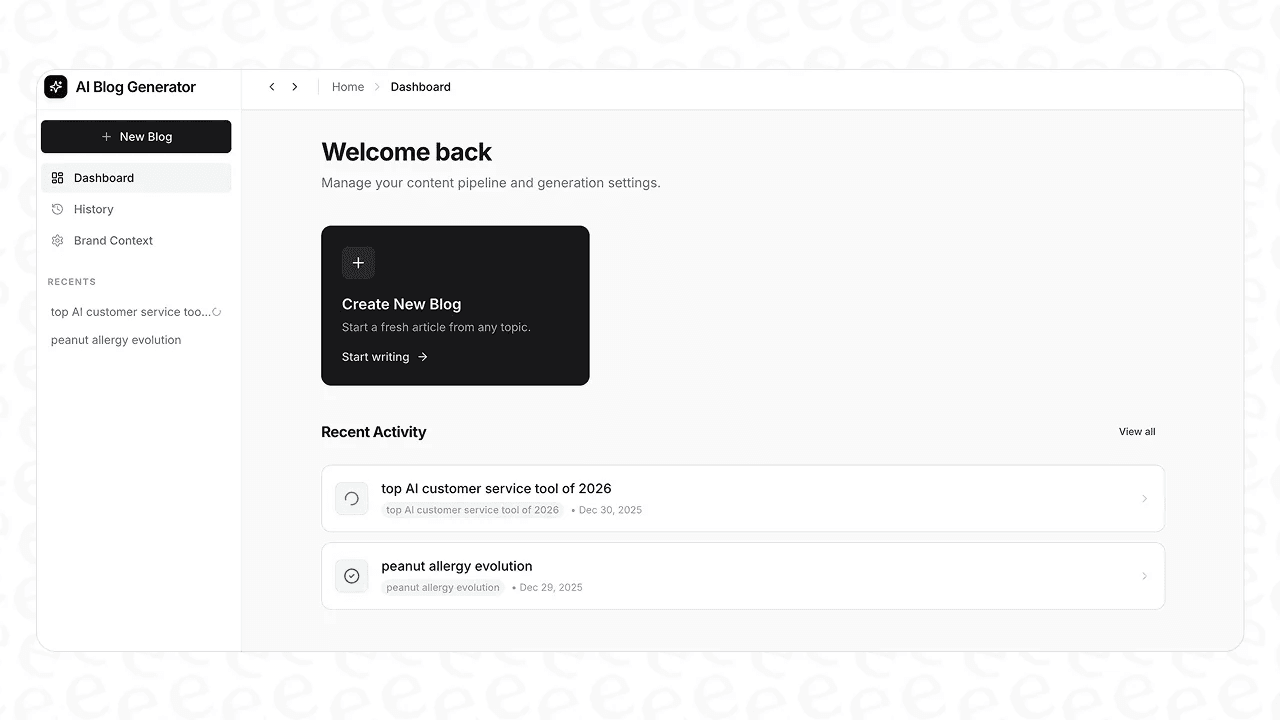
But let's face it, creating a constant flow of expert, authoritative content that meets Google's tough guidelines is a massive task for any busy practice. This is where tools like the eesel AI blog writer can be a big help, letting you create high-quality content much more efficiently so your team can focus on patient care.
The eesel AI blog writer dashboard, a tool for efficient healthcare SEO content creation.
What is healthcare SEO and why is it unique?
Simply put, healthcare SEO is about tweaking your medical website to show up higher in search results for what patients are looking for. But it's nothing like SEO for a local coffee shop or an online store. The stakes are much, much higher.
Google puts health-related content into a special bucket it calls "Your Money or Your Life" (YMYL). That's just their way of saying that content in this area is judged more harshly because bad information can cause real harm. This makes healthcare SEO different in a few key ways:
E-E-A-T (Experience, Expertise, Authoritativeness, Trustworthiness): This is Google’s measuring stick for quality, and it’s non-negotiable in healthcare.
Experience: Can you show you have real, first-hand experience with the topic? A blog post about post-op recovery written by a surgeon is going to carry more weight than one from a general content writer.
Expertise: Is the content created by a subject matter expert? You need to show off your medical credentials.
Authoritativeness: Is your practice or website seen as a go-to source of information in your field?
Trustworthiness: Can users trust your site with their personal information and health concerns? This covers everything from website security to having clear contact information.
An infographic explaining the E-E-A-T framework for healthcare SEO, covering experience, expertise, authoritativeness, and trustworthiness.
HIPAA Compliance: Patient privacy is everything. The Health Insurance Portability and Accountability Act (HIPAA) dictates how you handle Protected Health Information (PHI). This affects your entire online presence, from ensuring your website contact forms are secure to how you reply to online reviews. You can't even hint that you know someone is a patient.
Critical Local Intent: Most healthcare is local. People aren't just searching for a "family doctor"; they're searching for a "family doctor near me." For local searches, the top three results in the Google Maps section get around 70 percent of all clicks. If you're not showing up there, you're missing out on a huge number of potential patients.
The three pillars of a successful healthcare SEO strategy
A good strategy is more than just scattering keywords on a page. It's about building a trustworthy and accessible online space for your patients. An effective plan is built on three pillars that work together to attract and convert new patients.
An infographic showing the three pillars of healthcare SEO: foundational/technical SEO, content/on-page SEO, and off-page/local SEO.
Pillar 1: Foundational and technical healthcare SEO
Think of this as the foundation of your digital practice. It’s about making your website easy for patients and search engines to use and trust. If your website is confusing or slow, everything else you do won't matter much.
Website Speed and Mobile-Friendliness: We’ve all been there, impatiently waiting for a slow website to load. It’s frustrating, and most people will just give up and leave. Since more than half of all web traffic comes from mobile devices, your site has to look great and work perfectly on a phone. A slow or clunky mobile experience doesn't just annoy visitors; it actively hurts your search rankings.
Secure Your Site (HTTPS) and Forms: See the little padlock next to the URL in your browser? That’s HTTPS, and it means the connection is secure. It's a basic requirement for any website, but for healthcare, it's a huge trust signal for patients. Any web forms where patients might enter their name or health concerns must be HIPAA-compliant and fully encrypted to protect their data.
Logical Website Architecture: A clean, organized website helps patients find what they need quickly, whether it's a list of services, a doctor’s bio, or your clinic’s phone number. A good way to structure this is with "silos." For example, have a main "Services" page that then links out to separate, detailed pages for each specific service, like cardiology, pediatrics, or dermatology.
Physical Location Signage: This might seem a bit random, but it comes straight from Google's guidelines. If you list your address on your website and Google profile, you need to have permanent, fixed signage with your business name at that location. It’s one way Google confirms you're a real, physical practice.
Pillar 2: Content strategy and on-page optimization
Content is where your healthcare SEO efforts really shine. It’s how you answer patient questions, solve their problems, and show your E-E-A-T to both people and search engines.
Keyword Research for Patient Intent: It’s easy to target broad terms like "cardiologist," but the real value is in understanding what patients are actually typing into Google. Focus on long-tail keywords (longer, more specific phrases) and questions. Someone searching for "best knee replacement surgeon in Houston" is much closer to booking an appointment than someone just searching for "knee doctor."
While there are some keywords that you've identified that have low volume but easy difficulty, that might be an area to target. It's okay if you're not getting a lot of traffic, you just want qualified traffic that generates leads.
* **Creating High-Quality, People-First Content:**
* Your content must be written or at least reviewed by a qualified medical professional. To signal this expertise, include author bios with credentials on every blog post and service page.
* Google now uses a "Who, How, and Why" framework to judge [helpful content](https://developers.google.com/search/docs/fundamentals/creating-helpful-content). Be transparent about *who* wrote the content, *how* it was created (e.g., based on clinical experience), and *why* your main purpose is to help the reader, not just to rank on Google.
* **Essential On-Page SEO Elements:**
* **Title Tags and Meta Descriptions:** These are the headline and short summary that appear in Google search results. Make them clear and compelling, and include your target keyword.
* **Headings (H1, H2, H3):** Use headings to break up your content and create a logical structure. This makes the page easier for people to skim and for search engines to understand. Your main keyword should always be in your main heading.
Here’s a quick look at how thinking about patient intent changes your keyword strategy:
Generic Keyword
Long-Tail Healthcare Keyword
User Intent
"knee doctor"
"best knee replacement surgeon in Houston"
High intent, looking to book a consultation
"skin problems"
"how to treat adult acne with sensitive skin"
Informational, looking for expert advice
"children's doctor"
"after-hours pediatric urgent care Austin"
Urgent need, location-specific, high intent
Pillar 3: Off-page and local healthcare SEO
This last pillar is all about building your practice's reputation and visibility away from your own website. What other trusted sources say about you matters a lot to search engines.
Claim and Optimize Your Google Business Profile: If you do only one thing for your local SEO, make it this. A complete Google Business Profile can lead to five times more views. Make sure your Name, Address, and Phone number (NAP) are 100% accurate and consistent everywhere online. Add photos of your practice, list your services, and keep your hours updated.
A step-by-step guide on optimizing a Google Business Profile for healthcare SEO, from claiming the profile to managing reviews.
Manage Online Reviews: With more than 94 percent of patients checking reviews before booking an appointment, managing your online reputation is essential. Encourage happy patients to leave feedback and make sure you respond professionally to all reviews, both good and bad.
Pro tip
To stay HIPAA-compliant when replying to reviews, never confirm that the person is a patient or mention any of their medical details. Keep your responses general (e.g., 'Thank you for your feedback. We are committed to providing all our patients with the best possible care.') and invite them to discuss their concerns offline through a secure channel like a phone call or patient portal.
Build Local Citations and NAP Consistency: A "citation" is just a mention of your practice's NAP online. Getting your practice listed in reputable healthcare directories like Healthgrades, Vitals, and Zocdoc is a great way to build these. The key is making sure your NAP information is identical across all these platforms. Consistency is a huge trust signal for local SEO.
Earn Authoritative Backlinks: A backlink is just a link from another website to yours. When a respected website (like a local news outlet, a university, or a health organization) links to your site, it’s like a vote of confidence. It tells search engines that you're a credible authority, which can give your rankings a nice boost.
How to scale your content with the eesel AI blog writer
The biggest hurdle for most healthcare practices is simply time. Creating a steady stream of content that meets those strict E-E-A-T guidelines is incredibly time-consuming when your team is focused on patients.
A screenshot of the eesel AI blog writer interface being used to create content for a healthcare SEO strategy.
Here’s how it helps healthcare practices get over the content bottleneck:
Deep Research with Citations: Instead of generating shallow, generic AI text, it performs deep research and includes citations. This is vital for building the authority and trust that healthcare content needs.
Human-Centric Tone: It produces content that sounds empathetic, clear, and human. It avoids the robotic, jargon-filled language that can make patients feel disconnected.
Automatic Assets & Social Proof: It automatically creates and embeds useful assets like AI-generated images and tables. It can even pull in real forum insights from places like Reddit, which helps add context and show real-world experience.
AEO Optimized: The content is automatically structured to perform well in AI Answer Engines, like Google's AI Overviews. This is the next phase of search, and being ready for it gives you a big advantage.
This approach lets your team generate a publish-ready draft in minutes. A medical professional can then give it a quick review, turning a days-long process into a task that takes less than an hour.
Measuring the success of your healthcare SEO efforts
SEO isn't something you can set up once and then forget about. It’s an ongoing process, and tracking your results is the only way to know what's working and where you need to make adjustments.
Navigating tracking and reporting limitations due to HIPAA and cookie consent changes and, even more challenging, getting the C-suite to accept the fact we won't have 100% reporting like the days of old.
Keyword Rankings: Are you moving up in the search results for your most important keywords? Tools like Google Search Console can help you track this.
Organic Traffic: How many people are finding your website through search engines each month? Is that number going up?
Online Appointment Bookings/Calls: This is the bottom line. Are more patients contacting you through your website? You can use call tracking and form submission tracking to measure this directly.
Google Business Profile Insights: Your GBP dashboard has a ton of useful data, like how many people found you on Google Maps, called you from your profile, or asked for directions to your clinic.
An infographic displaying key metrics for tracking healthcare SEO performance, including keyword rankings, organic traffic, and patient conversions.
For a deeper dive into practical strategies you can implement right away, check out this video from WebFX. It covers three essential tips that align perfectly with the pillars we've discussed, offering actionable advice for improving your healthcare website's presence in search.
A video from WebFX offering three valuable tips for an effective healthcare SEO strategy.
Your prescription for online growth
Ultimately, a good healthcare SEO strategy is a long-term investment in building trust where your future patients are already looking for help.
It really boils down to those three pillars: a solid technical foundation, high-quality content that demonstrates your expertise, and strong local signals centered around your Google Business Profile. With the right approach and tools, you can transform your website from a simple online brochure into your practice's best tool for attracting new patients.
Ready to start creating the expert content your practice needs? Try the eesel AI blog writer for free and generate your first publish-ready article in minutes.
It's a combination of three key areas: a technically sound website, high-quality content that proves your expertise (E-E-A-T), and strong local signals, especially a well-managed Google Business Profile. All three need to work together.
It's a long-term game. You might see some small improvements in a few months, but significant, lasting results typically take six months to a year of consistent effort.
You can definitely manage some aspects yourself, like your Google Business Profile. However, the technical and content sides can be very time-consuming. Using tools or working with a specialist can help you get better results faster.
The main differences are the high stakes and strict rules. Google's "Your Money or Your Life" (YMYL) standards mean content must be extremely trustworthy. On top of that, all patient interactions, even online forms and review responses, must be HIPAA-compliant.
The biggest mistakes include having a slow, non-mobile-friendly website, neglecting your Google Business Profile, being inconsistent with your name and address online, and failing to create content that demonstrates real medical expertise.
E-E-A-T (Experience, Expertise, Authoritativeness, Trustworthiness) is Google's primary quality signal for health content. If your content doesn't clearly show that it's from a credible expert and is based on real experience, your healthcare SEO efforts will struggle to gain traction.
Share this article
Article by
Stevia Putri
Stevia Putri is a marketing generalist at eesel AI, where she helps turn powerful AI tools into stories that resonate. She’s driven by curiosity, clarity, and the human side of technology.