I tried over 20 generative AI tools for marketing to find the best in 2026

Kenneth Pangan

Katelin Teen
Last edited January 16, 2026

The market for AI marketing tools is expanding rapidly, with new platforms emerging frequently. Many promise to transform workflows and automate content creation. After testing over 20 of these tools, I found that while many focus on specific tasks, a select few offer comprehensive solutions that solve larger marketing challenges.
This list is not just another roundup of every tool out there. This is my curated selection of the platforms that actually do what they say they will, save you a ton of time, and deliver results you can actually measure. Let's get into the six tools that have earned a permanent spot in my 2026 marketing stack.
What are generative AI tools for marketing?
Generative AI in marketing is more than just telling a chatbot to write a social media post. We're talking about a category of AI that creates brand-new, original content, text, images, data analysis, and even strategic outlines. For marketers, this changes things quite a bit.
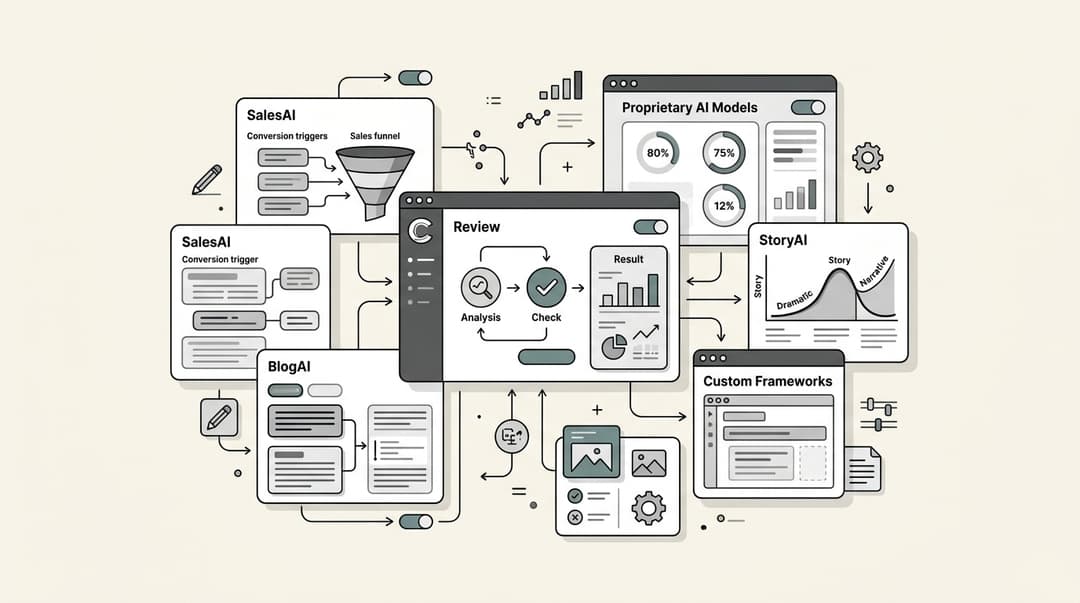
The main uses are all about scaling your impact, and we've summarized them in the infographic below.
-
Automating the content lifecycle: This means going from a simple keyword to a fully researched, written, and optimized blog post in minutes, not weeks.
-
Personalizing at scale: It’s about creating unique email campaigns, ad copy, and landing page variations for different audience segments without having to do it all by hand.
-
Streamlining workflows: This involves connecting different apps and data sources to automate complex jobs, like lead nurturing or market research.
More than the tools, I think the use cases. Some basic data analysis ones I've used recently: 1. I love chatgpt and other tools for excel formulas. Nothing like explaining in plain english what you want to do and having it write a perfect formula with everything you need (for complex formulas especially) 2. Uploading data and asking it questions about the data - like which characteristics are the most common, or which have the highest association to specific results (our main point of contact on a sale can be in multiple departments. Which department has the highest impact on sales in terms of deal size, deal speed, and total lifetime value) 3. Writing api connectors for me 4. Writing code or classes to standardize the data (normalizing departments, roles, titles, etc) without a pre-set list to match to. Ah-Mazing! 5. Creating documentation 6. Taking notes in meetings, summarizing the notes, highlighting my tasks, and creating calendar tasks for me. Also Amazing. 7. Upscaling images 8. Generative image creation. 9. Understanding and categorizing sentiment from reviews, survey responses, etc.

While tools like ChatGPT kicked the door open, the real value for marketers comes from specialized platforms. These tools are built specifically for marketing workflows, giving you more control, brand consistency, and a clear path to business results. They're less about writing clever prompts and more about getting a specific job done, like generating a complete blog post with a tool like the eesel AI blog writer.
My criteria for choosing the best generative AI tools for marketing
To cut through the hype, I didn't just read marketing pages or feature lists. My approach was simple: I used each platform for actual marketing tasks to see if it could handle the pressure.
Here's the checklist I used for my evaluation:
-
Quality of output: Does the AI produce high-quality, human-like content that doesn't need a ton of editing? Can it stick to a specific brand voice without me having to correct it constantly?
-
Marketing-specific features: Is the tool actually built for a marketer? Does it get concepts like SEO, search intent, and conversion, or is it just a generic tool I have to force to work for me?
-
Ease of use: How fast can I get something useful out of it? The best generative AI tools should empower marketers, not force them to become prompt engineers.
-
Value for money: Is the price tag justified by the features and the actual impact? I don't mind paying a premium if the return on investment is there.
-
Real-world impact: This was the deal-breaker. Does the tool actually help me hit my goals? Whether that’s boosting organic traffic, running more efficient campaigns, or just saving me dozens of hours a week.
Comparison of the top generative AI tools for marketing in 2026
Here’s a quick look at the top tools that made my list. We’ll dive into the details for each one below.
| Tool | Best for | Key feature | Starting price (billed annually) |
|---|---|---|---|
| eesel AI blog writer | End-to-end SEO content automation | Generates complete, publish-ready blog posts with assets | Free to try, then $99 for 50 blogs |
| Jasper | AI content automation platform | Brand IQ for voice, style, and knowledge consistency | $59/month per seat (Pro) |
| Gumloop | No-code AI workflow automation | Visual canvas for connecting apps and LLMs | Free plan available, paid plans from $37/month |
| Surfer SEO | On-page content optimization | Real-time Content Score and optimization suggestions | $79/month (Essential) |
| Midjourney | High-quality AI image generation | Creating unique, artistic visuals via Discord prompts | ~$10/month |
| HubSpot AI | Integrated marketing and CRM automation | Breeze AI agents for a unified customer experience | Included with various HubSpot plans |
The 6 best generative AI tools for marketing I'm using in 2026
After weeks of testing, these six tools really stood out. They aren't just gadgets; they're solid platforms that solve real marketing problems and deliver consistent results.
1. eesel AI blog writer
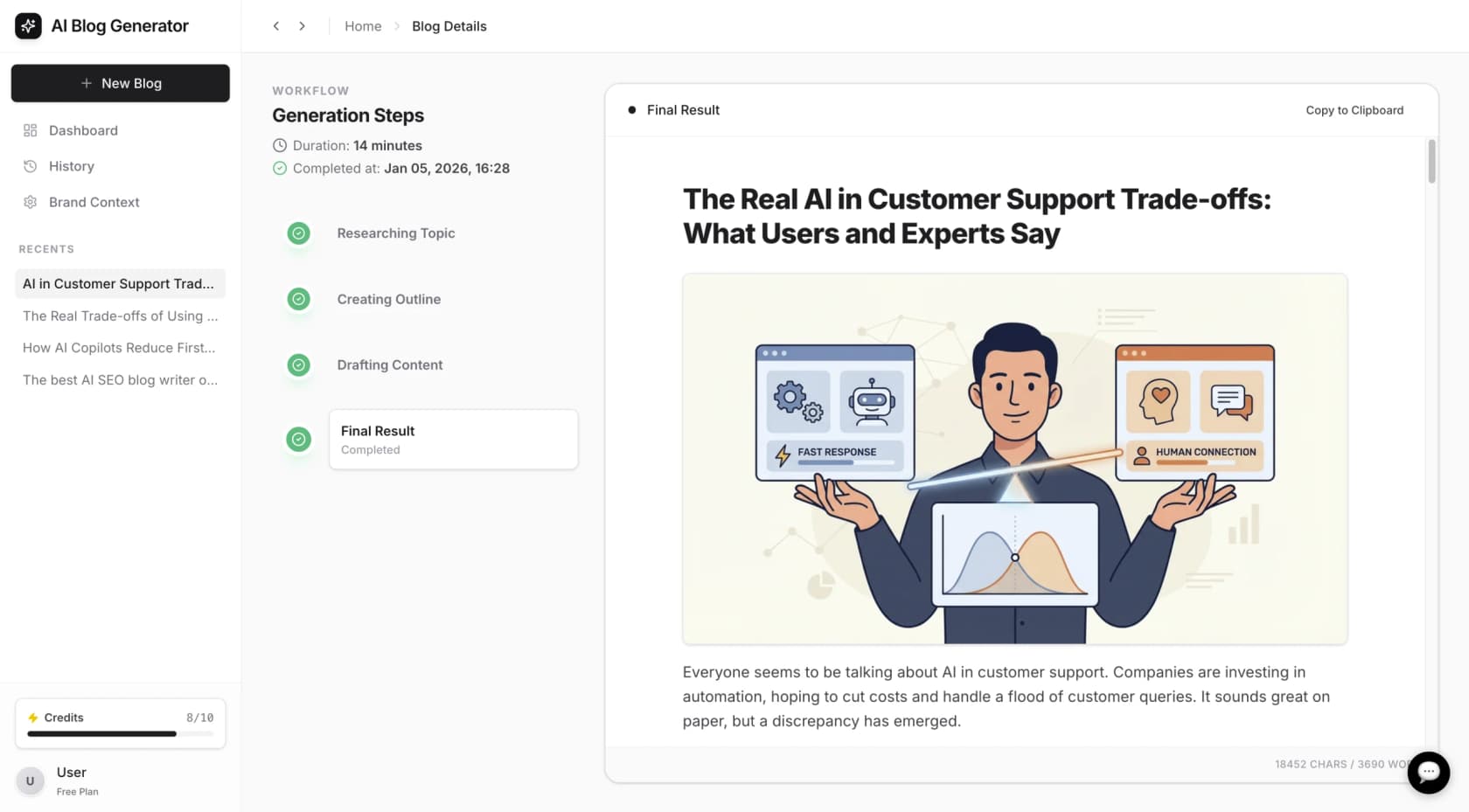
I'm putting this one first for a simple reason: the results speak for themselves. The eesel AI blog writer is the exact tool we used to grow our own organic search impressions from 700 to over 750,000 per day in just three months by publishing over 1,000 optimized blogs. It’s an engine for creating high-quality content at scale.
What really sells it is that it automates the entire process. You feed it a single keyword, and it spits out a complete, SEO-optimized blog post that’s ready to go live. And I don't just mean a text draft. It includes a logical structure with headings, well-researched content, internal links to your other posts, and all the assets you need like AI-generated images, data tables, and even relevant Reddit quotes for social proof.
-
Pros: The end-to-end automation is the biggest plus. It saves you from juggling multiple tools for research, writing, optimization, and asset creation. The context-aware research is fantastic; it automatically pulls pricing for comparison posts or technical specs for reviews. It’s also optimized for AI Answer Engines (AEO), which is vital for getting visibility in Google's AI Overviews.
-
Cons: It's a specialist. It’s designed to create high-quality, long-form blog content and it does that exceptionally well. If you only need to generate short social media updates or ad copy, this might be a more specialized choice than you need.
-
Pricing: You can generate your first blog for free to see the quality for yourself. After that, paid plans are credit-based, starting at $99 for 50 complete blog posts.
2. Jasper
Jasper has grown from a simple AI writer into a full-blown content platform for marketing teams. It’s built to automate the entire content lifecycle, making it a solid choice for companies that need to produce a lot of different on-brand assets consistently.
Its main strength is Jasper IQ, which acts as a central brain for your brand. You give it your style guides, product info, and audience personas, and it makes sure every piece of content stays consistent. The Brand IQ feature lets you fine-tune voice, tone, and specific messaging rules, which is a lifesaver for larger teams.
-
Pros: Jasper is really powerful for building custom marketing processes. You can use Jasper Studio to create your own no-code AI apps and workflows, and its Agents can handle complex jobs like personalizing email sequences or optimizing landing pages based on performance data.
-
Cons: To really get the most out of Jasper, you have to think more like a systems builder than a content creator. It pushes you to build "Content Pipelines," which is a powerful idea but has a steeper learning curve than simpler tools.
-
Pricing: The Pro plan starts at $59 per seat per month when billed annually. Business plans with more advanced features and API access require custom pricing.
3. Gumloop
Gumloop is for any marketer who's ever thought, "I just wish my tools could talk to each other." It’s a drag-and-drop platform for building custom AI automations without writing any code. Think of it like Zapier, but with a powerful AI brain built-in.
It lets you connect large language models (like GPT and Claude) to all the apps you already use (Slack, Notion, Google Sheets, your CRM) to create automated workflows. Teams at big companies like Shopify and Instacart use it to automate everything from qualifying leads to generating weekly performance reports.
-
Pros: The visual interface is clean and super intuitive. A huge plus is that access to premium LLMs is included in the subscription, so you don't have to mess with your own API keys and billing. The Gummie AI assistant is also a nice feature; you can just describe the workflow you want in plain English, and it helps you build it.
-
Cons: While it's no-code, it's still a technical tool. You have to think in terms of triggers, actions, and data flows. For marketers who aren't used to automation platforms, there might be a bit of a learning curve.
-
Pricing: Gumloop has a generous free plan with 2,000 credits per month, which is plenty to build and test a few key workflows. Paid plans start at $37 per month.
4. Surfer SEO
Surfer SEO is the tool you bring in to make sure the content you create actually ranks. While other tools focus on writing the first draft, Surfer’s main job is data-driven optimization. It analyzes the top-ranking pages for your target keyword and gives you a precise roadmap to beat them.
And for SEO, Surfer AI and RankIQ are useful. They guide me on what to include in blog posts to rank better.
The process is simple: you enter your keyword, and Surfer’s Content Editor gives you real-time feedback as you write. It tells you which keywords to include, how long your article should be, what your headings should look like, and which topics to cover. They recently added an AI Content Humanizer to help make AI-generated text sound more natural.
-
Pros: The real-time Content Score is addictive and it works. It turns optimization into a bit of a game and gives writers instant, actionable feedback. Surfer also integrates directly with Google Docs, WordPress, and even Jasper, so it's easy to slot into your existing content process.
-
Cons: Surfer is mostly a guide and a polisher. While it does have AI writing features, its main purpose isn't to create content from scratch. This means it’s often an extra (though very valuable) step and cost in your content production.
-
Pricing: Plans start at $79 per month for the Essential package when billed annually.
5. Midjourney
For marketers seeking to create unique visuals, Midjourney offers a powerful alternative to traditional stock photography. It's the clear leader for generating unique, high-quality, and often beautiful visuals for your blog thumbnails, ad creative, and social media posts.
It all happens inside Discord. You join their server and create images by typing descriptive text prompts. It sounds simple, but the system gives you an incredible amount of creative control once you learn its commands and parameters.
-
Pros: The quality of the images is just unmatched. Midjourney is amazing at creating visuals with a specific mood, style, and composition that you'll never find in a stock photo library. It's the best way to create visuals that are a perfect fit for your brand.
-
Cons: The Discord interface is the biggest hurdle. It can feel chaotic and confusing for new users. There’s also a learning curve to writing good prompts; getting the exact image you have in your head takes some practice.
-
Pricing: Basic plans start at around $10 per month, which is an incredible deal for unlimited creative potential.
6. HubSpot AI
HubSpot AI isn't a single tool, but a suite of features built right into the HubSpot CRM platform. Known as Breeze, these tools are designed to fit perfectly within your existing marketing, sales, and service workflows.
Hubspot's content hub has a pretty cool one that allows you to remix content. Blogs to social to email to whatever, adjust the tone to the medium, teach it your brand voice, generate stock photos, etc
For marketers, key features include Breeze AI agents, which can automate tasks like prospecting and lead qualification. The Marketing Hub uses AI to help you create personalized email campaigns, come up with blog topic ideas, and even build out a full Answer Engine Optimization (AEO) strategy based on your real-time CRM data.
-
Pros: The biggest benefit is the seamless, enterprise-grade integration. If your company already runs on HubSpot, these AI features are woven right into the tools you use every day. This removes friction and lets you use your rich CRM data to create smarter, more personalized marketing. It's a highly reliable platform with a massive, supportive ecosystem.
-
Cons: These tools are specifically optimized for the HubSpot ecosystem to leverage your unified customer data. For teams not currently using HubSpot, this requires adopting the platform's broader suite of tools to unlock the full potential of its AI agents.
-
Pricing: HubSpot AI features are included across various subscription tiers, offering a scalable solution that grows alongside your business needs.
Pro tips for using generative AI tools for marketing
After spending hundreds of hours with these tools, I’ve picked up a few things. Here’s how to get the most out of your investment in AI.
- Tip 1:
Pro tip
Be the editor, not just the prompter. AI is a fantastic first-draft machine, but a human touch is what makes content truly great. Always fact-check data, tweak the tone to perfectly match your brand, and most importantly, add your own unique expertise. The AI builds the house; you make it a home.
- Tip 2:
Pro tip
Provide rich, specific context. The quality of your output is directly tied to the quality of your input. Don't just give the AI a keyword. Tell it about your target audience, the goal of the piece, your brand's unique perspective, and key points you want to cover. The more you give it, the more you get back.
- Tip 3:
Pro tip
Create powerful workflows by combining tools. The real magic happens when you stack these platforms. A winning workflow could look like this: Use HubSpot's CRM data to find a customer pain point, use Surfer SEO to analyze related keywords, generate a complete, optimized blog post with eesel AI blog writer, and then create a stunning hero image for it with Midjourney.
The takeaway on generative AI tools for marketing: Choose outcomes, not tasks
The generative AI market includes tools that automate single tasks as well as platforms that solve complete, end-to-end marketing problems. The most valuable platforms are the ones that automate outcomes, not just steps in a workflow.
While every tool on this list is great at what it does, modern marketing is all about scaling your impact without scaling your team. To do that, you need efficiency.
For a deeper dive into how these tools can be applied in real-world marketing scenarios, the following video offers a great overview of some of the best platforms available and how they can enhance your business strategies.
For marketers whose main goal is driving sustainable organic growth, the biggest lever you can pull is creating high-quality content at scale. The best place to start is with a tool that automates the entire content lifecycle, from keyword to published post.
See for yourself how eesel AI blog writer can take you from a single keyword to a fully published, SEO-optimized blog post in minutes. Generate your first blog for free.

Frequently asked questions
Focus on tools that offer high-quality, brand-aligned output with minimal editing. Key features include marketing-specific functions (like SEO optimization), ease of use, and the ability to automate entire workflows, not just single tasks.
No, they are best used as powerful assistants. These tools handle the heavy lifting of drafting content, analyzing data, and automating repetitive tasks, freeing up marketers to focus on strategy, creativity, and adding unique human insights.
Start by identifying your biggest bottleneck. If it's content creation for SEO, a tool like the eesel AI blog writer is a great starting point. If it's workflow automation, look at Gumloop. Many tools offer free trials, so test a few to see which one fits your process best.
Yes, many premium tools offer free trials or limited free plans. For example, you can generate your first complete blog post with the eesel AI blog writer for free, and Gumloop has a generous free tier for building automations. This allows you to test their value before committing.
Look for tools that allow you to input brand context. Platforms like Jasper have Brand IQ, and the eesel AI blog writer lets you add your website and brand guidelines to ensure the output matches your voice and tone. Consistent human review and editing is also essential.
The biggest mistake is treating them like a magic button. The quality of the output depends directly on the quality of the input. Providing clear, specific context about your audience, goals, and brand voice is the key to getting results that don't sound generic.
Share this article

Article by
Kenneth Pangan
Writer and marketer for over ten years, Kenneth Pangan splits his time between history, politics, and art with plenty of interruptions from his dogs demanding attention.