I tested 6 tools for creative blog titles ideas in 2026 (here are my top picks)

Stevia Putri
Last edited February 1, 2026
Ever pour hours into a blog post, hit publish, and then... nothing? It's a terrible feeling. More often than not, the problem isn't your content, it's the headline. Your title is the gatekeeper. It has the tough job of convincing someone scrolling through Google or social media to stop and give your article a click.
A great title can be the difference between a post that gets ignored and one that takes off. And while creativity helps, you don't have to do it all on your own. The right AI content writer tool can help you brainstorm compelling ideas, find new angles, and make sure your titles are set up to perform well with search engines and the new AI Answer Engines.
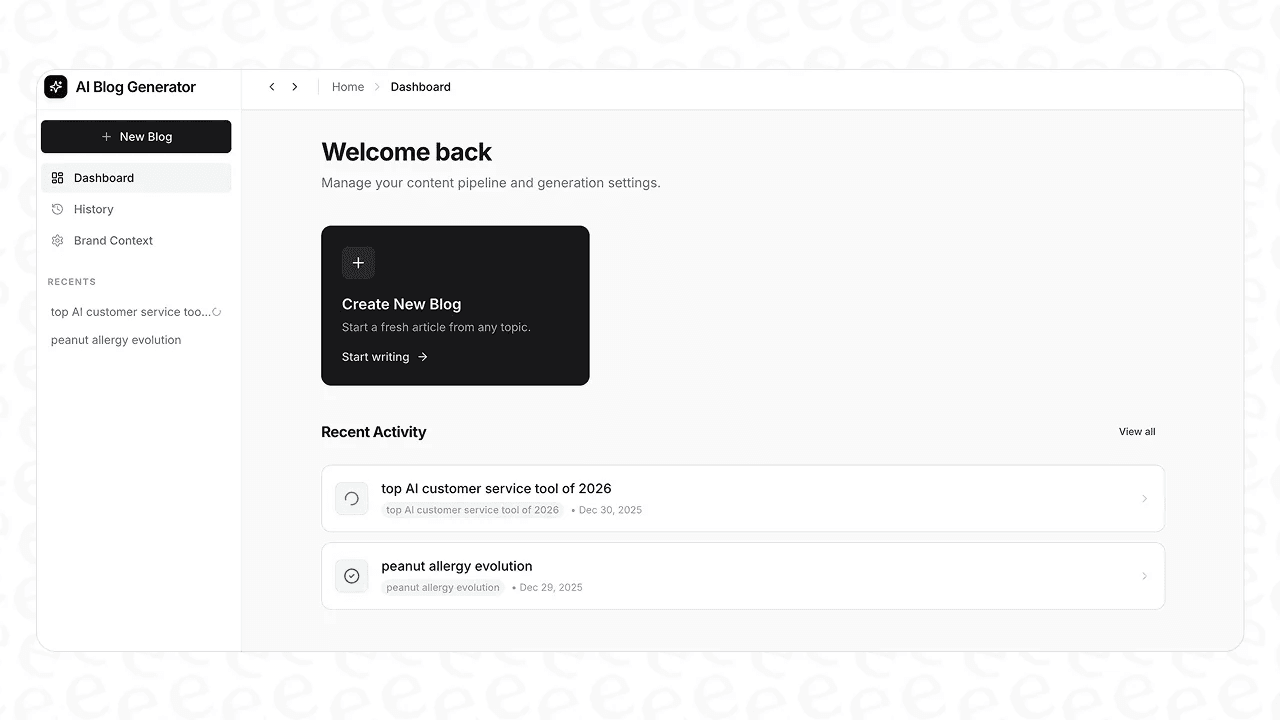
Getting the title right is just the first part of the puzzle. We used the eesel AI blog writer to go from a title idea to a fully published post, which helped us scale our own organic traffic from just 700 impressions a day to over 750,000. It turns a simple idea into a complete article, so you can focus on the big picture instead of just the writing.
What are blog title generators?
At their core, blog title generators are tools designed to help you come up with catchy headlines. You can think of them as a creative partner to help you get past writer's block. You just enter a keyword or a topic, and they'll give you a list of potential titles to get you started.
Their main function is to offer different angles and frameworks for your topic, often while incorporating some SEO best practices.
These tools have evolved quite a bit. They started as simple, fill-in-the-blank templates using proven headline formulas. Now, many are powered by AI that can understand context, tone, and the little details that make a title truly click-worthy. They're not just for avoiding a blank page anymore; they're for creating titles that work for both people and algorithms.
How we chose the best tools
To put this list together, I didn't just search for "best blog title generators." I actually got my hands dirty and tried them out, looking for tools that provide real value. To keep things fair, here’s the criteria I used to judge each one:
- Quality of suggestions: Do the titles sound like something a person would actually click on, or do they come off as robotic and awkward?
- Ease of use: How quickly can you get from a blank page to a list of useful ideas? The smoother, the better.
- SEO features: Does the tool help you include keywords naturally? Does it consider things like title length and structure for search engines?
- Creativity and variety: Does it just spit out the same old templates, or does it offer unique angles?
- Value: What are you getting for your money (or your time, for the free ones)?
The best tools at a glance
| Tool | Best For | Key Feature | Pricing |
|---|---|---|---|
| eesel AI blog writer | Generating a complete, publish-ready blog post | Automatic asset creation & deep research | Free to try; Plans start at $99/mo |
| RightBlogger | Generating multiple title variations with 90+ tools | AI-powered SEO-friendly suggestions | Free plan available; Paid from $9.99/mo |
| CoSchedule Headline Analyzer | Analyzing and improving existing titles | Data-driven scoring and optimization tips | Free analyzer available |
| Sumo Headline Generator | Filling in the blanks for proven formulas | Template-based generation for different content types | Free |
| HubSpot's Blog Ideas Generator | Brainstorming multiple blog topics at once | Generates a week's worth of content ideas | Free |
| Jasper | Advanced AI content creation with brand voice | Jasper IQ context layer & AI agents | Starts at $59/mo (billed annually) |
6 best tools for generating blog title ideas
Alright, let's dive into the specifics. Here are my top picks for the best tools to help you come up with creative blog title ideas in 2026.
1. eesel AI blog writer
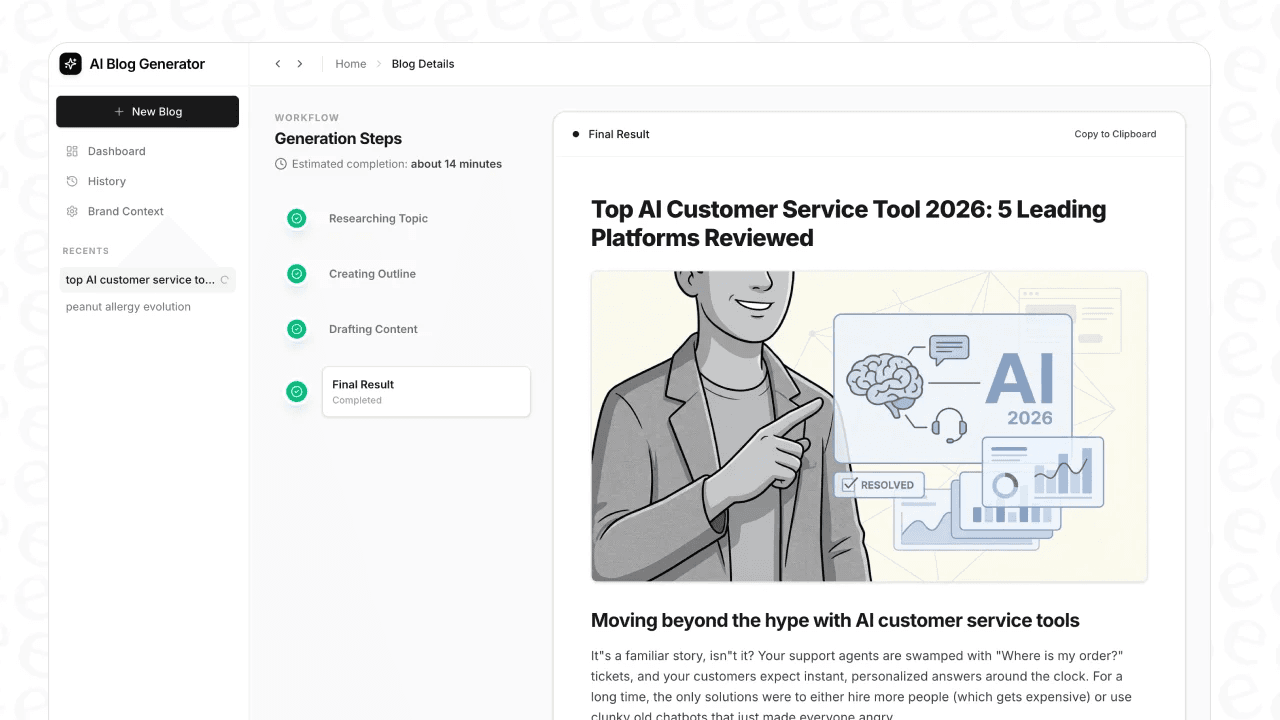
The eesel AI blog writer is more than a title generator. It's a complete AI content platform built to take you from a single keyword to a fully written, SEO-optimized, and media-rich blog post in minutes. This is the exact tool we use to power our own content, and it’s how we grew our traffic from 700 to 750,000 impressions a day in just three months.
Instead of just giving you a list of headlines, eesel does it all. It writes the title, meta description, intro, headings, and body content. It even finds relevant Reddit quotes and YouTube videos to embed, making your content more engaging and trustworthy. It’s less of a tool and more of an AI teammate for your content marketing.
Pros: It closes the gap between brainstorming a title and writing the article. The content it creates is well-researched, avoiding a generic feel. It also automatically includes assets like custom images, tables, and infographics, which saves a huge amount of time. You can also translate the final post into any language with one click.
Cons: If you're only looking for a quick title idea and don't plan on writing the article, it might be more than you need. It’s built for creating complete content, not just one-liners. That being said, the free trial lets you generate a full article, so you can see the quality for yourself with no strings attached.
Pricing:
- It's completely free to try.
- The Early Bird plan gives you 50 blog generations per month for $99.
2. RightBlogger
RightBlogger has a suite of over 90 tools for bloggers, and its "Post Title" generator is a solid option. It uses a mix of different AI models to generate suggestions that are both SEO-friendly and engaging. It’s a great starting point if you're stuck and need a quick burst of inspiration.
Pros: It's super easy to use. You just enter your main keyword, and it gives you a list of ideas almost instantly. I appreciate that it focuses on SEO from the beginning and lets you choose different tones and writing styles to match your brand's voice.
Cons: The free version is a bit restrictive, capping you at 2,000 words per month across all of its 90+ tools. And, like many other generators, it only gives you the titles. You still have to do the hard work of researching and writing the actual content.
Pricing:
- A free plan is available with usage limits.
- Paid plans start at $9.99 per month when billed annually.
3. CoSchedule's Headline Analyzer
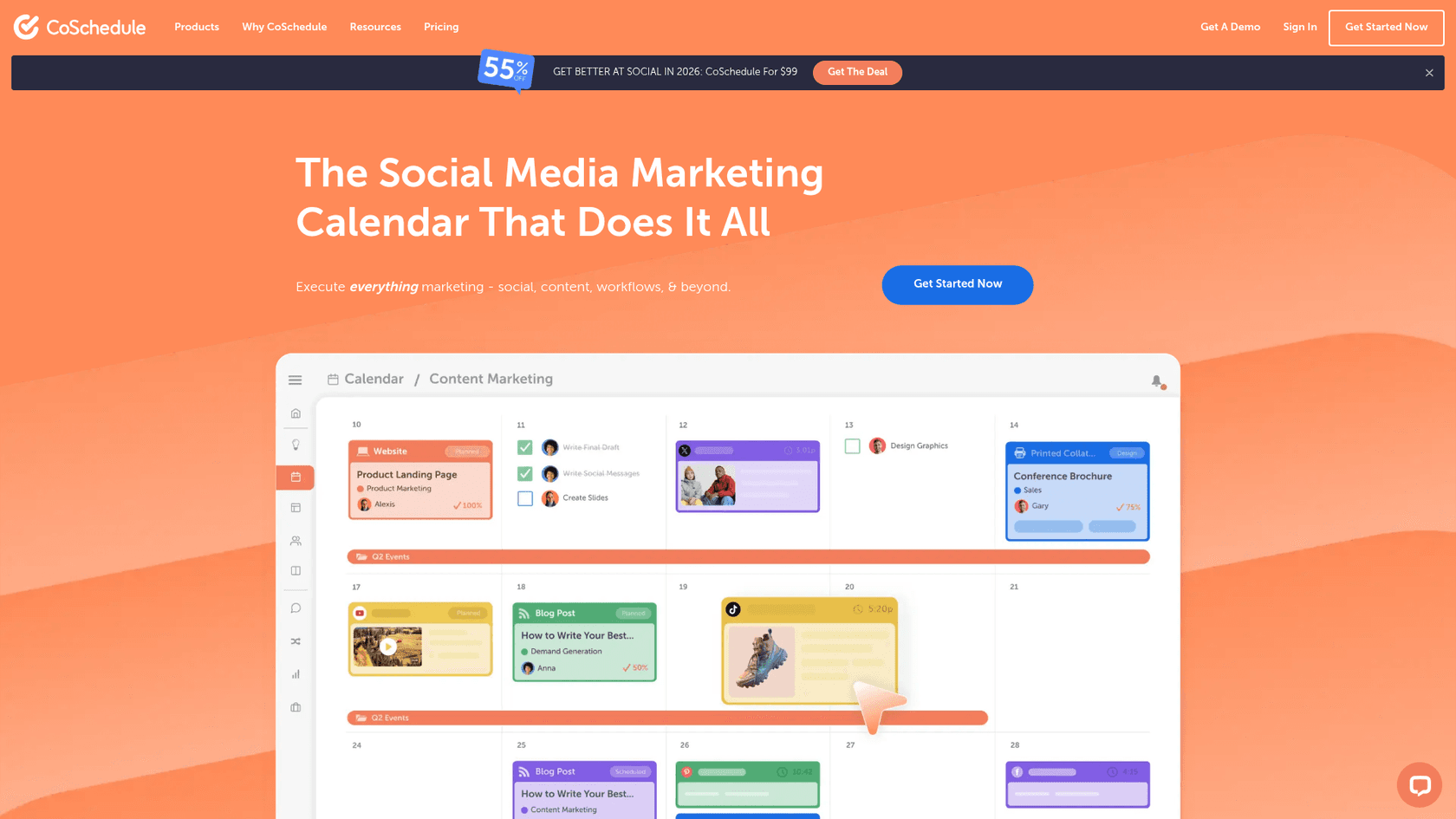
CoSchedule's Headline Analyzer works a little differently. Instead of giving you ideas from scratch, it helps you improve the titles you already have. You paste in your headline, and it gives you a score out of 100 based on factors like word balance, length, clarity, and sentiment. It's a great tool for refining your ideas for blogs, emails, and videos.
Pros: This tool is fantastic for learning what makes a headline effective. The data-driven feedback helps you become a better title writer over time. You start to get a feel for what makes a title strong. The free browser extension is also really convenient, letting you analyze headlines on any site you're on.
Cons: The main drawback is that it doesn't actually generate new ideas. It's a tool for analysis, not brainstorming. If you have writer's block, this won't help you find a starting point. You need to come with your own draft titles.
Pricing:
- The basic headline analyzer is free to use.
4. Sumo's Headline Generator
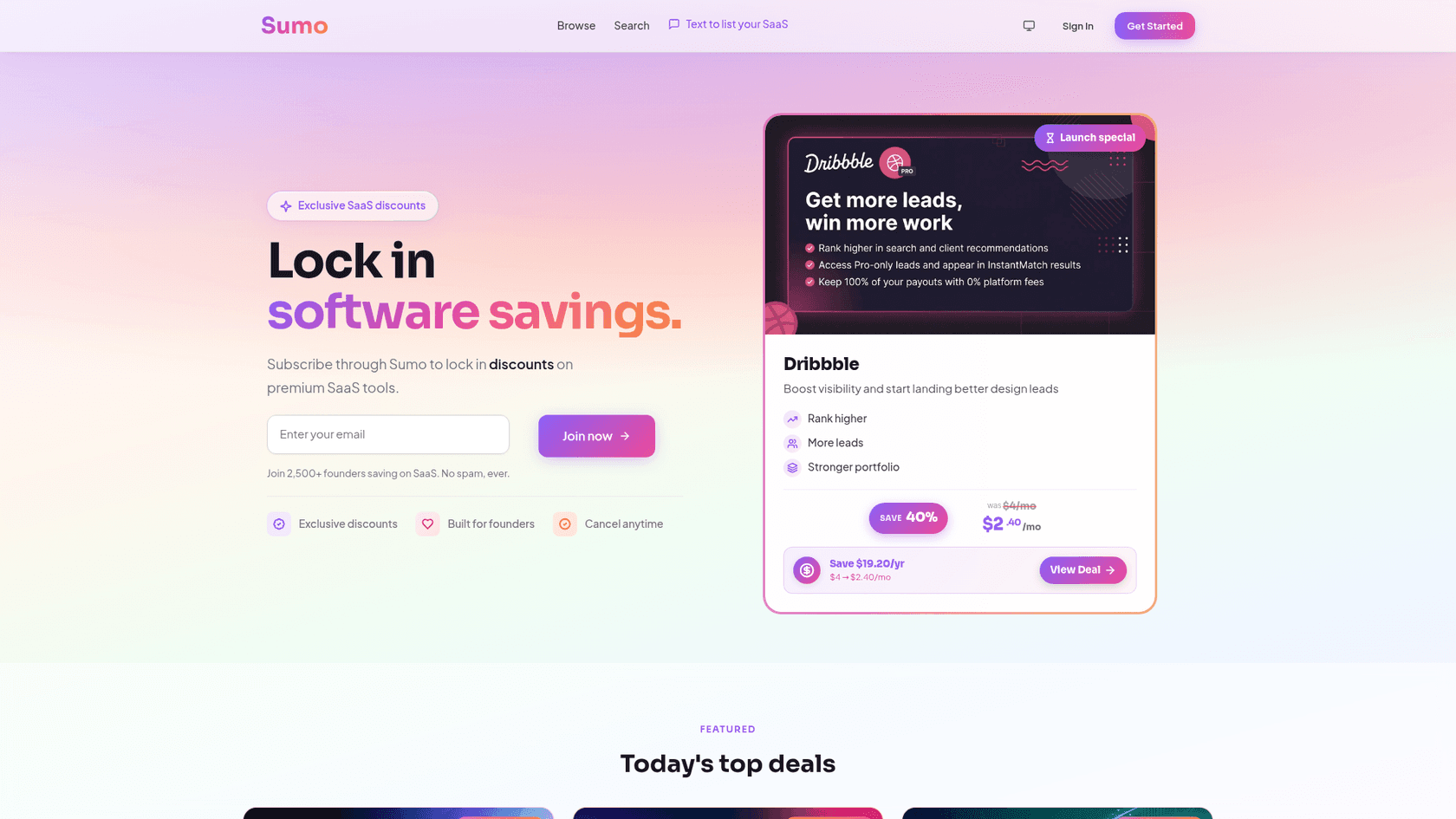
Sumo's tool is a classic, template-based headline generator, and sometimes, that's all you need. It's a simple, no-fuss tool where you pick a headline category (like a list, how-to, or controversial post), fill in a few blanks with your topic, and it generates titles based on proven formulas.
Pros: It's incredibly fast and simple to use. When you're completely stuck and just need a framework to get going, the fill-in-the-blank style is perfect. It’s built on formulas that are known to get clicks, so it's a safe bet for generating solid options.
Cons: Since it's based on templates, the suggestions can sometimes feel a bit generic. It doesn't have the creative spark or contextual understanding of a more advanced AI tool. You'll probably need to tweak the results to make them your own.
Pricing:
- Completely free.
5. HubSpot's Blog Ideas Generator
HubSpot's tool, part of its Content Hub, is less about polishing headlines and more about brainstorming topics. You enter up to five nouns related to your niche, and it gives you a week's worth of general blog post ideas and potential titles. It's great for when you need to fill out your content calendar.
Pros: This is an excellent tool for when you're low on topics. It's free, easy, and can give you a solid base for several articles at once. It's a great way to kickstart your content planning for the month.
Cons: The title suggestions are very broad and almost always need a lot of work before they're ready to go live. Think of it more as a topic finder than a headline crafter. You'll get the "what," but you'll have to figure out the "how" to make it catchy.
Pricing:
- It's free to use.
6. Jasper

Jasper is a comprehensive AI marketing platform that does much more than just write titles. It can generate all kinds of content, from social media posts to full articles. It has specific templates like "Perfect Headlines" and "Blog Post Topic Ideas." A standout feature is its Jasper IQ layer, which lets it learn your brand voice for more consistent results.
I have tested most of these too, and found real differences once you get past the surface features. Based on Sprout Score comparisons, Jasper scored higher (8.2) for brand voice and long-form consistency, especially in team use. Surfer SEO scored strong (8.0) in post-publish optimization and SERP alignment, but depends heavily on pairing with another tool like Jasper. Copy.ai lagged a bit (7.4) for structured content workflows, it is fast, but less controllable. Writesonic sat in the middle (7.8), solid for ecommerce and quick drafts but needed a lot of manual editing in B2B use. If you add more tools, consider Narrato or Content at Scale; both had solid Sprout Scores for automation + SEO structure.

Pros: Jasper is powerful and versatile. The ability to define a specific brand voice is a huge advantage for creating content that feels consistent. Its "Content Pipelines" feature can also help automate your entire content workflow, which is great for larger teams.
Cons: It's a premium tool with a higher price tag, so it might not be the right fit if you're just looking for a free or cheap way to get title ideas. There's also a bit of a learning curve to get the most out of all its features.
Pricing:
- The Pro plan starts at $59 per month per seat when you pay annually.
Tips for writing blog titles that get clicks
Tools are great, but they're most effective when you understand the strategy behind a good title. Here are a few proven formulas you can use as a starting point:
- The "How-To" Title: A classic for a reason. It directly promises a solution to a reader's problem (e.g., "How to write a blog title in 5 minutes").
- The Listicle Title: Using numbers makes your content feel scannable and easy to read. People love lists (e.g., "15 creative blog titles ideas that actually work").
- The "Mistakes to Avoid" Title: This taps into our fear of doing something wrong. It creates urgency and a desire to learn (e.g., "7 blog title mistakes that are killing your traffic").
- The "Secret" or "Insider" Title: This formula builds intrigue by promising exclusive or little-known information (e.g., "The one secret to writing headlines no one tells you").
- The Question Title: A good question sparks the reader's curiosity and makes them want to find the answer in your article (e.g., "Is your blog title good enough?").
Watching experts break down their process can also be incredibly helpful. The video below offers a great overview of the data and psychology behind effective headlines, giving you more strategic tools to work with.
From title ideas to a great blog post
At the end of the day, your blog title is your content's first impression. It's the handshake, the opening line, and the movie trailer all in one. Getting it right is essential if you want to get clicks and grow your audience.
The tools we've covered can definitely help you brainstorm, refine, and optimize your headlines. But the real work isn't just coming up with a title; it's delivering on that title's promise with a high-quality article that people actually want to read.
So, why stop at the title? Instead of just brainstorming a headline, you can generate the entire, SEO-optimized post in just a few minutes.
Ready to see for yourself? Generate your first post with the eesel AI blog writer for free—not just the title—and see how easy scaling your content can be.

Frequently Asked Questions
Share this article

Article by
Stevia Putri
Stevia Putri is a marketing generalist at eesel AI, where she helps turn powerful AI tools into stories that resonate. She’s driven by curiosity, clarity, and the human side of technology.
