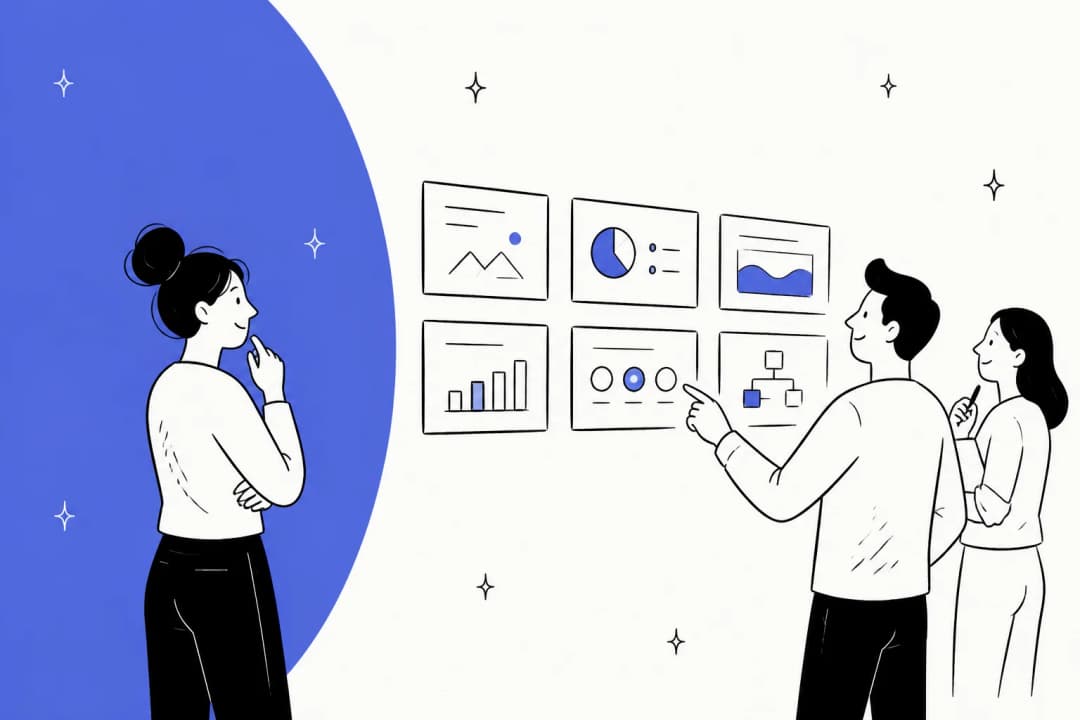
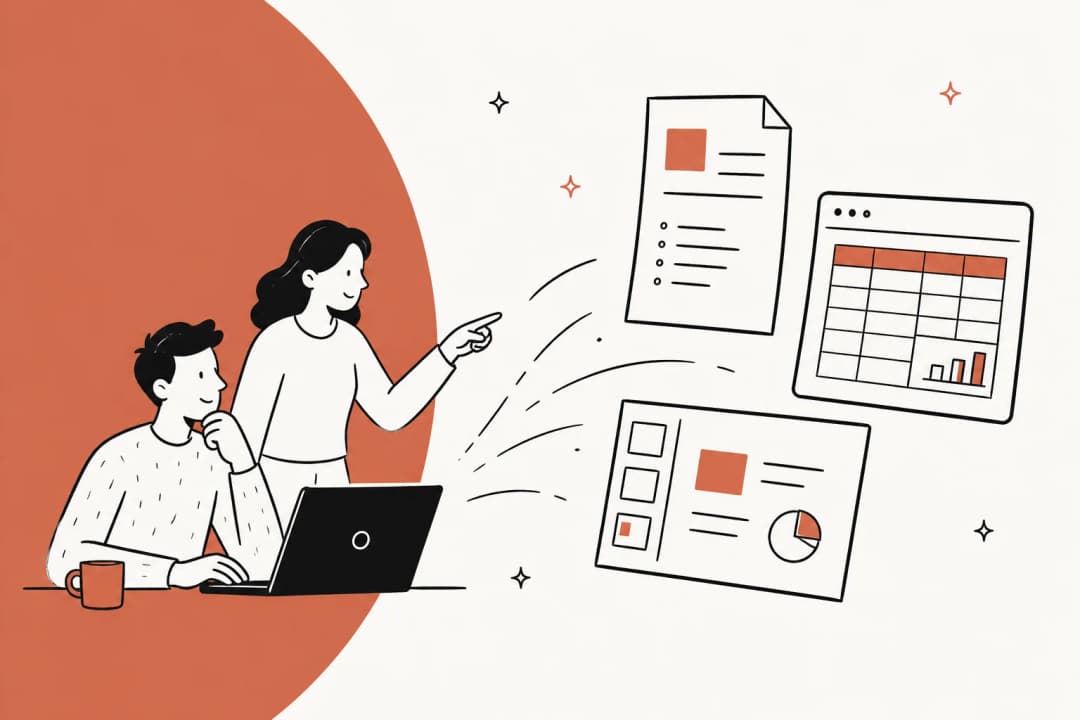
What is content planning? A guide to building a winning strategy

Stevia Putri

Katelin Teen
Last edited January 12, 2026
Expert Verified

Let's face it, content marketing has gotten complicated. It's no longer enough to just publish a blog post and hope for the best. You're now managing content across multiple channels, trying to hit business goals, and now you have to think about ranking on AI Answer Engines like Google's AI Overviews. Trying to keep all of that straight without a solid map is a surefire way to burn out.
That's what a good content plan prevents. It's the blueprint that links your big-picture strategy to the actual work of creating and publishing. In this guide, we'll break down what a content plan is, how it’s different from a strategy or a calendar, and how AI tools are changing things. With the right tools, like the eesel AI blog writer, you can shift from just posting content to building a system that actually grows your business.

What is content planning?
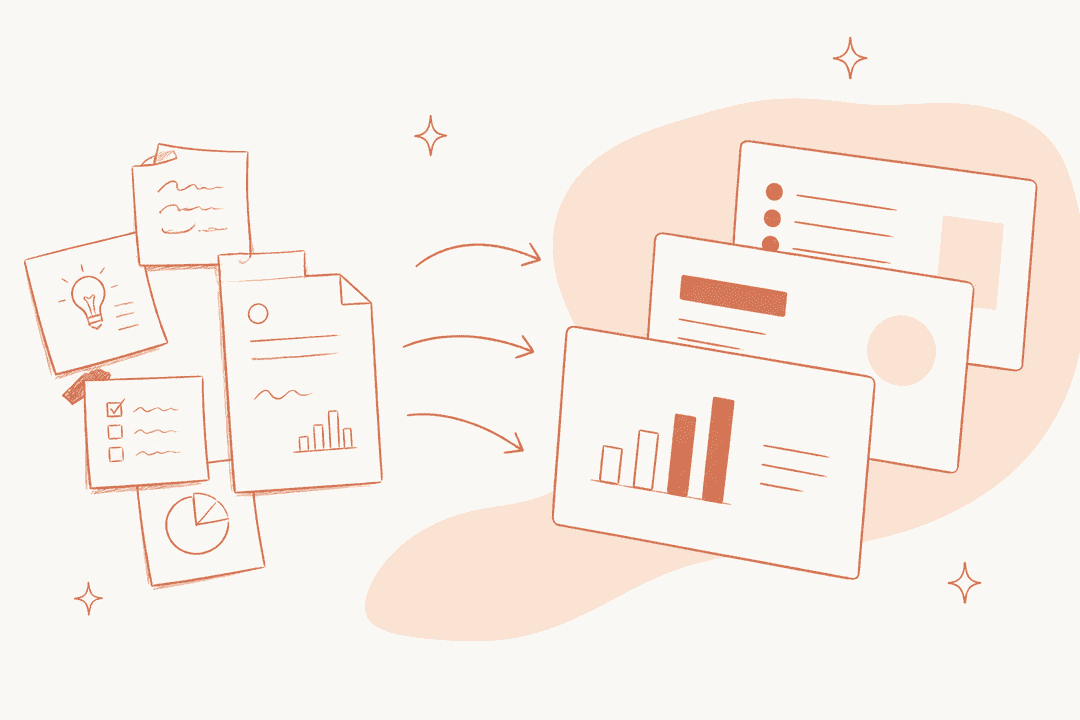
A content plan is your tactical playbook. It lays out the specific topics, formats, channels, and workflows you need to bring your content strategy to life. If your strategy is the blueprint for a house, the plan is the construction schedule. It tells your team what to build, when to build it, and who’s responsible for each task.
This is what separates organized, effective content teams from those who are always scrambling for ideas at the last minute. A good plan makes sure every article, video, or social post aligns with your brand voice and a clear business goal, like driving traffic or generating leads. It turns lofty goals into a concrete, day-to-day process.
Content planning vs content strategy vs a content calendar
People often use these terms interchangeably, which can lead to a lot of confusion and wasted effort. Getting the distinction right is key to running a smooth content operation. Each piece has a specific job, and they all fit together.
Here’s a simple way to think about it:
- Content Strategy (The Why): This is your high-level vision. A content strategy defines the core business objectives your content will support, such as increasing brand awareness, generating qualified leads, or improving customer retention. It answers the big questions: Why are we creating content in the first place, and who is it for? It sets the direction and purpose for everything you produce.
- Content Plan (The What & How): This is the tactical layer that translates your strategy into action. A content plan details the specific themes, topic clusters, and campaigns you will create to achieve your strategic goals. It answers the operational questions: What specific content will we create, and how will we produce, publish, and distribute it? It’s the bridge between your "why" and your "when."
- Content Calendar (The When & Who): This is the logistical tool for execution. A content calendar is a schedule that outlines publication dates, deadlines, and responsibilities for each piece of content. It answers the time-sensitive questions: When exactly will each piece go live, and who is responsible for getting it done? It’s the most granular part of the process, ensuring the machine runs smoothly day in and day out.
In short, your strategy sets the destination, your plan draws the map, and your calendar keeps you on schedule.
The core components of effective content planning
A real content plan is much more than a list of blog titles. It's a detailed framework that gives your entire team clarity and direction. A solid plan is built on a few key components that make sure your content is targeted, purposeful, and actually measurable.
- Clear objectives and metrics: Every piece of content should have a job to do. Your plan must connect each content theme or campaign to a specific, measurable goal. For example, a series of posts on a new feature might be aimed at increasing product adoption by 10%, while a top-of-funnel guide could be designed to grow organic traffic by 15% over the next quarter. Tying content to metrics is the only way to prove its value.
- Audience intelligence: You can't create resonant content if you don't know who you're talking to. A good plan includes detailed personas for your target audience, outlining their primary pain points, the questions they're asking, and the channels they use to find information. This ensures your content addresses their actual needs, not just what you think they want to hear.
- Topic clusters and themes: Instead of chasing random keywords, a modern content plan groups ideas into strategic topic clusters. These clusters are built around a central "pillar" page on a core topic, supported by related "cluster" content that delves into specific sub-topics. This structure signals your expertise to search engines and is critical for Answer Engine Optimization (AEO), as it makes your content easier for large language models to understand, synthesize, and cite in AI-generated answers.
- Content formats and channels: Not every idea is best suited for a blog post. Your plan should specify the right format for each topic, whether it's a video tutorial, an in-depth whitepaper, a podcast, or a series of social media posts. It should also outline the primary distribution and promotion channels for each format to ensure it reaches your target audience where they are most active.
- Workflow and responsibilities: A plan is useless without a clear process for execution. This component outlines every step of the content lifecycle, from ideation and research to writing, design, review, publication, and promotion. It should also clearly assign responsibilities to each team member, eliminating confusion and ensuring accountability.
The shift to AI-powered content planning
For a long time, content planning was a grind. Teams would spend hours brainstorming, digging through keywords, updating spreadsheets, and waiting for approvals. That old way of doing things is slow, inefficient, and nearly impossible to scale. It's also full of bottlenecks like writer's block and often relies more on guesswork than data.
AI is completely changing this. Modern AI platforms do more than just write faster; they help automate the content process, from the first idea to the final post. These tools offer advantages over general AI models, which are designed for a wide range of tasks. Specialized platforms, on the other hand, are built to address specific content creation challenges, like accessing real-time information and avoiding generic text.
Specialized AI content platforms are built to handle these problems by plugging directly into your workflow:
- Ideation: They analyze search engine results pages (SERPs), competitor content, and online forums in real-time to identify relevant, data-backed topics with high traffic potential.
- Research: They perform live research to gather current data, statistics, and credible sources, building a foundation of factual accuracy and providing citations.
- Creation: They generate complete, structured drafts that include rich media assets like images, tables, and infographics, not just walls of text.
- Optimization: They structure content from the ground up for both traditional SEO and the new wave of AI Answer Engines (AEO), ensuring it's easily understood and cited by models like Google's AI Overviews and Perplexity.
How the eesel AI blog writer streamlines your content planning workflow
The eesel AI blog writer is a perfect example of this modern, AI-powered approach. It’s a specialized platform built to do one thing well: turn a keyword into a blog post. It helps teams get out of the slow, manual cycle of planning and writing and into a faster workflow focused on publishing and promoting.
Here’s what makes it different:
- Context-aware research: Unlike generic models, the eesel AI blog writer understands the intent behind your keyword. If you're writing a comparison post, it automatically pulls pricing and feature data. For a product review, it finds technical specs. This ensures the content is factually accurate and genuinely useful to the reader.
- Complete asset generation: It doesn't just deliver text. It creates a fully structured blog post with AI-generated images, infographics, and data tables included. This saves your team hours of manual design and formatting work.
- Built-in social proof: To build credibility and meet Google's E-E-A-T (Experience, Expertise, Authoritativeness, and Trustworthiness) guidelines, the tool automatically integrates relevant YouTube videos and real quotes from Reddit discussions into the content, adding authenticity and depth.
- AEO optimization: From the heading structure to the use of lists and tables, every piece of content is generated to be easily parsed, understood, and cited by AI Answer Engines, positioning your brand as a source of truth.
We used this exact tool to grow daily impressions in just three months by publishing over 1,000 optimized blogs. It’s a content engine built for scale.
A look at popular content planning tools
There are plenty of planning tools to help with different parts of content planning. Most fall into a few main categories, each with its own pros and cons. Knowing how they differ helps you pick the right tools for your team. Here’s a look at the main types:
| Tool Category | Examples | Best For | Starting Price | Key Limitation |
|---|---|---|---|---|
| Project Management | Asana, Monday.com | Organizing tasks, deadlines, and team collaboration. | Asana: $10.99/user/mo Monday.com: $9/seat/mo | Does not assist with content creation, research, or asset generation. |
| Social Media Schedulers | Hootsuite, Buffer | Planning and automating social media posts. | Buffer: $5/channel/mo Hootsuite: $99/mo | Limited to social media; doesn't manage long-form content like blogs. |
| All-in-One AI Platforms | eesel AI blog writer | Generating complete, publish-ready blog posts from a single keyword. | Free to try / $99 for 50 posts | Focused specifically on long-form blog content generation. |
| Collaborative Docs | Notion, Google Docs | Brainstorming ideas and writing shared drafts. | Notion: Free plan available, paid starts at $8/seat/mo | Requires manual processes for research, assets, SEO, and publishing. |
To see how these components come together in a real-world scenario, check out this video from Wes McDowell. He walks through his complete content planning system, showing how to map out an entire year of content in about an hour.
A video from Wes McDowell explaining his detailed strategy for effective content planning.
Bringing your content plan together
Good content planning is what separates content that gets results from content that just adds to the noise. It all comes down to having a clear understanding of your goals, your audience, and the different roles that a strategy, plan, and calendar play.
While project management and collaboration tools are still useful, specialized AI platforms are the future for anyone looking to scale up their content. These tools handle the most time-consuming parts of content creation, so your team can focus on the bigger picture. Instead of getting stuck in spreadsheets, you can build a system that consistently delivers.
Ready to spend less time planning and more time publishing? Generate a blog post for free.
Frequently Asked Questions
Share this post

Article by
Stevia Putri
Stevia Putri is a marketing generalist at eesel AI, where she helps turn powerful AI tools into stories that resonate. She’s driven by curiosity, clarity, and the human side of technology.