Clearscope vs Grammarly: Which tool is right for your content workflow?

Amogh Sarda

Katelin Teen
Last edited January 26, 2026
Creating content these days can feel like you're trying to please two very different bosses. On one hand, you have your human reader, who wants articles that are clear, interesting, and well-written. On the other, you have search engines, demanding perfectly optimized content that ticks all the right boxes to get ranked. Trying to satisfy both is a real balancing act.
Most of us end up with a multi-step workflow, jumping between different tools to get the job done. You might write in one app, check your grammar in another, and then paste everything into an SEO tool to see if it has a chance of ranking. This can involve switching tabs, managing multiple subscription costs, and spending extra time on the process.
If I'm writing content for clients, I mostly use Google Docs, Grammarly, Copyscape (though I'm not sure if that's really a writing tool) and maybe Hemingway.

This is where tools like Clearscope and Grammarly enter the picture. Clearscope is a powerhouse for SEO and Answer Engine Optimization (AEO), giving you the data you need to rank. Grammarly is the go-to AI assistant for making sure your writing is clean, correct, and professional.
So, which one do you actually need? Or do you need both? We’re going to break them down to help you figure out where your money is best spent. We’ll also show you a more integrated solution, like the eesel AI blog writer, which handles both optimization and writing, turning a single keyword into a post that's ready to publish.
What is Clearscope?
Clearscope is an AI-powered content optimization platform built to help your content get discovered on Google and AI search. You can think of it as your SEO strategist, telling you exactly what to include in an article to have a fighting chance on the search engine results page (SERP).
Its main job is to analyze the top-ranking content for your target keyword. From there, it gives you a list of important terms, topics, and questions you should cover to make your piece more comprehensive. The goal isn't just to stuff keywords into your text; it's to help you create content that truly satisfies what users are searching for, which is critical for both traditional SEO and getting cited in AI Overviews.
Its key features include a real-time content editor that gives your article a letter grade, suggestions for relevant terms, competitor analysis, and even tools for monitoring your content to prevent its rank from decaying over time. It’s really built for SEO specialists, content strategists, and marketing teams who are serious about growing their organic traffic.
What is Grammarly?
You’ve probably seen Grammarly’s ads or used its browser extension. It’s an AI writing assistant that helps its 40 million users write more clearly and effectively. Its main focus isn’t on what you say for SEO, but how you say it.
Grammarly is like having an editor looking over your shoulder 24/7. It catches everything from simple spelling and grammar mistakes to awkward phrasing, unclear sentences, and inconsistent tone. It’s your safety net for quality control.
Beyond basic proofreading, it offers a tone detector to make sure you’re coming across the right way and a plagiarism checker that scans against billions of web pages. It has also recently expanded into generative AI with features that can paraphrase or "humanize" your text. It’s built for just about everyone who writes anything, including students, professionals, content writers, and marketing teams.
A head-to-head comparison of Clearscope vs Grammarly
While Clearscope and Grammarly have different primary goals, their features can sometimes feel like they overlap, especially as both lean more into AI. This makes it tough for teams to decide where to invest their budget. Let's put them side-by-side.
Core purpose
Grammarly's purpose is all about professionalism and clarity. It answers the question, "Is this content well-written, error-free, and easy for my audience to understand?" Its use cases are incredibly broad: proofreading important emails, editing articles for publication, or even maintaining a consistent brand voice across your team with its style guide feature. It’s about the polish and delivery of your writing.
So, here's the bottom line: they aren't really direct competitors. They solve two different, but equally important, parts of the content puzzle. Clearscope handles what you should write about (the topics and terms), while Grammarly focuses on how you write it (the grammar and style).
Key features
A feature list can tell you a lot about where a tool's priorities lie. Here’s a quick breakdown of what Clearscope and Grammarly bring to the table for content creators.
| Feature | Clearscope | Grammarly |
|---|---|---|
| Primary Function | SEO & AEO Content Optimization | Writing Quality & Assistance |
| Content Generation | Yes (AI Drafts & Outlines) | Yes (Generative AI with prompt limits) |
| Keyword Research | Yes (Topic Explorations tool) | No |
| SERP Analysis | Core feature, detailed term suggestions | No |
| Plagiarism Checker | No | Yes (Premium/Pro plans) |
| Internal Linking | Yes (AI-backed recommendations) | No |
| Style Guide | No | Yes (Pro & Enterprise plans) |
| Integrations | Google Docs, WordPress | Browser, Desktop, Mobile (works on 1M+ sites) |
Looking at the table, the differences are pretty stark. Clearscope is built around its SERP analysis and term suggestion engine, which Grammarly doesn't even try to do. It’s a specialized tool for a specialized job. On the other hand, Grammarly’s strengths are in areas Clearscope ignores, like plagiarism checking and enforcing a brand-specific style guide. Grammarly is a generalist tool that works almost everywhere you write, while Clearscope is a specialist tool you bring in for a specific task.
Workflow and integration
How a tool fits into your daily process is just as important as its features.
Clearscope usually comes in during the optimization stage of content creation. A common workflow is for a writer to produce a draft first. Then, they’ll paste that draft into Clearscope’s editor or use its Google Docs add-on or WordPress plugin. From there, it's a process of tweaking the text, adding the recommended terms, and restructuring sections until the content grade hits the target.
Grammarly is different. It’s there for the entire writing and editing stage. From the moment you type your first word in a Google Doc, email, or Slack message, Grammarly is right there with you, offering real-time feedback. It’s a constant companion that integrates into almost any app you use.
This can lead to a combined workflow where teams write a draft in Google Docs with Grammarly running, then copy it over to Clearscope for SEO optimization. While effective, it is a multi-step process that requires subscriptions to two separate platforms, which has led some to seek more streamlined solutions.
Pricing showdown
Clearscope pricing plans
Clearscope is positioned as a premium tool for serious content teams, and its pricing shows it.
- Essentials Plan: This starts at $129/month. It gives you 20 monthly AI Drafts and 20 Topic Explorations. The good news is it comes with unlimited user seats, so your whole team can use it.
- Business Plan: For teams with bigger needs, the price jumps to $399/month. This gets you more credits for reports and drafts, plus a dedicated account manager.
The main takeaway here is the high barrier to entry. At $129 per month, Clearscope is a big investment that’s best for businesses with a dedicated content SEO budget. On the plus side, they do offer monthly plans with no long-term contracts.
Grammarly pricing plans
Grammarly is built for the masses, making it far more accessible for individuals and teams of all sizes.
- Free Plan: The free version is surprisingly good, covering basic grammar, spelling, and punctuation checks. It also includes 100 AI prompts per month.
- Pro Plan: This starts at $12/month when you pay annually. It unlocks advanced features like full-sentence rewrites, tone suggestions, the plagiarism detector, and bumps you up to 2,000 AI prompts per month.
- Enterprise Plan: This is for larger organizations and comes with custom pricing. It adds security features like SAML single sign-on and unlimited AI prompts.
Grammarly's pricing makes it an easy choice for almost anyone. The free plan is great, and the Pro plan is affordable enough for freelancers, small businesses, and large teams alike.
An alternative to consider: eesel AI
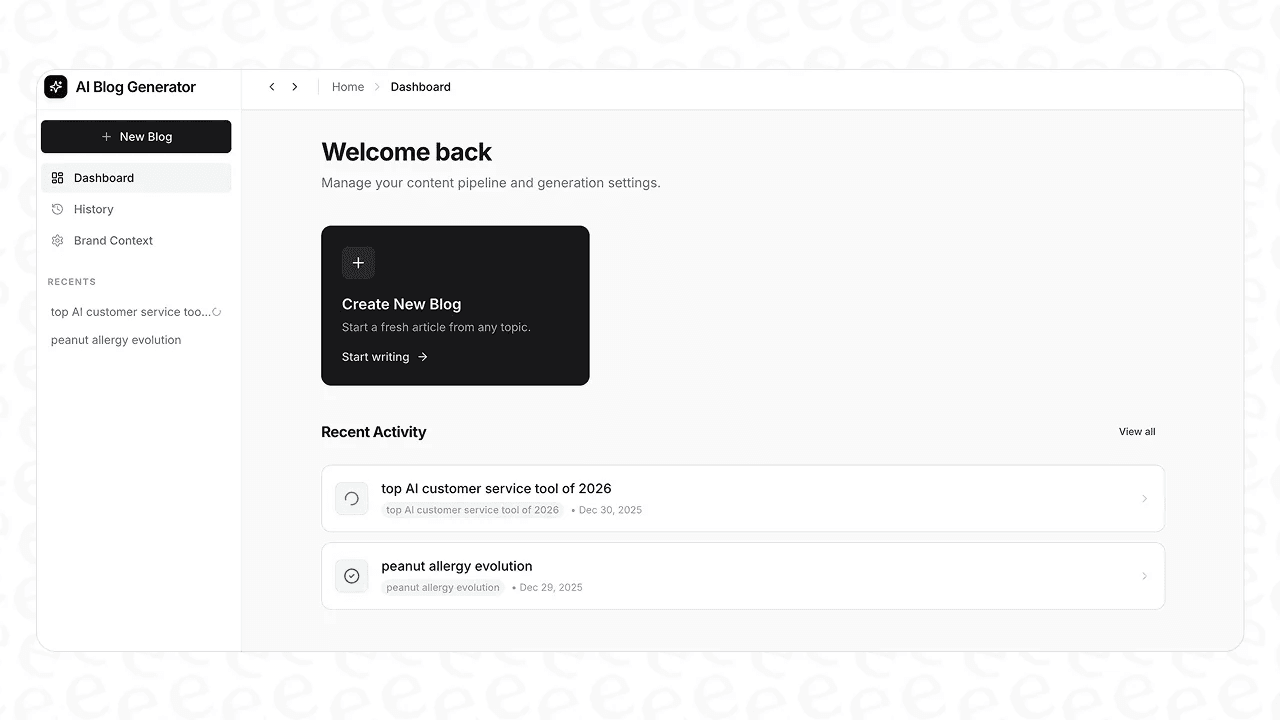
This is where the eesel AI blog writer comes in as a modern alternative that consolidates the entire workflow. Instead of writing a draft, proofreading it, and then optimizing it, you just give it a keyword. It generates a complete, publish-ready blog post that is already optimized for search engines and polished for human readers.
It’s not just another AI text generator. It’s a content creation engine that includes everything you need:
- Full SEO and AEO optimization is baked in from the start, not tacked on at the end.
- Automatic asset creation saves you hours. It generates relevant images, tables, and infographics to break up the text.
- Rich media integration brings your posts to life by embedding relevant YouTube videos and pulling in authentic quotes from Reddit discussions.
- Context-aware research digs deep into a topic to produce content with a genuinely human tone, not shallow AI filler.
We built this tool to solve our own problem, and the results speak for themselves. We used it to scale our own blog, growing from 700 to 750,000 daily impressions in just three months by publishing over 1,000 optimized posts.
The pricing is simple: $99 for 50 blogs. And because we want you to see the quality for yourself, it's completely free to try.
For a deeper dive into how different content tools fit into a marketing stack, this video offers a great overview of popular options, including both Clearscope and Grammarly.
Clearscope vs Grammarly: Which should you choose?
Let's wrap this up. The choice between Clearscope and Grammarly really comes down to identifying your biggest pain point in the content creation process.
To put it simply: Clearscope is for ranking, and Grammarly is for writing.
Who should choose Clearscope? You should go with Clearscope if you have a solid team of writers but need a data-driven layer to compete in crowded search results. If your main goal is to improve your SEO and AEO performance and you have the budget for a specialized tool, Clearscope is a powerful ally.
Who should choose Grammarly? Grammarly is the right choice for individuals and teams who need to ensure their writing is consistent, professional, and error-free across all channels, not just blog posts. It’s an affordable, versatile tool that improves writing quality of all written communication.
But if you’re looking to scale your content production without the friction of juggling multiple tools and subscriptions, a unified platform is the most efficient way forward. An all-in-one solution like the eesel AI blog writer handles the research, writing, and optimization in a single step. We’d encourage you to give it a try for free and generate your first blog post. You might be surprised at how much time you get back.

Frequently Asked Questions
Share this article

Article by
Amogh Sarda
CEO of eesel AI. Amogh Sarda is obsessed with making the ultimate AI for customer service teams. He lives in Sydney, Australia and has previously worked at Atlassian and Intercom. Outside of work he’s usually surfing or on stage doing improv.
