Claude vs MarketMuse: Which AI tool is right for you?

Stevia Putri
Last edited January 26, 2026
AI tools are popping up everywhere, aren't they? They're changing how we get work done, but figuring out which one to use can be a real headache. It’s not just about grabbing any tool; it’s about finding the one that actually fits the job you need to do, because they all have very different strengths.
This article will help clear things up by comparing two popular, but very different, players: Anthropic's Claude, a powerful AI assistant for all kinds of tasks, and MarketMuse, a specialized platform designed for creating data-driven content strategies. We'll break down what each one excels at so you can decide which one fits your workflow, whether you need a hand with daily tasks or a long-term plan to grow your organic traffic.
We'll also explore another category of AI tool: one that automates content creation from a keyword to a publish-ready article.
What is Claude? The next-generation AI assistant
Claude is an advanced AI assistant from the folks at Anthropic. Think of it as a helpful, reliable partner you can chat with to get things done. It’s built to be safe and accurate, whether you're asking it to write something, do some research, analyze data, or even help with a bit of code.
You can access it through a clean, simple chat interface on the web, iOS, or Android. It's designed to be easy for anyone to use, but it's also powerful enough for developers who want to build on its API.
Its biggest advantage is its versatility. It's a fantastic all-around tool for brainstorming ideas, whipping up a quick draft, summarizing long documents you upload, or answering complex questions by searching the web. It’s available for individuals with free and paid plans, but it also scales up for larger teams with enterprise solutions and even a government-authorized version. It’s basically your digital teammate for almost anything.
What is MarketMuse? The AI content strategy platform
MarketMuse is a completely different kind of tool. It’s an AI-powered content intelligence and strategy platform. Instead of helping with general tasks, its single focus is to tell you exactly what to write about to build topical authority and move up in the search rankings.
Its main features are all about data. It can map out valuable topic clusters, show you where your competitors have an edge, and provide Personalized Difficulty scores that estimate how hard it will be for your site to rank for a given keyword. It’s a specialized tool for SEOs, content strategists, and marketing leaders who need a data-backed plan for their content.
Core functionality and primary use cases
While both tools are powered by AI, they're playing in different leagues. Claude is like a flexible team member you can delegate a bunch of different tasks to, while MarketMuse is the strategist who designs the team's entire content playbook.
Claude: The versatile assistant for broad productivity
- Content Drafting & Brainstorming: It can be used to generate first drafts of emails, social media posts, or basic article outlines in just a few seconds.
- Research & Summarization: It can quickly process long articles, dense research papers, or financial reports. Just upload a file and ask questions to pull out the key information.
- Coding Assistance: A solid sidekick for developers. It helps write, debug, and explain code snippets. The Pro plan even has a feature called Claude Code, made specifically for coders.
- General Problem-Solving: It’s an interactive partner for thinking through almost anything. You can use it to plan a trip, analyze business data, or just bounce ideas around.
MarketMuse: The specialist for strategic content planning
- Content Auditing & Strategy: It looks at your whole site to build a content plan based on your existing strengths, telling you exactly what to create or update for the biggest SEO impact.
- Data-Driven Content Briefs: It creates incredibly detailed briefs for writers, outlining the specific topics, questions, and keywords to include. It offers nine different brief types for everything from articles to product reviews.
- Competitive Gap Analysis: Its SERP heatmap provides a visual breakdown of topics your competitors cover that you don't, highlighting clear opportunities to create more thorough content.
- Content Optimization: It scores your existing articles and gives you specific, data-backed advice on how to improve their quality and ranking potential.
Key feature comparison: Claude vs MarketMuse
To lay it all out, here’s a side-by-side look at what each platform offers. This table highlights their different strengths and makes it obvious they serve completely different purposes.
| Feature | Claude | MarketMuse |
|---|---|---|
| Primary Function | General-purpose AI assistant and chatbot | AI content intelligence and strategy platform |
| Content Generation | Drafts a wide range of content on demand. | Generates detailed content briefs and outlines; includes a generative AI component to assist writers, but does not write full posts. |
| SEO Analysis | No built-in SEO tools. Can answer general questions about SEO concepts. | Deep SEO analysis using patented topic modeling, competitive gap analysis, and personalized difficulty scores. |
| Content Auditing | No. Can only analyze text you provide it in a chat. | Yes, automatically analyzes your entire website's content inventory to find opportunities and weaknesses. |
| Integrations | Connects with Google Workspace, Microsoft 365, Slack, and more on Team/Enterprise plans. | Integrates with common CMS and analytics tools; briefs can be exported to Google Docs or MS Word. |
| Ideal User | Individuals, developers, and professionals needing a versatile productivity tool. | SEOs, content strategists, agencies, and enterprise marketing teams needing a data-driven content plan. |
Claude is a generative tool that can create almost any kind of text you ask for, but it lacks any built-in SEO intelligence. MarketMuse, on the other hand, is an analytical tool that gives you all the SEO context and strategy you could want, but it doesn't actually write the final, publish-ready article for you.
You would probably want Claude to create a Python script which does the scoring/ numerical manipulation for you. Otherwise Claude is prone to just hallucinate the results.

Pricing and plans
The pricing for Claude and MarketMuse says a lot about who they're designed for. Claude offers plans that are affordable for almost anyone, while MarketMuse is aimed at businesses ready to make a serious investment in their content strategy.
Claude pricing
- Free: A pretty generous free plan that lets anyone try Claude on the web and mobile. It has usage limits, but it’s a great way to get started.
- Pro: For $17 per month (billed annually), you get more usage, access to better models, and integrations with tools like Google Workspace.
- Max: Starting at $100 per month, this plan gives you 5-20 times more usage than Pro, making it a good fit for power users.
- Team and Enterprise: Custom-priced plans for organizations that need features like centralized admin controls and SSO.
MarketMuse pricing
- Free: MarketMuse offers a free plan for individuals with a small amount of content, giving you 1 user and 10 queries per month.
- Optimize, Research, & Strategy Tiers: The paid plans are designed for professionals and teams that publish content regularly. You’ll need to talk to their sales team for pricing on the higher-tier plans.
- Enterprise-Focused: The entire pricing structure is geared toward businesses that measure ROI in terms of saved research time and increases in organic traffic.
An alternative approach: AI blog generation
Claude generates text without built-in SEO features, while MarketMuse provides strategy without writing the final article. This creates a need for tools that bridge the gap between planning and publishing.
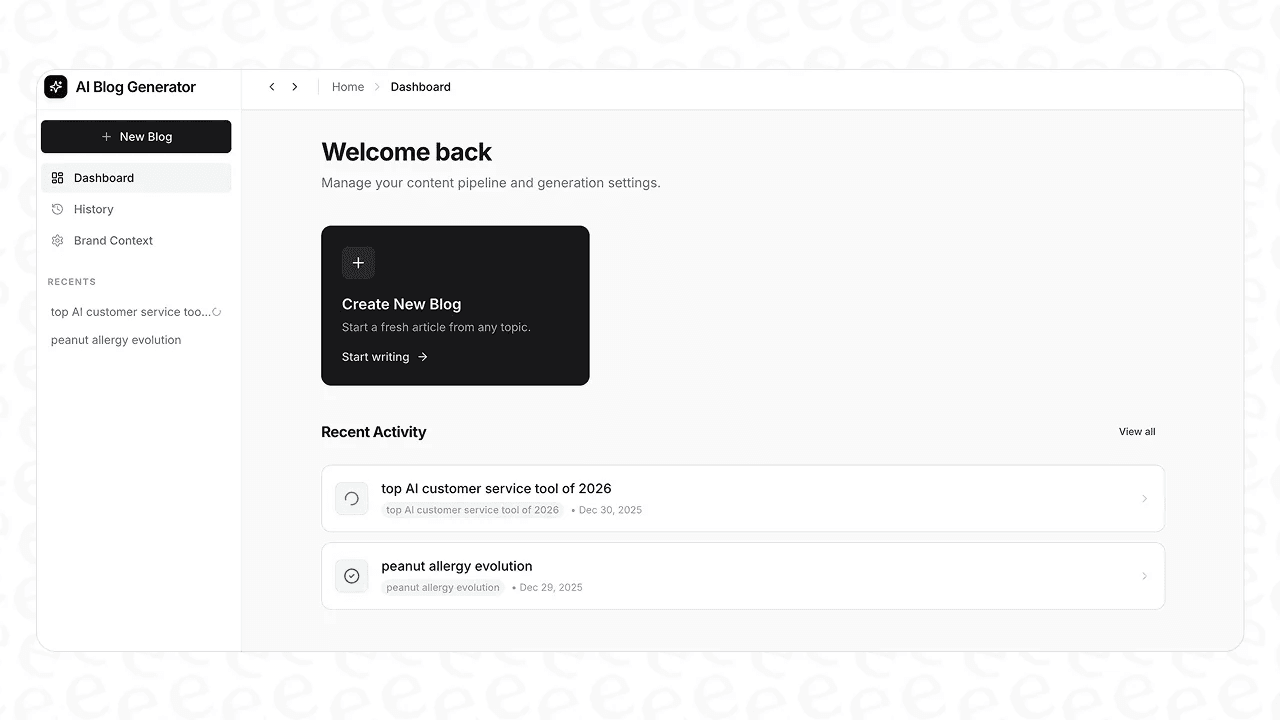
It offers several features for content creation:
- Comprehensive content generation: It produces a publish-ready post that can include tables, AI-generated images, and infographics.
- Research and social proof: It conducts research and can incorporate elements like quotes from Reddit to add credibility.
- AEO (AI Engine Optimization): The content isn't just structured for Google search; it's also optimized for AI answer engines like Google AI Overviews and ChatGPT.
- Example use case: The tool was used to grow the eesel AI site from 700 to 750,000 daily impressions in just three months.
The tool is free to try, allowing users to generate a blog post without commitment.
For a deeper dive into how AI can be leveraged for content strategy, the video below from The Artificial Intelligence Show Podcast features Jeff Coyle, Co-Founder of MarketMuse, discussing how to create content that aligns with search engine priorities.
Making the right choice
Deciding between these tools comes down to your specific needs.
- Choose Claude if: You need a powerful and flexible AI partner for a wide range of daily tasks. It's a strong productivity tool for everything from drafting emails to summarizing research and helping with code.
- Choose MarketMuse if: You're a content strategist or SEO pro tasked with building a long-term, data-driven content plan. It's a specialized tool for auditing your site, finding competitive gaps, and building topical authority.
- Consider eesel AI blog writer if: Your main goal is to scale your content production without sacrificing quality. It bridges the gap between strategy and execution, turning a single keyword into a complete, SEO-optimized blog post that’s ready to publish.
At the end of the day, the best AI setup often involves using the right tool for the right job. Understanding what makes each one different is the first, and most important, step.

Frequently Asked Questions
Share this article

Article by
Stevia Putri
Stevia Putri is a marketing generalist at eesel AI, where she helps turn powerful AI tools into stories that resonate. She’s driven by curiosity, clarity, and the human side of technology.