ChatGPT vs Surfer SEO: Which AI tool is right for your content?

Stevia Putri

Katelin Teen
Last edited January 15, 2026
If you’re making content in 2026, you've likely found yourself weighing two very different, but equally popular, AI tools: ChatGPT and Surfer SEO. It’s a common spot to be in. In one corner, you have a brilliant, do-it-all AI like ChatGPT that can whip up a first draft on almost any topic in seconds. In the other, you have a specialized SEO coach like Surfer that tells you exactly what to write to climb the Google rankings.
So, what's the right call? Are you just trying to get a first draft out the door, or are you fine-tuning a final piece to outrank the competition? The best choice really comes down to what you’re trying to do.
Thanks for this list. Quick question. How are Surfer SEO and Frase io different from each other? If you have experience with both, can you share your insights? I have heard about Frase before, but I am not sure how it compares to Surfer SEO.

Or maybe, you don't have to choose. Tools like the eesel AI blog writer are showing up to bridge that exact gap, mixing pure text generation with data-driven SEO optimization into one smooth process.
What is ChatGPT?
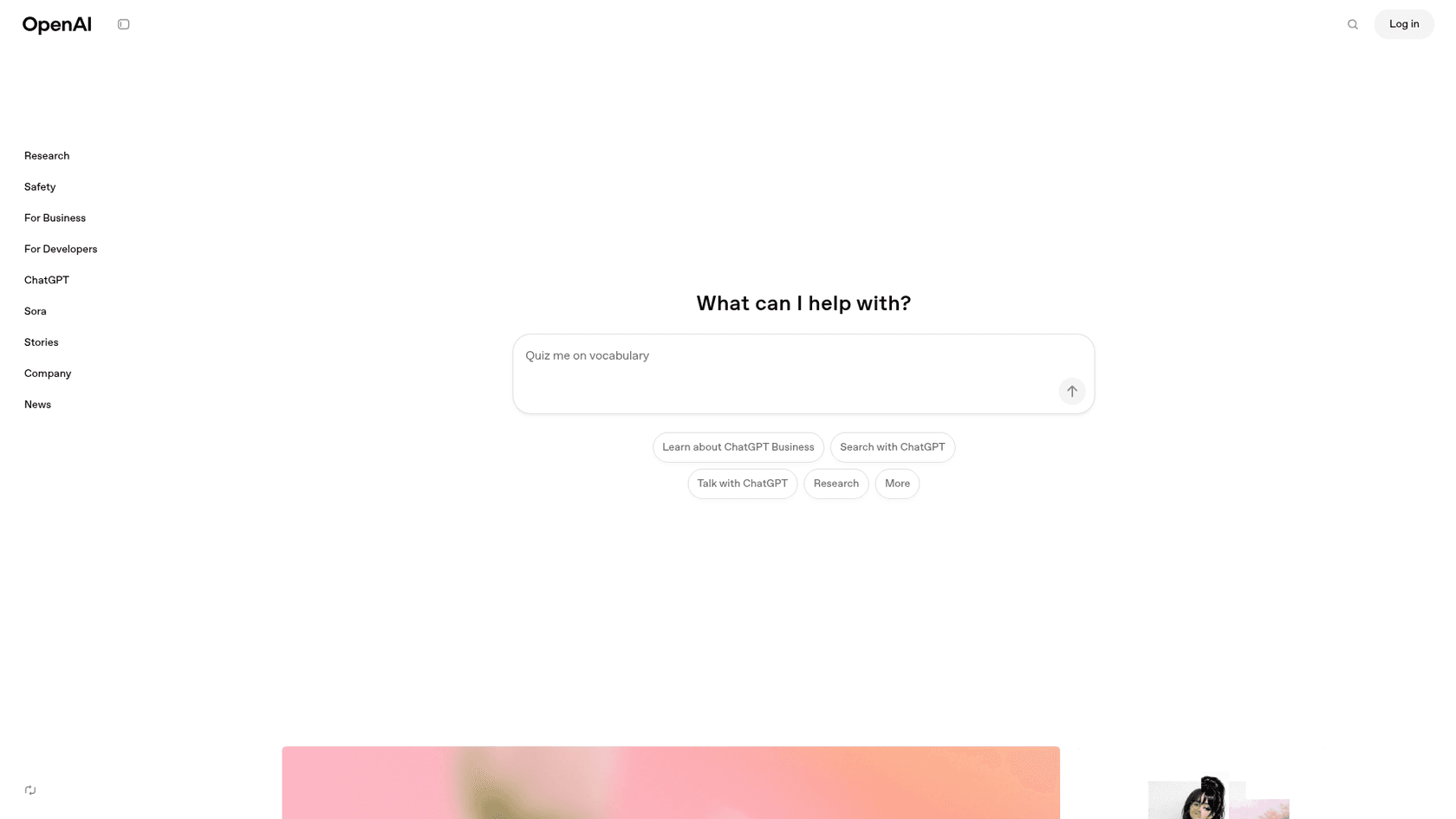
ChatGPT is a powerful large language model from OpenAI that's built to generate surprisingly human-like text. You can ask it to answer questions, brainstorm ideas, write code, or draft an email to your boss. It’s become the default tool for getting words on a page, and fast.
Its biggest selling points are its flexibility and speed.
- Versatility and Speed: Need a social media caption, a blog outline, or a quick summary of a long article? ChatGPT can produce it almost instantly.
- Creative Partner: It’s great for getting past writer's block. You can give it a half-formed idea and get a bunch of different angles to explore.
- Accessibility: The free version is incredibly useful, and paid plans like Plus and Pro give you access to even more powerful models.
But when it comes to creating content that actually needs to rank on Google, ChatGPT has some real limitations. It doesn't have live access to the internet, so it has no clue what’s currently ranking for your target keyword. Its knowledge is based on training data with a cutoff date, which means it's out of the loop on recent trends. Plus, as OpenAI themselves admit, it can sometimes produce "hallucinations", which are plausible-sounding but fabricated statements. That means you absolutely have to fact-check everything it produces.
What is Surfer SEO?
Surfer SEO, on the other hand, is a platform built for one thing: to help your content rank higher in Google. It's not a general-purpose writer; it's a data-driven strategist for winning at SEO.
Instead of just spitting out text, Surfer analyzes what's already performing in the search results and gives you a blueprint to follow.
- Live SERP Analysis: It checks out the top-ranking pages for your keyword and breaks down what they're doing right, including word count and the specific terms they use.
- Content Score: This is its main feature. It gives you a real-time score from 0-100, grading your content against the competition as you write.
- NLP and Entity Suggestions: Surfer suggests important terms and topics you need to include to show Google you’ve thoroughly answered the searcher's question.
- Content Audit: You can plug in an old, underperforming blog post and Surfer will tell you how to update it to improve its rankings.
Think of Surfer as your strategic coach. It provides an actionable checklist to make sure your content aligns with Google’s E-E-A-T (Experience, Expertise, Authoritativeness, and Trustworthiness) guidelines, giving you the best possible shot at ranking.
Unifying creation and optimization
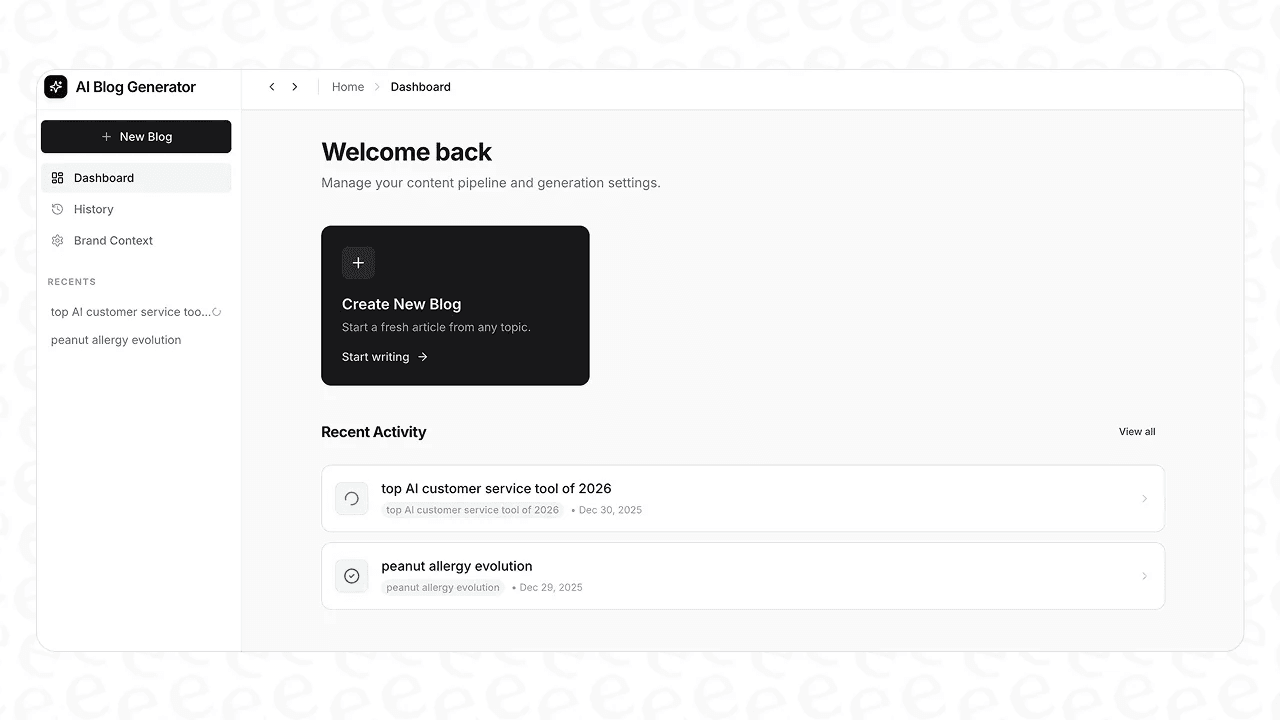
This is the exact problem the eesel AI blog writer was designed to fix. It merges the creative power of a generative AI with the strategic smarts of an SEO tool into a single, streamlined process. Instead of juggling tools, you just give it a keyword, and it does the rest.
It's not about just drafting text; it's about creating a complete, publish-ready article in minutes. Here’s what makes it different:
- One-Click SEO Content: It doesn’t just write; it researches the competition to build a structure that’s designed to rank from the start.
- Automatic Assets: It goes beyond plain text. The eesel AI blog writer automatically generates and adds relevant images, infographics, and data tables right into the post.
- Authentic Social Proof: To add credibility and a human touch, it embeds relevant YouTube videos and includes real quotes from Reddit forums.
- AEO (Answer Engine Optimization): The content isn't just optimized for traditional Google search. It's structured to perform well in AI-native search like Google's AI Overviews, ChatGPT, and Perplexity answers.
This is the approach we used to grow our own daily impressions from 700 to 750,000 in just three months, streamlining our process from research to publication.
Feature comparison: ChatGPT vs Surfer SEO
While both tools use AI, they’re meant for totally different parts of the content process. ChatGPT is for the initial creation phase, while Surfer SEO is for the all-important optimization phase. Let's break down how they stack up.
Core purpose
- ChatGPT: It's a generalist LLM for content generation. Think of it as a blank canvas. Its purpose is to produce human-like text on pretty much any topic, based on the prompt you provide.
- Surfer SEO: It's a specialist platform for content optimization. Think of it as a strategic blueprint. Its purpose is to analyze real-time search data and give you a clear, data-driven path to creating content that ranks.
Data sources
- ChatGPT: It runs on a static, pre-trained dataset. It can't browse the live web, which is a huge downside for SEO. Its advice isn't based on what's working right now in the search results.
- Surfer SEO: Its entire platform is built on live SERP analysis. It pulls data directly from the top-ranking pages for your keyword, so its recommendations are always current, relevant, and based on what Google is actually rewarding.
Content creation workflow
- ChatGPT: The process is completely open-ended and hinges on your prompts. The quality of the output is directly tied to how good you are at writing detailed prompts. In this workflow, the user guides the AI.
- Surfer SEO: The process is structured and guided. The Content Editor provides a checklist of things to do, like add specific terms, use a certain number of headings, and aim for a target word count. The Content Score tracks your progress. Here, the AI guides the user.
AI features and output
- ChatGPT: You get raw, unformatted text. This first draft needs a lot of manual work: formatting, fact-checking, adding images, and of course, SEO optimization, before it’s ready to publish.
- Surfer SEO: You get a Content Score and a list of specific optimizations. While its Surfer AI feature can generate a draft, the platform's real strength is its editor, which helps you refine content with features like Auto-Optimize to insert keywords and an AI Content Humanizer to polish the tone.
Pricing plans: ChatGPT vs Surfer SEO
ChatGPT pricing
- Free: Gives you limited access to their advanced models, which is fine for casual use.
- Plus: Costs $20 per month for individuals who need more reliable access and faster responses.
- Team: Priced at $25 per user per month (when billed annually) and is aimed at teams that need to collaborate.
- Enterprise: Custom pricing for large organizations with specific security and admin needs.
Surfer SEO pricing
- Essential: Starts at $99 per month (or $79/month if you pay annually) and gets you 30 Content Editor credits and 5 AI article credits each month.
- Scale: Jumps to $219 per month for agencies and teams with higher content volume.
- Enterprise: Custom plans that include more advanced features like API access and single sign-on (SSO).
The eesel AI blog writer alternative
The eesel AI blog writer keeps things simple with a straightforward, credit-based model. You pay $99 for 50 complete blog generations. There are no monthly subscriptions or confusing tiers. Even better, it's completely free to try, so you can generate your first few articles without paying anything to see if it works for you.
Which tool should you use?
Alright, let's get down to it. The right tool depends on the job.
When to choose ChatGPT
ChatGPT is your go-to for brainstorming. Use it for coming up with topic ideas, creating rough outlines, or drafting content where SEO isn't the main priority, like internal memos, social media posts, or ad copy. It's a great writing assistant for getting the creative juices flowing.
When to choose Surfer SEO
If ranking on Google is your number one goal, Surfer SEO is the tool for the job. It's what you need for building data-driven content briefs, optimizing new articles to be competitive from the start, and updating old content to boost its performance.
The hybrid approach
This approach can be effective, but it is a manual, multi-step process that requires paying for two separate tools. For a visual guide on how this process works in practice, you can check out tutorials that walk through combining both platforms for faster blog post creation.
Choosing your workflow: Fragmented vs. unified
Here's the bottom line: ChatGPT is for generating text, and Surfer SEO is for optimizing it. They're two different tools for two different parts of the content creation puzzle. While using them together can be powerful, it creates a multi-step process.
For teams looking to simplify this process, a unified solution is an appealing alternative. The eesel AI blog writer combines the raw generative power of an LLM with the SEO intelligence of a data-driven platform. It adds features like automatic asset generation and real social proof to streamline the entire process, from keyword to publish-ready post, into a single platform.
Instead of managing multiple tools, you can handle the entire workflow in one place. Try it for free and see for yourself. You can generate your first complete, SEO-optimized article in the next few minutes.

Frequently Asked Questions
Share this article

Article by
Stevia Putri
Stevia Putri is a marketing generalist at eesel AI, where she helps turn powerful AI tools into stories that resonate. She’s driven by curiosity, clarity, and the human side of technology.