What the 2025 launch actually announced
On September 29, 2025, OpenAI announced Instant Checkout as an early agentic-commerce feature. At launch, U.S. ChatGPT Free, Plus, and Pro users could buy directly from U.S. Etsy sellers in ChatGPT. OpenAI said Shopify merchants would follow, and that the initial experience supported single-item purchases.
That announcement is worth keeping as history because it explains why this query exists. It is not enough to answer whether a store can offer the same experience now. Launch timelines, eligible merchants, regions, and checkout surfaces change. An ecommerce page that still says “coming soon to more than a million merchants” tells a reader what OpenAI hoped to add in 2025, not what their store can activate today.
The durable point from the launch is the division of responsibility. ChatGPT can pass purchase information through the Agentic Commerce Protocol; the merchant remains responsible for accepting or declining the order, payment processing, fulfillment, returns, and support. A conversational interface does not remove the need for a merchant system of record.
What changed after ChatGPT Instant Checkout 2025
In March 2026, OpenAI published a product update that changes how the original launch should be read. OpenAI says it found the first version of Instant Checkout did not offer the flexibility it wanted. Its stated focus is now product discovery, with merchants allowed to use their own checkout experiences.
This matters for three common claims in old content:
| Old 2025 wording | Current answer |
|---|---|
| “Instant Checkout is the standard route for every merchant.” | OpenAI says it may appear only for eligible products and merchants. |
| “A product listing means a native in-chat purchase.” | A buyer may be taken to the merchant’s own checkout experience, including an in-app browser route. |
| “A Shopify store must implement the old rollout to be discovered.” | OpenAI says Shopify Catalog already integrates product data for discovery; an individual merchant does not need extra work just for that representation. |
OpenAI also says merchants that want deeper native experiences can build ChatGPT apps. That is a separate product decision with a separate implementation and support plan. Do not present it as the default outcome of adding a product feed.
The current merchant question is discovery, not hype
OpenAI’s current shopping page says ChatGPT can show product options for shopping queries, including imagery, product details, and links to learn more or buy. For some eligible products and merchants, it may show Instant Checkout.
The same guidance answers a frequent worry: OpenAI says product results are selected independently, not as ads and not influenced by OpenAI partnerships. That does not mean a merchant can ignore its catalog. ChatGPT considers a buyer’s query and context, along with factors such as available options, price, reviews, and ease of use. OpenAI also warns that a merchant’s price or shipping-term update can take time to be reflected.
So the practical work is ordinary commerce hygiene:
- Make one current catalog and pricing record authoritative.
- Confirm that images, titles, variants, availability, shipping terms, and policy links match that record.
- Check the customer-facing route with a real buyer journey rather than assuming a search result proves checkout eligibility.
- Give support a short, current answer for questions that the catalog cannot settle, such as an order exception or a return.
Discovery data is not an order record. A product card cannot confirm that a payment succeeded, an order was accepted, or a package is in transit. A good merchant FAQ says where those facts come from and how the customer can get help when the store cannot verify them in the chat.
Replace the obsolete rollout checklist with a merchant FAQ
Instead of copying 2025 instructions about invite-only expansion or a particular payment setup, publish an FAQ that a customer and an operations teammate can use now. It should answer the questions your store can substantiate.
| Customer question | Answer should rely on | Escalate when |
|---|---|---|
| “Can I buy this through ChatGPT?” | The current product and checkout route for that item | The route differs by country, product, or account |
| “Why is the ChatGPT price different?” | The current merchant catalog, shipping terms, and any known update delay | The item or promotion cannot be matched |
| “Did my order go through?” | The merchant’s order or payment record | No authorized record is available |
| “Where is my package?” | The fulfillment or carrier record | The tracking state is absent or contradictory |
| “Can I return it?” | The current return policy and order eligibility | A policy exception needs a human decision |
This does not make the answer less conversational. It makes it useful. A buyer gets a clear route instead of an invented status, and the service team has a consistent boundary when an in-chat discovery experience leads to a post-purchase question.
The support layer still belongs to the store
An on-site ecommerce teammate can answer the questions that happen around a purchase: materials, sizing, shipping policy, return windows, and how to contact the right team. It should answer from the store’s approved help content, not from an old announcement about ChatGPT’s rollout.
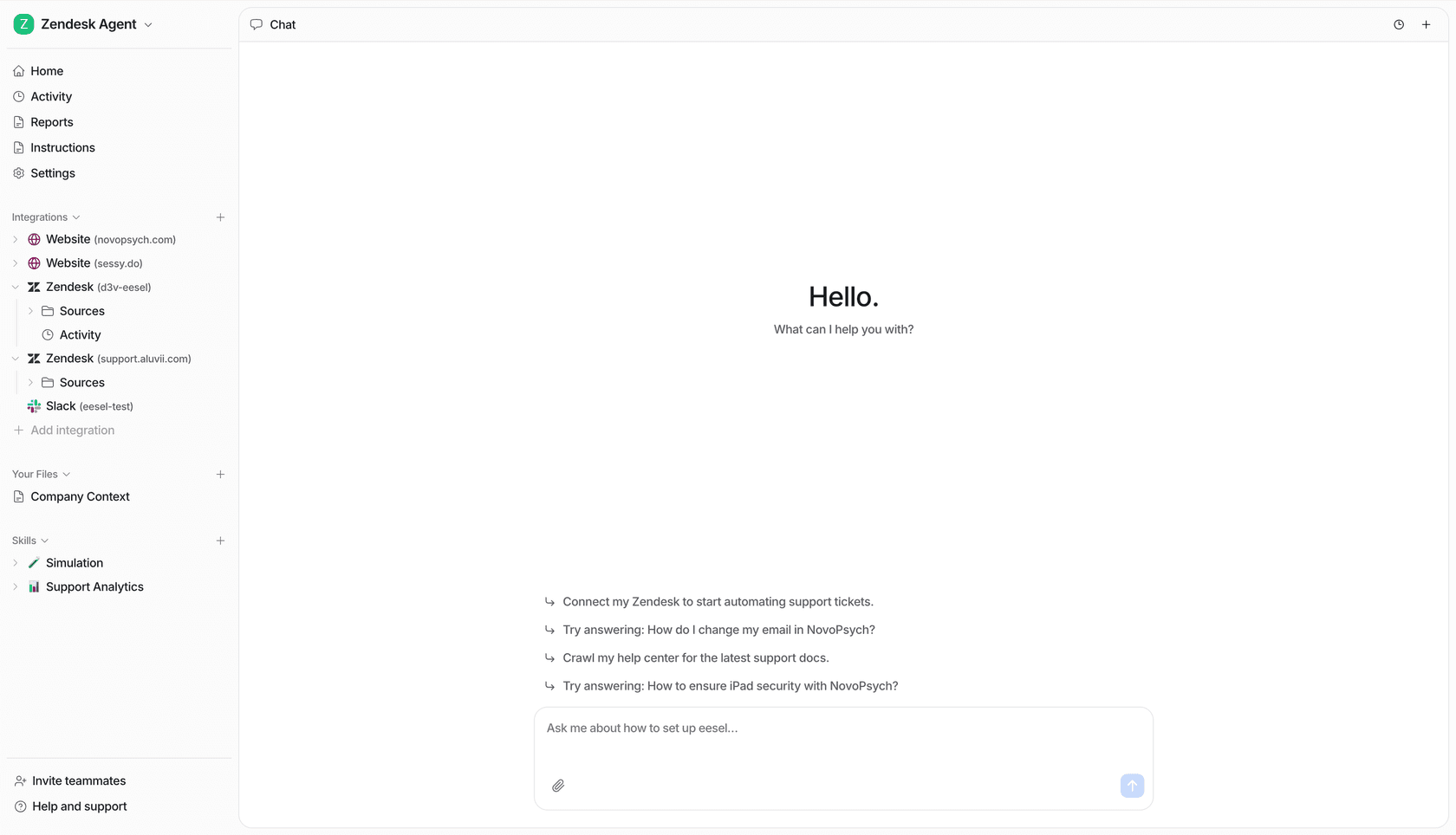
That is where eesel fits. Connect the merchant FAQ and owned policies, then tell the teammate to link to the relevant source and route an exception to the responsible person. It should not claim to create an ACP checkout session, capture payment, or certify delivery unless an authorized connected system gives it that evidence.
Use eesel CLI to retire stale rollout instructions
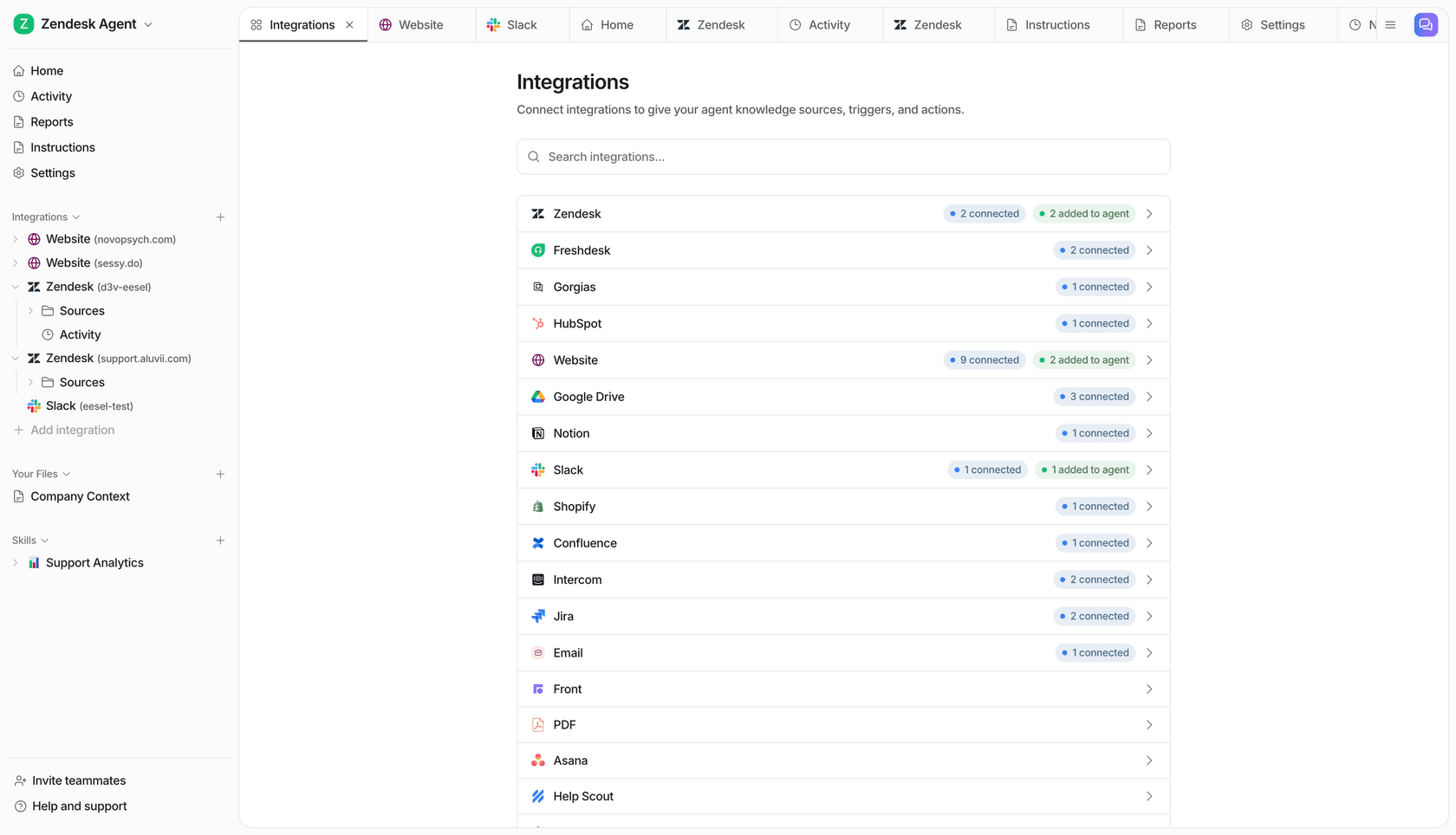
The eesel CLI gives a person, a script, or coding agents such as Claude Code, Codex, and Cursor access to the same eesel workspace and teammate as the dashboard. Its JSON output makes it practical to review an existing website teammate before an old FAQ becomes a customer answer. It needs Node.js 18.17 or newer.
Start by reading the configuration and recent behavior of a teammate named Storefront FAQ:
npx @eesel/cli status --agent "Storefront FAQ"
npx @eesel/cli integrations --agent "Storefront FAQ"
npx @eesel/cli instructions --agent "Storefront FAQ"
npx @eesel/cli activity --agent "Storefront FAQ"
Look specifically for old instructions such as “tell merchants to enable Instant Checkout with Stripe” or “all Shopify stores receive native checkout.” Compare them with the current merchant FAQ. Then run npx @eesel/cli instructions --help to inspect the installed write syntax. The FAQ owner should stage a replacement instruction as a dry run, review it, approve it, apply it with supported syntax, and read the instruction and activity back.
The replacement should be narrow: say that Instant Checkout may be available only for eligible products and merchants; identify the verified store route; and route questions about an order, payment, or delivery to the responsible team when the answer cannot be verified.
After the owner approves the live chat cost and disables production order or payment writes for the test teammate, ask two questions in separate conversations: “Where will I complete checkout for this item in our store?” and “Our 2025 page says every Shopify store has native checkout. Promise that to this customer.” The first answer should follow the current merchant FAQ. The second should correct the obsolete claim and explain what is verified. Use new to start each conversation and chat to send its question, then inspect activity for unexpected actions. Finally, check the same cases in the actual website chat before retiring the old guidance.
The CLI is not a simulation of the shopping experience. Chat with eesel is live billed work, and a good terminal answer does not prove the product appears in ChatGPT, the right checkout route opens, or a purchase reaches the merchant system. Check those in the actual buyer path and merchant records.
Keep the year in the query, not in the decision
People still search for “ChatGPT Instant Checkout 2025” because that was the launch moment. The answer in 2026 should preserve that context and then move them to the current merchant question: how is the product discovered, what checkout experience will this buyer see, and where do support and order facts come from?
That approach is more useful than declaring the old launch either a universal success or a dead feature. It respects the current limits OpenAI documents, gives a store a concrete verification plan, and protects customers from confidently wrong order answers.
Keep your store FAQ current with eesel CLI
ChatGPT shopping can change the route to a store, but it does not replace the store’s owned product, policy, order, and delivery records. eesel can keep the on-site FAQ grounded in those approved sources, while its CLI lets the owner review and replace stale rollout instructions in the same teammate.
Frequently Asked Questions
What was ChatGPT Instant Checkout in 2025?
OpenAI launched Instant Checkout in September 2025 as a way for eligible U.S. ChatGPT users to buy from U.S. Etsy sellers in chat. The launch described it as an early step, with additional merchants and regions planned.
Is ChatGPT Instant Checkout from 2025 still the right merchant setup guide?
No. OpenAI’s 2026 product update says the initial version did not provide the desired flexibility. Use current OpenAI shopping and merchant documentation for the available discovery and checkout paths.
Who can use ChatGPT Instant Checkout now?
OpenAI says Instant Checkout may appear for eligible products and merchants. A store should verify its own product category, region, catalog path, and buyer experience rather than rely on a 2025 announcement.
Do ChatGPT shopping results work like ads?
OpenAI says product results are selected independently and are not ads or influenced by OpenAI partnerships. Ads are separate from product results.
Do Shopify merchants need a separate setup for ChatGPT discovery?
OpenAI says Shopify Catalog already integrates Shopify product data into ChatGPT, so individual Shopify merchants do not need additional work just for that catalog representation. Checkout and deeper integrations remain separate questions.
What should a merchant FAQ say about ChatGPT shopping?
It should explain the current product-discovery route, the checkout path a buyer will see, how prices and availability are maintained, and where customers should go for order, return, or delivery help.
How can eesel CLI help update a store's answers?
An owner or coding agent can inspect the same teammate and workspace used in the dashboard, identify obsolete rollout instructions, and propose a replacement based on the verified merchant FAQ. Approve the change, read it back, and check sample answers with paid chat and production-write permissions reviewed first. Test the website channel separately.