A practical guide to the blog writing fundamentals that drive traffic

Stevia Putri
Last edited January 20, 2026
Have you ever poured your heart into a blog post, hit publish, and then heard nothing? It’s a common story. The internet is packed with content, but a staggering 90% of pages get zero organic traffic from Google. So, what is the reason? It’s rarely about bad writing. More often than not, it’s because some key fundamentals were missed.
Great blogging is more than just being a good writer. It's about having a system, a repeatable process that blends smart strategy, clear structure, and some optimization know-how. Nail these, and you've got a formula for content that people actually find and read.
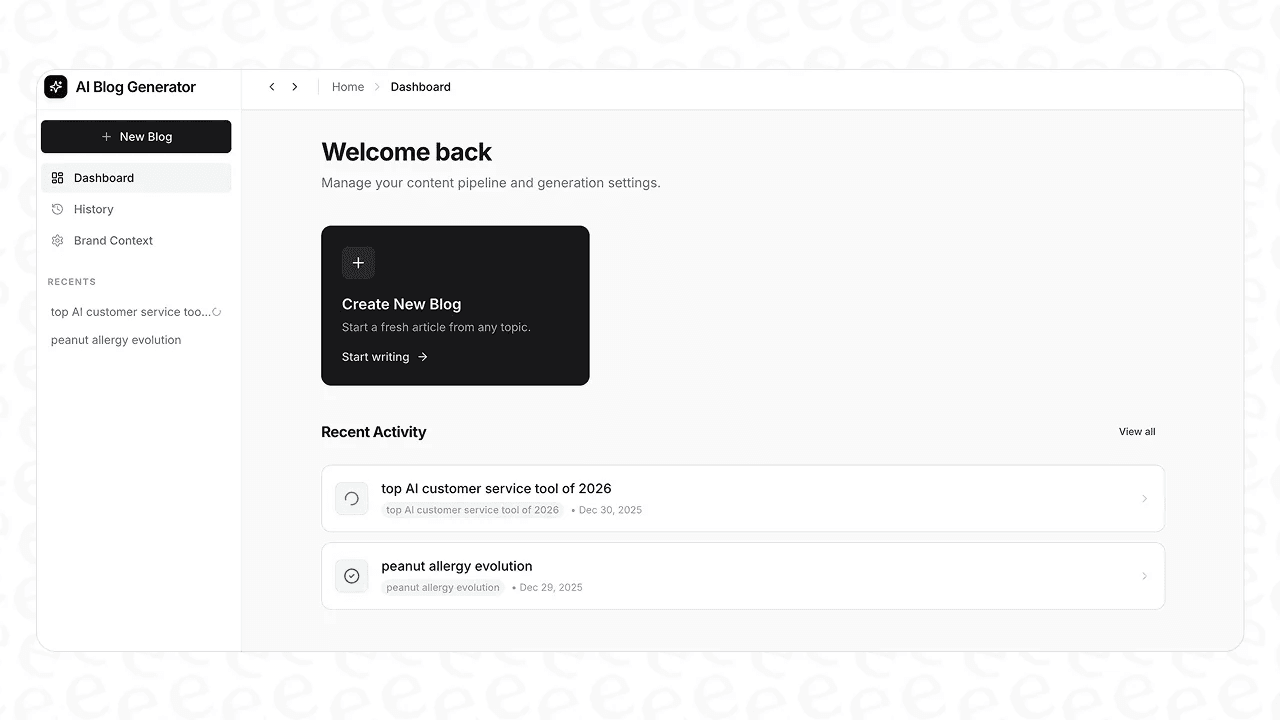
In this guide, we're going to break down those core principles. We’ll cover the strategy, the craft, and the optimization that separates a popular blog from a digital ghost town. We'll walk through the whole process, from idea to the final post. Plus, I'll show you how an AI tool can help you apply these fundamentals consistently, turning one keyword into a full article with something like the eesel AI blog writer.
What are blog writing fundamentals?
What are we talking about when we say "blog writing fundamentals"? Think of them as the blueprint for creating content that works for both actual people and search engines. It's not just about grammar and spelling; it is the whole game plan for creating posts that solve a real problem for your reader while also playing nice with Google.
To keep it simple, I like to break it down into three main buckets:
- Strategy: This is the 'why' and 'who' of your post. It’s all the homework you do before you even start writing.
- Craft: This is the 'how.' It’s about structuring your ideas and writing in a way that keeps people reading.
- Optimization: This is how you get your post seen, read, and hopefully, shared.
To visualize how these pieces fit together, here's a simple breakdown of the three core pillars of effective blogging.
Getting a handle on these fundamentals is how you build real, lasting organic growth instead of publishing content that doesn't reach an audience.
Pillar 1: Strategic foundations and core blog writing fundamentals
Before you open a blank document, you need to lay the groundwork. A solid blog post is built on research and planning. Skipping this part means you are writing without a clear direction.
Understanding your audience and their search intent
You can’t write a helpful post if you don’t know who you’re helping. That's why you need a clear picture of your target reader. Sketching out a simple reader persona helps you write for a real person with a real problem, which makes your content much more pointed and effective.
Next, you have to figure out why they're searching in the first place. This is called search intent, and if you want to rank, matching it is essential. It usually falls into one of three categories:
- Informational: The user wants to learn something (e.g., "what are blog writing fundamentals").
- Commercial: The user is comparing products or services (e.g., "best AI blog writers").
- Transactional: The user is ready to make a purchase (e.g., "eesel AI blog writer pricing").
A great trick for finding out what your audience is struggling with is to go where they hang out. Forums like Reddit can be valuable sources of information. Try searching for phrases like “I'm struggling with” or “biggest challenge” in subreddits related to your niche. You'll find real pain points you can solve with your content.
Choosing topics with keyword research
Once you know your audience, you need to find the topics they're actually searching for. This is what keyword research is all about. The goal is to find topics with search volume that are not overly competitive.
It helps to think about two main types of keywords:
- Short-tail keywords: These are broad, one or two-word phrases like "blogging." They get a ton of searches but are very competitive.
- Long-tail keywords: These are more specific, longer phrases like "blog writing fundamentals for SaaS." They have less search volume, but the competition is lower and the search intent is usually much clearer.
Here’s a quick comparison to illustrate the difference.
If you're just starting out, focusing on long-tail keywords is the smartest way to gain some traction. You can use tools like Ahrefs Keywords Explorer or SEMrush to find them, or start with free options like Google Keyword Planner.
Analyzing the competition to find your angle
The point here isn't to copy what's already ranking. It's to find a gap you can fill. A keyword gap analysis can show you important keywords your competitors rank for that you don't, which provides a list of content ideas.
When you search for your target keyword, really look at the top results. How are they structured? How detailed are they? What kinds of images or videos are they using? Are there questions in the "People Also Ask" box that they didn't really answer?
Your goal is to create something more comprehensive or unique. That could mean adding a unique perspective, some fresh data, or a personal story to make your post stand out.
Pillar 2: The craft of writing and structuring your content
With a solid strategy ready, it's time to turn that great idea into a published article that people will actually stick around to read.
Crafting headlines that demand a click
Your headline is your first, and sometimes only, shot at making an impression. It needs to be interesting enough to get someone to click but clear enough to set the right expectations.
Here are a few formulas that tend to work well:
- Use numbers: "7 Simple Steps to..."
- Ask a question: "Are You Making These Common Blogging Mistakes?"
- Add a clarification in brackets: "How to Write a Blog Post [Step-by-Step Guide]"
Most importantly, your headline should include your main keyword and try to stay under 60 characters so it doesn't get cut off in search results.
Structuring your post for maximum readability
People don't read online; they scan. Your content needs a structure that's easy on the eyes and helps readers find what they're looking for fast. If they see a giant wall of text, they're going to click away.
Here are a few best practices to follow:
- Use H2s and H3s: Break your content into logical sections with clear headings. This creates a visual hierarchy that helps both readers and search engines understand the flow.
- Keep paragraphs short: Aim for 2-4 sentences per paragraph. This adds more white space and makes the text feel less overwhelming.
- Use bullet points: When you have a list of distinct items, use bullet points or a numbered list to make them easy to scan.
- Use bold text: Use bold text for key takeaways and important phrases. It naturally draws the reader's eye and helps them skim for the good stuff.
Here’s what that difference looks like in practice.
Finding your voice and writing like a human
Nobody wants to read a textbook. A good blog post feels like a conversation with a real person.
Try to tell stories, share personal experiences, and write directly to your reader by using the word "you." This helps build a connection and makes your content far more memorable than dry, formal writing.
Some AI-generated content can sound generic. However, more advanced platforms are improving at producing natural-sounding text. For instance, the eesel AI blog writer is designed to write in a human-like tone.
Pillar 3: Optimizing your post with advanced techniques
You've got a smart strategy and a well-written draft. Now it's time for the final polish to make sure your content can reach its full potential.
Mastering on-page SEO and the rise of AEO
On-page SEO is about more than just sprinkling keywords throughout your text. It’s about sending clear signals to search engines about what your content is about. This includes writing a clear meta description, creating a simple URL slug (like /blog-writing-fundamentals), and adding internal links to other relevant posts on your site.
However, the landscape is changing. A new idea called Answer Engine Optimization (AEO) is becoming more and more important. This means optimizing your content not just for a list of blue links, but for AI-powered answers like Google's AI Overviews and chatbots. Gartner even predicts that by 2026, 25% of organic search traffic will go to AI chatbots, making AEO an important concept to consider.
This represents a significant shift in how we should approach optimization.
Modern tools are being built for this shift. The eesel AI blog writer, for example, has AEO optimization built-in, structuring content in a way that’s easy for AI answer engines to understand and use.
Integrating visuals, quotes, and rich media
Visuals aren't just for looks. They break up long blocks of text, boost engagement, and can make complicated topics much easier to grasp. Always try to include relevant images, infographics, or charts in your posts. Embedding a related YouTube video can also increase the time people spend on your page.
To add a layer of credibility and social proof, think about including real quotes from social media. It shows you've done your homework and understand the real conversations happening around your topic. This can be time-consuming to do manually, but some tools can automate it. The eesel AI blog writer can automatically find and embed real quotes from Reddit that are directly related to your topic.
Adding a compelling call-to-action (CTA)
Every post needs a purpose. What do you want the reader to do after they've finished reading? Your call-to-action (CTA) is what guides them to that next step.
It doesn't have to be a hard sell. Your CTA could be an invitation to:
- Subscribe to your newsletter
- Download a free guide
- Read another related article
- Leave a comment with their thoughts
Whatever you choose, make sure your CTA is clear, simple, and makes sense as the next logical step.
How to scale the blog writing fundamentals with the eesel AI blog writer
As you can tell, a lot of work goes into creating just one high-quality blog post. While these fundamentals are the path to success, doing them all, for every single article, takes a massive amount of time.
This is where a tool like the eesel AI blog writer can be very helpful. It's a platform designed to handle the entire process, turning a single keyword into a final, publish-ready draft with all these fundamentals already included.
Here’s how it tackles the pillars we talked about:
- Strategy: You provide a keyword and your website. It then does context-aware research to understand the topic and search intent, pulling in relevant data and insights.
- Craft: It generates a complete, structured post in a human-like voice. It doesn't stop with text, either. It also creates assets like AI-generated images, infographics, and data tables to make the content more engaging.
- Optimization: It includes SEO and AEO best practices from the very beginning. It also automatically adds rich media like relevant YouTube videos and Reddit quotes for extra authenticity.
It’s the exact tool we used to grow our own blog from 70k to over 750,000 impressions in just three months. It is also free to try.
For a more hands-on look at how these fundamentals come together in a real-world example, this video from Neil Patel walks through the entire process of creating a blog post from scratch, reinforcing the core principles we've discussed.
Putting your blog writing fundamentals into practice
Building a successful blog isn't about finding some secret hack. It's about consistently applying the fundamentals: start with a solid strategy, write with a human touch, and finish with smart optimization. Get these three pillars right, and you'll be on your way to creating content that brings in real, sustainable traffic.
The key ingredient is consistency. The more you practice these principles, the more they'll become second nature.
Ready to see what a blog post with all these fundamentals already baked in looks like? Generate your first post for free with the eesel AI blog writer.

Frequently Asked Questions
Share this article

Article by
Stevia Putri
Stevia Putri is a marketing generalist at eesel AI, where she helps turn powerful AI tools into stories that resonate. She’s driven by curiosity, clarity, and the human side of technology.