Anyword vs Scalenut: Which AI content writer is right for you?

Amogh Sarda
Last edited January 18, 2026
The world of AI content tools has gotten pretty crowded. It feels like a new AI writer pops up every week, and for marketing teams, trying to pick the right one is getting overwhelming. You are looking for something that will genuinely make your life easier, not just add another subscription to the company card.
The real snag is that most AI writers can generate text, but that is where they stop. You are left without a complete, publish-ready blog post. You end up with a decent draft, but then you are stuck doing all the heavy lifting: editing for tone, formatting everything, finding or creating images, and optimizing for SEO. It kind of defeats the purpose of automation when you still have hours of manual work ahead.
What is Anyword?
Anyword is an AI writing platform made specifically for performance marketers and copywriters. Think of it as a tool designed to generate words that sell. Its main job is to create compelling, data-driven copy that is optimized to boost conversions, whether that is for an ad, an email, or a landing page.
Have you tried combining Scalenut and Anyword for ad copy with built-in SEO? Been getting solid results on ecommerce promos that way, but curious if you’ve got a better workflow for ad campaigns or if you mostly use tools solo.

Its standout feature is the predictive performance score. Instead of just guessing which headline will work best, Anyword analyzes your copy variations and gives them a score to predict how well they will engage your audience. It is all about taking the guesswork out of creating short-form marketing content that gets clicks and drives action.
Key features of Anyword
- Predictive performance scoring: This is Anyword’s standout feature. It uses data to score different versions of your copy, helping you pick the one most likely to perform well before you even launch a campaign.
- Multi-format copy generation: It is a versatile copy machine. You can use it to generate text for just about any marketing channel, from Facebook ads and email subject lines to product descriptions and landing page CTAs.
- Customer persona targeting: You can create specific customer personas within the tool and ask it to generate copy that speaks directly to that audience segment. This is great for personalizing your messaging.
- Brand voice controls: To avoid sounding like a generic robot, you can set up brand voice guidelines. This helps ensure that all the copy it generates stays consistent with your company’s tone and style.
Limitations of Anyword
- Focus on short-form copy: It is great for snappy headlines and ad copy, but it was not really designed for writing long-form blog posts that need to rank on Google.
- High cost for scale: The pricing plans can get pretty steep, especially for small businesses or teams that need to produce a high volume of content. It is priced for performance marketers who can justify the cost with a clear ROI on ad spend.
- Learning curve for data features: To get the most out of it, you need to understand the data it is showing you. If you are not deep into performance marketing, you might miss out on its best features.
What is Scalenut?
Scalenut is an all-in-one AI platform aimed at creating long-form content that is built to rank in search engines. It is designed to guide you through the entire SEO content process, from finding the right keywords all the way to writing an article that is ready to compete on the search engine results pages (SERPs).
I would add Post BrAIner to create content for blogs that are optimized for SEO. You can also publish directly onto your WP blog pressing a button for the generated content in the plaform.
Its core focus is on helping you build topical authority and rank higher on Google. Scalenut does this by analyzing top-ranking content for your target keyword and giving you a detailed brief with an outline, key terms to include, and common questions to answer. Then, its AI helps you write the content within an editor that provides real-time optimization feedback. For more comparison articles, see Wordtune vs Surfer SEO, Neuronwriter vs Hyperwrite, or Wordtune vs MarketMuse.
Key features of Scalenut
- Cruise Mode for AI drafting: This feature is a huge time-saver. You give it a keyword, and it analyzes the SERPs to generate a structured first draft of your blog post in a few minutes.
- In-depth content research: Scalenut automates the painful process of content research. It pulls data from top-ranking competitors to create comprehensive content briefs, so you know exactly what you need to cover.
- Real-time SEO optimization: As you write in the editor, Scalenut gives you a content grade and suggests important NLP (Natural Language Processing) terms to include. This helps you optimize your article for search engines on the fly.
- Topic clustering: To help you plan your content strategy, Scalenut can identify and group related keywords into topic clusters. This is a great way to build authority around a core topic and signal your expertise to Google.
Limitations of Scalenut
- Requires SEO knowledge: It is a powerful tool, but you will need a decent grasp of SEO to use it well. If terms like 'NLP' or 'keyword intent' are new to you, you might have a tough time.
- Output is a draft, not a final post: Cruise Mode gives you a solid starting point, but it is just a text draft. You still have to spend time editing for flow and tone, formatting everything, and finding or creating your own images.
- Potential for generic content: The push to include specific NLP terms can sometimes make the writing feel a bit robotic or keyword-stuffed. It definitely needs a human touch to sound natural.
Anyword vs Scalenut: A head-to-head comparison
Core focus and ideal user
- Anyword: This tool is built for performance marketers, PPC specialists, social media managers, and anyone whose main job is to write short-form copy that converts. If your success is measured in click-through rates and cost-per-acquisition, Anyword is built for you.
- Scalenut: This platform is for SEO managers, content marketers, and digital agencies. If your primary goal is to increase organic traffic by publishing long-form blog content that ranks on Google, Scalenut is your co-pilot.
SEO and optimization capabilities
- Anyword: Its optimization is all about conversion rates, not search rankings. It tells you what copy is most likely to get a click or a sale, but it does not have the deep SERP analysis or keyword research features needed for modern SEO.
- Scalenut: SEO is where Scalenut really shines. Its entire workflow is built around SEO. From topic clustering and competitor analysis to NLP term suggestions and real-time content scoring, it gives you everything you need to create a draft that is structurally optimized to rank.
Final output and workflow
- Anyword: With Anyword, you get a list of copy variations with predictive performance scores. Your job is to pick the winner and then paste it into your ad platform, email marketing tool, or website builder.
- Scalenut: It delivers a structured, SEO-optimized text draft inside its content editor. From there, it is on you to take that text, edit it, format it, add images and other media, and then publish it through your CMS.
Pricing and value proposition
Both platforms are subscription-based, with pricing that scales based on usage and feature access. It is always best to check the official Anyword and Scalenut websites for the latest pricing details, as these can change.
They offer different kinds of value:
- Anyword's value is measured by its ability to directly improve your marketing ROI. If it helps you write an ad that cuts your cost-per-lead in half, it has paid for itself.
- Scalenut's value lies in its ability to increase organic traffic over time and dramatically reduce the hours you spend on manual SEO research and content briefing.
An alternative for end-to-end content creation: eesel AI
Anyword focuses on short-form copy and Scalenut on SEO-driven drafts. Both tools typically deliver a text document, leaving tasks like formatting and asset creation to the user. This is a common workflow for many content tools.
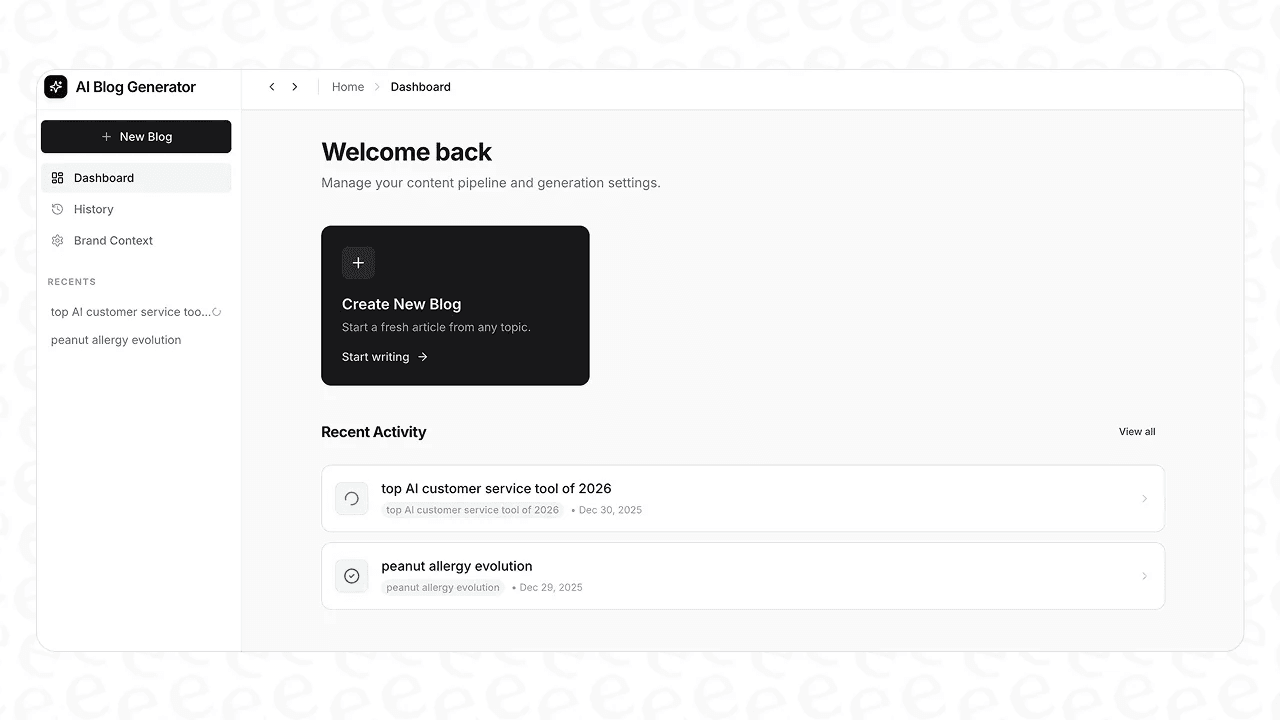
This is the exact gap the eesel AI blog writer was designed to fill. Instead of giving you just a draft, it generates a complete, media-rich, and SEO-optimized blog post from a single keyword.
What makes the eesel AI blog writer different?
- Goes beyond text drafts: eesel AI does not just write words. It delivers a fully structured article with an introduction, proper headings, a conclusion, and even an FAQ section. It is designed to be ready to publish with minimal, if any, tweaking.
- Includes automatic asset generation: This is a huge one. It automatically creates and embeds relevant AI-generated images, infographics, charts, and tables right into the post. This solves one of the biggest bottlenecks in content creation.
- Integrates real-world social proof: To add authority and a human touch, the tool automatically finds and embeds relevant YouTube videos and real Reddit quotes from actual community discussions on your topic.
- Optimized for the future of search: The content is not just optimized for traditional SEO. It is also optimized for AEO (Answer Engine Optimization), making it ready for new search experiences like Google AI Overviews and Perplexity.
Quick comparison: Anyword vs Scalenut vs eesel AI
Here is a simple table to see how they all stack up at a glance.
| Feature | Anyword | Scalenut | eesel AI blog writer |
|---|---|---|---|
| Best For | Performance marketing copy | SEO-driven content drafts | Complete, publish-ready blog posts |
| Primary Output | Text variations for ads & emails | A structured text draft | A full blog with text, images, embeds, & links |
| Automatic Assets | No | No | Yes (AI images, charts, YouTube/Reddit embeds) |
| Unique Feature | Predictive performance scoring | In-depth SERP analysis & NLP terms | AEO optimization & automatic social integrations |
| Workflow End Point | A list of copy options | An unformatted document | A formatted, media-rich article |
| Pricing Model | Subscription-based | Subscription-based | Credit-based ($99 for 50 blogs), free to try |
Choosing the right tool for your workflow
Ultimately, the right tool is the one that fits your specific needs.
If your world revolves around ads, emails, and landing pages, and your primary goal is to write copy that converts, Anyword is a powerful, data-driven choice.
If you are an SEO or content marketer focused on scaling long-form content production and need a robust assistant for research and drafting, Scalenut is a solid option.
However, if your goal is to really scale your content marketing and go from a keyword to a finished, media-rich blog post in minutes, you need something that handles the whole process. So, what do you need? A copy generator, a drafting assistant, or a complete content production platform?
For a deeper visual dive into how these tools operate, watching a head-to-head review can be incredibly helpful. The video below offers a direct comparison of Scalenut and Anyword, showing their interfaces and workflows in action.
Why not see the difference for yourself?
Generate your first blog post for free with the eesel AI blog writer.

Frequently Asked Questions
Share this article

Article by
Amogh Sarda
CEO of eesel AI. Amogh Sarda is obsessed with making the ultimate AI for customer service teams. He lives in Sydney, Australia and has previously worked at Atlassian and Intercom. Outside of work he’s usually surfing or on stage doing improv.