Wordtune vs MarketMuse: Which AI content tool is right for you?

Amogh Sarda
Last edited January 19, 2026
Creating content that ranks and connects with readers can be a challenge. You're constantly juggling keyword research, writing, editing, and trying to understand search engine algorithms. It’s no wonder AI tools have become a go-to for scaling up quality content without burning out your team.
But not all AI tools are the same. Today, we're looking at two popular names in the content world: Wordtune and MarketMuse. They both use AI, but they tackle completely different parts of the job.
- Wordtune is like an AI writing assistant that helps you rewrite, rephrase, and polish text you've already written to make it clearer and more engaging.
- MarketMuse is an AI content intelligence platform. Think of it as your SEO strategist, helping you plan, research, and optimize your content to build authority and improve search performance.
So, one helps you fine-tune how you write, while the other helps you decide what you should write about. It’s a classic editor vs. strategist situation. But what if you need a tool that handles both? That’s where a solution like the eesel AI blog writer fits in, bridging the gap by managing the entire process, from deep SERP analysis to generating a complete, publish-ready blog post from just a keyword.
What is Wordtune?
Wordtune is an AI sidekick designed to improve the clarity, style, and flow of your existing text. It's not a long-form content generator that writes articles from scratch. Instead, you use it to refine what’s already on the page. Think of it as a super-smart thesaurus and grammar checker rolled into one, helping you sound your best.
Its main job is to give you options. Instead of just fixing a typo, it offers different ways to phrase a sentence so you can pick the one that perfectly captures your intended meaning and tone.
Here are some of its key features:
- Rewrite & Paraphrase: This is Wordtune's core function. You can highlight any sentence or paragraph, and it will suggest several alternative phrasings to improve clarity, change the emphasis, or just make it sound better.
- Tone Adjustments: Need to switch from a casual blog post to a formal report? Wordtune can adjust the tone of your text to be more professional or conversational, depending on your audience.
- Summarizer: If you're drowning in information, Wordtune can help. It condenses long documents, articles, PDFs, and even YouTube videos into key points, saving you reading time.
- Grammar & Spelling: It goes beyond basic spell-checking to catch grammatical errors and improve the overall flow of your writing.
- Translation: Wordtune can translate text from 10 different languages (like Spanish, Mandarin, and German) into English, which is handy for multilingual teams.
So, who is this for? Wordtune is great for professionals, students, and social media managers who need to sharpen their daily communications. It’s perfect for polishing emails, reports, and short-form content. It’s also incredibly helpful for non-native English speakers looking to write more fluently.
What is MarketMuse?
While Wordtune focuses on the words themselves, MarketMuse takes a much bigger, strategic view. It’s an AI platform built for content strategy, helping teams build topical authority and systematically improve their search rankings. Its strength is telling you what to write about and exactly how to structure it for the biggest SEO impact.
MarketMuse doesn't just look at single keywords; it analyzes your entire website to understand where you have a competitive edge. It’s like having an SEO expert on your team who maps out your content landscape and shows you where to focus next.
Here’s a look at its core features:
- Topic Authority Analysis: Using its own patented AI, MarketMuse scans your site to find topic clusters where you already have some authority. It then points out content you can create or update to solidify your expertise and boost your rankings.
- Competitive Gap Analysis: Its "Heatmap" feature is a standout. It visually shows you which topics your competitors are covering that you’re missing, revealing opportunities to create content that fills a market need.
- AI-Generated Content Briefs: This is a huge time-saver. MarketMuse creates detailed outlines for writers, complete with target topics, subtopics, headings, questions to answer, and suggestions for internal and external links. These briefs are available for nine different content types, from standard articles to how-to guides.
- Content Scoring: Before you publish, MarketMuse grades your content's topical depth against the top-ranking pages for your target keyword. It gives you a score to beat, so you know exactly how comprehensive your article needs to be.
The ideal user for MarketMuse is an SEO strategist, a content marketing team, or an agency that is serious about long-term organic growth and wants to build a data-driven content plan.
Wordtune vs MarketMuse: A detailed feature breakdown
While both tools use AI to help with content, they operate in completely different worlds. They aren't really direct competitors because they serve separate stages of the content workflow. MarketMuse is for the initial planning and strategy (pre-writing), while Wordtune comes in at the end for editing and polishing (post-writing).
| Feature | Wordtune | MarketMuse |
|---|---|---|
| Primary Goal | Refine and enhance existing written text. | Plan and strategize SEO-driven content. |
| Core Function | Rewrite, paraphrase, adjust tone, and summarize. | Topic modeling, competitive analysis, and content briefs. |
| Ideal User | Writers, editors, students, and professionals polishing daily writing. | SEOs, content strategists, and marketing agencies. |
| Output | Alternative sentences, improved grammar, and summaries. | Data-driven content briefs, topic models, and strategy documents. |
| SEO Focus | Minimal (improves readability, a minor ranking factor). | Deep (built entirely for improving topical authority). |
| Workflow Stage | Final editing and polishing (post-writing). | Initial research and planning (pre-writing). |
To put it in perspective, a typical workflow using both might look like this: A content strategist uses MarketMuse to find a high-opportunity topic and generate a detailed brief. A writer uses that brief to draft the article. Finally, the writer (or an editor) uses Wordtune to polish the text, improve sentences, and perfect the tone before publishing. They are two separate pieces of a much larger puzzle.
Pricing breakdown
The pricing for these tools clearly reflects their different audiences and what they offer. Wordtune is priced for individuals and small teams, while MarketMuse is aimed at businesses with a significant content marketing budget.
Wordtune pricing
Wordtune offers a pretty accessible pricing structure, including a free plan to get you started.
- Basic (Free): This plan gives you 10 rewrites per day and 3 summaries per month. It's a good way to test out the core features.
- Advanced Plan: For $4.89 per month (billed annually), you get 30 rewrites per day and 15 summaries per month.
- Unlimited Plan: At $6.99 per month (billed annually), you get unlimited access to all features, including rewrites, summaries, and tone adjustments.
- Business Plan: This is a custom-priced plan for teams that need features like centralized billing and SAML SSO for security.
MarketMuse pricing
MarketMuse’s pricing is less transparent, which is common for platforms targeting larger businesses.
- Free Plan: They offer a limited free plan that gives a single user 10 queries per month, which lets you explore some of the platform's capabilities.
- Paid Plans (Optimize, Research, Strategy): MarketMuse doesn't list the prices for its paid tiers publicly. These plans unlock powerful features like tracked topics, unlimited content briefs, and full-site strategy documents. To get pricing, you have to contact their sales team for a quote. This can be a hurdle for smaller teams that want to compare costs without a sales call.
Key differences and when to choose each tool
Making the right choice comes down to understanding what problem you’re trying to solve. Each tool is great at what it does, but they are specialized for different tasks, which is a key consideration if you're looking for an all-in-one solution.
When to choose Wordtune
Wordtune is your go-to if your main challenge is the quality and clarity of your writing.
- Use cases: It's perfect for quickly improving the readability of emails, sales outreach, reports, or social media posts. It's also a fantastic aid for polishing a first draft of a blog post or helping non-native English speakers write more fluently.
I've tried a bunch but keep coming back to ChatGPT/Wordtune + Grammarly for writing since they work together pretty smoothly for me.
- Limitations: Wordtune won't help you with your SEO strategy. It is a writing assistant, not a content generator or a strategist. It can't do keyword research, analyze competitors, or tell you what topics to write about to build authority and drive traffic. It only works with text you've already written.

When to choose MarketMuse
MarketMuse is the right choice if your biggest hurdle is knowing what to write about to improve your search rankings.
- Use cases: It’s ideal for developing a data-driven content strategy from the ground up. Use it to find content gaps, create comprehensive briefs to guide your writing team, and make sure every piece of content contributes to your topical authority.
- Limitations: MarketMuse has a steep learning curve and is built for users who already have a solid grasp of SEO. But its biggest limitation is that it doesn't write the content for you. It generates a highly detailed plan, but the writing still falls on your team. This can become a major bottleneck for businesses trying to scale content production. You get the strategy, but you're still left with the heavy lifting.
An end-to-end alternative: eesel AI blog writer
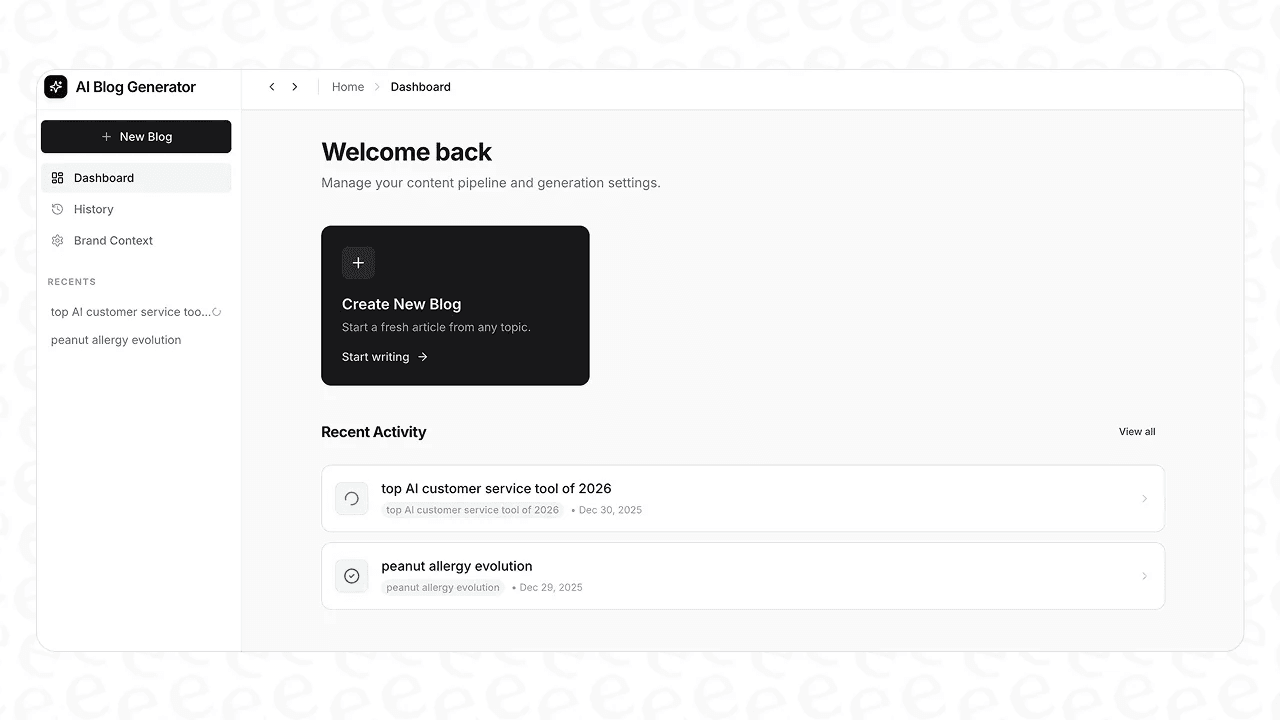
It’s designed to solve the end-to-end content challenge in one workflow:
- Starts with a keyword: Just like MarketMuse, it all begins with an SEO goal. You enter a topic or keyword you want to rank for.
- Automates the research: It instantly analyzes the top-ranking search results, figures out the search intent, and structures a complete blog post designed to compete.
- Generates the complete post: Here’s the key difference. It doesn't stop at a brief; it writes the entire article for you. You get a publish-ready draft with an introduction, logical headings, a conclusion, and an FAQ section.
- Enriches with media: Unlike either Wordtune or MarketMuse, the eesel AI blog writer automatically includes assets to make your content more engaging. It generates AI images and infographics, embeds relevant YouTube videos, and even pulls in authentic Reddit quotes to add real-world perspectives.
A four-step workflow showing how the eesel AI blog writer functions, positioned as an alternative in the Wordtune vs MarketMuse discussion.
We used this exact tool to grow our own organic traffic from 700 to 750,000 daily impressions in just three months by publishing over 1,000 optimized blogs. It’s also optimized for AEO (Answer Engine Optimization) to help your content get featured in AI-powered search results like Google's AI Overviews. Best of all, it's completely free to try, so you can see the quality for yourself.
For a broader look at how different AI tools fit into the modern content workflow, this video provides a great overview of over 50 powerful options available today, helping to contextualize where specialized tools like Wordtune and MarketMuse fit in.
Choosing the right tool for your workflow
At the end of the day, the choice between Wordtune and MarketMuse depends entirely on where you are in your content workflow and what problem you need to solve.
- Wordtune is your AI editor, perfect for polishing final drafts and making your writing shine.
- MarketMuse is your AI strategist, essential for building a long-term, data-driven content roadmap.
The primary consideration is that neither tool is designed to solve the end-to-end problem of researching, writing, optimizing, and enriching content at scale. You're either left with a great plan and no content, or well-written content with no real strategy.
For those looking for a platform that handles both strategy and execution, the eesel AI blog writer offers a combined solution. Stop juggling multiple tools and see what it feels like to go from a single keyword to a fully optimized, media-rich blog post in minutes.

Frequently Asked Questions
Share this article

Article by
Amogh Sarda
CEO of eesel AI. Amogh Sarda is obsessed with making the ultimate AI for customer service teams. He lives in Sydney, Australia and has previously worked at Atlassian and Intercom. Outside of work he’s usually surfing or on stage doing improv.