NeuronWriter vs HyperWrite: An in-depth comparison

Amogh Sarda
Last edited January 19, 2026
Choosing the right AI writing tool can feel like staring at a restaurant menu with way too many options. On one side, you have specialized SEO platforms that promise top rankings by dissecting search engine results pages (SERPs). On the other, you have flexible writing assistants built to make daily writing tasks easier. Two tools that highlight this split are NeuronWriter, which is focused on data-driven content optimization, and HyperWrite, a versatile AI assistant for many other tasks.
This guide will break down the key differences between NeuronWriter and HyperWrite, covering their main features, pricing, and intended users. We'll also look at an alternative, the eesel AI blog writer, which is designed to generate complete, ready-to-publish blog posts from just a keyword, a solid option for scaling up content marketing with less manual effort.
What is NeuronWriter?

NeuronWriter is an AI-powered platform built to help you plan, write, and optimize articles with one clear goal: ranking higher on Google. It uses natural language processing (NLP) and SERP analysis to give you data-backed suggestions for your content. It's less of a free-form writer and more of an SEO strategist's co-pilot.
The whole process kicks off when you pop in a target keyword. NeuronWriter then analyzes the top-ranking competitor content and generates a detailed brief with recommended keywords, headings, and questions to cover. Its editor even gives you a real-time content score, guiding you to create comprehensive content that matches what people are actually searching for. It is built for SEO pros and content marketers who appreciate a methodical approach to creating articles that perform.
NeuronWriter is amazing. I use Human Writer to write my articles and NeuronWriter to optimize.

What is HyperWrite?
HyperWrite is an AI writing assistant that is focused on boosting your general productivity across a ton of different writing tasks. It’s best known for its free Chrome extension that works across the web, offering handy tools like sentence completions, paragraph generation, and even email responses. It’s designed to help you overcome writer's block and speed up daily writing tasks, whether you're drafting social media posts or replying to emails in Gmail.
Unlike NeuronWriter, HyperWrite isn’t an SEO-first tool. Its main strength is its flexibility and how easy it is to use for quick content creation. It offers a bunch of tools, including a flexible "AutoWrite" feature for generating paragraphs, context-aware "TypeAhead" suggestions as you type, and HyperChat for research and brainstorming. This makes it a great sidekick for professionals and students who need a hand with a wide range of writing styles.
Feature deep dive: NeuronWriter vs HyperWrite
Core functionality
NeuronWriter's primary function is to create and optimize long-form content, like blog posts and articles, so they can climb the search engine ranks. Its entire platform is built around analyzing SERPs for a target keyword and then guiding you on how to create competitive content. It’s perfect for SEOs, content marketers, and agencies managing a comprehensive content strategy. The process is pretty straightforward: research, outline, write, and optimize, all in one spot.
HyperWrite, on the other hand, is designed for general writing and productivity. Its purpose is to be a co-writer across different websites. Whether you're in Gmail, Google Docs, or a social media scheduler, HyperWrite's extension is right there with instant suggestions and content generation. The ideal user is anyone who writes a lot online and wants to save time drafting, rewriting, and brainstorming, without focusing on SEO.
SEO and content optimization
This is NeuronWriter's core strength. The platform is built on a foundation of SEO analytics. Its key features include:
- Google SERP analysis: It pulls data from top-ranking pages to figure out what kind of content is currently winning.
- Semantic models: NeuronWriter gives you NLP term suggestions to make your content more relevant and topically authoritative.
- Content scoring: A real-time score shows you how well your draft is optimized compared to your competitors.
- Competitor analysis: It lets you peek at your competitors' article structures, keyword usage, and content outlines.
HyperWrite does not focus on this area. You could certainly use it to write a blog post, but it won't give you any data-driven tips on keyword density, related terms, or what your competitors are up to. You'd have to handle all the optimization yourself.
Writing assistance
NeuronWriter’s AI writer, which it calls the "Content Designer," can generate one-click articles based on facts and competitor data. The AI focuses on achieving a high content score, so the output is usually well-structured and packed with keywords. The output may require some editing for a more natural tone.
HyperWrite offers a more flexible and creative writing experience with its suite of tools designed for a wider range of tasks:
- Flexible AutoWrite: Generate paragraphs on just about any topic.
- TypeAhead: Gives you smart sentence completions as you type.
- Email Responder: Assists in drafting quick email replies.
- Hundreds of AI tools: You get access to a large library of pre-made tools for specific tasks, from summarizers to social media post generators.
While HyperWrite is great for brainstorming and short-form content, it's not designed to produce a fully optimized, long-form article from a single prompt.
Integrations and workflow
NeuronWriter is made to integrate into a content publishing workflow. It offers direct integrations with Google Search Console, WordPress, and Shopify, which helps streamline the process from analysis to publication. It also connects with Zapier and has an API if you want to build out custom workflows.
HyperWrite's main integration is its Chrome extension, which lets it work on pretty much any website or web app. This makes it a seamless part of your day-to-day tasks in tools like Gmail and Google Docs, but it doesn't offer the same kind of deep, workflow-specific integrations you get with NeuronWriter.
NeuronWriter vs HyperWrite: A pricing comparison
The pricing for NeuronWriter and HyperWrite reflects their target audiences. NeuronWriter uses a tiered model based on usage volume, while HyperWrite has a simpler structure with individual productivity plans.
NeuronWriter pricing plans
NeuronWriter has five different plans, so there's something for everyone from solo bloggers to large agencies. They don't have a free-forever plan, but you can get a 7-day free trial of their Gold plan to test the waters.
| Plan | Monthly Price | Key Features |
|---|---|---|
| Bronze | $23 | 2 projects, 25 content analyses, 15,000 AI credits |
| Silver | $45 | 5 projects, 50 content analyses, 30,000 AI credits |
| Gold | $69 | 10 projects, 75 analyses, 45,000 credits, Content Designer, Integrations |
| Platinum | $93 | 25 projects, 100 analyses, 60,000 credits |
| Diamond | $117 | 50 projects, 150 analyses, 75,000 credits |
HyperWrite pricing plans
HyperWrite's pricing is much more straightforward, and it includes a limited free starter account. The paid plans unlock more advanced AI and give you higher usage limits.
| Plan | Monthly Price | Key Features |
|---|---|---|
| Starter | Free | Limited access to basic AI tools |
| Premium | $19.99 | 250 AI messages per month, access to hundreds of AI tools |
| Ultra | $44.99 | Unlimited AI messages, first access to experimental features |
Limitations and alternatives
Both NeuronWriter and HyperWrite are solid tools, but they're not suited for every use case. NeuronWriter’s strong focus on SEO may be more than some users need for quick, creative copy without the detailed analytics. The interface can seem complex to new users, and the content it generates is so driven by SEO metrics that it can sometimes lack a unique brand voice.
HyperWrite's primary limitation is its lack of built-in SEO tools. It's simply not a solution for creating content that's designed to rank. It helps you write faster, but it does not provide SEO guidance. It also tends to generate content in smaller chunks (like paragraphs or sentences) rather than a complete, structured article in one go, which makes it less efficient for long-form content production.
If your main goal is to generate complete, SEO-optimized blog posts with minimal effort, you may find that both of these tools leave a gap in your workflow.
The alternative for publish-ready content: eesel AI blog writer
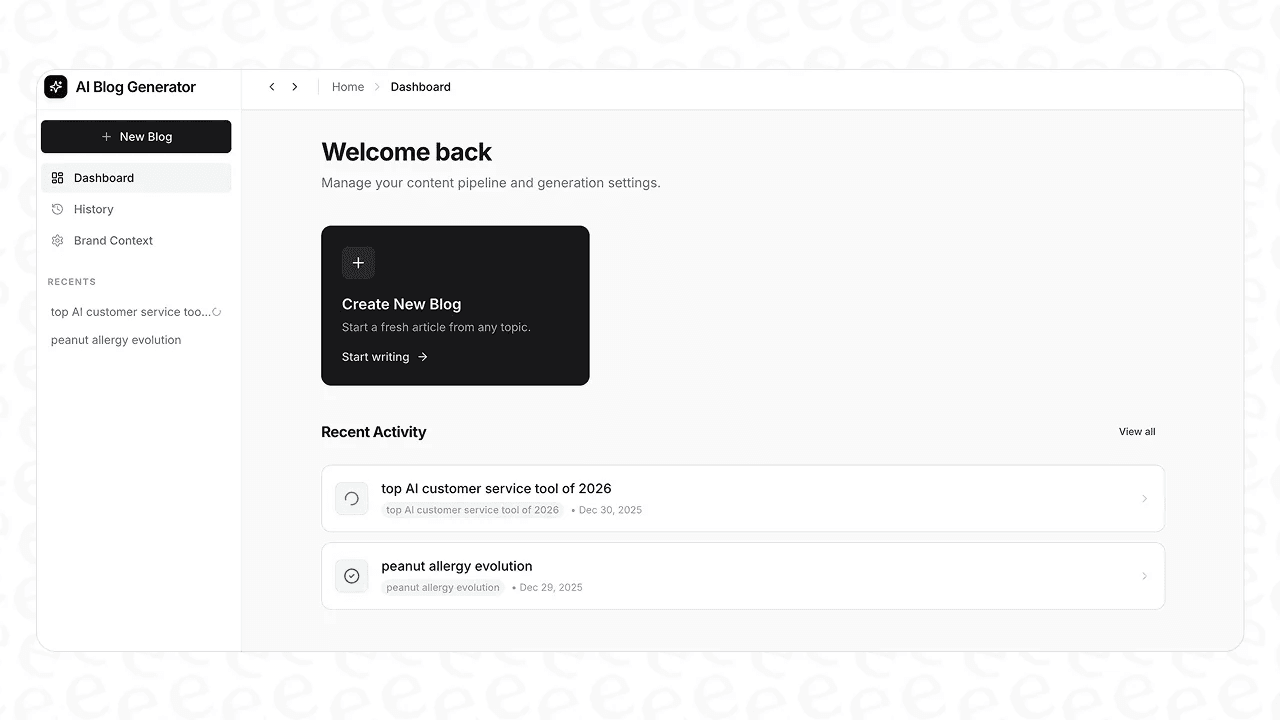
Unlike tools that just give you a text draft, eesel AI generates a publish-ready article that includes:
- Automatic Assets: It creates AI-generated images, infographics, and tables that are relevant to the content.
- Social Media Integration: It automatically finds and embeds relevant YouTube videos and real Reddit quotes to make your content more authentic and engaging.
- AEO Optimization: The content isn't just optimized for search engines, but also for AI Answer Engines like Google AI Overviews and ChatGPT.
- Context-Aware Research: The AI automatically pulls in relevant info based on the type of blog post. A comparison post gets pricing data; a product review gets technical specs.
This approach has been used to significantly grow blog traffic, for example, from 700 to 750,000 impressions per day in just three months. You can even generate your first blog for free to see the quality for yourself.
Final verdict: A summary of NeuronWriter vs HyperWrite
Choose NeuronWriter if:
- Your number one goal is to rank on Google.
- You're an SEO, content marketer, or agency that needs a data-driven way to create content.
- You enjoy digging into deep competitor analysis and semantic optimization features.
Choose HyperWrite if:
- You need a versatile writing assistant for daily tasks like emails, social media posts, and quick drafts.
- Your priority is speed and beating writer's block, not SEO.
- You want a tool that works seamlessly in your browser across a bunch of different websites.
Neither tool is designed as a one-click solution for a finished blog post. NeuronWriter provides an SEO blueprint but requires writing input, while HyperWrite assists with writing but lacks an SEO framework. If your goal is to streamline the entire blog creation process from a keyword to a publish-ready article, an alternative like the eesel AI blog writer may be a good fit.

Frequently Asked Questions
Share this article

Article by
Amogh Sarda
CEO of eesel AI. Amogh Sarda is obsessed with making the ultimate AI for customer service teams. He lives in Sydney, Australia and has previously worked at Atlassian and Intercom. Outside of work he’s usually surfing or on stage doing improv.