AI support for field service teams: A complete 2026 guide

Stevia Putri
Written by

Stevia Putri

Last edited March 18, 2026

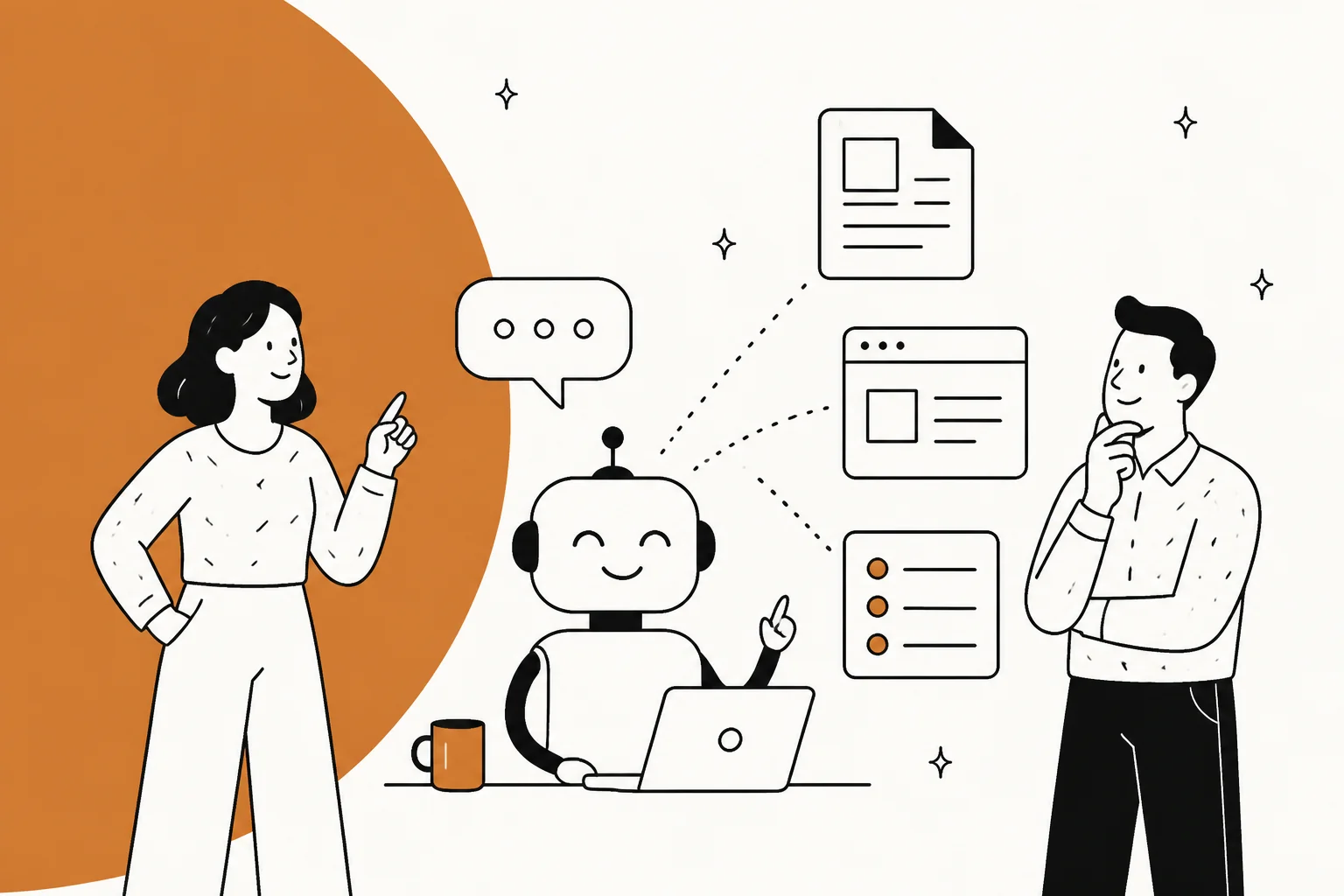
Banner image for AI support for field service teams: A complete 2026 guide

Field service teams are stretched thin. Technicians juggle complex repairs, tight schedules, and rising customer expectations all while battling burnout and a widening skills gap. AI is emerging as the teammate that can help, not by replacing the human expertise that matters, but by handling the administrative burden and providing real-time support when it's needed most.

This guide covers how AI is transforming field service operations, from intelligent scheduling to predictive maintenance, and how to implement it without disrupting your team's workflow.

How AI transforms field service operations

AI-powered field service operations overview

Intelligent scheduling and dispatch

Scheduling is the most widely adopted AI use case in field service, with 59% of organizations already using AI for scheduling. The technology has moved far beyond basic calendar matching.

Modern AI scheduling considers:

  • Technical skill sets and certifications required for each job
  • Technician workload and real-time availability
  • Proximity to job sites and traffic conditions
  • Job priority levels and SLA requirements
  • Real-time adjustments for weather delays, callouts, or emergency dispatches

The result is the right technician arriving at the right job at the right time improving first-time fix rates and customer satisfaction.

Major platforms have invested heavily here. Microsoft Dynamics 365 Field Service includes a Scheduling Operations Agent (in public preview) that autonomously optimizes technician schedules as conditions change throughout the day. Salesforce Field Service offers AI-powered scheduling and route optimization starting at $175 per user per month, with their premium Agentforce 1 tier at $650 per user per month including unlimited AI usage.

Predictive maintenance and asset management

IoT sensors combined with AI enable continuous equipment monitoring that predicts failures before they occur. Currently 40% of organizations use predictive maintenance, with 59% planning to implement it.

The approach is straightforward: sensors monitor equipment health metrics like vibration, temperature, and performance data. AI analyzes patterns to identify anomalies that signal impending failures. The system then automatically generates work orders and schedules maintenance before the equipment breaks down.

The impact is significant organizations report up to 30% reduction in unplanned downtime. ServiceMax, a leader in asset-centric field service management, has helped companies like 3D Systems cut repeat visits by 39% using IoT and predictive service capabilities.

For equipment-heavy industries, this shifts the service model from reactive break/fix to proactive uptime assurance a win for both service providers and their customers.

Route optimization

AI-powered route optimization analyzes multiple variables simultaneously to create efficient travel plans that adapt in real-time.

The technology considers:

  • Job locations and traffic patterns
  • Priority levels and SLA commitments
  • Technician skills and vehicle equipment
  • Real-time conditions and emergency rerouting

ServiceMax users report 20% reduction in travel time, while other implementations show 15% increases in daily service completion rates. For technicians spending hours in transit each day, these efficiencies add up quickly both in cost savings and in capacity to handle more jobs.

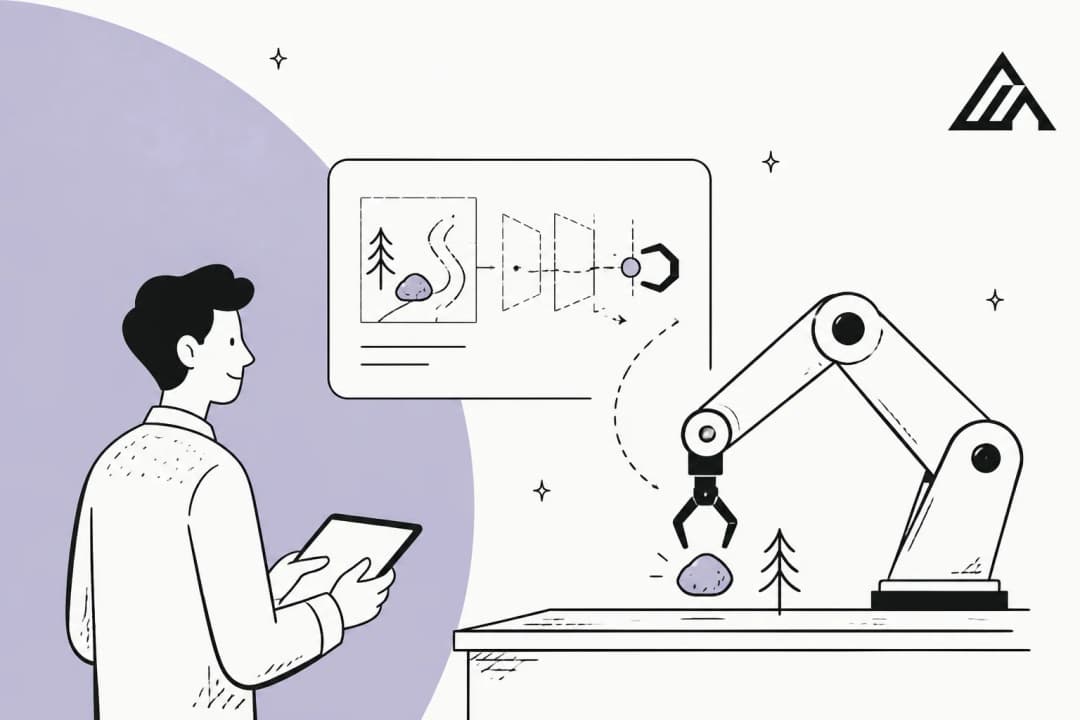
AI route optimization for field service technicians

Real-time technician enablement

Perhaps the most visible AI transformation happens in the field, where technicians get real-time support through mobile devices.

Modern AI tools provide:

  • AI-generated work order summaries that surface the key details technicians need
  • Step-by-step repair guidance based on equipment manuals and historical fixes
  • Voice-activated, hands-free operation for safe use while working
  • Visual remote assistance via AR that connects technicians with experts who can see what they see

Microsoft's Copilot integration lets technicians search lengthy product manuals using natural language to find relevant answers faster. Salesforce offers multimodal troubleshooting and pre-work briefs as part of their Technician tier. Specialized tools like CareAR and TechSee Sophie AI provide visual diagnostics that guide technicians through complex repairs.

The result is a technician who never works alone even when they're the only person on site.


AI for customer support in field service

While field technicians handle the physical work, customer support teams manage the communication layer that shapes the overall experience. AI bridges these two worlds.

24/7 customer availability

AI chatbots handle appointment scheduling, service status updates, and routine inquiries around the clock. Customers get immediate responses instead of waiting for business hours or sitting on hold. eesel AI's chatbot integrates with your existing help desk to provide instant answers trained on your service history and documentation.

Automated communication

The gap between scheduling a job and completing it is filled with customer questions: "When will the technician arrive?" "Do I need to be home?" "What's the status of my repair?" AI automates these updates via text and email, reducing inbound call volume while keeping customers informed.

Self-service troubleshooting

For common issues, AI guides customers through basic troubleshooting before dispatching a technician. This deflects unnecessary truck rolls and gets faster resolutions for simple problems. When a technician is needed, the AI captures relevant details upfront so the field team arrives prepared.

Intelligent triage

Not every inquiry needs the same response. AI triage automatically categorizes incoming requests, routes urgent issues to the right team, and escalates complex problems while handling routine questions autonomously. Integration with platforms like Zendesk and Freshdesk means this happens within your existing workflow.

The connection between customer-facing AI and field operations is where the magic happens. When a customer reports an issue via chat, the AI can check technician availability, suggest appointment slots, and create the work order all before a human gets involved. Field teams arrive with context, and customers get faster service.

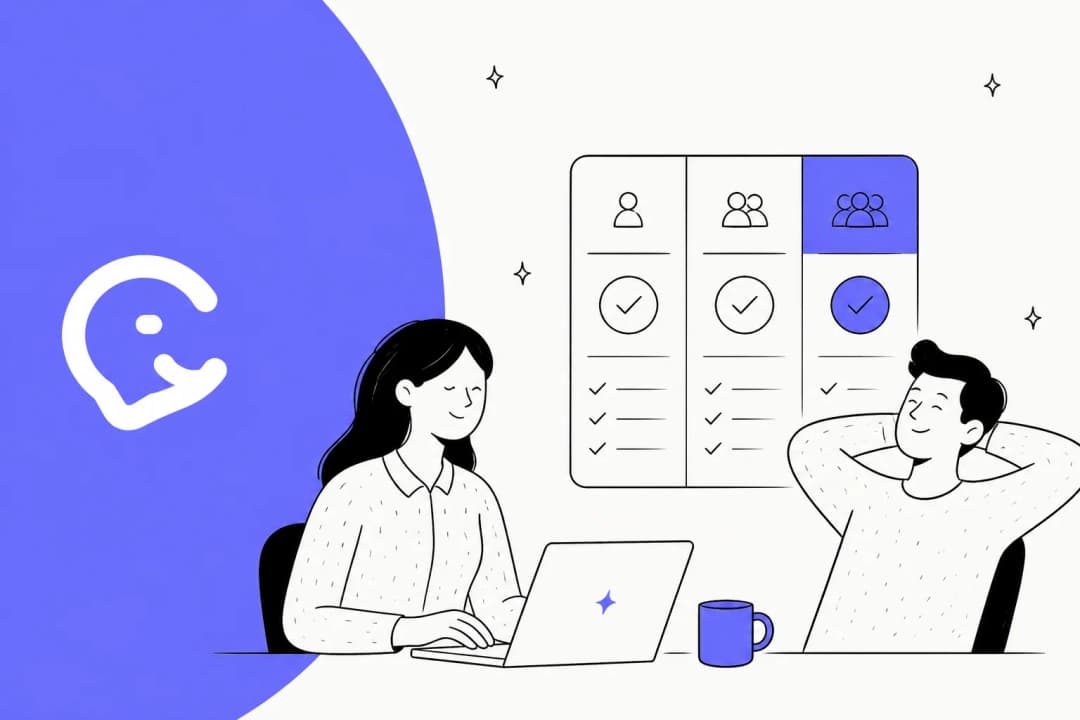
AI-powered customer support to field service workflow

Will AI replace field service technicians?

This is the question every technician asks, and the answer is clear: no. The evidence shows AI supports technicians it doesn't replace them.

Consider what actually happens on a service call. Technicians diagnose complex problems, make judgment calls in ambiguous situations, handle unexpected complications, and deliver the human interaction that builds customer relationships. These capabilities remain firmly in human hands.

What AI does is reduce the administrative burden and cognitive overload that contribute to burnout. It handles the scheduling logistics, surfaces the right information at the right time, and automates the documentation that technicians typically complete after hours.

The 70/30 rule is emerging as a practical framework: AI handles routine tasks and information retrieval (the 70%), while humans focus on complex problem-solving, customer relationships, and quality judgment (the 30%). This isn't about doing less it's about spending time on work that matters.

Technician retention actually improves when AI is positioned as support rather than surveillance. The message matters: you're giving technicians a teammate, not installing a monitoring system. Teams that frame AI as augmentation see higher adoption and better outcomes than those that impose it top-down.

The 70/30 framework for AI and human collaboration in field service

Getting started with AI in field service

Start with your biggest pain point

Don't try to transform everything at once. Identify your highest-impact area whether that's scheduling chaos, dispatch inefficiencies, or maintenance backlogs and focus there first.

Run simulations on past data to measure potential impact before committing. Most major platforms offer trial periods or pilot programs that let you test with real scenarios.

Begin with a pilot project

Test AI with a specific team, region, or job type before rolling out company-wide. This limits risk while generating real feedback from actual users.

Involve technicians in the process from day one. Their input shapes implementation, and their buy-in determines adoption. A pilot that ignores frontline feedback will fail when scaled.

Ensure data quality

AI is only as good as the data it learns from. Clean, organized data is essential for accurate scheduling, reliable predictions, and useful recommendations.

Connect your existing systems help desk, CRM, inventory management so AI has the full context. Siloed data produces siloed results.

Train your team

Position AI as a teammate, not a replacement. Provide comprehensive onboarding that shows technicians exactly how AI helps them, not just how to use it.

Create feedback loops for continuous improvement. When technicians correct AI suggestions or provide input, that feedback should improve future performance. eesel AI's pricing scales based on interactions, making it feasible to start small and expand as you validate results.

A screenshot of an analytics dashboard displaying important AI customer service metrics, including automation rate and customer satisfaction scores.

Choosing the right AI support for your field service team

Selecting AI tools requires evaluating more than feature lists. Consider these factors:

Integration with existing tools: The best AI fits into your current stack without forcing migrations. Look for solutions that connect to your help desk, CRM, and scheduling systems.

Scalability: Choose solutions that grow with your team. Per-interaction pricing models often work better for growing teams than per-seat licenses.

Plain-English control: Avoid solutions that require complex configuration or coding. You should be able to define behavior in natural language "escalate billing disputes to a human" rather than building workflow diagrams.

Learning from existing data: The best AI learns from your past tickets, service history, and documentation without requiring manual training or uploads.

Progressive rollout capability: Start with AI drafting responses for review, then level up to full autonomy as confidence builds. This "hire and promote" model reduces risk while accelerating adoption.

The teammate model is the right mental framework. You're not buying software you're hiring an AI teammate that learns your business, starts with guidance, and levels up based on performance.

For the customer support side of field service, eesel AI integrates with your existing operations to handle frontline inquiries, route complex issues, and provide 24/7 availability. With 100+ integrations and the ability to learn from your existing data in minutes, eesel acts as the support teammate that lets your field teams focus on what they do best.

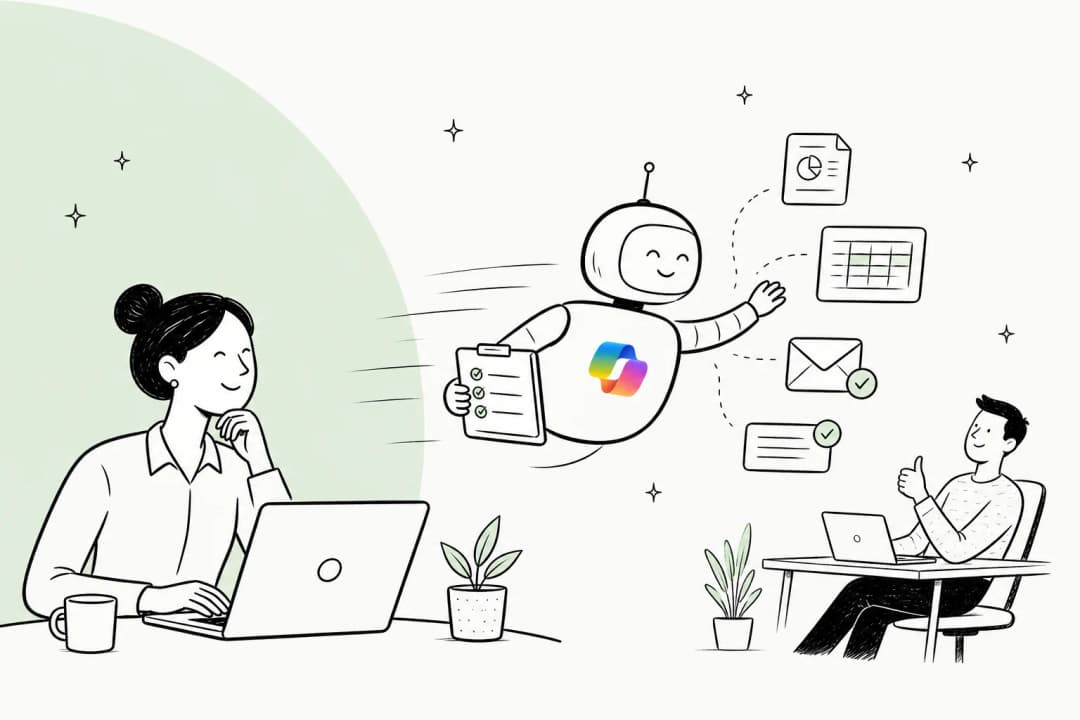
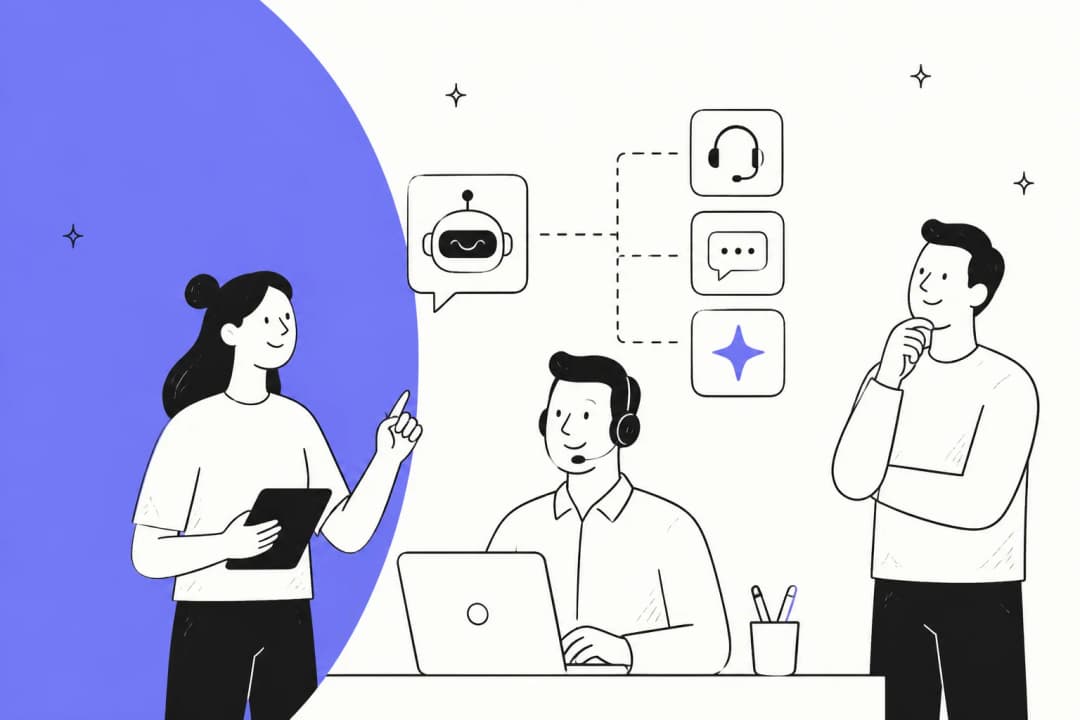
The AI teammate model for field service operations

The future of field service isn't AI replacing humans it's AI and humans working together, each doing what they do best, to deliver better outcomes for everyone.

Frequently Asked Questions

No. AI supports technicians by handling routine tasks and surfacing information, but humans remain essential for complex problem-solving, judgment calls, and customer relationships. The 70/30 framework suggests AI handles routine tasks (70%) while humans focus on complex work (30%).
The top AI use cases include: intelligent scheduling and dispatch (59% adoption), predictive maintenance (40% current, 59% planned), route optimization (20% travel time reduction), and real-time technician enablement through mobile AI assistants.
Start by identifying your biggest pain point, run a pilot project with a specific team, ensure your data is clean and connected, and train your team to view AI as a teammate rather than a replacement. Begin with supervised deployment and level up to autonomy as confidence builds.

Share this article

Stevia Putri

Article by

Stevia Putri

Stevia Putri is a marketing generalist at eesel AI, where she helps turn powerful AI tools into stories that resonate. She’s driven by curiosity, clarity, and the human side of technology.

Ready to hire your AI teammate?

Set up in minutes. No credit card required.

Get started free