A practical guide to AI powered marketing

Katelin Teen
Katelin Teen
Last edited January 12, 2026

The marketing world is moving at a dizzying pace. Not too long ago, we were manually tweaking ad campaigns and pouring weeks into a single blog post. Today, it's all about speed, intelligence, and creating experiences that feel personal. Think about how Netflix and Amazon seem to know what you want before you do: that's not magic, it's AI at work.
But AI isn't here to replace marketers. It's more like a powerful assistant, handling the tedious data analysis and repetitive tasks so you can get back to the creative, strategic parts of your job.
This guide is a straightforward look at what AI powered marketing really means. We'll cover the essentials, explore some useful tools, and show you how to get started without getting bogged down in technical jargon. We'll even touch on how some AI tools can now create entire, SEO-ready articles from just a keyword, saving you a ton of time.
What is AI powered marketing?
In short, AI powered marketing is using artificial intelligence to handle marketing tasks, understand customer data, and pull out insights that lead to better decisions. It’s the shift from guessing what your audience wants to knowing what they want.
For marketers, AI usually shows up in two main forms:
- Predictive AI: This is your forward-looking tool. It analyzes past data (purchases, email opens, site visits) to predict future actions. This is how you get effective lead scoring or forecasts on which customers might be about to leave.
- Generative AI: This is the creator. This type of AI can generate brand-new content, like writing a blog post, designing an image, or drafting an email campaign from a simple instruction.
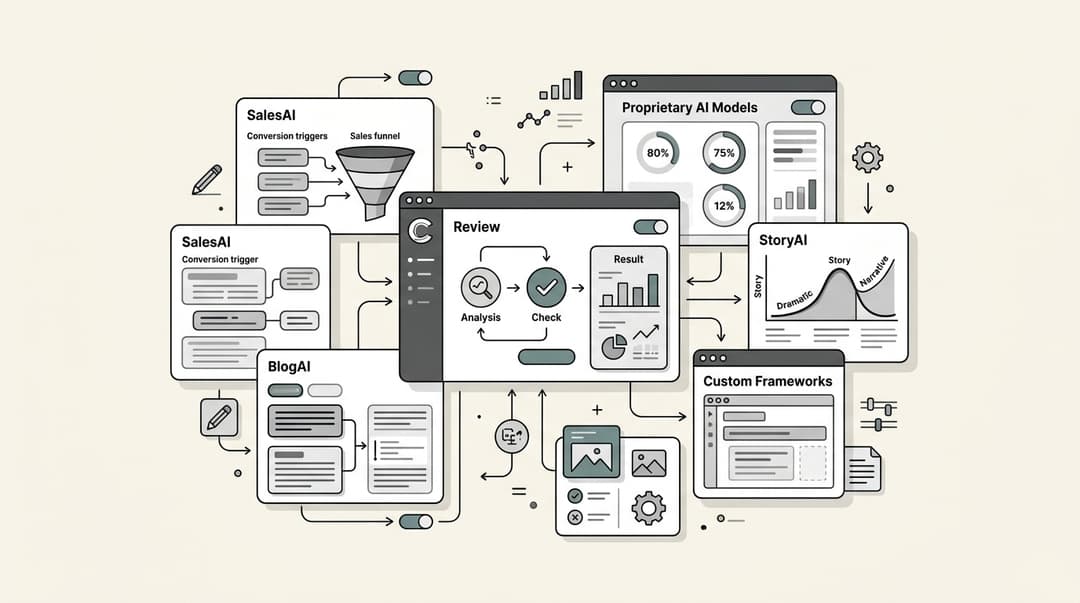
To give you a clearer picture, here's a visual breakdown of how these two types of AI differ in their marketing applications.
The main goal isn't just about speed, although that's a huge benefit. It's about being more effective. This means getting a better return on your ad spend, creating personalization that actually connects with people, and keeping up with the competition.
Pillar 1: Supercharging content and SEO with AI powered marketing
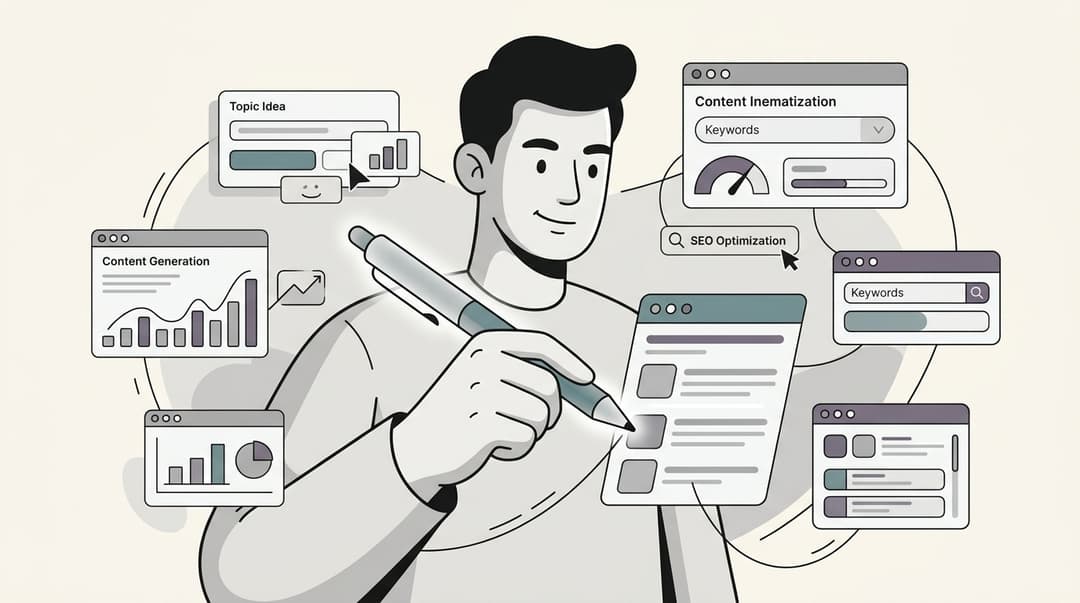
If there’s one area where marketers are constantly under pressure, it's content. Consistently creating high-quality, SEO-friendly content is a massive time commitment. AI is changing this completely, assisting with everything from brainstorming ideas to keyword research and writing full articles. However, not all AI writers are the same, and the quality can be all over the place.
Common AI content tools and their limits
Many popular AI content tools are useful, but they often focus on specific parts of the content creation process.
Take Jasper AI, for example. It's a well-known AI content automation platform that many marketing teams use. It offers features like Jasper IQ to match your brand voice and Content Pipelines for managing workflows, which are effective for generating text. Typically, users will then conduct SERP analysis and source visuals like images, charts, and infographics separately to complete the article.
Similarly, tools like Surfer SEO provide an excellent on-page optimization suite. Its data-backed Content Score offers real-time guidance on keyword inclusion, and its Surfer AI can generate articles based on this analysis. The output is SEO-friendly text, and the next step for users is often to find relevant videos, social proof, and other visuals to enhance reader engagement and build trust.
IMO opinion, AI is like most tools. Garbage in, garbage out. You can’t throw a Kw at it and expect a week written article. You still need to research proper KWs. You need to study the SERPs. You still need to perfect a great outline. Once all that is done, AI is a crutch, it can assist you.

A common challenge with using multiple specialized tools is the potential for a fragmented workflow. A team might use one tool for drafting, another for SEO analysis, and then manually source rich media. While this approach can be effective, it isn't always a seamless, all-in-one process.
Generating publish-ready blogs with the eesel AI blog writer
The eesel AI blog writer is designed to address the challenge of a fragmented workflow. It’s not just another AI writer or SEO tool; it’s an end-to-end content generator that takes you from a single keyword to a finished, publish-ready blog post.
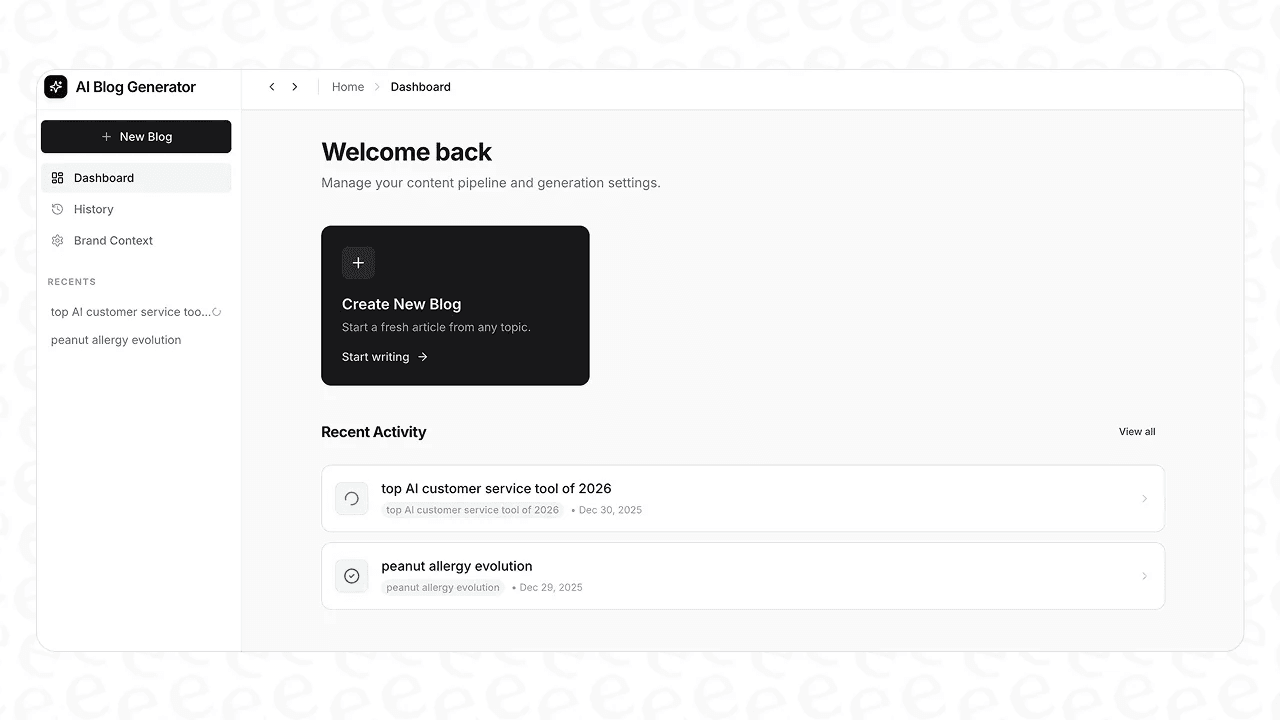
Here’s the process: you enter a keyword and your website URL. That's about it. The AI then produces a well-researched, SEO-optimized article that's full of rich media.
I work at eesel AI, and our whole approach with our AI blog writer is to avoid that exact problem. Instead of just scraping the SERPs, it can pull context from a specific URL you give it. This means it can learn a company's actual brand voice, product details, and unique perspective, rather than just regurgitating what's already out there.
What sets it apart?
- Complete assets included: This is a big one. It doesn’t just write text; it automatically generates and embeds AI images, infographics, and data tables directly into the article. You get a visually appealing post from the start.
- Authentic social proof: To add credibility, the AI finds and embeds relevant YouTube videos and actual quotes from Reddit discussions related to your topic. This helps build trust and shows you've done your research.
- Context-aware research: Unlike generic tools, it tailors its research to the content type. For a comparison post, it will pull pricing data. For a product review, it will find technical specs.
- AEO Optimization: In 2026, ranking on Google isn't the only goal. You also need to appear in AI Answer Engines like Google AI Overviews. The content from eesel is structured for this, helping you gain visibility in this new search landscape.
- Proven Results: We used this exact tool at eesel to grow our blog from 700 to 750,000 daily impressions in just three months.
Pricing is simple, starting at $99 for 50 blogs. You can also try it for free and generate your first article to see the quality for yourself.
Pillar 2: Driving personalization and customer insights
Modern customers expect personalization. They want brands to understand their needs and communicate with them as individuals, not just as another entry in a database. AI makes it possible to do this at scale by analyzing vast amounts of data to spot patterns a human couldn't.
This lets marketers go beyond broad demographics ("males, 25-35") and create highly targeted segments based on actual user behavior.
Audience segmentation and web experiences
AI algorithms excel at finding patterns. They can analyze a customer's purchase history, browsing habits, and email engagement to predict their next actions and group them into dynamic segments.
Tools like HubSpot's AI-powered personalization agent can take this even further. It can identify your most valuable audience segments and then automatically adjust your website content, headlines, or calls-to-action to better suit those specific users.
This is also where you find applications like predictive lead scoring, which helps sales teams focus on the most promising leads, and churn prediction, which identifies at-risk customers so you can intervene before they leave.
Enhancing your CRM with AI
Your CRM is a treasure trove of customer data, but it can also involve a lot of manual work. AI can automate tedious CRM tasks like data entry and cleanup, which helps reduce errors and frees up your sales and support teams to focus on building relationships.
An AI-enhanced CRM can also drive highly personalized messaging. For instance, Salesforce Einstein offers a feature called "Next Best Action". It analyzes all available customer data and suggests the best next step for a sales or support representative, whether that's upselling a product, offering a discount, or sending a helpful article.

Pillar 3: Achieving efficiency with marketing automation
Think about all the repetitive tasks that fill up your week. AI-powered marketing automation is about taking that work off your hands so you can focus on strategy and creative thinking. It helps you build a marketing system that runs smoothly on its own.
Programmatic advertising and chatbots
Two of the most common applications of AI automation are in advertising and customer support.
- Programmatic Advertising: This involves using AI to buy and place digital ads in real time. Instead of you manually negotiating ad space, algorithms do the work, finding the right audience at the right time for the best price. It's fast, efficient, and highly targeted.
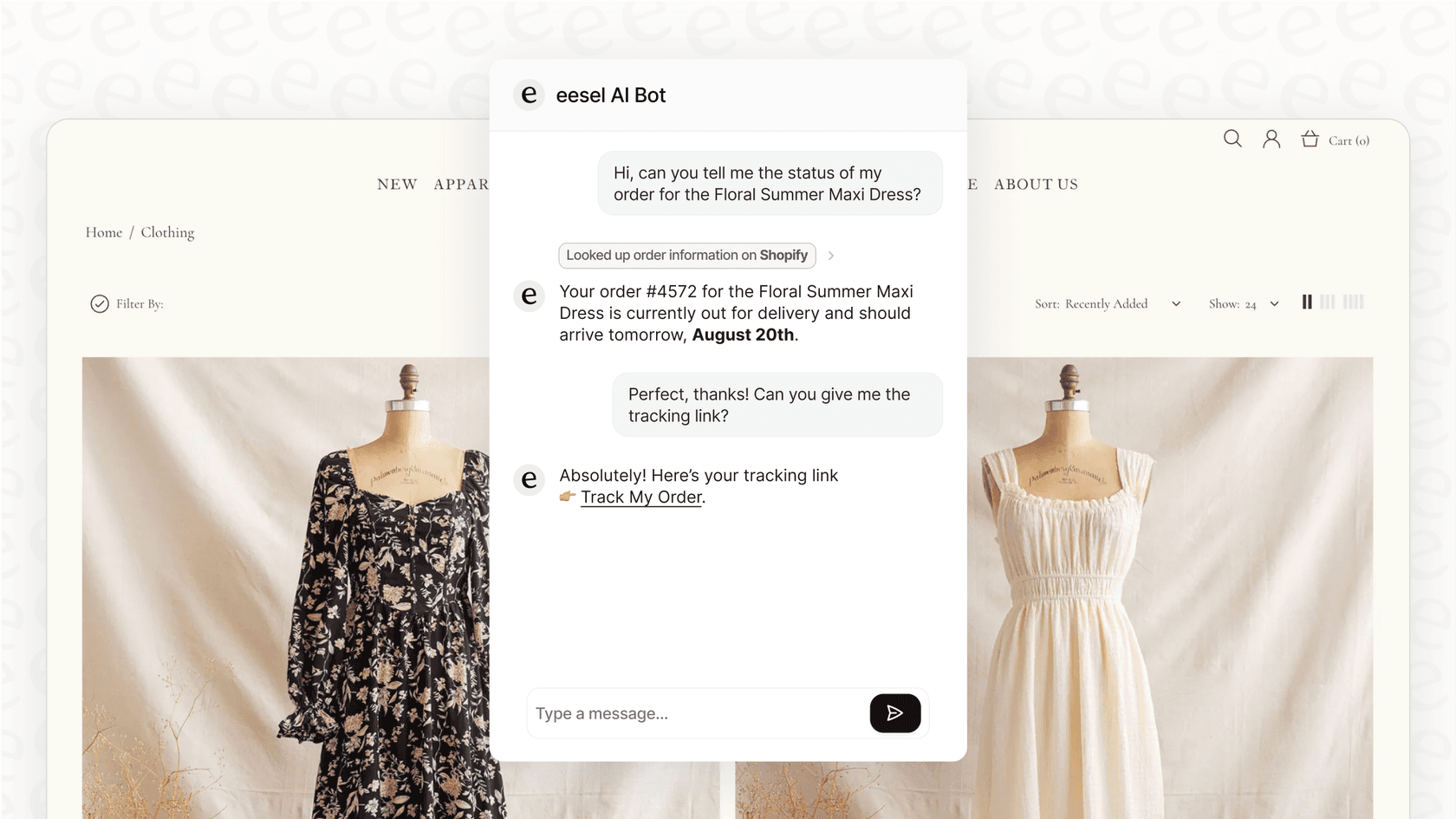
- Chatbots: The days of clunky chatbots are over. Modern AI-powered chatbots, like the eesel AI chatbot, can answer customer questions, qualify leads, and offer 24/7 support on your website. They also learn from your company’s knowledge base and past interactions, becoming more helpful over time.
End-to-end workflow automation
Beyond individual tasks, AI can connect your various marketing apps to create seamless, automated workflows. Tools like Zapier use AI to link thousands of platforms, allowing you to build complex automations without any coding.
Here’s a quick example:
- A user downloads an ebook from your site.
- Zapier automatically starts a workflow.
- It sends a personalized follow-up email to the user.
- It adds them to a specific list in your CRM (like "Ebook Readers").
- It notifies your sales team on Slack about the new lead.
This entire sequence happens instantly and automatically, ensuring no leads are missed and every user gets a relevant, timely response.
For a deeper look at how leading marketers are using AI to automate their workflows and drive growth, the video below offers some practical strategies and tool recommendations.
The challenges and ethical considerations of AI powered marketing
As promising as this all sounds, jumping into AI powered marketing has its hurdles. It's important to be aware of the potential issues to use these tools responsibly and maintain trust with your audience.
- Data Privacy and Security: AI models require a lot of data to learn. This raises important questions about how that data is collected, stored, and used. With regulations like GDPR, handling customer data responsibly is not just good practice: it's the law.
- Algorithmic Bias: An AI is only as good as the data it's trained on. If your historical data contains biases (which most data does), the AI can learn and even amplify them. This could lead to unfair or discriminatory marketing, which can harm your brand's reputation.
- Lack of Human Oversight: AI should be a tool, not the final decision-maker. Over-relying on automation without human supervision can lead to campaigns that feel out of touch or just plain strange. Human judgment and empathy are still your most important assets.
- Cost and Complexity: While many AI tools are becoming more affordable, implementing a large-scale, custom AI solution can be a major project that requires a significant budget and specialized technical skills.
Your next steps in AI powered marketing
The main point is this: AI is no longer just a buzzword. It's a practical tool that is reshaping marketing by enabling new levels of personalization, efficiency, and creativity.
The future isn't about marketers being replaced by machines; it's about marketers being empowered by them. Your role will likely shift from handling manual tasks to being a strategist who guides these powerful tools to meet business goals.
If you're looking for an easy and effective way to start with AI powered marketing, content generation is a great entry point. It's an area where you can see a significant return on your time, quickly.
Ready to see what end-to-end content creation is like? Give the eesel AI blog writer a try and generate your first publish-ready article for free.

Frequently Asked Questions
Share this article

Article by
Katelin Teen
Katelin is an operations specialist at eesel where she uses her psychology training and education experience to optimize B2B SaaS processes. Outside of work, she unwinds with story-driven games, writing, and keeping up with latest tech innovations.