

It feels like just yesterday the SEO world was about one thing: keyword ranking. Marketers would track moving from position 3 to position 2 on a search page, celebrating every tiny jump. Then, Google’s AI-generated answers became a big deal, and that old playbook suddenly felt like a relic. The new game isn't about climbing a list of links anymore. It’s about getting cited and mentioned right inside the AI’s answer.
That change has led to a search for new software, with many trying to find the best tools that can help them adapt. This isn't just about tracking your rank. It’s about seeing how visible you are inside the AI itself and, more importantly, creating content that these AI models want to feature. This list covers helpful tools, from platforms that monitor your presence to a powerful content generator. After all, you can't fix what you can't see, but you can't see anything if you're not creating cite-worthy content to begin with.
It’s honestly hard to make any final conclusions, cuz the results keep shifting, and AI behavior isn’t exactly stable.

What are AI mode SEO tools?
You might hear them called Generative Engine Optimization (or AEO) tools, and they're a different beast from the classic SEO platforms many have used for years.
Instead of just telling you where your website ranks on a search results page, these tools check your brand's presence inside AI-generated responses. They look at Google's AI Overviews, ChatGPT, and Perplexity to see if your brand is getting mentioned, what people are saying about it (the sentiment), and who you’re competing against.
They mostly break down into two types, as this graphic illustrates:
-
Monitoring & analytics tools: These are your lookouts. They track your citations, analyze the vibe of the conversation around your brand, and show you which competitors are getting all the attention for key topics.
-
Content optimization & creation tools: These are your builders. They help you write and structure your content so that Large Language Models (LLMs) can easily understand it, digest it, and, ideally, cite it as a source they trust.
Criteria for selecting the best AI mode SEO tools
To cut through the hype, there are a few non-negotiables to consider. It is important to recommend genuinely useful tools, not just old software with a fancy "AI" sticker slapped on. Here’s what to look for:
-
Focus on AEO: How much is the tool really about AI-generated search? The ideal platforms are built for this new reality, not ones where AEO tracking felt like an afterthought.
-
Useful advice: Data is nice, but knowing what to do with it is better. The best tools don't just throw charts at you; they give you solid recommendations to improve your visibility.
-
Easy to use: Life’s too short for clunky software. If a platform was confusing or a pain to navigate, it may not be the best choice. It should feel intuitive.
-
Good value: Does the price make sense for what you get? Look for clear pricing, fair usage limits, and whether they offered a free trial so you could test it out first.
-
Fresh data: The AI world changes by the hour, so the data needs to be current. Favor tools that offered daily (or at least frequent) updates on prompts and mentions.
The best AI mode SEO tools of 2026: A comparison
Before we get into the nitty-gritty, here’s a quick rundown of some top picks and what they’re best for.
| Tool | Best For | Key Feature | Starting Price |
|---|---|---|---|
| eesel AI blog writer | Creating cite-worthy content | AEO & asset generation | Free to try ($99/50 blogs) |
| Peec AI | Agencies & competitor analysis | AI-suggested prompts | €89/month |
| seoClarity | Large enterprises | End-to-end AI search optimization | Custom |
| Scrunch AI | Actionable content optimization | Page optimizer & AI traffic monitoring | $300/month |
A review of the 4 best AI mode SEO tools
1. eesel AI blog writer
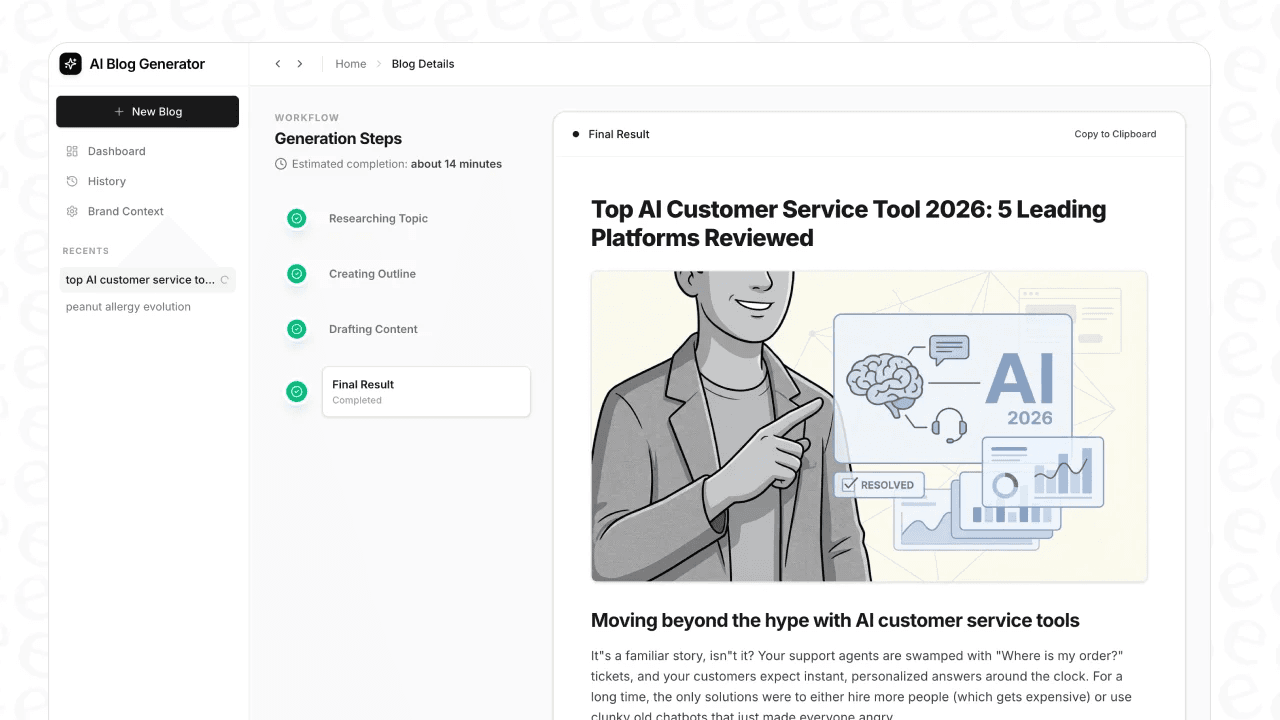
An AI can't cite content if it doesn't have great, trustworthy content to find. While most tools in this space focus on monitoring visibility, the eesel AI blog writer is a tool that helps create that content. It's built to generate complete, publish-ready blog posts from a single keyword, with the content already optimized for both traditional SEO and the new world of AEO.
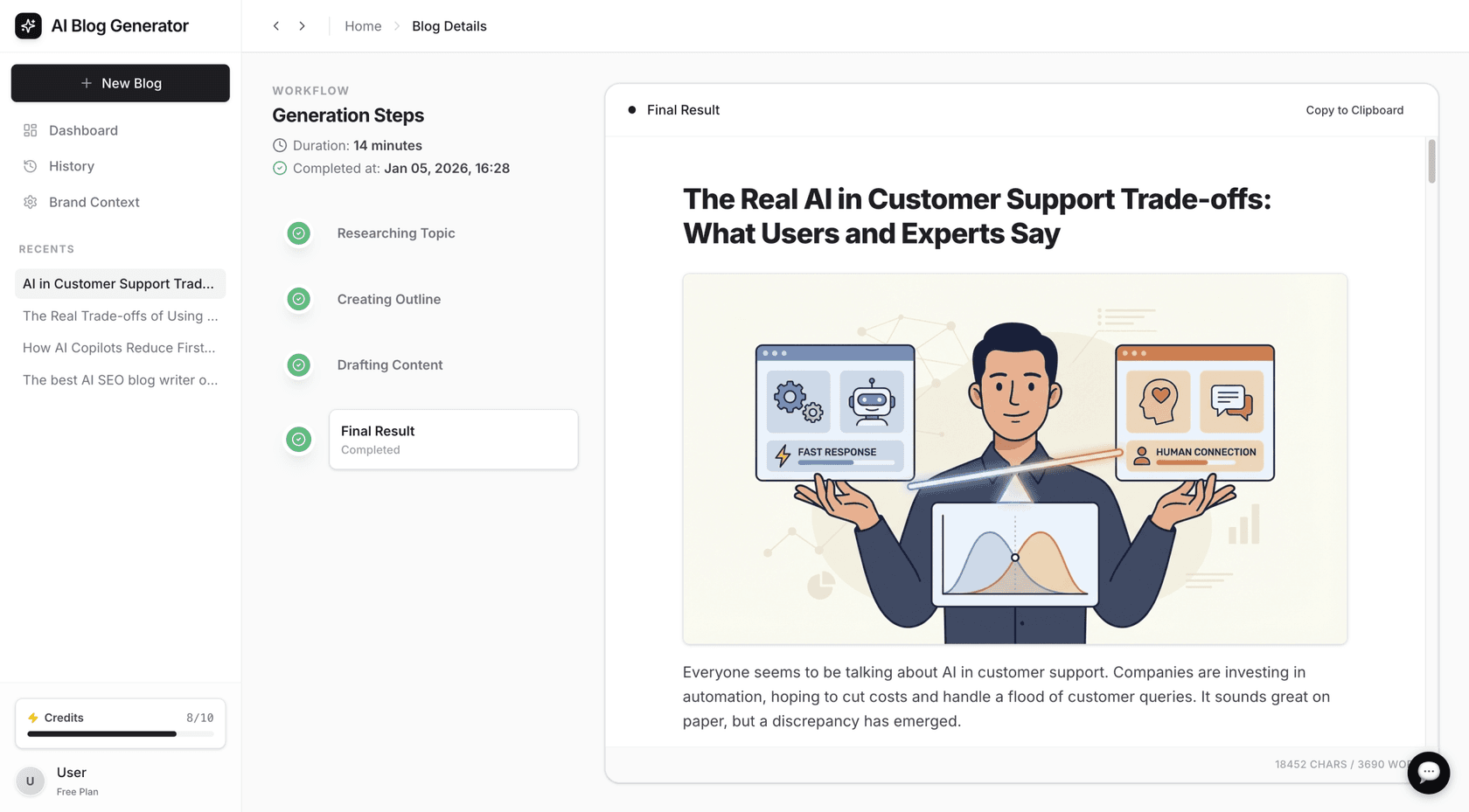
It creates articles with a natural, human tone and a logical structure that LLMs can easily break down. It also automatically adds assets like charts, infographics, and even relevant Reddit quotes to bring in a layer of authenticity. The eesel AI team put this to the test, using the tool to publish over 1,000 optimized blogs. The result? They went from 700 to 750,000 daily impressions in just three months by producing content that AI engines could feature.
-
Pros and Cons: A key benefit is the speed and quality. It’s a fast way to scale up the creation of content specifically made for AI citation, complete with all the visuals. It's also free to try, so you can see the output for yourself. The main thing to know is that it’s a content creation tool, not a monitoring one. It is most effective when used alongside a visibility tracker to measure its impact.
-
Pricing:
- Free to try.
- Paid plans start at $99 for 50 blog posts.
2. Peec AI
Based in Berlin, Peec AI has become a go-to for marketing agencies and teams that need to analyze the competition. The interface is clean, and its features are all about competitive analysis within AI search. The platform tracks your brand's "Visibility", "Position", and "Sentiment" across the big AI platforms like ChatGPT, Perplexity, and AIO.
One of its standout features is the 'Suggested' prompts tab. It looks at your website and gives you prompt ideas you should be tracking, which saves a lot of guesswork. The "Sources" tab is also very helpful. It shows you the exact URLs being cited in AI answers, which is useful for finding link-building or digital PR opportunities. It’s a smart way to reverse-engineer what’s already working for your competitors.
We’re also using Peec, and it’s the only one I found that’s actually useful... in terms of directional accuracy and tracking the impact of our work Peec has been the only one we’re using with clients
-
Pros and Cons: The platform offers professional-grade data, especially if you're looking at established brands. The fact that its 7-day free trial doesn't ask for a credit card is a notable advantage. On the other hand, some have pointed out it's less valuable for new startups without much search history. And while it does a great job showing you where you are, it doesn't provide a detailed step-by-step plan for improvement.
-
Pricing:
- Offers a 7-day free trial.
- Starter: €89/month for 25 prompts.
- Pro: €199/month for 100 prompts.
- Enterprise: €499+/month for 300+ prompts.
3. seoClarity
If you’re with a large organization that needs one tool to do it all, seoClarity is a comprehensive platform. It's a full-blown enterprise SEO platform, and its AI search module, Clarity ArcAI, is equally robust. This isn't a simple tracker; it's a complete system for big teams that need to monitor visibility, research prompts, analyze sentiment, optimize content, and measure everything across multiple AI engines.
seoClarity is fantastic for monitoring changes at scale and provides impact reporting on affected keywords, which is crucial for bigger sites.
What makes it different is its ability to connect AI search performance to actual business results. It provides on-demand tracking of your brand mentions and shows you the direct effect AI search is having on your website's traffic and clicks. For companies where SEO is a major revenue channel, connecting those dots is essential. The platform is built to handle huge amounts of data and works with BI tools, making it a centralized place for all things SEO.
-
Pros and Cons: For big companies, seoClarity is a top contender. The data is incredibly detailed and offers a level of insight that smaller tools can't. However, its enterprise focus comes with a significant price tag and a bit of a learning curve. Its complexity may be more than what is needed for smaller teams or solo marketers.
-
Pricing:
- Pricing is custom, but enterprise packages reportedly start at $4,500/month.
4. Scrunch AI
While a lot of AEO tools are good at showing you what’s going on, Scrunch AI stands out by telling you what to do about it. Its main strength is giving you concrete "Insights" on how to tweak your existing content to perform better in LLMs. The platform's page optimizer scans your content, finds gaps, and gives you specific suggestions to boost your chances of getting cited.
A useful feature is its AI agent traffic monitoring. It connects to Google Analytics to show you how AI bots are crawling your site and which pages they visit most. This gives you a clear idea of which content is already on the AI's radar and might be good candidates for optimization. It helps you move from just looking at data to actually doing something with it.
-
Pros and Cons: The actionable recommendations are a significant benefit. It’s one thing to know you’re not being cited; it’s another to get a to-do list to fix it. However, it’s one of the pricier options on this list for what you get. Some users have also said that the improvement suggestions can be thin at times and might not give you enough detail. Also, prompt updates might not be daily, which could be a downside in this fast-paced area.
-
Pricing:
- Starter: $300/month for 350 prompts.
- Growth: $500/month for 700 prompts.
Tips for getting content featured in AI search
Having the right software is a big help, but it’s only half the story. The content itself still has to be excellent. Here are three basic tips that will help your content get noticed and featured by AI engines, no matter which tools you’re using.
-
Tip 1: Write for people, not robots. This has always been good advice, but now it’s critical. AI models are trained to spot and reward natural, conversational writing. Forget keyword stuffing and awkward phrases. Write clearly, use simple language, and focus on giving the reader a complete answer. A human-friendly tone is exactly what AI is trying to copy.
-
Tip 2: Make your content easy to scan. LLMs love well-organized content because it's easy for them to grab specific facts and data points. Use short paragraphs, clear H2s and H3s, bullet points, and tables to break up your text. If an article is easy for a person to scan, it’s also easy for an AI to understand.
-
Tip 3: Focus on E-E-A-T (Experience, Expertise, Authoritativeness, Trustworthiness). Google's core principles for quality content are the foundation of AEO. You have to build trust with both people and AI. You can do this by citing good sources, including unique data or your own insights, and showing you have real, first-hand experience with your topic.
Visual learners might find it helpful to see these concepts in action. The video below explains how to adapt your SEO strategy for AI search, covering many of the principles discussed and how they apply to different AI mode SEO tools.
Preparing your content for the future of search
The rise of AI-powered search has completely changed the SEO game. To succeed in 2026 and beyond, you need to do two things well: monitor your visibility and create content that’s worth citing.
While monitoring tools like Peec AI and seoClarity are key for tracking progress, a proactive content strategy is also important. That means consistently publishing high-quality, AEO-optimized content that answers questions clearly and with authority. You need to provide high-quality content for AI to find before you can worry about whether it found you.
If you want to see what AI-ready content looks like, you can generate your first post for free with the eesel AI blog writer. It’s a good first step to earning your first citation, not just tracking it.
Frequently asked questions
What is the main purpose of AI mode SEO tools?
Their primary function is to show you where and how your brand is being mentioned inside AI-generated search answers, like Google's AI Overviews. Instead of just tracking rankings on a results page, they track visibility within AI responses itself.
How do I choose the right AI mode SEO tools for my business?
Think about your main goal. If you need to create content that gets cited, a tool like eesel AI blog writer is a strong option. If you're focused on tracking competitors, look at platforms like Peec AI. For large companies needing deep analytics, something like seoClarity is more suitable.
Are traditional SEO practices still relevant with the rise of AI mode SEO tools?
Absolutely. Things like creating high-quality content, building authority (E-E-A-T), and having a well-structured site are more important than ever. AI mode SEO tools build on these fundamentals; they don't replace them.
Can free AI mode SEO tools be effective?
Some platforms offer free trials that are very effective for getting started. For example, you can use the eesel AI blog writer for free to generate your first AI-optimized posts. While most dedicated monitoring tools are paid, these trials can give you a good sense of what you need.
How often should I check my data in AI mode SEO tools?
It depends on the tool, but since the AI search landscape changes quickly, it's a good idea to check in at least weekly. Some platforms offer daily updates, which is great for tracking specific campaigns or high-stakes topics.
Do AI mode SEO tools help with content creation?
Some do, and it's a crucial part of the puzzle. While many tools focus on monitoring and analytics, platforms like the eesel AI blog writer are specifically designed to create content that is optimized to be cited by AI engines, tackling the problem from the creation side.