A practical guide to AI in digital marketing

Stevia Putri

Katelin Teen
Last edited January 12, 2026

Artificial intelligence has moved past the buzzword phase and is now a standard tool for marketing teams. In 2026, the question isn't if you should use AI, but how you can use it to get real results and keep up. Whether it's scaling up SEO content or personalizing customer experiences in ways that were impossible a few years back, AI in digital marketing is giving marketing teams a serious boost.
This guide will walk you through the practical uses of AI, showing you how it can make your work more efficient, improve ROI, and let you focus on the big-picture strategy that humans are best at. We’ll look at how AI is being used today and how the right tools can make complicated tasks much simpler.
What is AI in digital marketing?
Let’s clear something up first: AI in a marketing context isn't about replacing marketers. It's about giving them powerful tools for automation, analysis, and creation. In practice, AI in digital marketing means using technologies like machine learning (ML), natural language processing (NLP), and generative AI to make your marketing faster, more precise, and more effective. Instead of manually digging through spreadsheets or writing every piece of content from scratch, AI systems can spot patterns, predict outcomes, and automate the repetitive work that fills up your day.
These technologies can be broken down into a few core functions you probably already see every day:
- Machine Learning (ML): These are models that find patterns in massive datasets. They can predict the best audience for a campaign, figure out the most effective message for a certain segment, or determine the perfect time to send an email.
- Natural Language Processing (NLP): This is all about systems that understand and generate human language. It's the tech behind the chatbots you talk to, the tools that write ad copy, and the software that analyzes the sentiment of customer reviews.
- Generative AI: This is the subset of AI that has been in all the headlines. It creates brand-new content, like text, images, and video, based on prompts and existing data.
Here’s a simple table showing how they apply to marketing:
| Capability | What it does | Common marketing use case |
|---|---|---|
| Machine Learning | Finds patterns in data to predict outcomes. | Optimizing ad bids and budgets in real-time on platforms like Google Ads. |
| Natural Language Processing | Understands and generates human language. | Powering chatbots to answer customer questions 24/7. |
| Generative AI | Creates original text, images, or video. | Drafting blog posts, social media captions, and ad copy. |
| Predictive Analytics | Forecasts future trends and behaviors. | Identifying customers who are at risk of churning. |
Using AI for content creation and SEO
Content creation is one of the first and most impactful areas where AI is changing things for marketers. While plenty of tools can generate text, the real value comes from platforms that create complete, optimized content that doesn't require hours of manual work to be ready to publish.
The challenge of scaling quality content
Marketing teams are always under pressure to produce a steady stream of good content for multiple channels. A single, well-researched blog post can take days to outline, write, edit, and optimize for SEO. This process takes up a lot of time and often slows down organic growth. You end up having to choose between quality and speed, and neither is a great trade-off.
How generative AI writing assistants provide a starting point
General AI writing assistants are popular for getting words on the page, but they often need a lot of manual work to turn their output into a finished piece of content that actually performs well.
Tools like ChatGPT, Claude, and Jasper are great for brainstorming, getting past writer's block, and generating first drafts for emails, ads, and social posts. They give you a foundation to work from.
A common challenge is that these tools often produce a block of text. As many marketers have noted, getting a publish-ready article often means juggling multiple tools: one for research, another for outlining, and a third for drafting. The final text often lacks deep research, brand context, and key elements like visuals, internal links, or social proof. This leaves you with the job of editing, formatting, and adding to the content to make it useful for a real person.
IMO opinion, AI is like most tools. Garbage in, garbage out. You can’t throw a Kw at it and expect a week written article. You still need to research proper KWs. You need to study the SERPs. You still need to perfect a great outline. Once all that is done, AI is a crutch, it can assist you. Stuck in your outline, but have a general idea what you want to write. Throw it into AI. Maybe you like the results, maybe you don’t. But it will usually prompt you.

Going beyond drafts with the eesel AI blog writer
While many writing assistants focus on generating text, the eesel AI blog writer is an AI content platform built to produce a complete, SEO-optimized article from a single keyword. Instead of a simple draft, it delivers a fully structured post with all the elements needed to rank in search and connect with readers.
This is the approach that allowed our team at eesel AI to grow blog impressions from 700 to over 750,000 per day in just three months by publishing over 1,000 optimized blogs.
You're not wrong about how a lot of the early AI writers worked, basically just fancy spinners mashing up the top 10 results. That approach is definitely getting easier for Google to spot and penalize. The game is shifting pretty fast though. I work at eesel AI, and our whole approach with our AI blog writer is to avoid that exact problem. Instead of just scraping the SERPs, it can pull context from a specific URL you give it. This means it can learn a company's actual brand voice, product details, and unique perspective, rather than just regurgitating what's already out there.
Its main differentiators are focused on creating a finished asset, not just a draft:
- Automatic asset generation: It doesn't just write text. It creates and inserts relevant visuals like AI-generated images, infographics, and data tables directly into the post.
- Authentic social proof: It automatically finds and embeds relevant YouTube videos and real quotes from Reddit threads to add credibility and a human touch.
- Deep, context-aware research: The AI does live research and adds citations, so the content is current and authoritative. It also pulls context from your website to make natural product mentions that don't feel forced.
- SEO and AEO optimization: Content is structured with keywords for search engines and also optimized for AI Answer Engines like Google's AI Overviews and Perplexity, which is becoming more important for visibility.
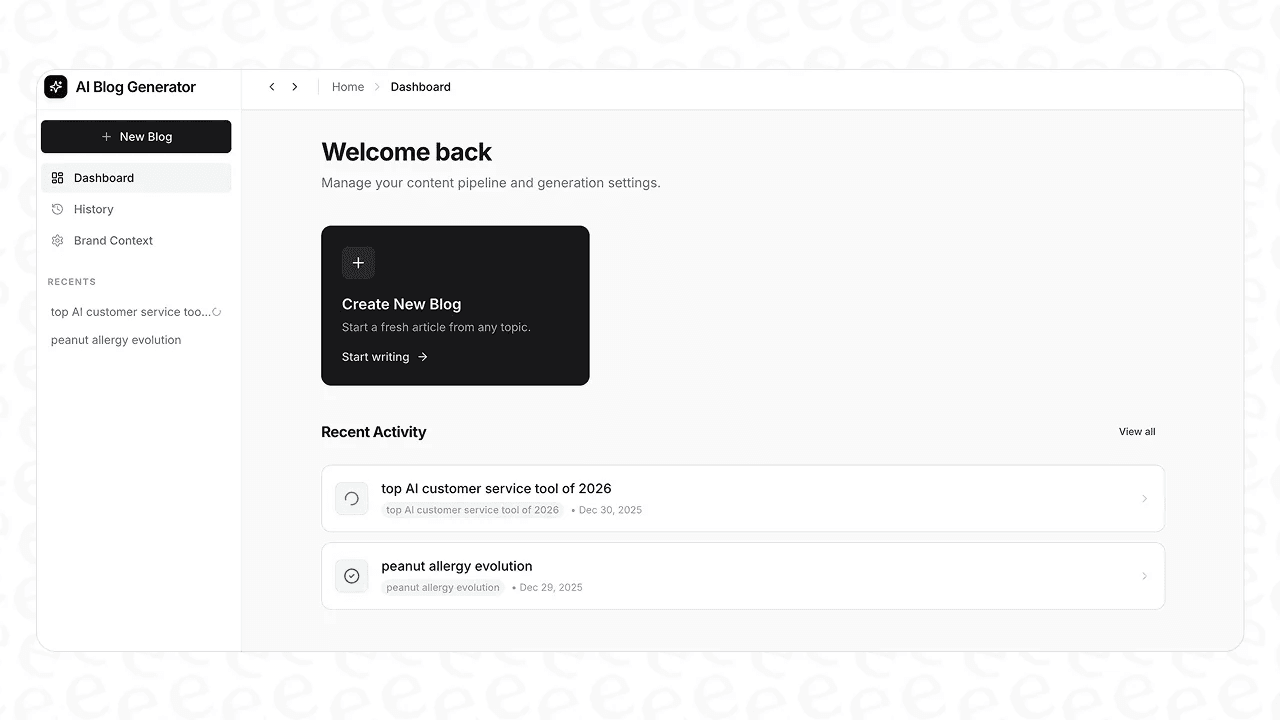
The platform is completely free to try, so you can generate your first blog and see the quality for yourself. The paid plan starts at $99 for 50 blog generations.
AI-driven personalization and customer experience
AI allows marketers to deliver personalized experiences at a scale that just wasn't possible before. According to research from McKinsey, 71% of consumers now expect personalized interactions from brands. AI is what makes meeting that expectation achievable.
Hyper-personalization at scale
Think about streaming services like Netflix and Spotify. They are perfect examples of AI-driven personalization. Netflix’s algorithm doesn't just recommend what you should watch next; it even customizes the thumbnail for a movie based on your viewing history to make it more appealing specifically to you.
This level of personalization is very effective at keeping users engaged because it makes them feel like the service actually gets them. It's a huge step up from the old one-size-fits-all marketing messages.
Smarter customer segmentation and service
Beyond recommendations, AI can analyze customer data to identify specific segments and power intelligent customer service tools that feel more human.
AI algorithms can group customers into micro-segments based on behavior, purchase history, and engagement patterns with a level of detail that manual analysis could never match. This lets marketers create highly relevant messages for each small group, which can increase conversion rates and loyalty.
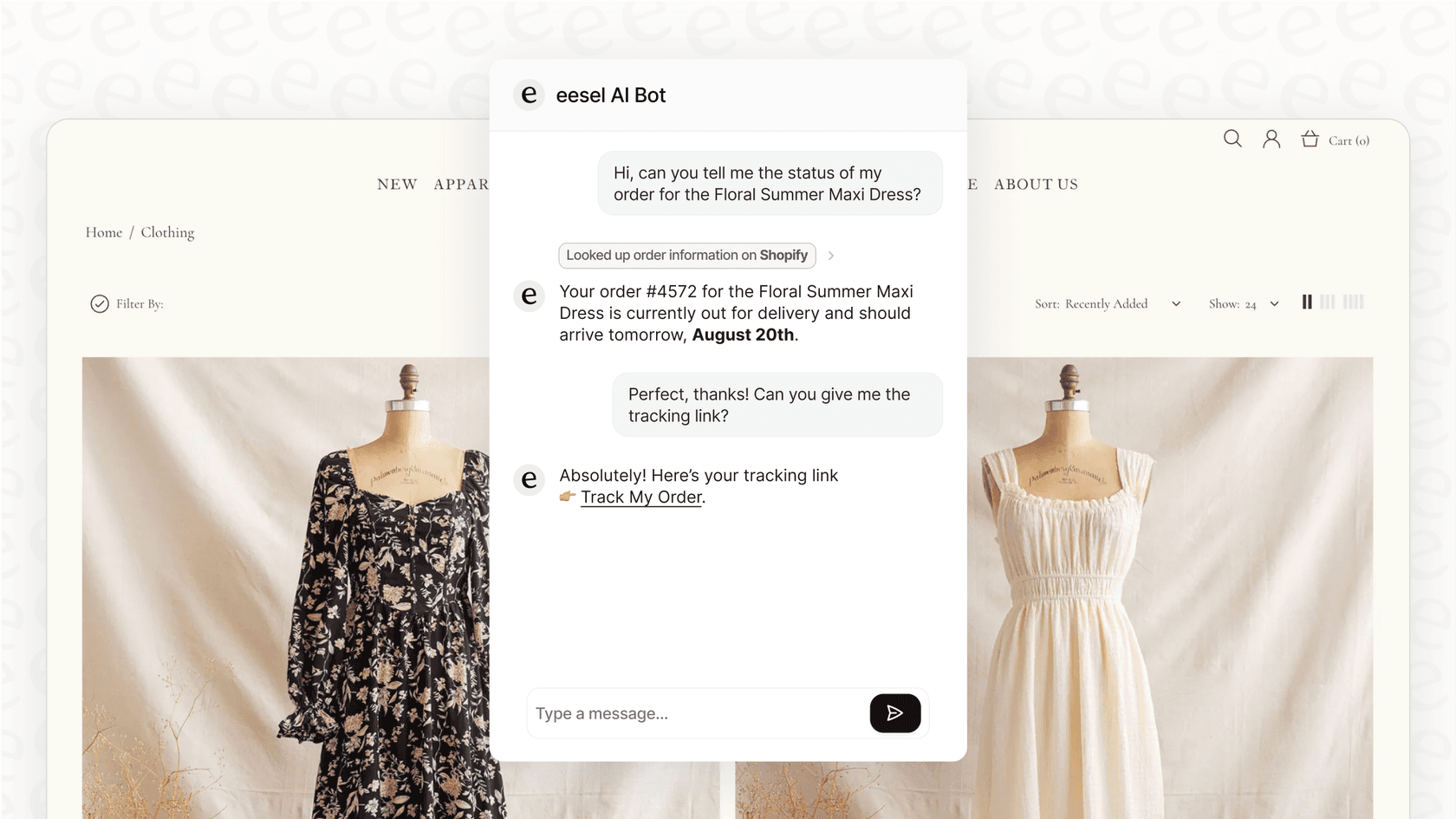
On top of that, modern AI chatbots have gone from clunky and frustrating to sophisticated conversational tools. Platforms like eesel AI let businesses build chatbots that are trained on their own help center articles and internal documents. This ensures customers get accurate, on-brand answers 24/7, improving the customer experience and freeing up human support teams to handle more complex issues.
Full disclosure, I work on this tool so I'm biased, but the category of AI that just plugs into your existing helpdesk/docs is super underrated. I work at eesel AI, the whole thing is built to learn from your past Zendesk tickets, Confluence pages, etc., so it can actually answer questions with your company's specific context and tone. It's not a generalist chatbot that you have to train from zero. A lot of businesses think they have to migrate platforms or build something custom to get decent AI support, but just slotting something into your current workflow is way smoother.
Using AI for data analytics and campaign optimization
AI's ability to process huge amounts of data very quickly gives marketers useful insights to improve campaign performance and predict future trends. It’s like having a team of data scientists working for you 24/7.
Predictive analytics for forecasting trends
AI uses historical data to predict future outcomes, helping marketers make more informed, proactive decisions. Predictive models can forecast which customers are most likely to convert, which content will perform best with a certain audience, or which market trends are about to grow.
For example, GA4 predictive metrics automatically create predictive audiences. These can identify users with a high probability of purchasing or churning in the next seven days, allowing you to target them with specific campaigns before it's too late.
Automating media buying and ad optimization
Programmatic advertising platforms use AI to automate the entire ad buying process, making sure your ads are shown to the right audience, at the right time, and for the best price.
AI algorithms analyze millions of data points in real time to bid on ad placements. They can adjust bids, rotate ad creatives, and reallocate budgets automatically based on what's performing best at any given moment. This gets rid of a lot of the tedious manual work in media buying and usually leads to a higher return on ad spend (ROAS). Most major ad platforms, including Google Ads and Meta, have powerful AI features built right in.
Getting deeper insights from marketing data
AI tools can also analyze unstructured data, like customer reviews, social media comments, and support tickets, to find valuable insights about brand perception and customer sentiment. Marketers can use AI to understand what customers are really saying about their products, brand, and competitors. This raw feedback is a goldmine for improving products, refining marketing messages, and spotting new opportunities.
The risks and limitations of AI in digital marketing
While AI is powerful, it's not a magic bullet. It’s important for marketers to know its limitations and use it responsibly to maintain customer trust.
- Data privacy: AI runs on data, which brings up important ethical questions about consent and security. Marketers have to comply with regulations like GDPR and CCPA. Trustworthy platforms like eesel AI are transparent about their privacy policies and contractually guarantee that your company's data is never used for training third-party models.
- Accuracy and bias: AI models are only as good as the data they're trained on. If the training data is flawed or biased, the AI's output can be inaccurate or discriminatory. Human oversight is needed to fact-check outputs, verify claims, and ensure fairness.
- Lack of strategic nuance: AI can generate content and analyze data with incredible speed, but it lacks real creativity, emotional intelligence, and the strategic thinking a human marketer provides. It's a tool to help, not a replacement for human strategy and intuition.
Making AI work for your marketing strategy
AI in digital marketing is a transformative force that is here to stay. It acts as an amplifier, not a replacement. When used correctly, it automates repetitive tasks, uncovers deep insights from data, and enables personalization at a scale we’ve never seen before. This frees up human marketers to focus on what they do best: strategy, creativity, and building genuine customer relationships.
The key is to treat AI as a capable teammate. Start by identifying a time-consuming task that is slowing your team down, like content creation. By using the right tools, you can significantly increase your output without sacrificing the quality that builds trust with your audience.
To see how AI is transforming the marketing landscape in practice, this video from Georgetown's School of Continuing Studies offers an expert perspective on how AI accelerates content creation, powers analytics, and shifts how modern marketers work.
If you're ready to see how a dedicated AI platform can transform your content strategy, a great first step is to generate a complete, SEO-optimized blog post in minutes. The eesel AI blog writer is entirely free to try, giving you a firsthand look at how powerful a context-aware AI content platform can be.

Frequently Asked Questions
Share this article

Article by
Stevia Putri
Stevia Putri is a marketing generalist at eesel AI, where she helps turn powerful AI tools into stories that resonate. She’s driven by curiosity, clarity, and the human side of technology.
