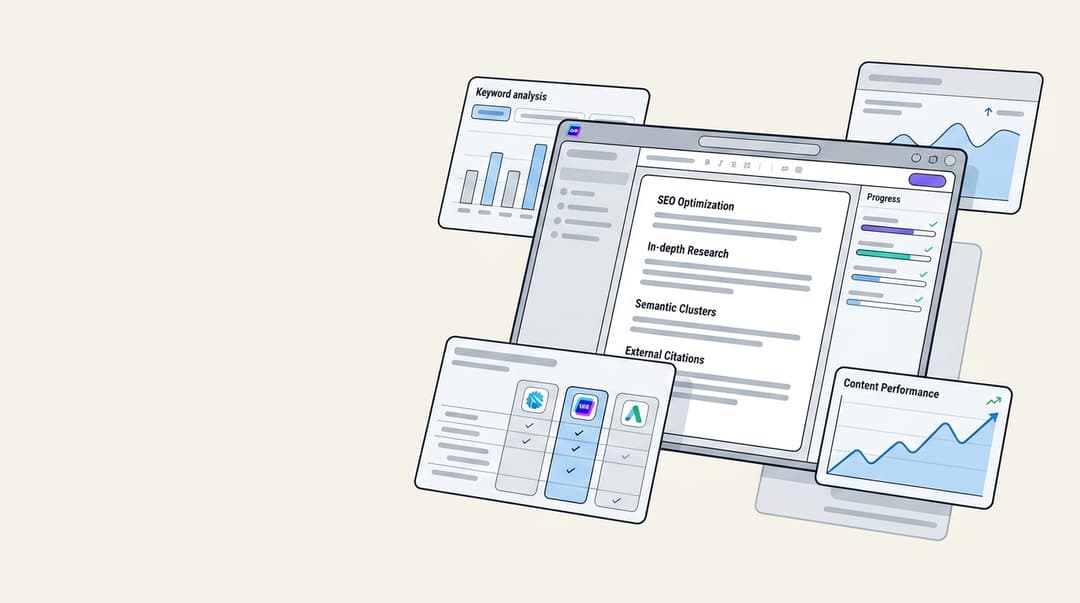
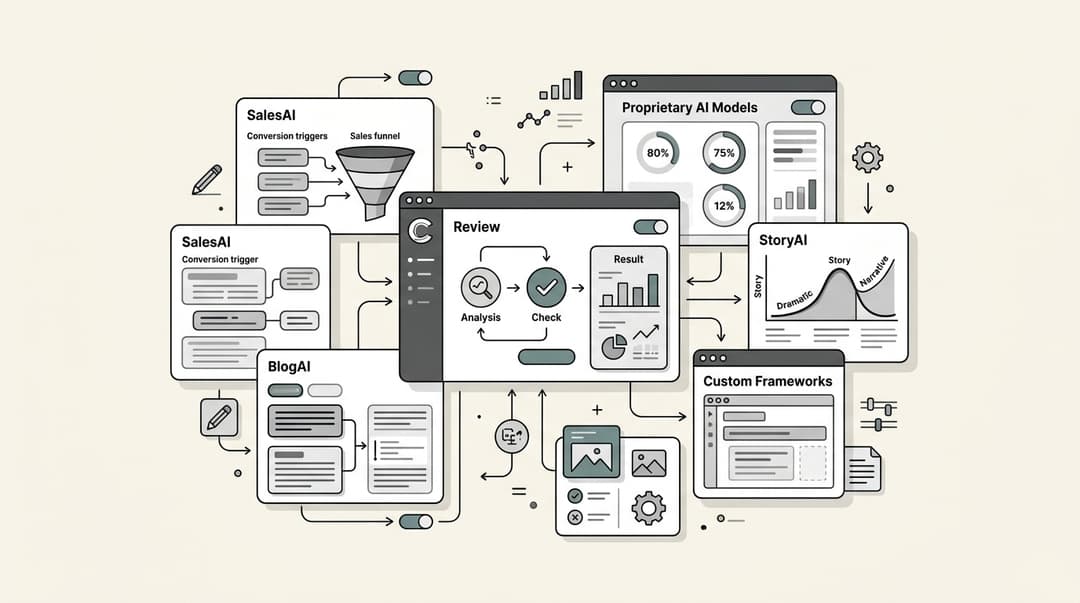
AI blog writer vs content agency: Which is right for your content strategy?

Amogh Sarda
Last edited February 1, 2026
If you're on a marketing team, you know the drill: create more high-quality content, but don't blow the budget or burn out your team. For a long time, the go-to solution was a content agency. Now, AI blog writers have entered the scene, giving everyone a new way to create content.
This isn't just about AI speed versus human strategy. There’s no one-size-fits-all answer here. Your best bet depends on your goals, your budget, and how much you want to be involved in the process. But things are definitely shifting. Advanced tools like the eesel AI blog writer are closing the quality gap, combining AI's efficiency with features that support high-quality content production.
AI blog writer vs content agency: What's being compared?
Before we get into the nitty-gritty, let's be clear on what we're actually comparing. Both options get you content, but they work in very different ways.
What is an AI blog writer?
What is a content agency?
Speed, cost, and scale
When you get down to it, the practical differences between an AI writer and a content agency are about time, money, and the ability to grow.
Speed and volume
This is where AI generally has an advantage. An advanced AI blog writer can generate a complete, well-structured article in minutes. This speed helps teams keep a consistent and high-volume publishing schedule, which is important for building authority with search engines. A single person can produce dozens of quality blog posts in a week, a level of output that is difficult to achieve with a traditional workflow.
A content agency, on the other hand, works on a human schedule. The process includes briefs, research, writing, editing, and approvals. A single, well-researched article can take anywhere from several days to a few weeks. Their output is tied to the size of their team and the number of clients they have, which makes it hard to quickly ramp up your publishing rate.
Cost and investment
The financial side is one of the biggest differences. AI writers usually have a subscription or credit-based price, making them much more affordable. You can start with a low monthly fee and create a good amount of content.
Content agencies are a much bigger financial commitment. You're paying for the expertise, strategy, and project management that comes with their service. Their prices reflect the human hours and overhead involved, which can be a hurdle for startups and smaller businesses.
| Approach | Common Pricing Model | Typical Cost | Best For |
|---|---|---|---|
| AI Blog Writer | Monthly Subscription | "$20 - $300 / month" | Teams focused on high-volume, cost-effective content production. |
| eesel AI Blog Writer | Credits | "$99 for 50 blog posts" | Teams wanting to scale high-quality, publish-ready content efficiently. |
| Content Agency | Monthly Retainer | "$2,500 - $10,000+ / month" | Businesses needing a full-service, hands-off strategic partner. |
| Content Agency | Project-Based Fee | "$10,000 - $25,000+ / project" | Companies with a specific, one-off content campaign or objective. |
| Content Agency | Hourly Rate | "$150 - $200 / hour" | Projects with an undefined scope or requiring specialized consulting. |
Scalability
AI offers almost unlimited scalability. Once you find a tool you like, you can go from 10 articles a month to 500 without a huge jump in cost or effort. The technology doesn't get tired. This makes it great for ambitious content strategies that need to cover many topics quickly.
Quality and strategy
While AI wins on speed and cost, the discussion gets more complicated when you look at content quality and the strategy behind it. This is where human expertise has always had an edge.
Originality and human connection
The best content does more than just answer a question; it connects with the reader. Human writers at agencies are good at finding fresh angles, telling stories, and using emotional intelligence to build a rapport with the audience. They can use personal experience to create a narrative that makes a brand stick.
AI is trained on huge amounts of existing internet data, so it can sometimes create content that feels generic. It can put facts together and follow a structure, but it often lacks a unique voice or a truly original take.
As one expert at Ahrefs pointed out, generic content might solve a reader's problem, but "they won't remember you." That memorability is what builds a loyal audience.While creating content for my app, I used AI extensively to generate text and stories. If these are considered the main content, you might face issues because the AI-generated content often feels artificial. It gives the impression that it wasn’t written by a human, and there’s a certain strangeness to it especially when it comes to deep or lengthy topics.

Accuracy and E-E-A-T
A content agency is responsible for accuracy. They have writers with deep industry knowledge and editors who fact-check every claim. This human oversight is key for building trust with both readers and search engines. Google has been clear that it focuses on rewarding quality content, no matter how it's made. But content made only by AI often doesn't meet the high standards of E-E-A-T without a lot of human checking.
Strategic oversight and brand voice
One of the main reasons to hire a content agency is for their strategic guidance. They don't just write articles; they create a content plan that fits with bigger business goals, like getting leads or building brand awareness. They take time to understand your brand's unique voice, values, and message, and they make sure every piece of content reflects that identity.
Basic AI tools don't have this strategic ability. They produce content in a flat, generic tone that needs a lot of editing to match a specific brand. You have to be the strategist, editor, and brand guardian, which takes a lot of time and skill.
How advanced AI blog writers bridge the gap
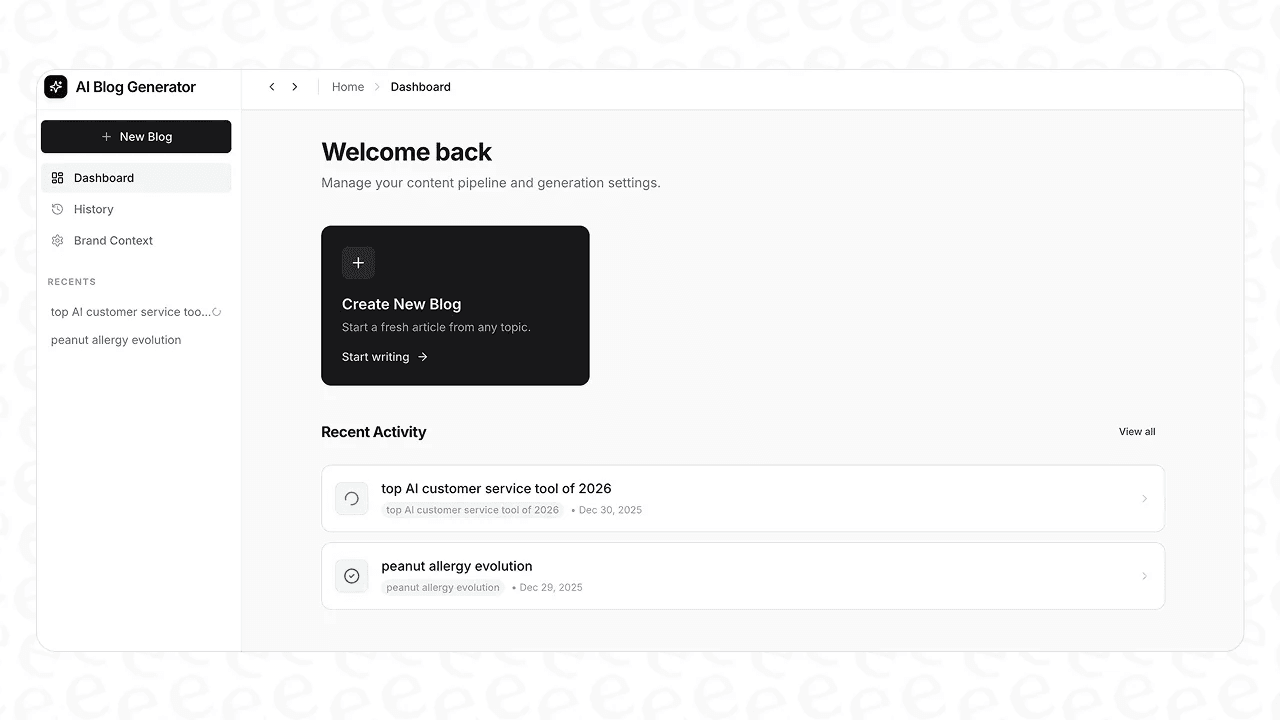
It does more than just generate a simple draft. It creates a complete, publish-ready article that needs very little editing. Here’s how it works:
- Complete, structured content: Instead of a wall of text, it gives you a full blog post with a logical structure, including headings, an intro, a conclusion, and an FAQ section. It handles the formatting for you.
- Automatic assets and media: This is a big one. The tool automatically creates relevant AI images and infographics, builds data tables, and finds and embeds relevant YouTube videos to keep readers engaged.
- Authentic social proof: To add credibility, the tool automatically finds and embeds real quotes from Reddit. This grounds the content in real conversations and shows you understand the community's view.
- Context-aware research: Unlike generic tools, the eesel AI blog writer understands the intent behind your keyword. If you're writing a comparison post, it will automatically find relevant data like pricing and features.
- Built-in SEO and AEO: All content is optimized for traditional search engines (SEO) from the start. It's also optimized for AI Answer Engines (AEO), like Google AI Overviews and Perplexity, which helps your content stay relevant as search changes.
- Proven results: For example, we used this tool at eesel AI to grow our own blog from 700 to over 750,000 daily impressions in just three months by publishing over 1,000 optimized blogs.
The hybrid model: Combining AI and human expertise
The debate is shifting from "AI vs. human" to a focus on collaboration. The best plan for most businesses isn't to pick one or the other, but to create a hybrid model that uses the strengths of both. The future of content creation is a team effort.
The importance of human oversight
No matter which way you go, a human needs to be involved. Google's goal is to reward helpful, people-first content. AI is a great tool to help you create that content more efficiently, but it can't replace human judgment, experience, and creativity.
In fact, studies of top-ranking articles show that the best-performing AI-assisted content is almost always polished by a human editor. With an AI writer, you or someone on your team just becomes the editor, strategist, and final fact-checker.AI gets you 80% there, but that last 20%, the voice, nuance, personality and still needs a human touch. AI is a time-saver, but final check to inject our tone and perspective is very important.
A practical hybrid workflow
A hybrid workflow lets you be as efficient as possible without losing the quality and authenticity that builds trust. Here’s what that looks like:
- Generate (90%): Use an advanced tool like the eesel AI blog writer to do the heavy lifting. It handles the initial research, drafting, structuring, SEO, and creating all the visual and media assets. This gets you 90% of the way there in minutes.
- Refine (10%): Have an in-house expert or a skilled editor spend a little time on the final review. They're not fixing grammar or structure, but adding unique stories, making sure the brand voice is perfect, and doing a final fact-check. This last 10% adds the E-E-A-T that makes content great instead of just good.
A workflow diagram showing a two-step hybrid model using an AI blog writer for generation and human experts for refinement, relevant to the AI blog writer vs content agency decision.
For those interested in seeing a direct comparison in action, the video below shows a fun test pitting a professional blogger against an AI writer to see who comes out on top.
Making the right choice: AI blog writer vs content agency
The choice between an AI blog writer and a content agency comes down to your budget, goals, and internal team. A content agency offers a complete, hands-off partnership, but it comes with a high price tag that many can't afford. A basic AI writer is a low-cost tool for generating text, but it takes a lot of human work to turn that text into high-quality, ready-to-publish content.
For teams that need to scale content without the high cost of an agency or the intensive editing required by basic tools, a sophisticated AI platform can offer a balanced solution. The eesel AI blog writer is designed to produce high-quality, SEO-optimized, and asset-rich content at a scale that is difficult to achieve manually. Instead of a basic draft, the output is a more complete product ready for a final human review.
You can try it completely free and see for yourself how it can change your content workflow.

Frequently Asked Questions
Share this article

Article by
Amogh Sarda
CEO of eesel AI. Amogh Sarda is obsessed with making the ultimate AI for customer service teams. He lives in Sydney, Australia and has previously worked at Atlassian and Intercom. Outside of work he’s usually surfing or on stage doing improv.