SEO can seem challenging for smaller businesses. Powerful tools like Ahrefs and Semrush have price tags, often hundreds of dollars a month, which can be a hurdle for any small business owner.
The good news is, you don't need a large subscription to get results. The key isn't paying for the most expensive software, but finding the right tools that give you what you need without the enterprise-level cost. It’s about being smart with your budget and focusing on what actually improves your ranking.
I’ve spent time testing a bunch of budget-friendly options to see which ones hold up for keyword research, competitor analysis, and especially content creation. After all, data is useless if you can't act on it. The biggest hurdle is almost always producing the content itself, which is where tools like the eesel AI blog writer come in, helping to turn those keyword ideas into published posts.
What are affordable SEO tools?
At the end of the day, SEO tools are just software designed to help you rank higher on Google. They handle the important stuff, like finding keywords, seeing what your competition is up to, checking your site for technical glitches, and tracking your rankings.
"Affordable" doesn't mean weak. It just means these tools are smarter about their features. They skip the bloated, enterprise-level functions that a small business would never use and focus on the core things you actually need. This keeps the price reasonable.
In this review, I'm looking at a few different types of tools that are key for anyone doing SEO on a budget:
- All-in-one suites: These are your general-purpose tools for keyword research and checking on competitors.
- Specialized tools: These are built for one specific job, like coming up with new content ideas.
- AI Content Platforms: These are made to handle the most time-consuming part of SEO: writing good, optimized content consistently.
An infographic showing the three main categories of affordable SEO tools: all-in-one suites, specialized tools, and AI content platforms.
How I picked the affordable SEO tools for this list
To make sure every tool here earned its spot, I judged them on a few simple things:
- Price: This was the first filter. Every tool had to have a starter plan under $50 per month to be considered truly affordable.
- Core Functionality: It couldn't just be cheap; it had to work well. The tool needed to be great at its main job, whether that was finding keywords or writing a full blog post.
- Ease of Use: You shouldn't need a special degree to figure out your SEO software. I chose tools with simple interfaces that anyone could pick up and start using quickly.
- Actionable Data: I looked for tools that provide insights you can actually use. No vanity metrics, just clear data that helps you make better content and improve your rankings.
A quick comparison of the best affordable SEO tools
If you're short on time, here’s a quick look at my top picks.
| Tool | Best For | Starting Price (Monthly) | Key Feature |
|---|---|---|---|
| eesel AI blog writer | AI-Powered Content Scaling | Free to try ($99/50 blogs) | Turns a keyword into a complete, publish-ready blog post with assets |
| Keysearch | All-Around Keyword Research | $24/month | AI-powered "Foresight" engine for content strategy |
| Ubersuggest | Beginners & Site Audits | ~$29/month (kr299/mo) | User-friendly dashboard & integrated AI Writer |
| Mangools | User-Friendly Interface | $49/month | Five-tool suite with an intuitive UI and great UX |
| AnswerThePublic | Content Ideation | $20/month (limited free plan) | Visualizes question-based "search listening" insights |
The 5 best affordable SEO tools in 2026
Alright, let's get into the details. Here's a full breakdown of the top tools I recommend after using them myself.
1. eesel AI blog writer
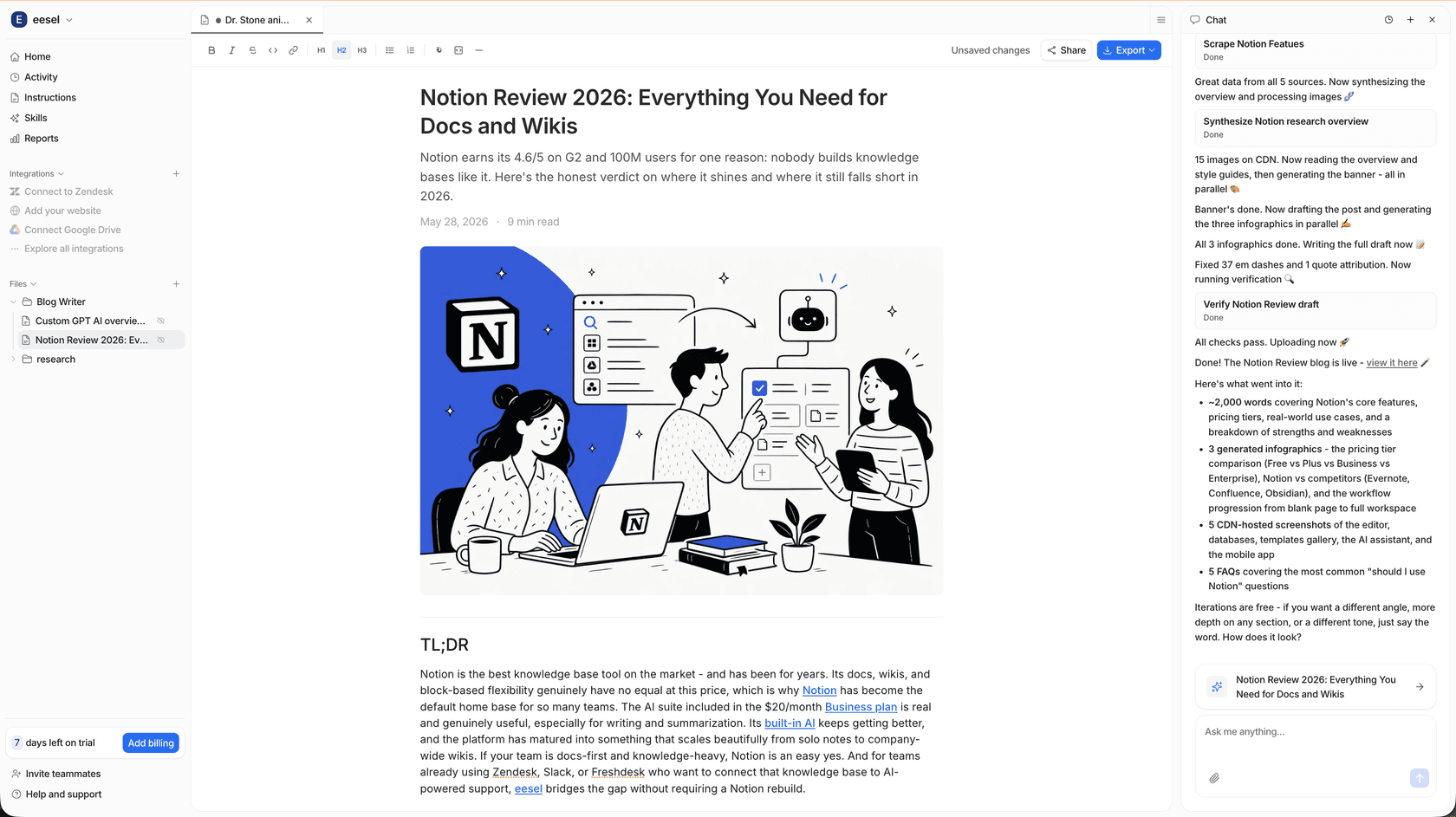
The process is straightforward. You give it a keyword, and it generates a fully researched, structured, and SEO-optimized blog post that’s ready to go. I’m not talking about a rough draft, either. It automatically adds assets like AI-generated images, infographics, and tables. It even pulls in relevant Reddit quotes and YouTube videos to make the content more interesting and credible. It helps streamline the content creation process.
- Pros: The main benefit is efficiency. What used to take hours of research, outlining, and writing now takes just a few minutes. It's also context-aware, so it knows if you need a comparison post or a product review and finds the right information. Plus, it’s optimized for Answer Engine Optimization (AEO), which is important for getting into Google's AI Overviews.
- Cons: This isn't an all-in-one SEO suite. If you need to do deep technical site audits or track keyword rankings daily, you'll want a different tool. The eesel AI blog writer is focused on one thing: creating high-quality content at scale.
- Pricing:
- Free to try: You can generate your first blog post to see the quality.
- Paid: It uses a credit system. A package of 50 blog credits for $99.
- Why it's on the list: It's an affordable and effective way to scale the most important part of any SEO strategy. While many tools provide data for your strategy, the eesel AI blog writer is designed to execute on that strategy by producing content.
2. Keysearch
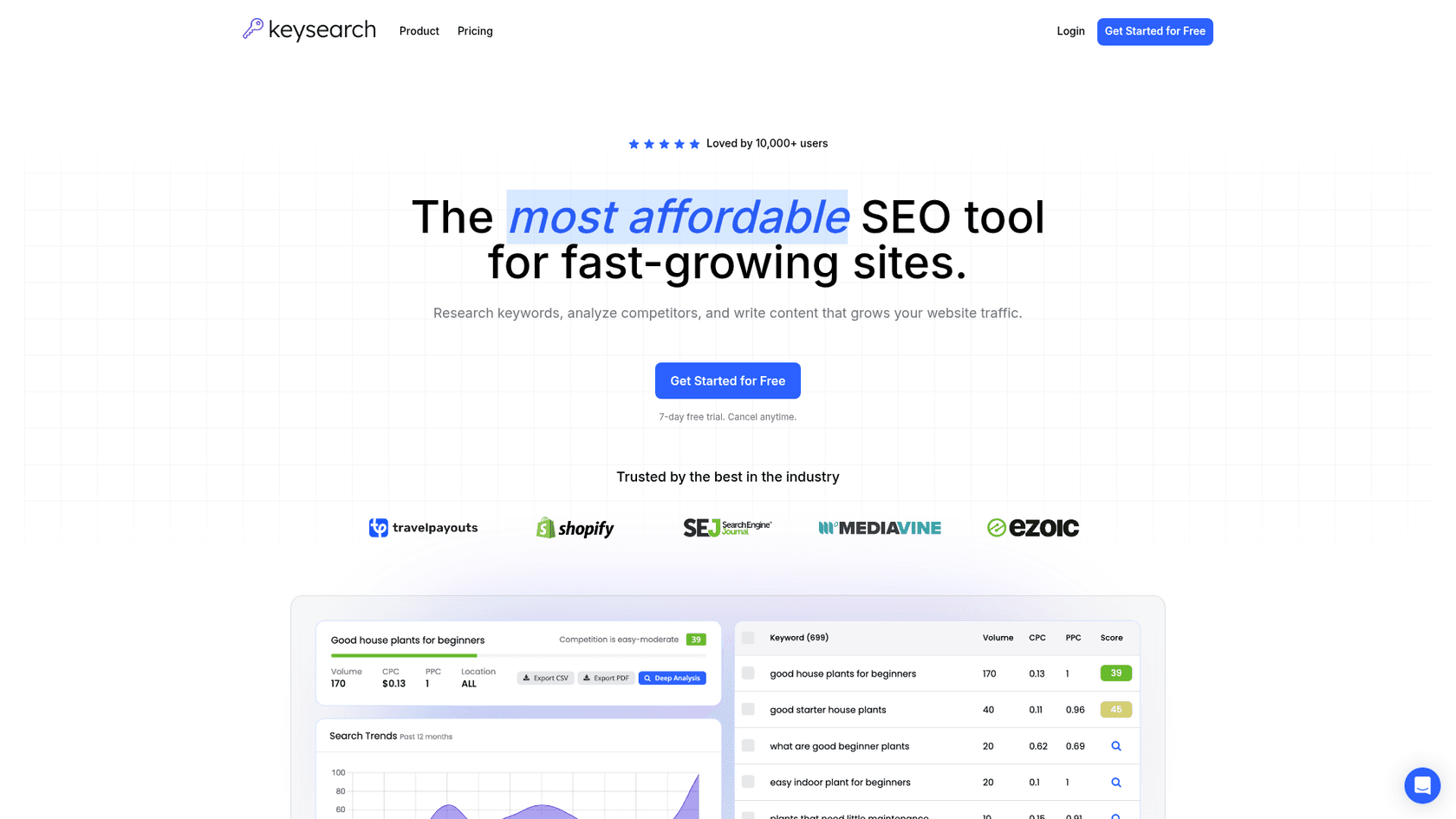
Its biggest strength is keyword research. The keyword difficulty score is one of the most accurate I've seen in a budget tool, and its competitor analysis features are surprisingly good. You can enter a competitor's domain and see the exact keywords they rank for. They also recently added an AI engine called Foresight, which analyzes your site's authority and suggests content strategies and keywords you have a real chance of ranking for.
- Pros: The value for money is fantastic. You get keyword research, competitor gap analysis, rank tracking, and YouTube research all in one plan. The interface is clean and easy to use, so you won't feel lost.
- Cons: Its less comprehensive backlink data compared to premium tools is a consideration, which is common for tools in this price range. This is something to keep in mind if link-building is your main goal.
- Pricing: You can sign up for a 7-day free trial.
- Starter: $24/month
- Pro: $48/month
- Why it's on the list: For anyone starting out or managing a few websites, Keysearch gives you about 80% of the functionality of the big-name tools for a fraction of the cost.
3. Ubersuggest
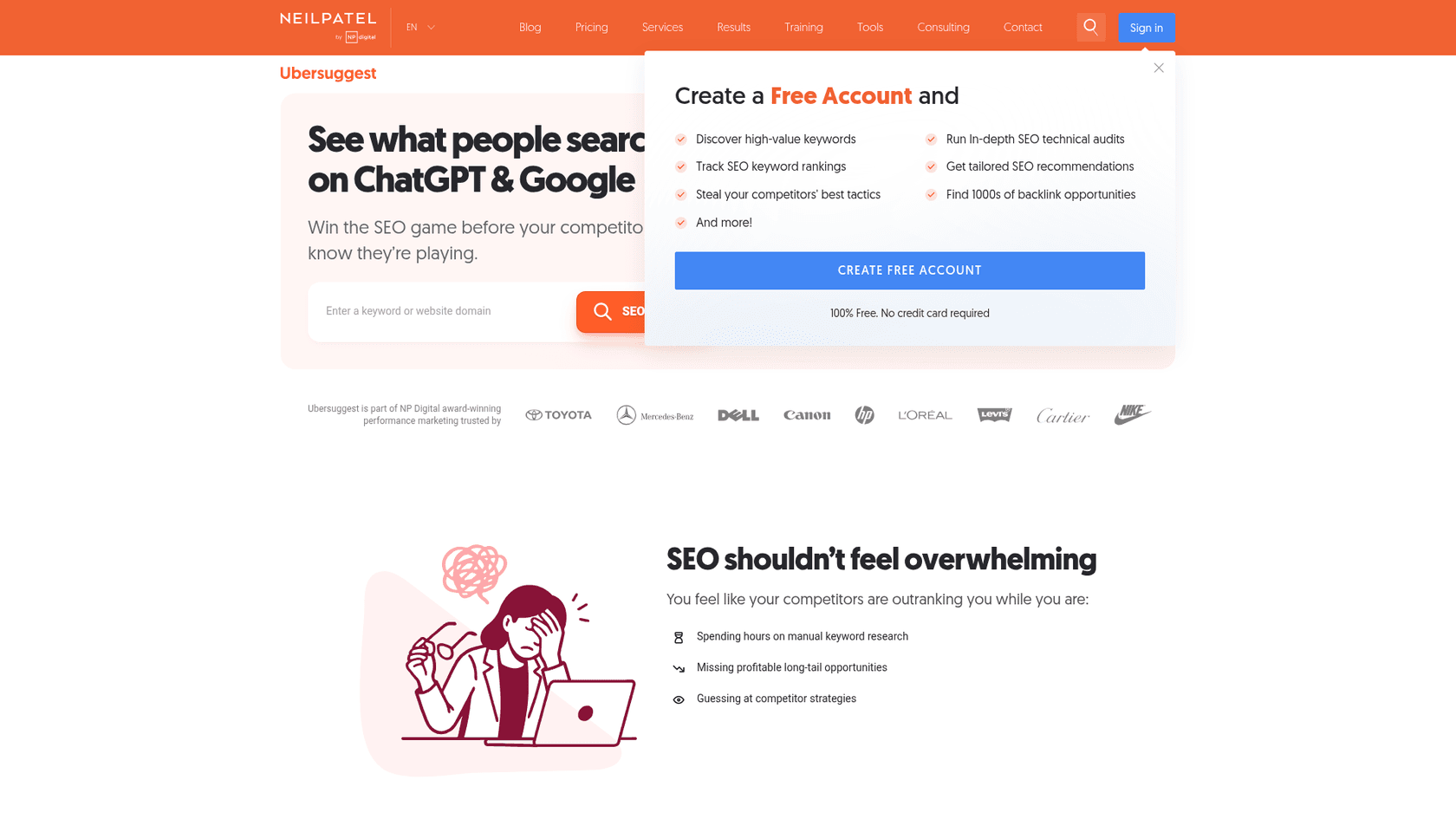
It covers all the basics: keyword ideas, content suggestions, a simple site audit tool that finds technical problems, and traffic estimates for any domain. They also have an integrated AI Writer and recently acquired AnswerThePublic, which has really improved its content idea features. The whole thing is designed to be as simple as possible.
- Pros: The user interface is probably the easiest to navigate on this list, which is great for SEO beginners. They also sometimes offer a lifetime deal, which is an incredible value if you can get it.
- Cons: The credit system can be restrictive. You only get a certain number of data refreshes per day, which can be annoying if you're doing a lot of research. Some people also find the data isn't always as consistent as more specialized tools.
- Pricing: It offers a 7-day free trial and a limited free version.
- Individual: kr299/month (about $29/month)
- Business: kr499/month (about $49/month)
- Why it's on the list: Ubersuggest is a great way to get started with SEO. It provides a solid all-in-one toolset with a gentle learning curve and a nice price.
4. Mangools
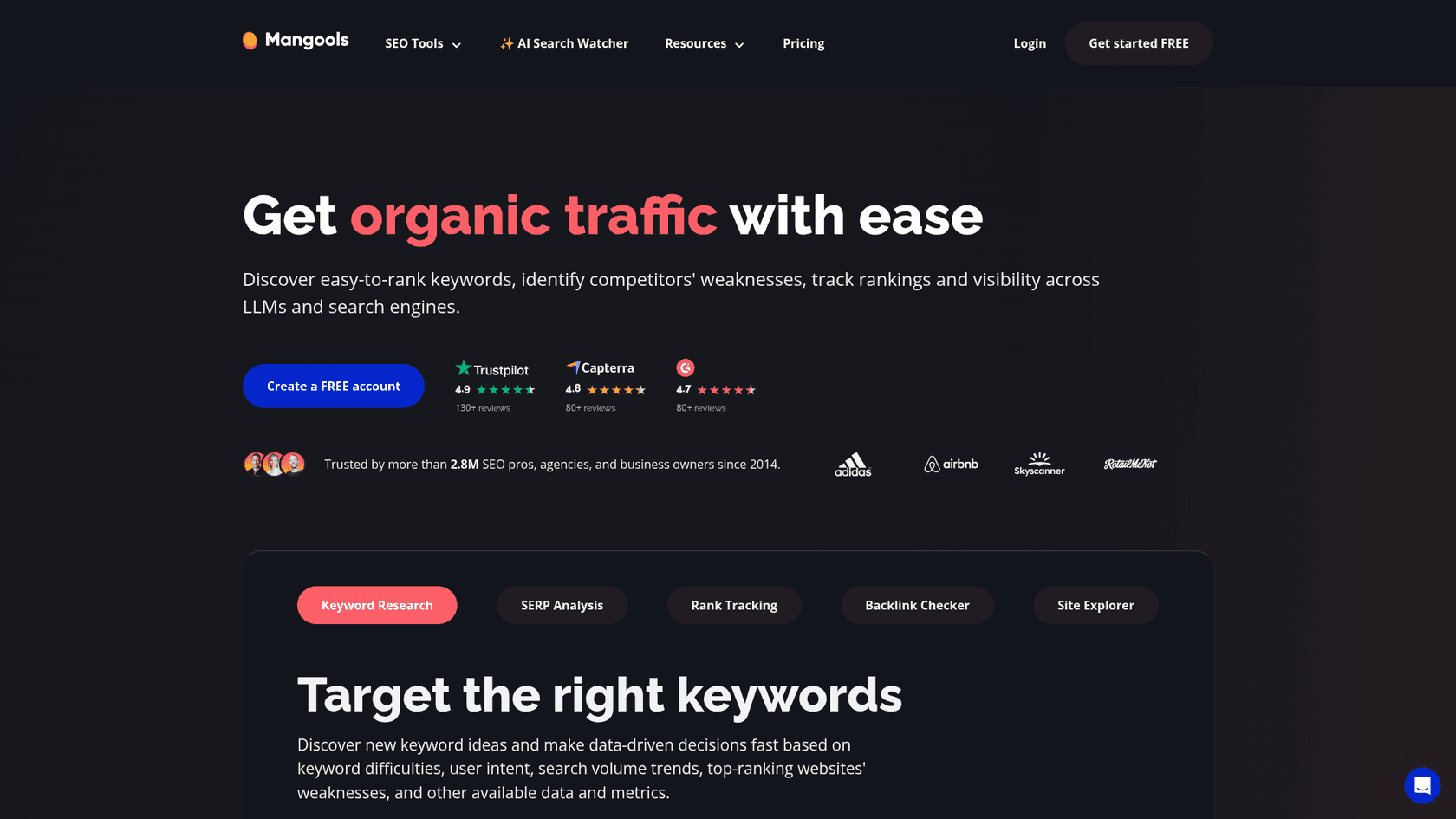
KWFinder is a notable tool in the suite. It's known for its accurate keyword difficulty score and clean layout. It makes finding low-competition, high-impact keywords straightforward. It shows you the SERP results right next to the keyword data, so you can see who you'd be competing against at a glance.
- Pros: The user experience is fantastic. Mangools presents complex SEO data in a way that’s colorful, intuitive, and easy to grasp. Their customer support team is also known for having real SEO knowledge, which is a big plus.
- Cons: Like Keysearch, its smaller backlink database is not as large as the premium tools. The daily search limits on the basic plan might also be an issue for agencies or anyone doing heavy research.
- Pricing: Mangools offers a 48-hour money-back guarantee on their plans.
- Basic: $49/month
- Premium: $69/month
- Why it's on the list: Mangools demonstrates that powerful SEO tools can have a modern and intuitive interface. It’s a great choice for solopreneurs and bloggers who appreciate a clean interface and reliable data.
5. AnswerThePublic
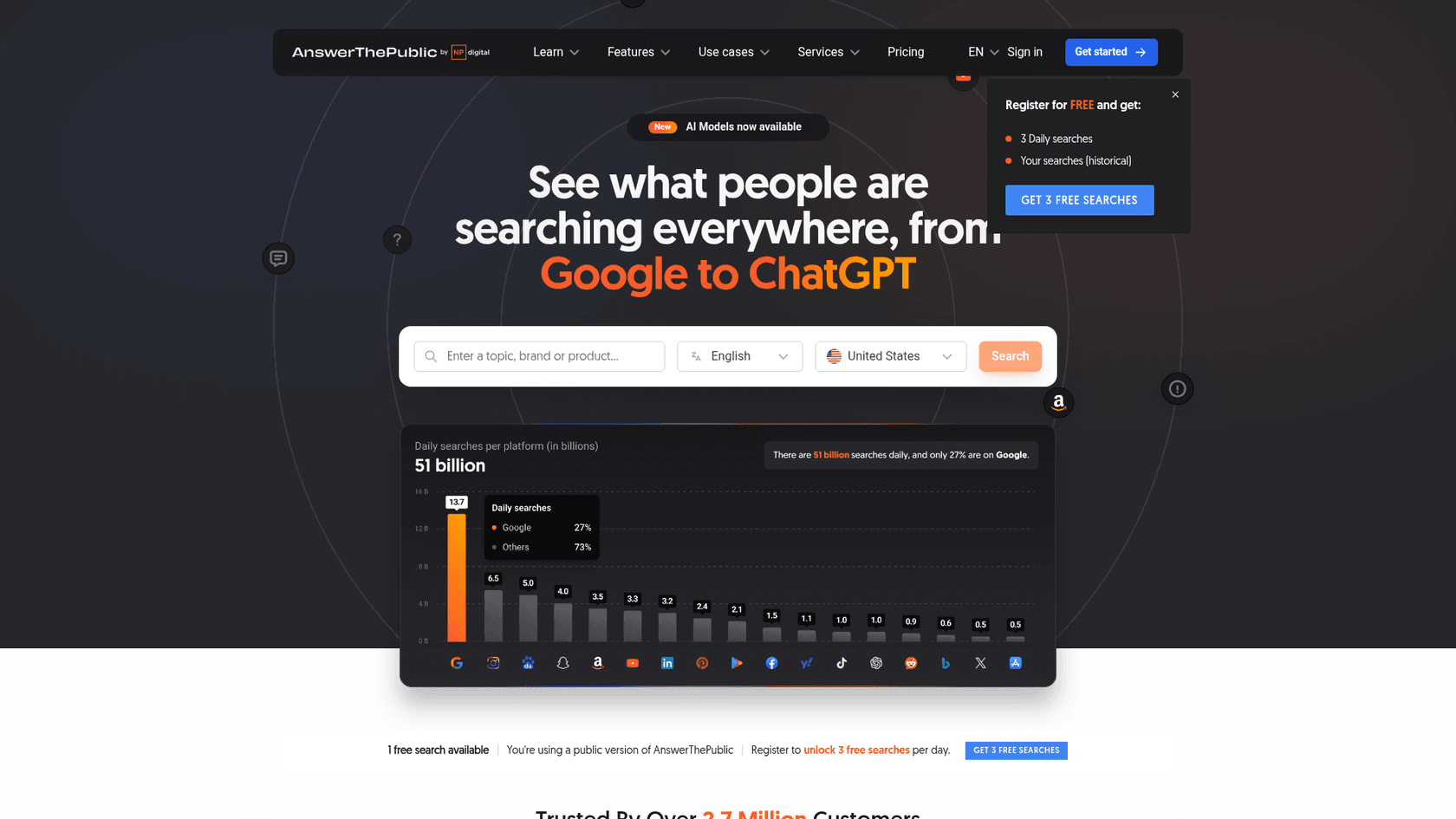
It takes your topic and turns it into visual "search clouds," breaking down queries by questions (what, where, why), prepositions (for, with, to), and comparisons (vs, and, or). It's a useful resource for finding ideas for blog posts, FAQ sections, and videos. It helps you get inside your audience's head and understand what they're really looking for.
- Pros: It’s an amazing tool for brainstorming and finding long-tail keywords you'd never think of otherwise. The visual format is creative and helps you spot new content angles. It's also very cheap.
- Cons: This is a very specialized tool, not an all-in-one suite. It gives you ideas, but it doesn't offer deep data on search volume or keyword difficulty on its free plan. It’s best used with another tool (like Keysearch) to validate the ideas.
- Pricing: There's a free plan available with a few searches per day.
- Starter: $20/month ($13.33/month if you pay yearly)
- Growth: $40/month ($26.67/month if you pay yearly)
- Why it's on the list: It solves one of the biggest problems for content creators: coming up with a steady stream of relevant ideas that match what your audience is searching for. It's a cheap and powerful addition to any SEO toolkit.
Essential free tools to complement your toolkit
- Google Search Console: This is the source of truth for your site's performance in Google search. It shows you clicks, impressions, the keywords you're ranking for, and any indexing problems. It's an absolute must-have.
- Google Analytics 4: This is crucial for understanding what people do after they land on your site. It helps you track where your organic traffic goes, which pages are popular, how long people stay, and which content leads to sales or sign-ups.
- Google Keyword Planner: It was built for Google Ads, but it's still a great free resource for getting keyword volume estimates and discovering new ideas directly from Google.
Reading about tools is one thing, but seeing them in action can provide a different perspective. For a deeper dive into how different affordable SEO tools compare for solopreneurs and small businesses, this video offers a helpful walkthrough of several options.
Which affordable SEO tool should you choose?
The right tool for you really depends on your biggest need right now. Here’s a quick summary:
- For all-around keyword research on a budget, you can't go wrong with Keysearch.
- For beginners who want a super easy-to-use interface, start with Ubersuggest or Mangools.
- For generating an endless stream of content ideas, add AnswerThePublic to your stack.
Ultimately, the challenge in SEO is execution. A list of keywords is valuable, but that value is only realized when it's turned into quality content. Data provides direction, but content is what ranks.
This is an area where the eesel AI blog writer is useful. It's designed not just as a data tool but as a content generator that helps turn an SEO strategy into blog posts. It connects the research phase with the writing phase.
Since it's free to try, there's no reason not to generate your first blog and see for yourself how it can change your content workflow.