How to reduce SaaS churn: Strategies, calculations, and AI-powered prevention

Stevia Putri
Last edited March 3, 2026
Customer churn is the silent killer of SaaS growth. You can spend months acquiring new customers, optimizing your funnel, and perfecting your product, but if customers keep leaving, your business stays stuck. According to the Zendesk Customer Experience Trends Report 2023, 73% of consumers will switch to a competitor after multiple bad experiences. That is a sobering statistic for any SaaS leader.
The upside? Churn is not inevitable. With the right strategies and modern AI-powered tools, you can identify at-risk customers before they leave and take action to keep them engaged. In this guide, we will break down what SaaS churn actually is, how to calculate it correctly, why customers leave, and how to build a churn prevention strategy that works.
What is SaaS churn and why does it matter?
Customer churn rate is the percentage of customers who stop doing business with you over a specific period. In SaaS, this usually means customers who cancel their subscriptions. But there's an important distinction to understand: customer churn is not the same as revenue churn.
Customer churn measures the number of customers you lose. Revenue churn measures the revenue you lose from those customers. A customer on your $50/month plan who cancels hurts less than one on your $500/month plan. That's why tracking both metrics matters.
SaaS businesses are particularly vulnerable to churn because of the subscription model. Unlike traditional software where you make a one-time sale, SaaS revenue depends on keeping customers month after month. The median gross dollar churn in the SaaS industry is around 14%, according to industry benchmarks. If your churn is above that, you're losing ground to competitors.
The impact goes beyond lost revenue. High churn signals deeper problems: product-market fit issues, poor customer support, or onboarding failures. It also kills your growth economics. Acquiring a new customer costs significantly more than retaining an existing one. When customers leave, you're not just losing their monthly payments. You're also burdened with the cost of replacing them.
How to calculate SaaS churn rate
Time to get practical. Here are the essential formulas every SaaS company should track.
Customer churn rate formula
The basic formula is straightforward:
(Lost customers ÷ Total customers at start of period) × 100 = Churn rate
Here is an example. Say you started January with 200 customers and lost 15 by the end of the month. Your calculation would be: 15 ÷ 200 = 0.075, then 0.075 × 100 = 7.5% monthly churn rate.
Revenue churn rate formulas
For SaaS companies, revenue churn often matters more than customer count. There are two ways to calculate it.
Gross revenue churn shows pure revenue loss without factoring in expansion revenue from existing customers:
(Churned revenue ÷ Previous period MRR) × 100 = Gross revenue churn rate
Net revenue churn factors in expansion revenue (upsells, cross-sells) to show your true growth picture:
[(Churned revenue - Expansion revenue) ÷ Previous period MRR] × 100 = Net revenue churn rate
Net revenue churn is the metric that matters most for growing companies. If your expansion revenue exceeds your churned revenue, you achieve negative churn, which means you're growing even without adding new customers. Zendesk, for example, reports 112% net revenue retention, meaning they grow 12% annually from existing customers alone.
What is a good churn rate?
A good monthly churn rate for SaaS typically falls between 5% and 7%. But context matters. B2B enterprise SaaS should aim lower (2-5%) because of longer sales cycles and higher contract values. B2C or SMB-focused SaaS might see higher churn (5-10%) and still be healthy.
Industry also plays a role. E-commerce SaaS often sees 70-80% annual churn because of the nature of online retail. Customer support SaaS like Zendesk targets below 14% to stay competitive.
Why SaaS customers churn
Understanding why customers leave is the first step to keeping them. Here are the most common causes.
Poor customer support experiences
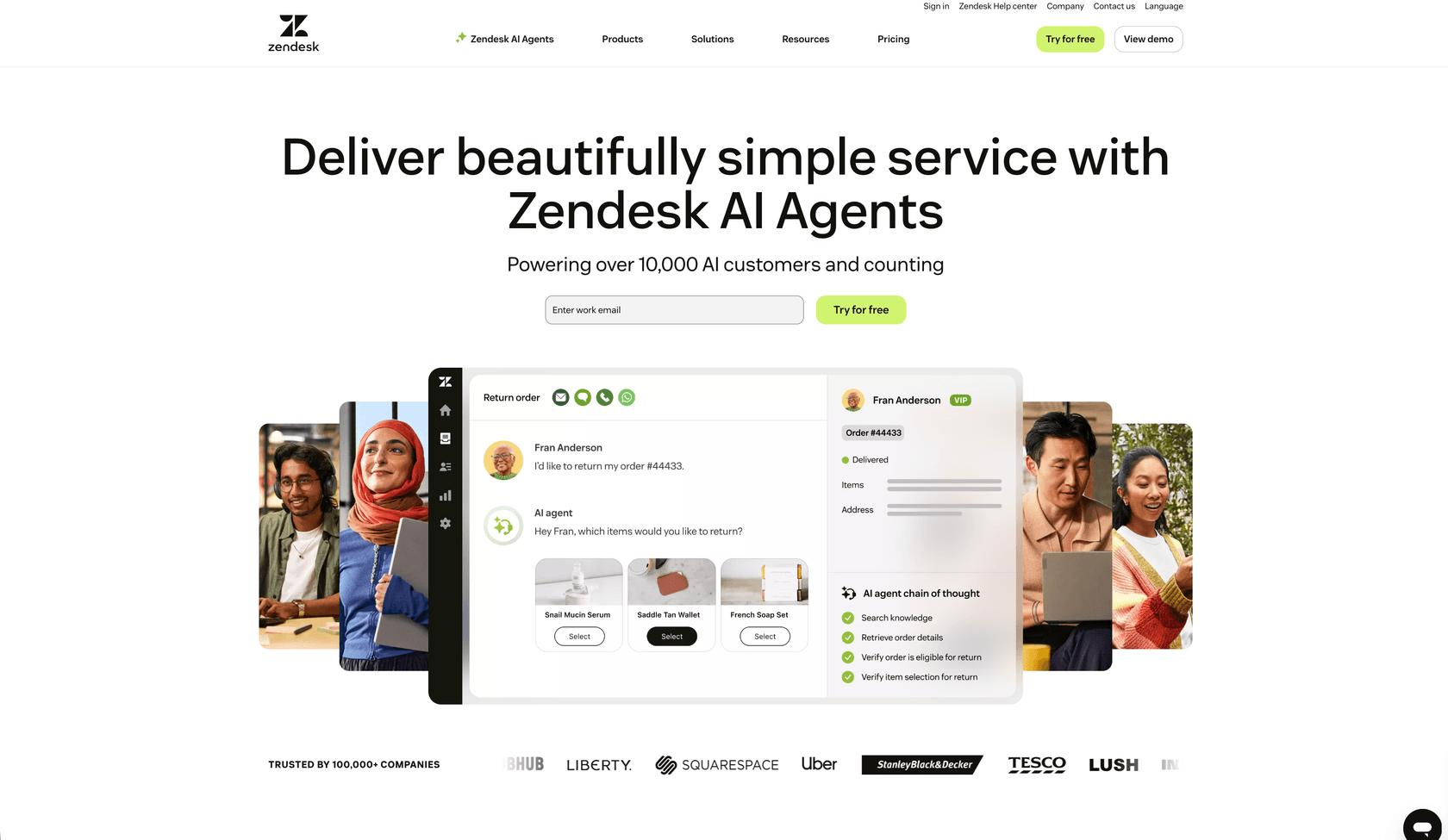
According to Zendesk's CX Trends Report, 80% of consumers expect support agents to help them with everything they need. When customers encounter unhelpful reps, long wait times, or constant transfers, frustration builds. More than half of consumers will switch to a competitor after just one bad experience.
Product adoption failures
Customers who don't achieve value quickly are at high risk of churning. This often stems from poor onboarding, confusing interfaces, or features that are hard to discover. Teresa Anania, VP of Global Customer Success at Zendesk, emphasizes that time-to-value is their go-to metric for this reason.
Competitive pressures
Sometimes churn is not about what you did wrong but what competitors did right. Better pricing, missing features, or superior user experiences can lure customers away. Monitoring competitor movements and customer feedback helps you stay ahead.
Strategies to reduce SaaS churn
Now let us talk solutions. Here are proven strategies that work.
Adopt a customer-first mindset
Put customer needs at the center of organizational decision-making rather than focusing solely on products or profitability. This means listening to feedback, anticipating needs, and delivering personalized experiences. When customers feel understood and valued, they stick around.
Identify at-risk customers early
The key to preventing churn is spotting warning signs before it's too late. Look for these signals:
- Support ticket escalation patterns, especially involving management
- Declining CSAT scores over 30-60 days
- Reduced product usage or login frequency
- Multiple unresolved technical issues
- Requests for competitor comparisons
Zendesk's approach combines support data with product usage to predict churn 60+ days in advance. When support and usage indicators align, churn risk increases exponentially.
Improve time-to-value
Streamline your onboarding to help customers achieve their first win quickly. This might mean simplifying setup, providing guided tutorials, or offering personalized onboarding calls. The faster customers see value, the less likely they are to leave.
Implement loyalty programs
Reward long-term customers with exclusive benefits, discounts, or early access to new features. These programs incentivize staying and can turn satisfied customers into advocates who refer others.
How AI-powered support prevents churn
Traditional churn prediction requires data science teams, months of setup, and complex modeling. Modern AI offers a different approach.
The AI teammate approach
Instead of configuring another tool, think of AI as hiring a teammate. Like any new hire, an AI teammate learns your business from existing data (past tickets, help center articles, macros), starts with guidance, and levels up to work autonomously. The difference is what takes a human weeks to learn, AI learns in minutes.
This teammate model means you can see how the AI performs before it's customer-facing. Run simulations on past tickets to measure quality. Start with the AI drafting replies for review. Expand scope only when confident.
Real-time churn risk detection
AI can analyze customer conversations as they happen, identifying sentiment shifts and frustration signals that humans might miss. It can flag at-risk accounts based on:
- Negative sentiment in support tickets
- Escalation language or mentions of cancellation
- Declining engagement patterns
- Unresolved issues spanning multiple interactions
Automated interventions
When risk is detected, AI can take immediate action: routing frustrated customers to your best-equipped agents, prioritizing urgent cases, or even intervening directly with personalized responses. This proactive approach prevents small issues from becoming churn events.
AI-powered churn prevention with eesel AI
At eesel AI, we've built an AI teammate specifically for churn prevention. Here's how it works.
Connect eesel to your help desk (Zendesk, Freshdesk, or others). It immediately learns from your past tickets, help center articles, and macros. No manual training or documentation uploads required. Within minutes, eesel understands your business context, tone, and common issues.
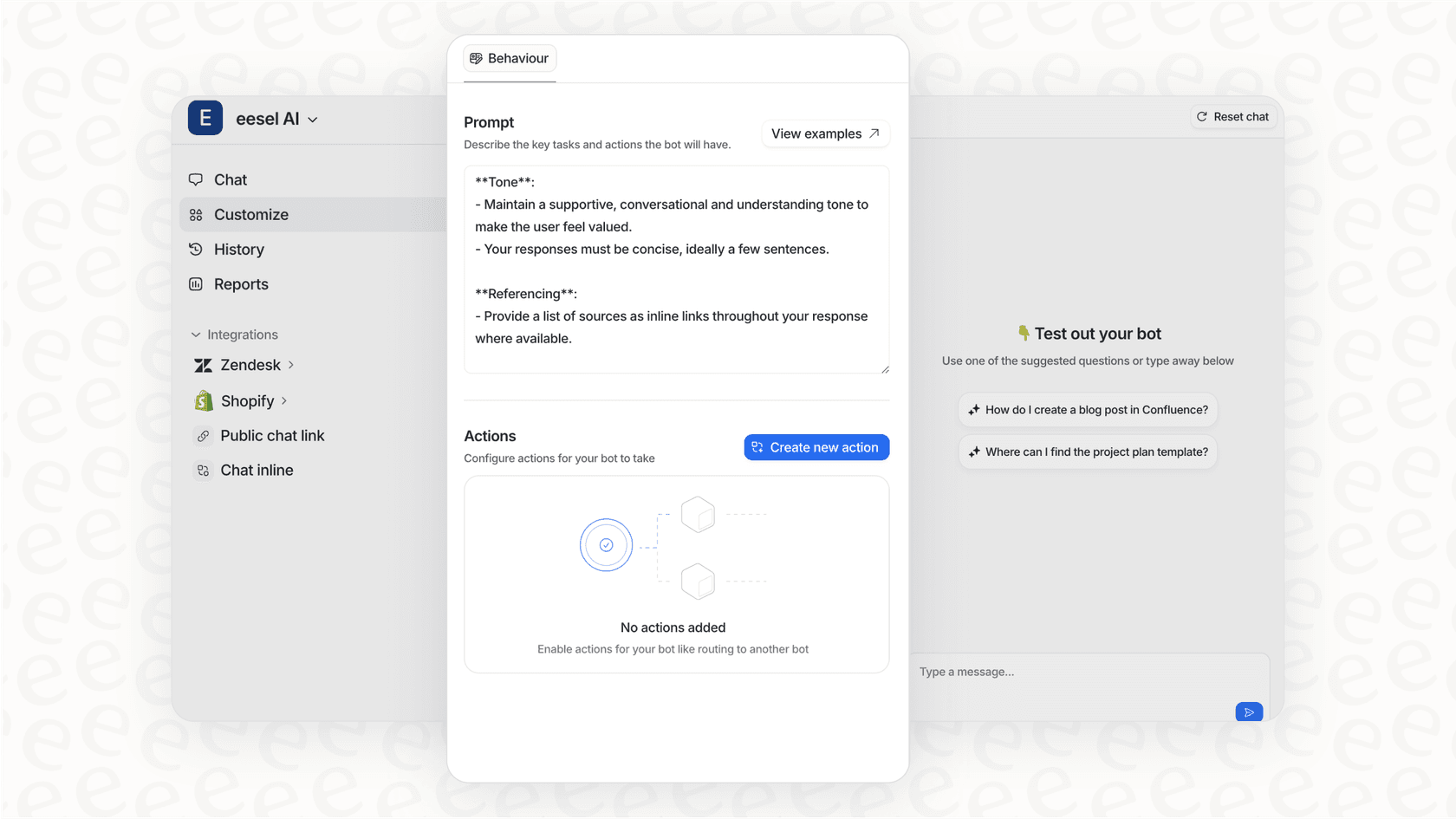
Start with guidance. Have eesel draft replies that your agents review before sending. Limit it to specific ticket types or business hours. This isn't a limitation. It's how you verify eesel understands your business before expanding its role.
As eesel proves itself, level up to autonomous. Let it send replies directly. Handle all frontline support. Work 24/7. Escalate only the edge cases you define, in plain English: "If the refund request is over 30 days, politely decline and offer store credit." "Always escalate billing disputes to a human."
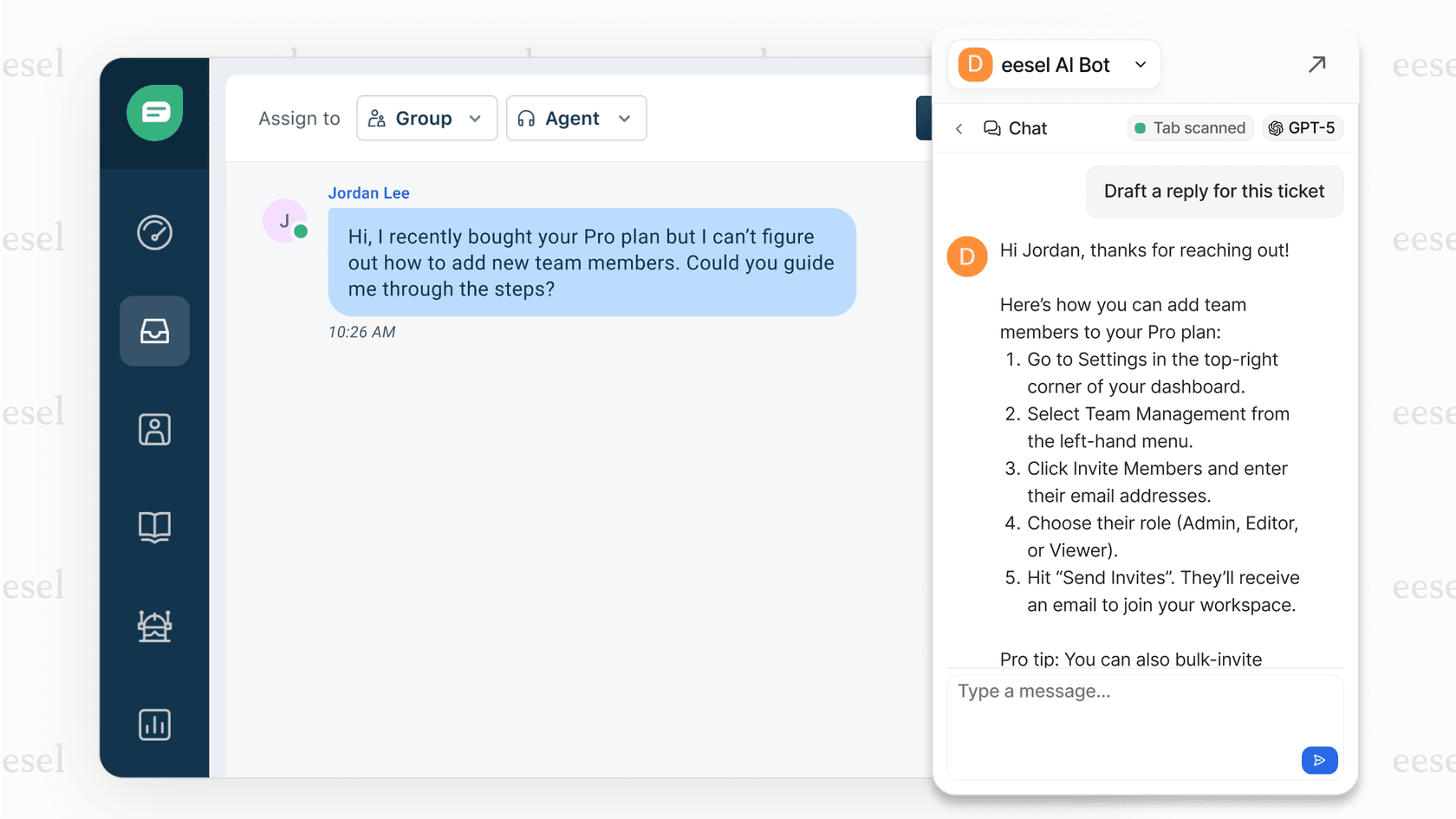
The result is proactive churn prevention. eesel identifies at-risk customers through conversation analysis, escalates complex issues intelligently, and provides 24/7 coverage to catch issues early. Mature deployments achieve up to 81% autonomous resolution with payback periods under two months.
Choosing your churn prevention strategy
Every SaaS company is different. Here's how to choose the right approach for your situation.
First, assess your current churn rate against industry benchmarks. If you're above 14% gross dollar churn, you have work to do. If you're below 7%, you're in good shape but can still improve.
Next, evaluate your support team's capacity. If your team is overwhelmed with tickets, AI-powered solutions can help scale without proportional headcount growth. If you have a small team handling complex issues, a copilot approach (AI drafting for human review) might be the right starting point.
Consider quick wins first. Improving response times, fixing onboarding friction, and addressing common support issues can deliver immediate churn reduction while you evaluate longer-term solutions.
Finally, think about scalability. Manual churn prevention works at small scale but breaks as you grow. AI teammates offer a scalable way to maintain personalized, proactive support without linearly increasing headcount.
Reduce SaaS churn with AI-powered support
Churn prevention is not about reactive fixes. It's about proactive engagement that catches issues before they become problems. The companies that excel at retention don't wait for customers to complain. They identify at-risk accounts early and intervene with value-driven outreach.
Modern AI teammates make this approach accessible to companies of all sizes. Instead of requiring data science teams and months of implementation, solutions like eesel AI learn from your existing data in minutes and start delivering value immediately.
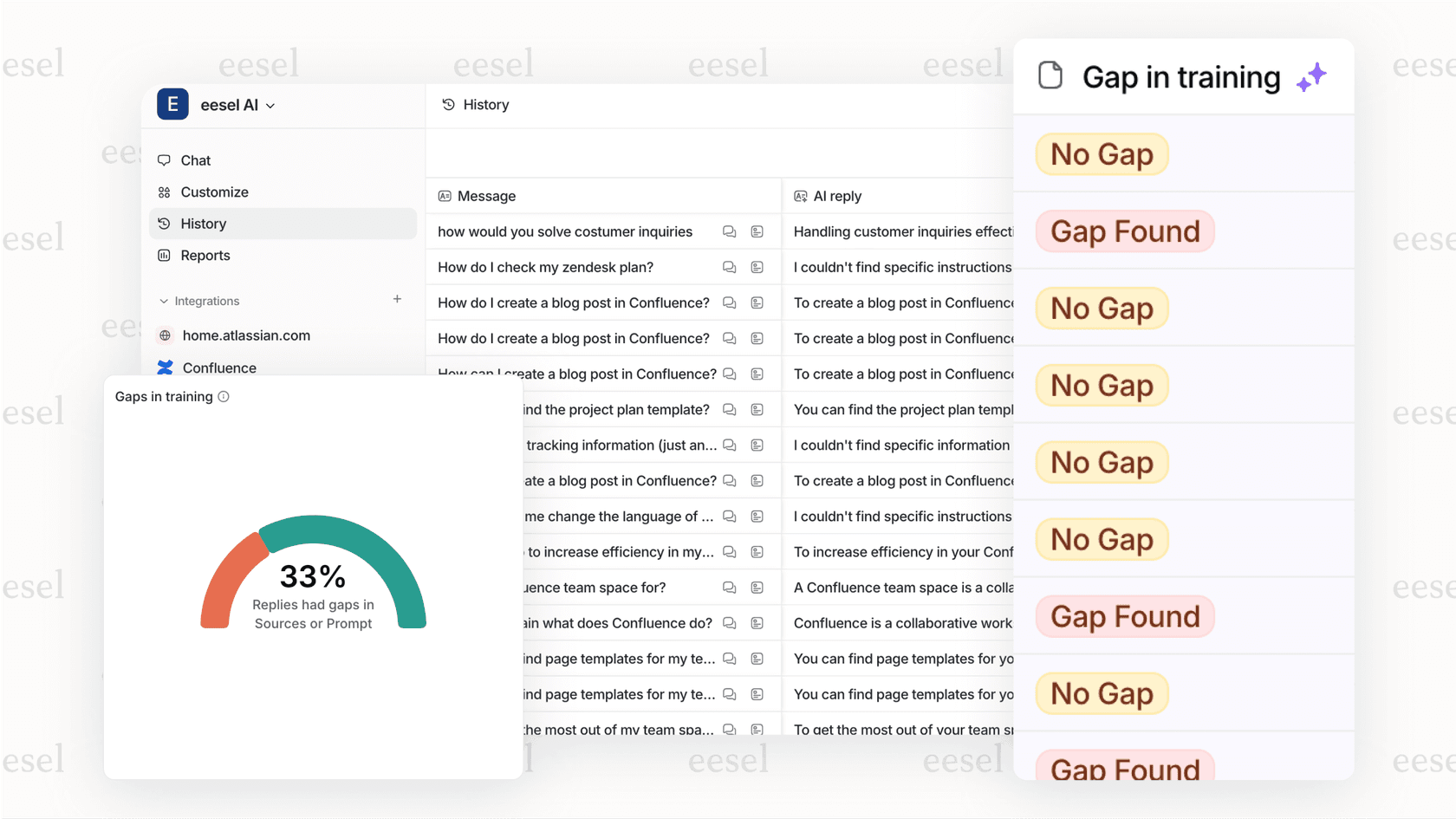
If you're looking to reduce churn and scale your customer success efforts, consider inviting an AI teammate to your team. Start with a free trial to see how eesel AI can help you identify at-risk customers, deliver faster support, and ultimately keep more of the customers you've worked hard to acquire.


Frequently Asked Questions
Share this article

Article by
Stevia Putri
Stevia Putri is a marketing generalist at eesel AI, where she helps turn powerful AI tools into stories that resonate. She’s driven by curiosity, clarity, and the human side of technology.