Zendesk SaaS changelog: How to track product updates in 2026

Stevia Putri
Last edited March 4, 2026
Staying current with Zendesk updates is not just about knowing what is new. It is about avoiding surprises when a breaking change affects your integrations, preparing for deprecations before they become emergencies, and understanding when new AI features might actually help your team.
If you are managing a Zendesk instance, you have probably experienced that moment of panic when something stops working and you realize you missed an announcement from three months ago. Let's fix that.
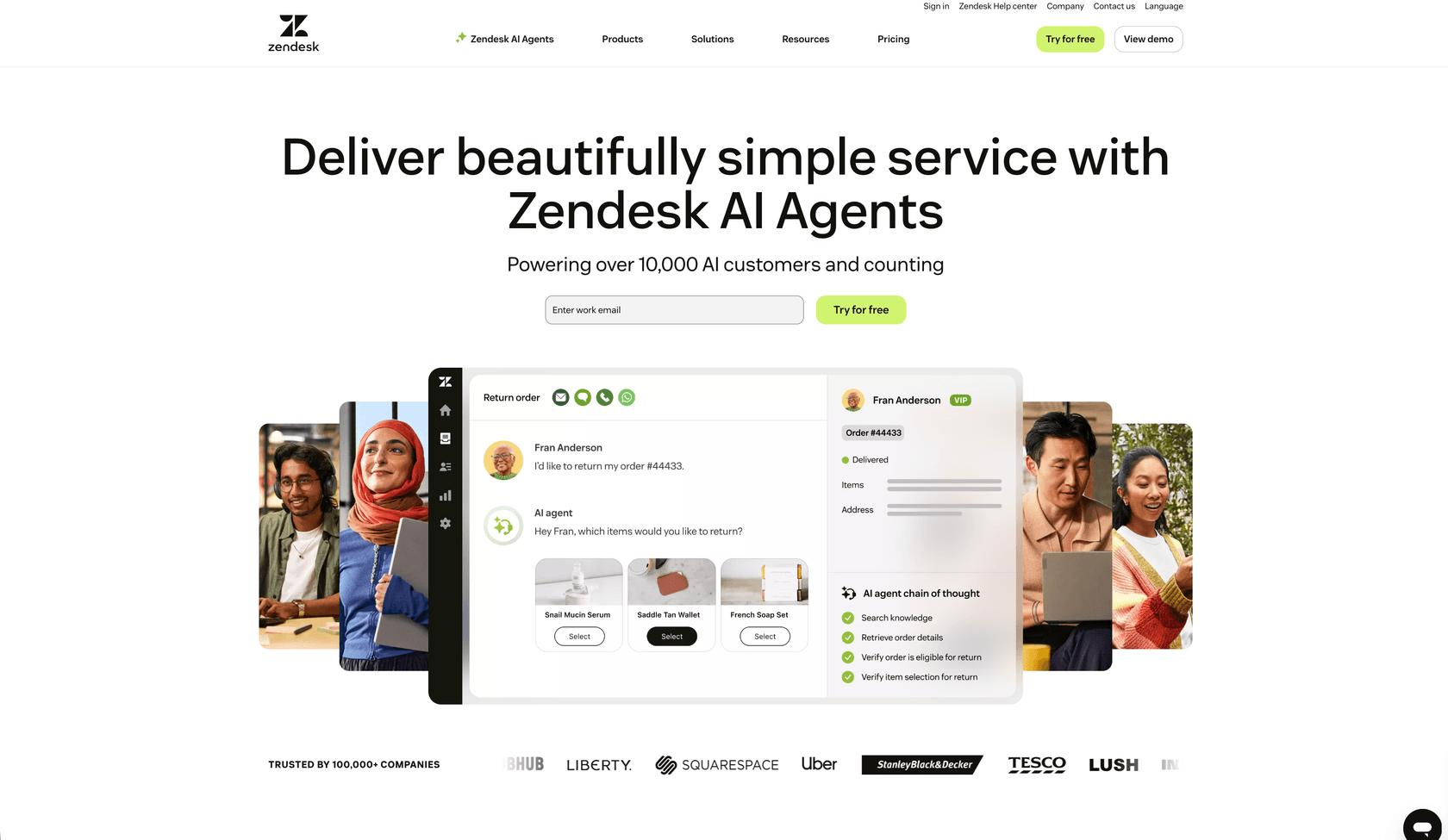
Where to find Zendesk SaaS changelog updates
Zendesk maintains several different changelog sources, each serving a different purpose. Knowing which one to check (and when) will save you from hunting through multiple pages every week.
Product release notes
The main Zendesk release notes live on their support site and get updated weekly. These cover new features, improvements, and bug fixes across the entire product suite: Support, Chat, Talk, Guide, and the various AI products.
Here is what you need to know: these notes are organized by product area (Admin Center, Voice, Copilot, AI Agents, etc.) and clearly mark what is new versus what has been fixed. If you only check one source, make it this one. The weekly cadence means you can review it every Monday and stay current without drowning in notifications.
Developer API changelog
For teams building on Zendesk or maintaining integrations, the developer API changelog is essential. This is where breaking changes, deprecations, and new endpoints get announced.
The format here is different from product release notes. Each entry includes:
- The date the change was announced
- Whether it is a breaking change, deprecation, or addition
- The specific API or feature affected
- A description of what changed
- Links to relevant documentation
This is the source you need to monitor if you have custom apps, API integrations, or anything built on Zendesk's platform. Breaking changes here can break your workflows.
Web Widget and SDK changelogs
If you are embedding Zendesk messaging on your website or building mobile apps with their SDKs, you need the Web Widget changelog and the corresponding SDK changelogs.
These get updated less frequently but contain critical information about JavaScript API changes, mobile SDK updates, and deprecation timelines for older widget versions. The Web Widget changelog in particular includes detailed notes about accessibility improvements, which matter if you are concerned about WCAG compliance.
Recent Zendesk updates worth knowing
Zendesk has been shipping a lot of AI-related features lately. Here is what actually landed in early 2026 and what it means for your team.
Voice AI agents enter early access
The big announcement in February 2026 was the Voice AI Agents EAP. This is Zendesk's move into end-to-end phone support automation.
What it does: handles phone calls from greeting through resolution, including intent capture, triage, and wrap-up. It can run generative procedures and API actions while preserving context for escalation to live agents.
To use it, you need the AI Agents Advanced add-on. The EAP is currently limited, so you will need to apply for access if you want to test it.
Copilot auto assist improvements
Copilot got a meaningful update in February 2026. Auto assist can now execute selected custom actions and action flows without requiring agent approval. This matters because it removes a manual step that was slowing down workflows.
Zendesk also announced that capped Copilot capabilities are being introduced to Suite, Support, and Employee Services Professional plans at no additional cost. Each agent gets five uses per month of the generative AI writing tools. It is not unlimited, but it gives teams a way to test the features before committing to a paid add-on.
Knowledge agent enhancements
The Knowledge agent (the part that answers questions based on your help center) got upgraded to Zendesk's latest RAG engine. The result is better response latency and improved answer accuracy.
More interesting for administrators: conversation logs now display the plan, reasoning, and knowledge sources behind each response. This visibility helps you debug why the AI answered a certain way and identify gaps in your knowledge base.
Procedure builder updates
The procedure builder (used for creating structured conversational flows) now supports linking between procedures or from procedures to dialogues. This enables more complex routing scenarios like authentication flows, data collection sequences, and IVR-like experiences.
The update also improved handling of mid-procedure topic changes. When a user switches topics during procedure execution, agent handover and context transitions now occur more smoothly.
Upcoming breaking changes and deadlines
This is the section that could save you from a weekend emergency. Zendesk has several major changes coming with hard deadlines.
OAuth token expiration (February 2026 - April 2027)
Starting February 2, 2026, Zendesk began enforcing default token expiration (TTL) for global OAuth clients. If you have integrations using global OAuth clients, you need to implement the refresh token flow.
The timeline:
- February 2, 2026: Global clients with no usage in the past 3 months get expiration enforced
- April 30, 2026: Newly created local OAuth clients receive automatic TTLs
- April 1, 2027: Full adoption deadline for the refresh token flow
If your integration uses OAuth, check the authentication documentation and verify you are handling token refresh correctly.
Password setting deprecation (April 2026)
Starting April 29, 2026, Zendesk apps will no longer support the "password" type in installation settings. If you have apps using parameters[].type = "password" in the manifest.json, you need to migrate.
The migration path is to use OAuth where supported, or store credentials using secure settings ("type": "text" with "secure": true). This change affects both private apps and apps distributed through the marketplace.
Legacy custom objects removal (July 2026)
Custom objects are Zendesk's way of storing structured data beyond tickets, users, and organizations. The legacy custom objects system is being removed.
Key dates:
- January 15, 2026: No new legacy custom objects can be created
- July 2026: Full removal of legacy custom objects
If you are using legacy custom objects, you need to migrate to the new custom objects experience. Existing objects remain accessible until July 2026, but you cannot create new ones after January 15.
Chat Web SDK end of life (April 2025)
The Chat Web SDK and Chat Conversation APIs reached end-of-life for new integrations in April 2025. Existing integrations continue to work, but Zendesk is no longer supporting new implementations.
The recommended migration path is to Zendesk Messaging and the Sunshine Conversations APIs. If you are currently using the Chat Web SDK, plan your migration sooner rather than later.
How to stay current with Zendesk changes
Knowing where to find updates is half the battle. Here is how to actually stay on top of them without spending hours each week.
Subscribe to official channels
Zendesk offers several official notification channels:
- Status page: Subscribe to status.zendesk.com for incident notifications and maintenance windows
- Developer blog: The Zendesk developer blog covers API changes and platform updates
- Product announcements: Enable email notifications in your Zendesk account settings for product updates
The status page is particularly important if you have SLAs to maintain. You want to know about incidents as they happen, not when customers start complaining.
Use third-party monitoring tools
Several services monitor Zendesk (and other SaaS platforms) for changes and provide curated summaries:
- Deltastring: Offers daily and weekly summaries of Zendesk ecosystem news with analysis of security implications and operational impact
- SaaS Alerts: Monitors for configuration changes and security-related updates
These services add commentary that helps you understand whether an update actually affects your instance. The Deltastring analysis, for example, includes "Action Required" sections that tell you exactly what to check after a security-related update.
Join the Zendesk community
The Zendesk community forums and user groups are where power users discuss changes, share workarounds, and explain updates in plain English.
Reddit's r/zendesk is also active, though the signal-to-noise ratio varies. The community is particularly useful for understanding how new features work in practice before you enable them in production.
Consider eesel AI for simpler support automation
Tracking changelogs and managing breaking changes takes time. If you are looking for an alternative that handles updates more seamlessly, we have built eesel AI to be an AI teammate that learns your business without complex configuration.
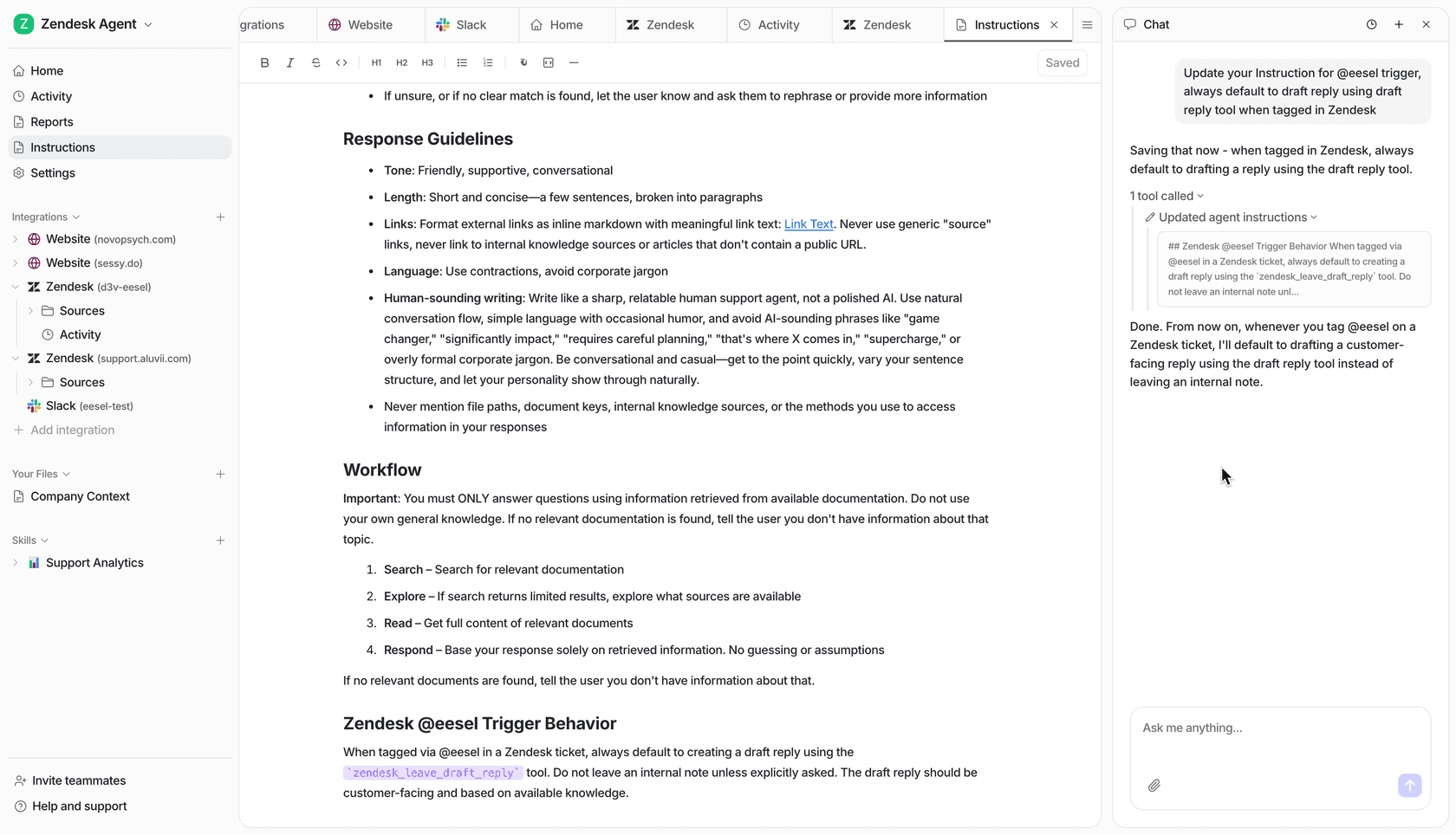
Here is the difference: instead of monitoring multiple changelog sources and planning migrations, you connect eesel AI to your help desk and it learns from your existing tickets, help center articles, and macros. It starts by drafting replies for your agents to review, then levels up to autonomous responses as it proves itself.
We handle the AI infrastructure, model updates, and feature improvements behind the scenes. You do not need to track breaking changes or migrate integrations. We integrate with Zendesk, Freshdesk, Intercom, and other major help desks.
The progressive rollout approach means you can verify quality before going fully autonomous. Run simulations on past tickets to see how eesel AI would respond, then expand scope as confidence grows.
Keep your help desk current
Staying on top of Zendesk changes does not have to be overwhelming. Here is the practical summary:
- Check the product release notes weekly for new features
- Review the developer changelog monthly if you have integrations
- Calendar these hard deadlines: OAuth refresh tokens (Apr 2027), password setting deprecation (Apr 2026), legacy custom objects removal (July 2026)
- Subscribe to the status page for incident notifications
- Consider whether the maintenance overhead of your current platform is worth the functionality it provides
The goal is not to read every update. It is to know about the ones that affect you before they become problems.


Frequently Asked Questions
Share this article

Article by
Stevia Putri
Stevia Putri is a marketing generalist at eesel AI, where she helps turn powerful AI tools into stories that resonate. She’s driven by curiosity, clarity, and the human side of technology.