How to build a Zendesk customer experience strategy in 2026

Stevia Putri
Last edited March 3, 2026
Here's a sobering statistic: 61% of consumers will switch to a competitor after just one bad experience. That number jumps to 76% after multiple negative interactions. On the flip side, 91% of buyers are willing to spend more with companies that consistently deliver good experiences.
These numbers explain why customer experience (CX) has moved from a nice-to-have to a business-critical priority. But great CX doesn't happen by accident. It requires a deliberate strategy, the right tools, and continuous refinement.
This guide walks you through building a customer experience strategy using Zendesk, one of the most widely adopted customer service platforms. We'll cover the core components of a successful strategy, implementation steps, and how modern AI capabilities can enhance your approach.
What is a Zendesk customer experience strategy?
A customer experience strategy is your blueprint for delivering positive, consistent interactions at every touchpoint. It captures the big picture of how customers interact with your business, both online and offline, and defines how you'll address pain points along their journey.
It's worth distinguishing CX from customer service. Customer service is a subset of CX, referring specifically to support interactions when customers have questions or issues. CX encompasses everything: the first ad a customer sees, your website experience, the purchase process, onboarding, ongoing support, and even how you handle complaints.
Companies invest heavily in CX because the returns are measurable. According to Zendesk's research, businesses that implement enterprise-wide CX programs see 15-20% increases in sales conversion rates, 20-50% declines in service costs, and 10-20% improvement in customer satisfaction. CX leaders also grow revenues more than twice as fast as competitors.
Core components of a successful Zendesk customer experience strategy
Before diving into implementation, let's look at the foundational elements every CX strategy needs.
Customer understanding and personas
You can't deliver great experiences if you don't know who you're serving. Start by analyzing your current customer base, especially your most loyal, high-value customers. What do they have in common? What industries are they in? What problems are they trying to solve?
Build detailed customer personas that include demographics, motivations, pain points, and goals. These profiles become the reference point for every CX decision you make.
Omnichannel experience design
Customers expect to interact with you on their preferred channels, whether that's email, chat, social media, or phone. But they also expect you to remember the conversation when they switch channels. Nothing frustrates customers more than having to repeat themselves.
An omnichannel approach unifies all these touchpoints so context travels with the customer. When a customer moves from chat to email to phone, your team should see the full history. Zendesk's unified workspace brings together conversations from all channels into a single interface.
Self-service capabilities
Many customers prefer to solve problems themselves. A comprehensive help center with searchable articles, FAQs, and how-to guides lets customers find answers quickly without waiting for an agent. Modern AI chatbots can handle routine questions and guide customers to relevant resources.
The data supports this: 89% of consumers will spend more with companies that let them find answers online without contacting anyone.
Feedback loops
Your customers are telling you what they need, whether through surveys, reviews, social media, or support tickets. The question is whether you're listening. Build systematic ways to collect, analyze, and act on feedback. Then close the loop by telling customers what you've changed based on their input.
Building your Zendesk customer experience strategy: Step-by-step
Now let's walk through implementing this framework using Zendesk.
Step 1: Secure company-wide buy-in
CX isn't just a support team initiative. It requires participation from product, marketing, sales, and operations. Start by building the business case with data that shows the value of investing in customer experience:
- 74% of consumers will forgive a company for mistakes after receiving excellent service, which means great CX directly impacts retention.
- Companies with superior CX can charge up to 16% more for their products because customers perceive greater value.
- 78% of people share positive experiences with others at least weekly, turning satisfied customers into organic marketers.
Identify CX champions across departments who can help drive adoption and gather feedback from their teams. Executive sponsorship is critical, so present a focused case showing how CX improvements tie to business outcomes like revenue growth and reduced churn.
Step 2: Map your customer journey
Break down the entire customer lifecycle into stages: awareness, consideration, purchase, onboarding, ongoing use, and advocacy. For each stage, identify what the customer is trying to accomplish, which channels they use, where friction or confusion occurs, and what emotions they might be feeling.
This mapping exercise reveals where your current experience falls short and where small improvements can have outsized impact.
Step 3: Configure Zendesk for your workflow
With your journey map in hand, configure Zendesk to support your ideal workflow. Start with these fundamentals:
Ticket routing: Set up triggers and automations to route tickets to the right team based on issue type, customer segment, or channel. Skills-based routing ensures complex issues reach agents with the right expertise.
Macros and templates: Create pre-written responses for common questions. This speeds up agent responses and ensures consistency.
SLAs: Define service level agreements for response and resolution times. Make sure these align with customer expectations you've identified.
Step 4: Build your knowledge base
A well-organized help center deflects routine questions and empowers customers to self-serve. When building yours, organize content by customer goal rather than internal department. Use clear, searchable titles and include step-by-step instructions with screenshots. Add a feedback mechanism so customers can flag outdated content, and review and update articles regularly.
Zendesk's Knowledge Builder tool can help identify gaps in your content based on what customers are searching for.
Step 5: Train your team
Even the best technology fails without well-trained agents. Your training program should cover how to use Zendesk efficiently (workflows, shortcuts, integrations), your products and services in depth, communication skills and tone of voice, when and how to escalate issues, and how to use customer context to personalize interactions.
Remember that agent experience directly impacts customer experience. Stressed, confused agents create stressed, confused customers. Invest in their success.
Leveraging AI in your Zendesk customer experience strategy
Artificial intelligence has become a core component of modern CX. According to Zendesk's CX Trends Report 2026, 70% of consumers believe there's a clear gap between companies that use AI effectively and those that don't.
Here's how AI fits into a Zendesk customer experience strategy:
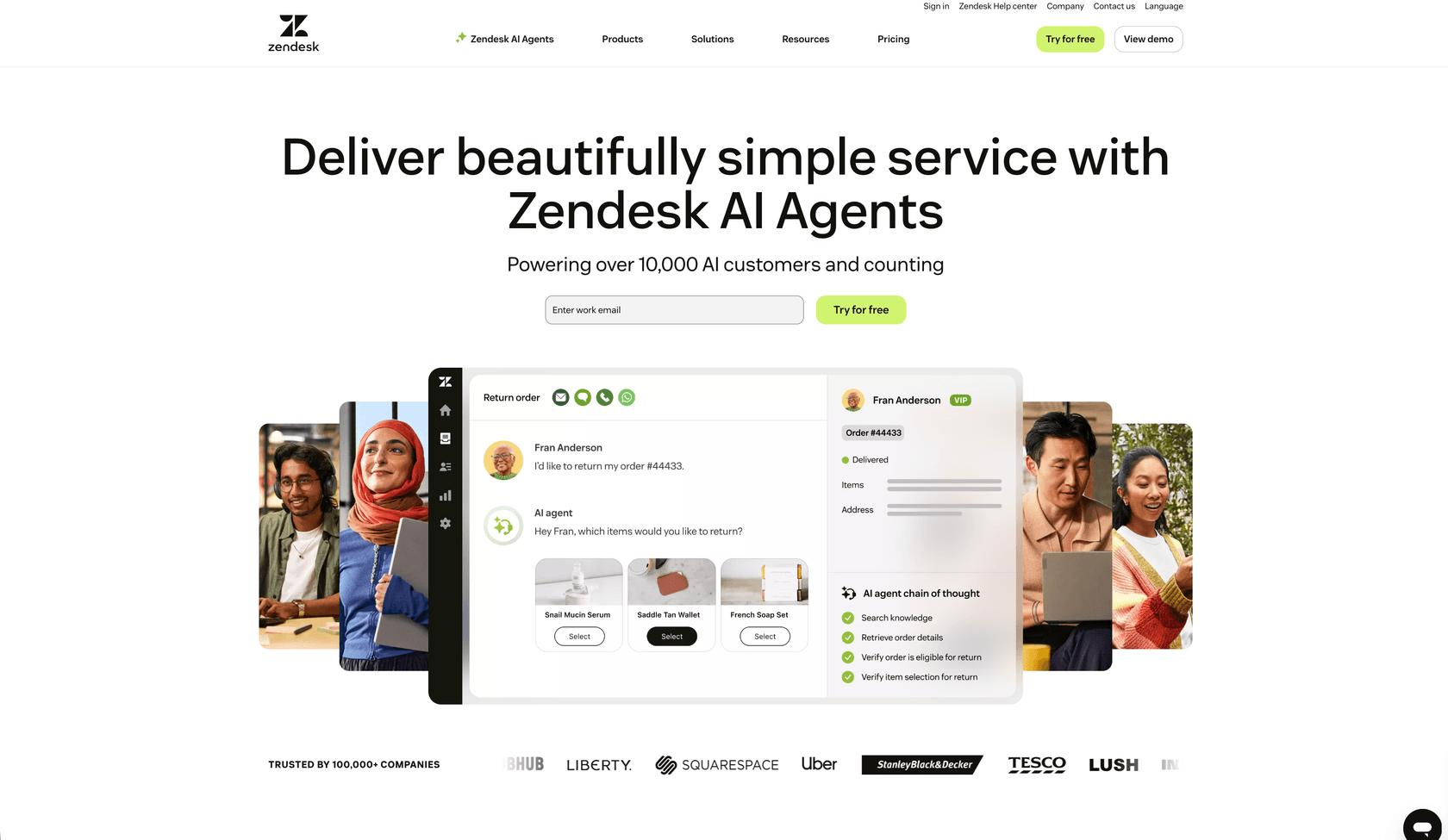
AI agents can autonomously resolve routine issues like password resets, order status checks, and refund requests. Zendesk AI agents are designed to handle 80%+ of interactions without human intervention, escalating only complex issues to your team.
Copilots assist human agents by suggesting responses, surfacing relevant knowledge base articles, and automating routine tasks. This increases productivity while maintaining quality. Zendesk Copilot provides contextual insights directly in the agent workspace.
Sentiment analysis automatically detects customer emotions in real-time, helping agents adjust their tone and approach accordingly.
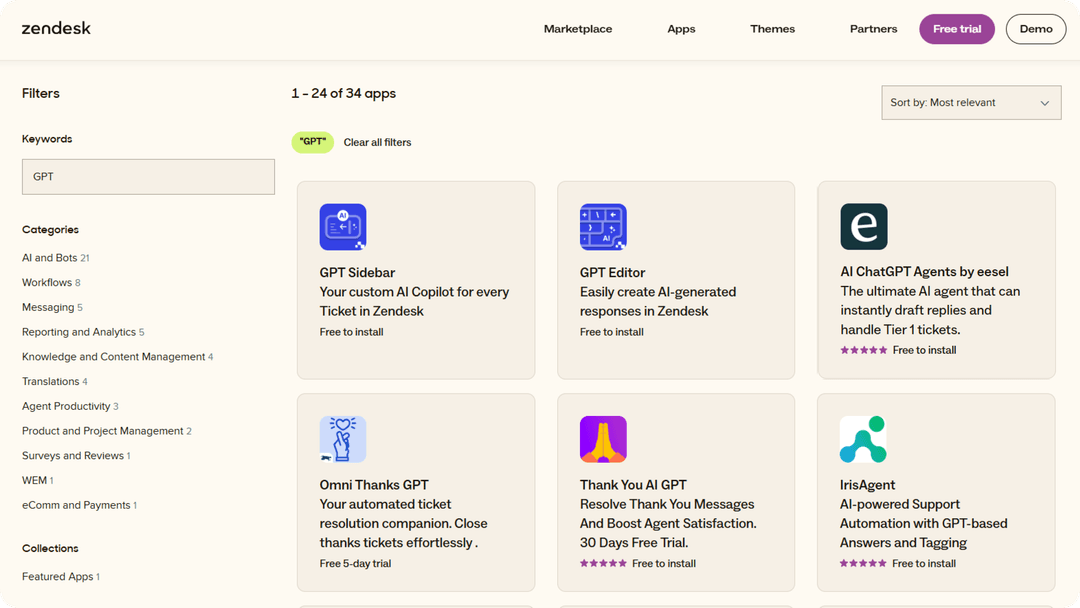
If you're looking to extend Zendesk's AI capabilities further, tools like eesel AI can work alongside your existing setup. We integrate with Zendesk to learn from your past tickets, help center, and macros, then act as an AI teammate that handles frontline support autonomously. The difference is in the approach: rather than configuring rules, you train an AI teammate that learns your business context and improves over time.
Measuring CX success: Key metrics
You can't improve what you don't measure. Track these key metrics to gauge your Zendesk customer experience strategy's effectiveness:
| Metric | What It Measures | How to Track in Zendesk |
|---|---|---|
| CSAT (Customer Satisfaction) | How satisfied customers are with specific interactions | Post-ticket surveys |
| NPS (Net Promoter Score) | Likelihood customers will recommend you | Periodic email surveys |
| CES (Customer Effort Score) | How easy it was to get help | Post-interaction surveys |
| First Contact Resolution | Percentage of issues resolved in one interaction | Ticket analytics |
| Time to Resolution | Average time to fully resolve issues | Reporting dashboards |
| Churn Rate | Percentage of customers leaving | Integration with CRM |
Zendesk's built-in analytics provide prebuilt dashboards for tracking these metrics. Review them regularly to identify trends and coaching opportunities.
Common CX strategy pitfalls to avoid
As you implement your Zendesk customer experience strategy, watch out for these common mistakes:
Siloed data: When customer information lives in separate systems, agents can't see the full picture. Zendesk's integrations help, but you need to actively break down data barriers between teams.
Over-reliance on automation: AI and chatbots are powerful tools, but customers still need human support for complex or emotional issues. Always provide an easy path to reach a person.
Ignoring feedback: Collecting feedback is pointless if you don't act on it. Create a process for reviewing feedback regularly and prioritizing improvements.
Neglecting agent experience: Burnt-out agents deliver poor experiences. Monitor agent workload, provide adequate training, and give them the tools they need to succeed.
Taking your Zendesk customer experience strategy further
A CX strategy isn't a one-time project. It's an ongoing commitment to improvement. Set aside time monthly or quarterly to review metrics and identify trends, analyze customer feedback for patterns, assess what's working and what isn't, test new approaches and measure results, and update your knowledge base and automations.
As your strategy matures, consider where AI can take on more of the workload. Start with simple automations, measure the results, and gradually expand scope as the AI proves itself.
If you're looking to enhance your Zendesk setup with AI capabilities, eesel AI offers an approach worth considering. We plug into your existing Zendesk instance and learn from your historical data to handle frontline support autonomously. Like any new team member, we start with guidance and level up to full autonomy based on performance. You can run simulations on past tickets to verify quality before going live, then expand scope as we prove ourselves.
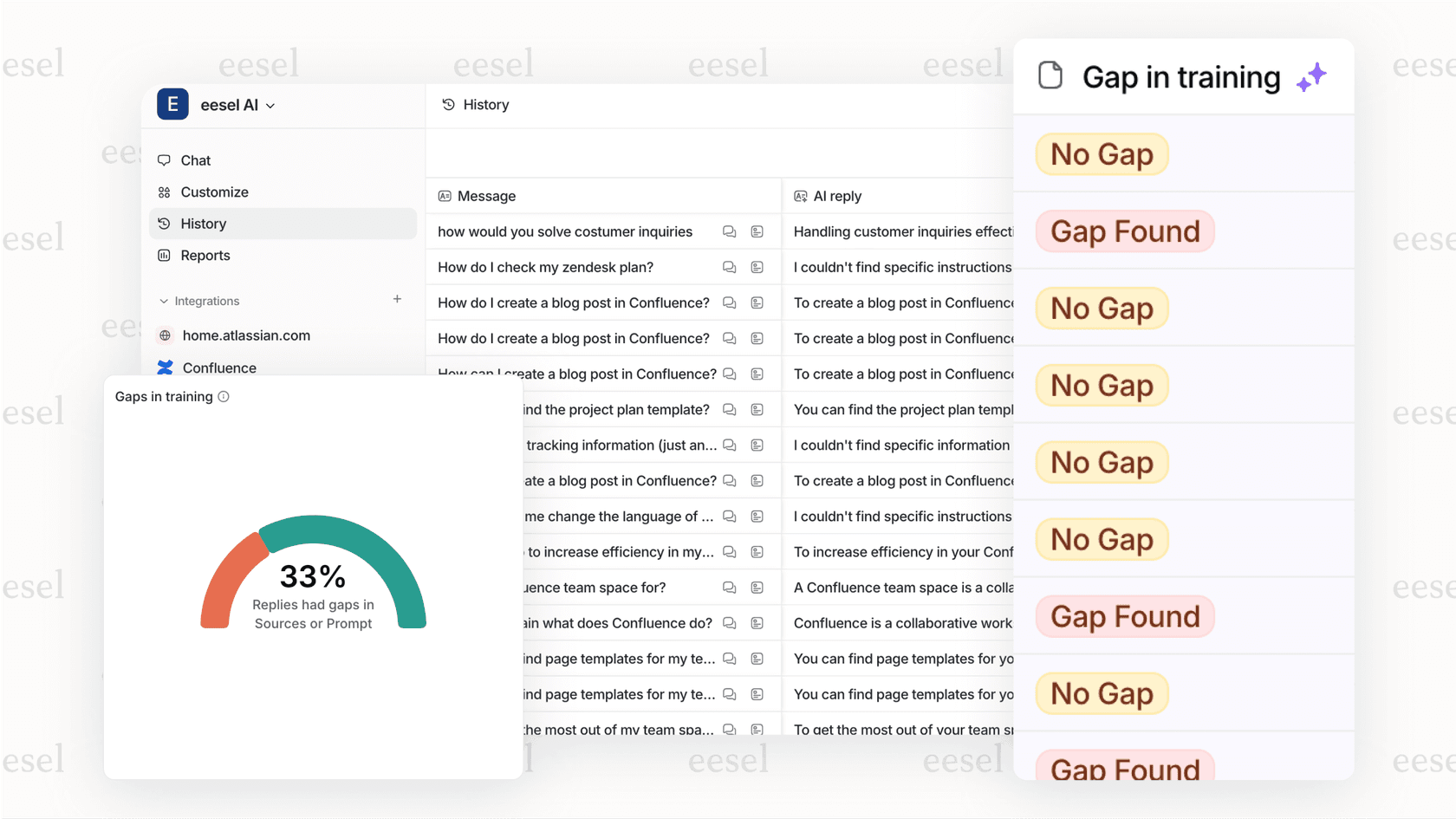
The goal isn't to replace your Zendesk investment. It's to make your team more effective by handling routine issues automatically while your human agents focus on complex, high-value interactions. You can learn more about eesel AI pricing or explore our AI customer service solutions to see how we can enhance your existing setup.


Frequently Asked Questions
Share this article

Article by
Stevia Putri
Stevia Putri is a marketing generalist at eesel AI, where she helps turn powerful AI tools into stories that resonate. She’s driven by curiosity, clarity, and the human side of technology.