Managing who gets notified about ticket updates in Zendesk seems straightforward until you realize there are two different features that do similar things. CCs and followers both keep people in the loop, but choosing the wrong one can expose agent email addresses to customers or leave internal teams in the dark.
This guide breaks down the differences between Zendesk CC and follower email notifications so you can make the right choice for every scenario.
What are CCs and followers in Zendesk?
At first glance, CCs and followers look like they serve the same purpose: keeping additional people informed about ticket activity. But they work very differently under the hood.
What are CCs in Zendesk?
CCs (carbon copies) in Zendesk work much like they do in regular email. When you add someone as a CC on a ticket, they become visible to everyone involved in the conversation.
Key characteristics of CCs:
- External visibility: CC'd users appear in the ticket header, and their email addresses are visible to other participants, including end users
- Reply capabilities: CCs can respond to ticket notifications, and their replies become public comments on the ticket
- Participant limit: You can have up to 48 email CCs on a single ticket
- Who can be CC'd: Both end users (customers) and agents
CCs are ideal when transparency matters and you want everyone to see who's involved in resolving an issue.
Source: Zendesk Help Center, Zendesk Admin Guide
What are followers in Zendesk?
Followers are an internal-only feature designed for team coordination. Unlike CCs, followers stay completely hidden from customers.
Followers differ in these ways:
- Internal only: Only agents and administrators can be followers
- Hidden from customers: Followers receive all updates but remain invisible to end users and other CCs
- Unlimited count: There's no limit to how many followers a ticket can have
- Full visibility: Followers see both public comments and internal notes
Followers are perfect when you need internal coordination without exposing your team's internal processes to customers.
Source: Zendesk Help Center, Best Practices Guide
Key differences between Zendesk CC and follower email
Understanding when to use each feature comes down to a few key distinctions. This side-by-side comparison shows the key distinctions:
| Feature | CCs | Followers |
|---|---|---|
| Who can be added | End users and agents | Agents and admins only |
| Visibility | Visible to all participants | Hidden from customers |
| Email notifications | Public comments only | All comments (public + internal) |
| Can reply | Publicly only | Publicly or privately |
| Limit per ticket | 48 | Unlimited |
| Best for | External coordination | Internal team updates |
The visibility differences between these features have real implications for your support operations.
Visibility and privacy implications
The most important difference is visibility. When you add an agent as a CC, their email address becomes visible to all end users on the ticket. This might not seem like a big deal until customers start emailing agents directly, bypassing your support system entirely.
Followers, on the other hand, remain completely invisible in email notifications. Their names and email addresses don't appear in the headers that customers see. This protects agent privacy and keeps your internal team structure confidential.
As Zendesk's documentation notes, "Agents who are added as CCs will have their email addresses visible to all end users in the thread." This is by design for transparency, but it's worth considering carefully.
Source: Zendesk Help Center
How and when notifications are sent also differs significantly between CCs and followers.
Notification behavior differences
CCs and followers also receive notifications at different times:
CC notifications are controlled by triggers. The default triggers "Notify requester and CCs of received request" and "Notify requester and CCs of comment update" handle this. Importantly, these triggers only fire for public comments. When an agent adds an internal note, the notification is suppressed.
Follower notifications work through a dedicated email template, not triggers. Followers receive notifications for both public comments and internal notes. The only exception is that followers don't receive notifications for their own comments.
Source: Zendesk Help Center
When to use Zendesk CC vs follower email: A decision framework
Choosing between CCs and followers becomes easier when you have clear criteria. Here's how to decide:
Use CCs when:
- Involving external stakeholders who need visibility: Partners, vendors, or other third parties who need to see ticket progress
- Customers need to loop in colleagues: When a customer wants their teammate or manager copied on the conversation
- Transparency with all parties is important: When everyone involved should know who else is participating
- External coordination is required: When you need input from people outside your organization
Use followers when:
- Internal team members need oversight without customer visibility: Managers monitoring ticket quality or escalations
- Cross-team collaboration is needed: When specialists from other departments need to contribute privately
- Protecting agent email privacy is a priority: Any time you're adding internal agents who shouldn't be contacted directly by customers
- You need unlimited participants: For complex tickets requiring input from many internal stakeholders
Common scenarios and the right choice
Let's look at some real-world situations:
Scenario 1: Account manager wants updates on a high-value customer ticket → Use a follower. The account manager stays informed without the customer knowing they're being monitored.
Scenario 2: Customer wants to include their IT director in the conversation → Use a CC. The IT director needs visibility and the customer explicitly requested their inclusion.
Scenario 3: Escalating to your technical specialist team → Use followers. Your specialists can review internal notes and contribute privately without exposing their emails.
Scenario 4: Partner organization needs visibility into a joint project ticket → Use a CC. External partners need transparency about who's involved in the resolution.
Source: Zendesk Help Center
How email notifications work for CCs and followers
Understanding the mechanics helps you troubleshoot when things don't work as expected.
CC notification mechanics
By default, two triggers control CC notifications:
- "Notify requester and CCs of received request": Fires when a new ticket is created
- "Notify requester and CCs of comment update": Fires when a public comment is added
Both triggers use the action "Email user + (requester and CCs)". This specific action is what causes CCs to receive email notifications. If you remove or modify these triggers without understanding the implications, CCs may stop receiving updates entirely.
Important: The "Email user + (requester and CCs)" action is suppressed when internal notes are added to a ticket. The trigger still fires and performs any other actions you've configured, but no email is sent. If you want CCs to receive notifications, you must include a public comment.
Follower notification mechanics
Followers receive notifications through a dedicated email template rather than triggers. Here's what you need to know:
- Followers receive email notifications when comments (public or internal) are added to tickets they follow
- Followers don't receive notifications for their own comments
- There's no way to disable follower email notifications without turning off the followers feature entirely
- The follower email template can be customized separately from CC notification triggers
This means followers are always in the loop once added, which is great for coordination but requires some discipline to avoid notification fatigue.
Customizing notification content
You can customize the text in email notifications to match your brand voice:
For CC notifications: Edit the default triggers in Admin Center > Objects and rules > Business rules > Triggers. Modify the email subject and body text as needed. Useful placeholders include {{ticket.cc_names}} for CC names and {{ticket.title}} for the ticket subject.
For follower notifications: Go to Admin Center > Objects and rules > Tickets > Settings, then expand the CCs and followers section. Edit the subject line and body content in the follower email template. The {{ticket.follower_names}} placeholder returns the names of followers on the ticket.
Source: Zendesk Help Center
Common mistakes with Zendesk CC and follower email
Even experienced teams make these errors. Here's what to watch out for:
Adding agents as CCs instead of followers
The risk: When you add an agent as a CC, their email address is exposed to all customers on the ticket. This opens the door for customers to contact agents directly, creating support gaps and potentially poor customer experiences.
The solution: Train agents to use followers for internal coordination. Make it a standard practice that any time an agent needs to stay informed about a ticket, they should be added as a follower, not a CC.
Best practice: Set up permissions and provide clear documentation about when to use each feature. Consider making this part of your onboarding for new support team members.
Expecting dynamic follower assignment
The limitation: Zendesk's native "Add follower" action only accepts static user selections. You can't use placeholders or custom field values to dynamically select which follower gets added based on ticket data.
The impact: This becomes a real problem when you're managing multiple organizations with different account managers or support tiers. You can't create a single trigger that says "add the account manager for this specific organization."
Workaround options:
- Create multiple macros for different scenarios
- Use webhooks with the Zendesk API and Liquid markup
- Store account manager emails in organization custom fields
A technical implementation guide details how to set up webhooks for dynamic follower assignment, though this requires significant technical expertise.
Misunderstanding notification suppression
The issue: Teams often report that "CCs aren't receiving notifications" when internal notes are added.
The reality: This is by design, not a bug. CC notifications are intentionally suppressed for internal notes to protect sensitive information.
The solution: If you need CCs to see an update after adding an internal note, you'll need to add a public comment to trigger the notification. Train your team on this behavior so they don't waste time troubleshooting.
Source: Zendesk Help Center
Scaling beyond Zendesk's native capabilities
Zendesk's built-in automation works well for straightforward scenarios, but it has clear limitations. The inability to dynamically assign followers based on ticket data creates friction for growing support teams.
At eesel AI, we've built an AI teammate that integrates directly with Zendesk to handle follower automation that goes beyond static macro actions.
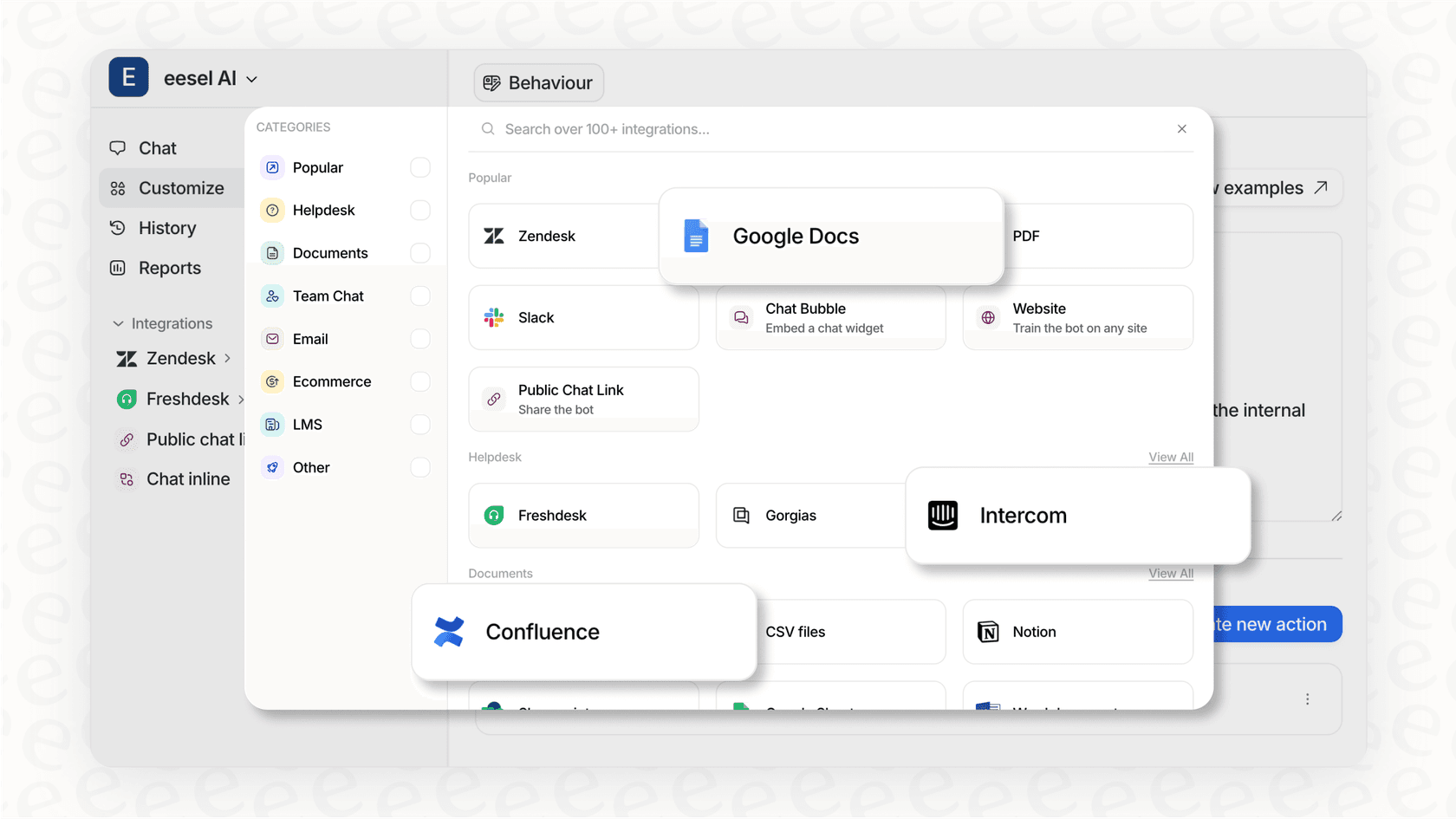
Here's how we complement Zendesk's native features:
- Natural language rules instead of rigid configurations. Define rules like "add the enterprise account manager for tickets from organizations with over 500 employees" in plain English.
- AI-powered routing based on ticket content. Our AI Triage reads ticket content to understand context, not just match field values. This means you can route based on sentiment, urgency signals, or complex combinations of factors.
- No-code setup for complex logic. No JSON, Liquid markup, or API tokens required. Business users can create and modify rules without technical help.
- Built-in error handling. We handle retries, edge cases, and failures automatically.
If you're already using Zendesk macros for follower management and finding they don't scale with your growth, there's a path forward. You can start with our simple setup, test against your historical tickets, and deploy with confidence.
Choosing the right approach for your Zendesk CC and follower email setup
Managing email notifications for CCs and followers isn't just about keeping people informed. It's about creating the right visibility for the right people at the right time. When configured well, your notification setup helps teams coordinate without overwhelming anyone with irrelevant updates.
Next steps for your team:
-
Audit your current trigger configuration. Are the default CC notification triggers still active and appropriate for your workflow?
-
Review your follower email template. Does it match your brand voice and provide clear guidance?
-
Identify opportunities for automation. Which tickets always need the same followers or CCs added?
-
Document your setup. Make sure your team knows when to use CCs vs followers and how your automation works.
If you find yourself creating dozens of macros to handle different scenarios, or if you need dynamic follower assignment that Zendesk can't provide natively, try eesel AI. We'll handle the complexity of intelligent follower routing so you can focus on delivering better customer experiences.