Writesonic vs Wordtune: A detailed comparison

Amogh Sarda

Katelin Teen
Last edited January 18, 2026
Picking the right AI writing assistant is not always straightforward. The market is full of tools that all claim to change the way you write content. Two common names you will see are Writesonic and Wordtune, but they are built for very different tasks. The right choice depends on what you need to do: generate new content from scratch or improve text you have already written.
This article offers a direct, head-to-head comparison of Writesonic and Wordtune to help clarify which tool is right for which job. We will look at their main features, pricing, and who they are best for. We will also examine their limitations, particularly for teams trying to scale organic traffic, and introduce a specialized alternative, the eesel AI blog writer, which is designed to turn a single keyword into a complete, SEO-optimized article.
What is Writesonic?
Writesonic is an AI platform that generates a wide range of marketing and business content. It uses a system of templates, offering a broad toolkit to create new material from prompts. You can think of it as a multi-purpose generator for different content needs across various channels.
When it comes to **writing**, though — especially longer-form content or creative + marketing-focused tasks — I have to say **Writesonic AI** has really impressed me the most.

Its main job is to generate long-form blog posts, Google and Facebook ad copy, landing pages, product descriptions, and social media updates. This all-in-one design makes it a common choice for marketers, agencies, and e-commerce businesses that want a single tool for producing different types of copy. The purpose of Writesonic is to speed up the first draft, whether it is a short tweet or a full article.
What is Wordtune?
Wordtune is an AI writing assistant that focuses on rewriting and improving existing text. Unlike Writesonic, it is not made to create content from the ground up. Its real strength is taking what you have already written and making it better. It helps you improve clarity, change the tone, and polish your style for more impact.
Other options like [Txt Muse](https://www.txtmuse.com) and [Wordtune](https://www.wordtune.com) are built to be more collaborative like ChatGPT, while also letting you work directly out of your text editor, which is more efficient than copy/pasting prompts and responses across different tabs.
Its core functions are all about editing. You can highlight a sentence, and Wordtune will suggest several different ways to phrase it. It can also make the tone more casual or formal, shorten or expand text, and use its "Spices" feature to add new information like statistics, counterarguments, or historical facts. This makes it a useful tool for writers, academics, students, and professionals who want to improve their own writing, not have an AI generate it for them.
Writesonic vs Wordtune: Key feature breakdown
While both tools use AI to assist with writing, their features and how they work are quite different. Here is a direct comparison of how they measure up in key areas.
Content generation vs. content refinement
Wordtune, in contrast, is a content editor. It is best at taking existing text and making it better. Its strength is in improving sentence structure, word choice, and overall readability. While its Spices feature can add new information to your text, it does not create articles from a prompt. You have to provide the initial draft for it to do its job.
Verdict: Choose Writesonic if you need to create content from scratch. Choose Wordtune if you need to improve content you have already written.
SEO and marketing tools
Writesonic is designed for marketers and comes with several built-in SEO features. It has specific templates for creating SEO-optimized landing pages, meta descriptions, and ad copy. Some of its plans also connect with tools like Surfer SEO to help you optimize long-form content for target keywords.
Wordtune does not have any dedicated SEO tools. Its value for SEO is indirect. By helping you improve the clarity and quality of your content, it can lead to a better user experience, which is a positive signal for search engines. However, it will not assist with keyword research, on-page optimization, or content strategy.
User interface and workflow integration
Writesonic works from a central dashboard that shows users its large library of templates. While this makes its capabilities clear, the number of options can be a bit much for new users just trying to find the right tool for a specific task. It can be connected with other platforms like WordPress and Zapier to fit into a larger marketing workflow.
Wordtune provides a more streamlined and integrated experience. It mostly works as a browser extension directly within the platforms you already use, like Google Docs, Microsoft Word, Gmail, and LinkedIn. This smooth integration makes it feel like a part of your existing writing process rather than a separate tool you need to open.
Summary of core differences
| Feature | Writesonic | Wordtune |
|---|---|---|
| Primary Use Case | Content Generation | Content Refinement & Rewriting |
| Long-Form Content | Yes, generates full articles | No, enhances existing text |
| SEO Features | Yes, built-in tools | No, indirect benefit only |
| Best For | Marketers, agencies | Writers, editors, academics |
| Workflow | Standalone platform | Integrated extension |
Pricing comparison
The pricing for each tool reflects its different purpose, with Writesonic's plans based on content volume and Wordtune's on editing features.
Writesonic pricing plans
Writesonic has several tiers based on word count, word quality (Premium, Superior, etc.), and access to advanced features.
- Free Trial: Gives users a limited number of words to test the platform's features.
- Business: Starts around $19 per month for a certain number of words, with the price going up as you need more. This plan is meant for individuals and small teams.
- Enterprise: Custom pricing for large teams and agencies that need to generate high volumes of content and want advanced features and support.
This model is best for users who can estimate their monthly content needs and want to pay for a specific amount.
Wordtune pricing plans
Wordtune’s pricing is simpler, which makes sense given its more focused set of features. Plans are usually based on the number of rewrites and access to premium features.
- Free: Offers a limited number of rewrites per day, so users can get a basic feel for the tool.
- Plus: Usually costs about $24.99 per month (or less if you pay annually) and gives you unlimited rewrites, tone adjustments, and length controls.
- Unlimited: A higher tier that includes everything in the Plus plan along with more advanced features and team options.
This model works well for individuals and professionals who need a constant writing assistant rather than a tool for bulk content generation.
Limitations for scaling SEO content
While both Writesonic and Wordtune are effective at what they do, they have certain limitations for teams whose main goal is to scale high-quality blog content for organic growth.
Writesonic can generate long-form drafts, but the output often requires significant editing to match specific search intent and achieve a specific brand voice. The text can sometimes be generic and may lack the depth needed to rank for competitive keywords. It also does not automatically create or add rich media like infographics, charts, or tables. It also lacks features for including social proof, like real Reddit quotes or forum discussions, which are important for building authority and trust with readers.
Wordtune, by design, is not a content generator. It cannot create an article from a topic or keyword. This means the user still has to do all the initial research, outlining, and drafting. It has no built-in SEO capabilities and cannot create any visual assets. It is an editor, not a production tool, which makes it less suitable for teams looking to scale content creation from scratch.
For a more detailed look at how different AI tools stack up for marketing purposes, this video offers a helpful comparison, including both Writesonic and Wordtune.
eesel AI blog writer: An alternative for content scaling
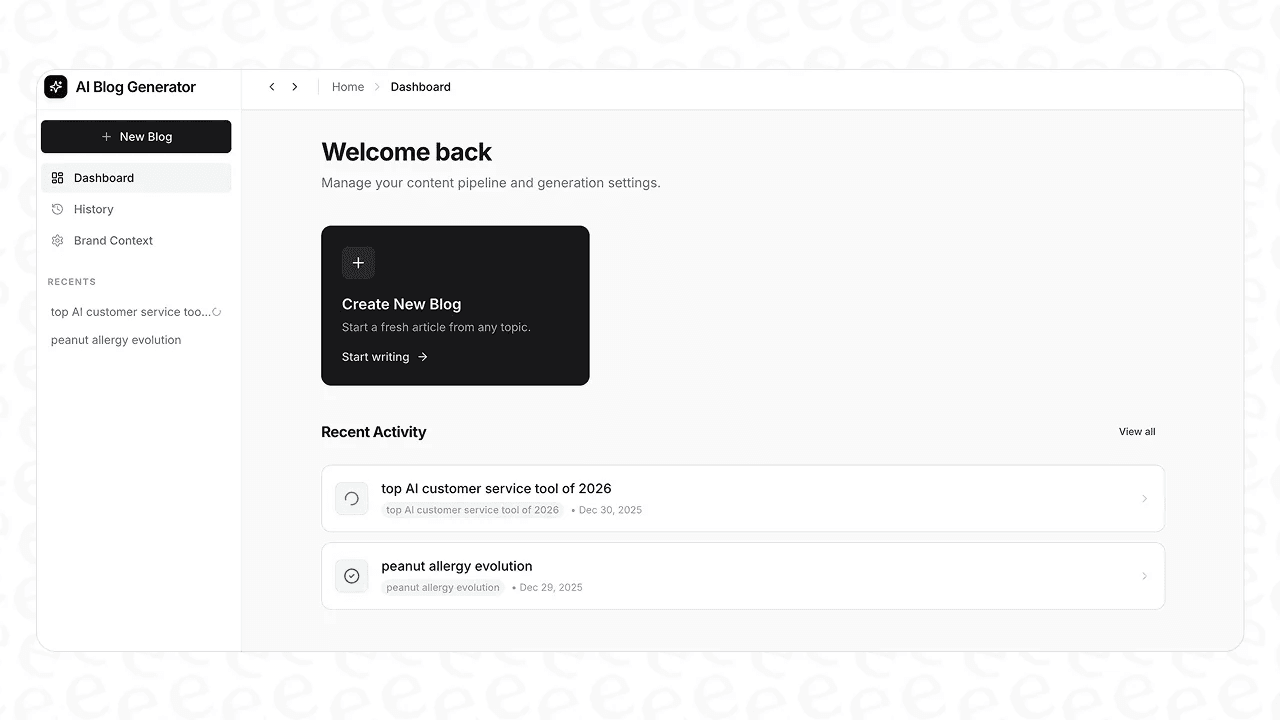
It is designed to handle the challenges of general-purpose AI writers by automating the entire content creation process, from research to formatting.
Here is how it is different:
- Complete, structured posts: Instead of generating a rough draft that requires extensive editing, it generates a full article with an introduction, logical headings, a conclusion, and an FAQ section.
- Automatic asset and media generation: It makes content richer by automatically including AI-generated images, tables, and infographics. It also embeds relevant YouTube videos and finds real Reddit quotes to add authenticity and social proof.
- Context-aware research and AEO: The tool does context-aware research, pulling relevant data based on the content type (like pricing for comparison posts). It also optimizes content for AI Answer Engines (AEO), making sure it is structured to show up in places like Google AI Overviews.
At eesel AI, this tool was used to grow daily impressions from 700 to 750,000 in just three months. By producing high-quality, media-rich content at scale, we were able to grow our organic presence significantly.
How to choose the right tool
- Choose Wordtune if: Your main goal is to improve the clarity, tone, and flow of text you have already written. It is the perfect assistant for writers who want to polish their own work.
- Choose Writesonic if: You need a versatile generator to quickly create a variety of short-form marketing copy and initial long-form drafts for different channels.
- Consider eesel AI if: Your main objective is to efficiently produce high-quality, SEO-optimized blog content that is complete with assets and ready to publish, helping you scale your organic traffic.
If scaling your blog is the priority, generate your first complete blog post for free with the eesel AI blog writer and evaluate its capabilities.

Frequently Asked Questions
Share this article

Article by
Amogh Sarda
CEO of eesel AI. Amogh Sarda is obsessed with making the ultimate AI for customer service teams. He lives in Sydney, Australia and has previously worked at Atlassian and Intercom. Outside of work he’s usually surfing or on stage doing improv.