Writesonic vs HyperWrite: An in-depth comparison

Stevia Putri
Last edited January 18, 2026
It feels like a new AI writing tool pops up every other week, doesn't it? For anyone creating content, this is mostly great news. These tools can be a huge help for busting through writer's block and just getting things done faster. But with so many options, picking the right one can feel like a chore in itself. That's why we're taking a close look at two popular names in the game: Writesonic and HyperWrite.
The market is flooded with AI Writing Tools these days. There are a lot of buzzes surrounding you these might be good.. but the truth lies somewhere in the middle!

This guide provides a head-to-head comparison to help you determine the right fit for your needs. We'll explore what they do best, who they're for, and their costs. While many AI writers focus on generating draft text, other tools are emerging that address the entire content creation workflow. For instance, tools like the eesel AI blog writer aim to create complete, publish-ready articles from a single keyword, including research, formatting, and visuals.
What is Writesonic?
Think of Writesonic as an all-in-one content platform built mainly for marketers and business owners. It's not just for writing blog posts; it’s designed to tackle a whole bunch of different marketing copy needs. When you log in, you’re met with a library of over 100 templates for pretty much anything you can think of, from Facebook ads and product descriptions to landing page copy and full-length articles.
Its main features are built around this multi-purpose idea. The Sonic Editor is its long-form content creator, helping you structure and write articles. But it also throws in Chatsonic, an AI chat assistant, and Photosonic, an AI image generator that lets you create custom visuals without leaving the platform.
Because of this wide range of tools, Writesonic is a solid pick for marketing teams, content agencies, and freelancers who need to produce a variety of copy for different channels. It’s made to be a central hub for your content work.
What is HyperWrite?
HyperWrite plays a different game entirely. Instead of being a platform you go to for creating content, it acts as your personal AI writing sidekick that follows you around the web. Its biggest advantage is its powerful Chrome extension, which plugs directly into whatever you're doing online.
Writing an email in Gmail? HyperWrite is right there, offering to finish your sentences. Working on a document in Google Docs? It can help you rewrite a paragraph to sound more professional. Its coolest feature, "TypeAhead," automatically completes your thoughts as you type, which can be a massive time-saver. It's less about building something from scratch and more about making the writing you’re already doing faster and better.
HyperWrite is perfect for professionals, students, or anyone who spends a lot of their day writing emails, reports, or messages. It’s for people who want real-time help to improve their clarity and speed without having to switch tabs or open a separate app.
Writesonic vs HyperWrite: Feature comparison
Alright, let's get into the nitty-gritty. While both tools use AI to help you write, how they do it and what they focus on are worlds apart. This section breaks down the key differences to show you how each one would fit into a different workflow.
Core writing tools
Here’s the main split: Writesonic is template-driven. You pick what you want to create (a blog intro, a tweet, an ad), fill in a few details, and it spits out options for you. For longer content, its Article Writer guides you through an outline and drafting process. It's built for creating new content from the ground up.
HyperWrite, on the other hand, is an in-line assistant. It's at its best when improving and expanding on what you’ve already typed. You can highlight a sentence and ask it to make it shorter, more formal, or just say it differently. It can help you build out a blog post piece by piece, but its real magic is in speeding up your own writing process, not replacing it.
In terms of output quality, both tools give you a decent first draft. But, like with any AI writer, you'll still need to fact-check, edit for tone, and sprinkle in your own unique insights to make the content truly yours.
User experience and workflow
Using these tools day-to-day feels completely different. With Writesonic, you'd log into its web app. The whole experience is self-contained. You might spend a bit of time scrolling through its many templates to find the right one, which can honestly be a little overwhelming at first. It’s a tool you set aside time to use for a specific content job.
HyperWrite is all about its browser extension. Once you install it, it’s just… there, ready to jump in whenever you're typing in a text box. It's incredibly intuitive for quick tasks. The workflow is seamless; you don't have to change your habits at all. It's perfect for firing off a quick, well-written email or polishing a social media update without ever leaving the page.
Unique features
This is where you can really see what each platform prioritizes. Writesonic is loaded with bonus features that turn it into a marketing content suite. Photosonic lets you create blog banners or ad images without needing a separate AI art tool. Chatsonic acts as a research assistant, pulling in current data from Google to answer questions or brainstorm ideas.
HyperWrite’s standout feature is its "TypeAhead" function. It learns your writing style and offers real-time sentence completions that are often surprisingly on point. It feels less like a tool and more like a collaborator sitting next to you. The pure convenience of having an AI assistant that works on pretty much any website is its biggest selling point.
Here’s a quick table to sum it all up:
| Feature | Writesonic | HyperWrite |
|---|---|---|
| Primary Use Case | Marketing copy & long-form content creation | Real-time personal writing assistant |
| Main Platform | Web Application | Chrome Extension |
| Content Templates | 100+ for specific marketing needs | Focused on rewriting, summarizing, & composing |
| AI Image Generation | Yes (Photosonic) | No |
| AI Chatbot | Yes (Chatsonic) | No |
| Best For | Marketers, bloggers, agencies | Professionals, students, frequent email writers |
Writesonic vs HyperWrite: Pricing breakdown
Let's talk money. Pricing is a huge factor, and these two tools structure their plans very differently. It’s important to get how you’ll be charged to know which one offers better value for what you need.
Writesonic pricing plans
Writesonic's pricing is based on a word count system, but with a twist. They have different quality levels for the words generated (like Premium vs. Superior), and higher-quality words cost more of your credits.
- Free Plan: Gives you a limited number of Premium words per month to try things out.
- Pro Plan: Aimed at individuals and small teams, this plan gives you a monthly word allowance and access to more features. You can choose your word count and quality level, with prices starting around $19/month.
- Enterprise: For larger teams, this offers custom word bundles, more user seats, and better security. You'll need to talk to their sales team for a quote.
Heads up, the credit system can be a little confusing at first, since the number of words you can actually generate depends on the quality setting you choose.
HyperWrite pricing plans
HyperWrite's pricing is a bit more straightforward. It’s based on monthly credits and access to premium features.
- Free Plan: Offers a limited number of credits per month and basic AI help. It's a great way to try out the core functions.
- Premium Plan: For about $19.99/month, this plan gives you more credits and access to features like longer-form generation.
- Ultra Plan: At around $44.99/month, this unlocks the best stuff, including the excellent TypeAhead auto-completion, the highest number of credits, and priority support.
An alternative for end-to-end blog creation: eesel AI blog writer
Writesonic and HyperWrite are effective tools for generating and refining text. For users who need support with the entire content workflow, from research to publishing, other solutions are available. These tools can help with tasks like finding relevant media, structuring the post for SEO, and adding social proof, which are often handled manually.
Whoever told you that, lied to you. Google loves AI content. One of my clients has a section on their site that is 100% AI generated content. It was launched at the end of March and has generated over 2 million clicks from Google search so far.
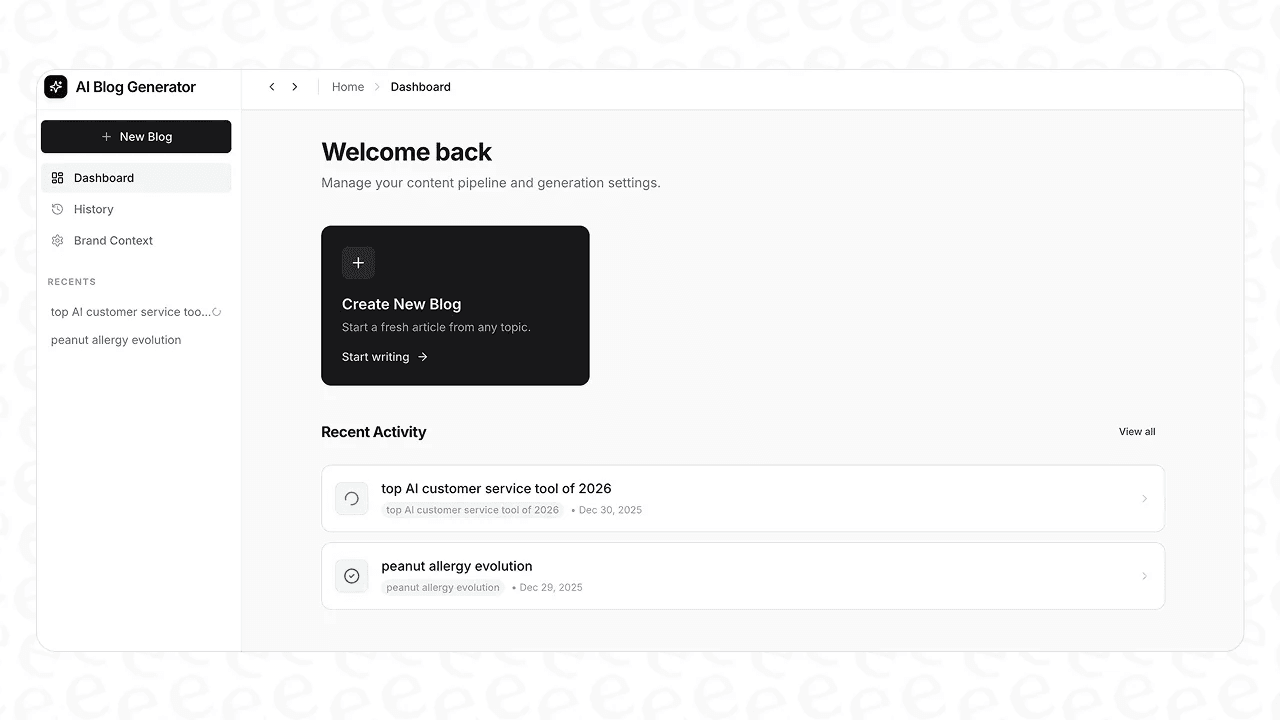
Here’s what makes it different:
- From keyword to complete post: You get a fully structured article with an intro, proper headings, a conclusion, and an FAQ section. It's designed to be published with very little editing.
- Automatic assets and rich media: This is a huge time-saver. The eesel AI blog writer automatically includes AI-generated images, infographics, and data tables right in the post. It even finds and embeds relevant YouTube videos and real quotes from Reddit to add some depth and authority.
- Deeply researched content: Instead of generating shallow, generic text, it performs context-aware research. If you're writing a comparison post, it will look for pricing data. If it's a "how-to" guide, it will focus on actionable steps.
- Built for SEO and AEO: The content is automatically optimized for traditional search engines (SEO) and the new wave of AI Answer Engines (AEO) like Google's AI Overviews, helping you rank today and in the future.
A workflow diagram showing the end-to-end content creation process with eesel AI blog writer, an alternative in the Writesonic vs HyperWrite comparison.
This is the exact tool we used at eesel AI to grow our search impressions from 700 to 750,000 per day in just three months. It's all about automating the tedious parts of content creation so you can focus on the bigger picture.
It's completely free to try. Generate your first blog and see the difference for yourself.
Writesonic vs HyperWrite: Which one is for you?
So, after all that, which one should you choose? It really boils down to what you need an AI writer to do for you.
- Choose Writesonic if: You're a marketer or part of an agency that needs a versatile toolkit for creating a wide variety of short-form marketing copy (ads, social media, product descriptions) and you want an all-in-one platform with built-in image generation and AI chat.
- Choose HyperWrite if: You're a professional, student, or anyone who writes a lot in their browser. You want an "always-on" AI assistant to help you write faster, get past writer's block, and improve your writing in real-time, no matter what site you're on.
- Choose the eesel AI blog writer if: Your main goal is to scale high-quality, SEO-optimized blog content. You want to automate the workflow from research and writing to adding assets and media, turning a keyword into a publish-ready post in minutes.
Ultimately, Writesonic and HyperWrite are both excellent tools, but they’re built for completely different jobs. Writesonic is a content creation suite, while HyperWrite is a personal writing assistant. Your choice depends entirely on your workflow.
To see some of these AI writing tools in action, check out this video review that explores how different platforms can enhance your writing process.
If you just need a hand drafting copy or getting real-time writing suggestions, they are both strong contenders. If your goal is to automate the end-to-end process of creating blog content designed to rank in search engines, a more specialized solution may be a better fit.
Ready to move from drafting to publishing? Try the eesel AI blog writer and automate your content workflow.

Frequently Asked Questions
Share this article

Article by
Stevia Putri
Stevia Putri is a marketing generalist at eesel AI, where she helps turn powerful AI tools into stories that resonate. She’s driven by curiosity, clarity, and the human side of technology.