Writesonic vs Grammarly: Which AI writing tool is right for you?

Stevia Putri

Katelin Teen
Last edited January 22, 2026
Choosing an AI writing tool involves matching the tool's strengths to your specific needs. It's less about finding the single best option and more about identifying the right one for the job.
Writesonic is a content creation engine built for marketers and SEO professionals who need to generate new, optimized articles. On the other hand, Grammarly acts as a co-pilot for writing. It serves a broad audience, including professionals and students, who want to make their existing text sharper, cleaner, and more professional.
This guide provides a straightforward comparison of their features, costs, and ideal users, helping you decide which one to integrate into your workflow.
For those looking for a tool that handles the entire content lifecycle from a keyword to a publish-ready article, an alternative like the eesel AI blog writer combines content generation with asset creation.
What is Writesonic?
Writesonic positions itself as an AI visibility platform. This means it combines content creation with a suite of SEO tools. Its primary function is to help marketing teams produce content that not only reads well but is also designed to rank on Google and be referenced by AI search engines like ChatGPT, Gemini, and Perplexity.
Its features are built around this mission. It includes an AI Article Writer for long-form posts, alongside SEO site audits and competitor analysis that utilize data from services like Ahrefs and Google Keyword Planner.
A unique offering is Generative Engine Optimization (GEO), which focuses on getting your content featured in the answers AI chatbots provide. Writesonic provides analytics to track your brand's mentions across these platforms, giving you a report on your visibility. It's a specialized tool for businesses focused on driving traffic from both traditional and AI-powered search.
What is Grammarly?
Grammarly is an AI-powered writing partner used by over 40 million people and 50,000 organizations. Its purpose is not to create content from scratch but to improve the content you have already written.
It covers the fundamentals like grammar, spelling, and punctuation. Its advanced features include tone detection to ensure your message sounds confident rather than bossy, a plagiarism checker that scans against billions of web pages and ProQuest’s academic databases, and suggestions for full-sentence rewrites to improve flow.
Grammarly has also introduced generative AI features and AI agents, such as a Proofreader and a Paraphraser, which are designed to help you brainstorm and refine your existing work. It functions as a smart assistant rather than a ghostwriter.
Feature comparison: Writesonic vs Grammarly
Here’s a quick look at how they compare:
| Feature | Writesonic | Grammarly |
|---|---|---|
| Primary Use Case | Content Generation & AI Search Visibility | Writing Assistance & Proofreading |
| Long-Form Content | Yes, generates articles up to 5,000 words | Assists with drafting, but no full article generation |
| SEO Tools | Advanced SEO suite and site audits | None |
| AI Search (GEO) | Yes, tracks visibility on ChatGPT, Perplexity, etc. | None |
| Grammar & Spell Check | Basic | Advanced, context-aware suggestions |
| Tone Analysis | No | Yes, detailed tone detection and adjustment |
| Plagiarism Checker | Yes (Coming soon per pricing page) | Yes, checks against billions of pages & ProQuest databases |
| Integrations | WordPress, Zapier, and API access | Works across 1 million+ apps and websites |
Let's break down the key differences a bit more.
Content generation and creation
- Writesonic: This is Writesonic's core strength. Its AI Article Writer is built to produce a complete, fact-checked, and SEO-optimized article from a single topic. It handles competitor analysis and web research to create content designed to rank.
When it comes to **writing**, though — especially longer-form content or creative + marketing-focused tasks — I have to say **Writesonic AI** has really impressed me the most. ... All-in-One Writing Platform: From blog posts and landing pages to product descriptions and emails, it covers a wide range of content types without needing a separate tool for each.

Writing assistance and editing
- Grammarly: This is where Grammarly excels. It provides high-quality checks for grammar, spelling, clarity, and conciseness. Its most valuable features are the tone detector, which gives you control over how your message is perceived, and a comprehensive plagiarism checker. Its AI can also help you rephrase sentences to sound more professional.
- Writesonic: It includes basic grammar checks to ensure its generated content is clean, but it does not offer the sophisticated style and tone suggestions that Grammarly is known for. A common workflow might involve creating an article in Writesonic and then using a tool like Grammarly for a final polish.
- Verdict: For editing, proofreading, and ensuring your communication is flawless, Grammarly is the more specialized tool.
SEO and GEO
- Writesonic: This is a major differentiator for Writesonic. The platform is designed around SEO and the emerging field of Generative Engine Optimization (GEO). It provides tools for site audits, keyword research, and content optimization. On its higher-tier plans, the GEO features track how your brand is discussed across AI chatbots, offering insights for improving visibility.
- Grammarly: Grammarly does not have any dedicated SEO or GEO features. While clear writing, which Grammarly promotes, can be beneficial for SEO, the tool does not provide technical analysis, keyword data, or tracking.
- Verdict: For any team focused on creating content that ranks in search engines, Writesonic is the only one of the two built specifically for that purpose.
Pricing comparison: Writesonic vs Grammarly
The pricing models for these tools reflect their target audiences. Grammarly is designed to be accessible to a wide range of users, with a functional free plan. Writesonic is positioned as a marketing tool for businesses that prioritize content production.
Writesonic pricing plans
Writesonic's plans are structured around content production for marketing.
- Lite ($39/month, billed annually): Designed for freelancers. This plan includes the AI Article Writer (up to 15 articles a month) and SEO tools, but it does not include GEO features.
- Standard ($79/month, billed annually): Aimed at small teams. It increases the limit to 30 articles per month and adds automatic SEO fixes, but still excludes GEO.
- Professional ($199/month, billed annually): For growing companies. This is the first plan that includes GEO features, allowing you to track 100 AI prompts per month on platforms like ChatGPT and Perplexity.
Grammarly pricing plans
Grammarly’s pricing is more straightforward and focuses on improving writing for individuals or teams.
- Free ($0/month): This plan is quite useful. It offers essential grammar, spelling, and punctuation checks, basic tone detection, and 100 generative AI prompts to use each month.
- Pro ($12/member/month, billed annually): This unlocks advanced features like full-sentence rewrites, plagiarism detection, detailed tone adjustments, and increases the generative AI prompt limit to 2,000.
- Enterprise (Custom): For large organizations needing extra security features like SAML SSO, unlimited AI prompts, and dedicated support.
Which offers better value?
- For individuals or teams who need to improve their writing, Grammarly Pro offers significant value. Even its free plan is a useful tool for basic proofreading.
- For businesses focused on creating content to attract organic traffic, Writesonic represents a strategic investment. The Professional plan is necessary to access its unique GEO features.
An alternative to consider: eesel AI blog writer
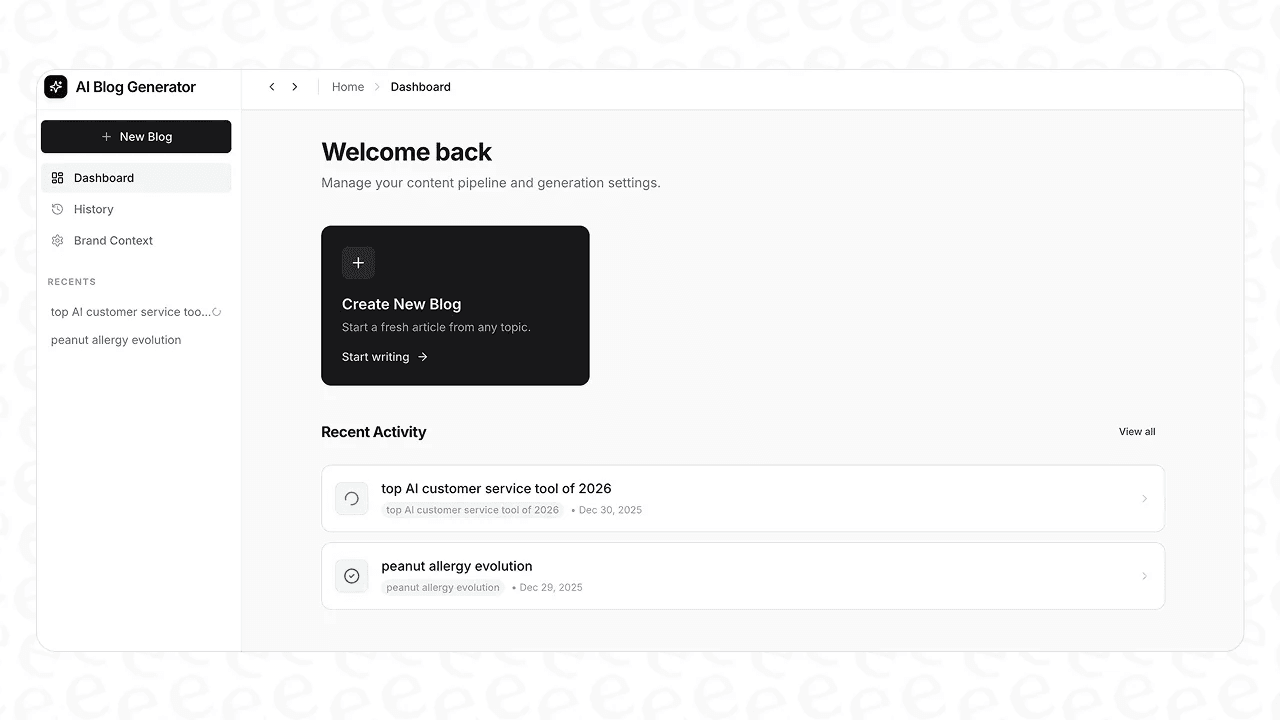
It is designed to turn a single keyword into a complete blog post. We used it to grow our own blog from 700 to 750,000 daily impressions in just three months by publishing over 1,000 optimized posts.
Here’s what sets it apart:
- Automatic assets: It generates and adds relevant images, infographics, and tables directly into the article.
- Authentic social proof: It finds and embeds real Reddit quotes and relevant YouTube videos, adding authority and a human perspective.
- Context-aware research: It analyzes searcher intent. For a comparison post, it looks for pricing data. For a "how-to" article, it outlines the necessary steps.
The eesel AI blog writer is designed for teams that want to publish more content efficiently. It's available to try for free.
When to choose Writesonic vs Grammarly
Once you clarify your primary goal, the choice between these two tools becomes straightforward. They are designed for different tasks and generally do not compete directly with each other.
Choose Writesonic if:
- Your main objective is to create new, SEO-optimized content from scratch at scale.
- Ranking on Google and appearing in AI search results (GEO) is your top priority.
- You work as a content marketer, SEO specialist, or for a marketing agency.
Choose Grammarly if:
- Your primary goal is to improve the quality, clarity, and tone of writing that you or your team has already produced.
- You need to ensure every email, report, or post is professional and error-free.
- You are a professional, student, or writer who values the impact of well-crafted communication.
It's also common for teams to use both. They might use Writesonic to generate a first draft and then use Grammarly for a final layer of polish before publishing.
For a deeper dive into how these and other AI writing tools stack up for business use, the following video offers a detailed comparison of the top platforms.
Final thoughts on Writesonic vs Grammarly
The Writesonic vs Grammarly discussion comes down to creation versus refinement. Writesonic is a content machine built for SEO and GEO, designed to increase brand visibility. Grammarly is a writing partner that helps you polish your message and ensure every word is effective.
If your goal is to manage the entire content process within a single platform, from keyword research to a published article with visual assets, an alternative like the eesel AI blog writer may be suitable. It combines content generation with asset creation and is free to try.

Frequently Asked Questions
Share this article

Article by
Stevia Putri
Stevia Putri is a marketing generalist at eesel AI, where she helps turn powerful AI tools into stories that resonate. She’s driven by curiosity, clarity, and the human side of technology.