Writesonic vs Bramework: Which AI writer is better for your blog?

Stevia Putri

Katelin Teen
Last edited January 22, 2026
Expert Verified

Picking an AI writer can feel like you're stuck between two extremes. You've got the huge, do-it-all platforms on one side, and the super-specific tools built for a single task on the other. If you're creating content that needs to rank, this isn't a small decision. It's about more than just writing faster. It's about creating content that actually gets seen, drives traffic, and shows you know your stuff in both traditional Google searches and the newer AI-powered ones.
This guide is a straight-up comparison of two popular options: Writesonic, a broad platform with a big focus on AI search visibility, and Bramework, a dedicated toolkit for SEO bloggers. We’ll get into their core features, how they work, and what they cost to help you figure out which one makes sense for you. We’ll also touch on a third option, the eesel AI blog writer, which takes a different approach entirely. It’s built to turn a single keyword into a finished blog post, cutting out a lot of the manual steps.
What is Writesonic?
Writesonic calls itself an all-in-one platform for content marketing, but its real hook isn't just about writing. It’s centered on what they call Generative Engine Optimization (GEO). This term refers to making sure you appear in AI search results on places like ChatGPT, Gemini, and Perplexity.
It's really aimed at marketing teams and businesses that need to create a lot of different content and want a high-level view of their brand's online presence. The platform uses data from classic SEO tools like Ahrefs and Google Keyword Planner and combines it with its own AI analytics. The workflow is pretty strategic: you track your visibility in AI answers, find "citation gaps" where competitors get mentioned but you don't, and then use its AI writer to create or update content to fill those gaps. It feels less like a simple writing tool and more like a command center for competing in both old-school search (SEO) and the new world of generative search (GEO).
What is Bramework?

Bramework is the complete opposite. It's a highly specialized AI writing assistant designed for one job: creating long-form, SEO-optimized blog posts. It's sold as a complete blogging suite, and it’s a good fit for solo bloggers, freelancers, and agencies who just need a dependable way to churn out articles that rank on Google.
Bramework's entire platform is built around a simple, four-step process: Research, Outline, Create, and Track. Its standout feature is the AI-powered outline generator, which checks out the top-ranking articles for your keyword and builds a strategic structure for you. This helps align your content with what Google already favors from the start. The platform also has a neat "Blog Booster" feature that helps you find and update your older, underperforming content, making it useful for the entire lifecycle of your blog.
Feature comparison: Writesonic vs Bramework
While both tools help you write, they approach it from completely different angles. Writesonic is about covering a lot of ground and making sure you’re visible everywhere, while Bramework is about going deep with a streamlined process for traditional SEO blogging.
Core use case and target audience
Writesonic is built for a modern marketing team. Its features, like AI visibility tracking and sentiment analysis, are for businesses trying to figure out how to win in the new era of generative search. It’s a tool for strategists who need to know where their brand stands against the competition in AI-generated answers.

Bramework, on the other hand, is for the person doing the actual work. Its user is the blogger or freelance writer whose main job is to produce high-quality, long-form articles efficiently. The workflow is straightforward and focused, taking you from a keyword to a finished blog post without distracting you with dozens of other marketing copy templates.
SEO and research capabilities
Writesonic’s SEO tools are powerful but broad. It pulls data from Ahrefs and Keyword Planner and puts a huge emphasis on Generative Engine Optimization (GEO), tracking your brand mentions and citation gaps in AI search across more than ten platforms. It’s a very strategic, top-down way of looking at search visibility.
Bramework’s approach is more tactical. Its Keyword Analyzer and SERP-based outline generator give you a direct, actionable plan for creating one perfectly optimized article. It’s less about tracking your overall brand visibility and more about making sure the structure and content of your next blog post are perfectly aligned with what’s already ranking on Google.
Unique features and workflow
The way you create content in each tool really highlights their differences. With Writesonic, you might start by analyzing a citation gap and then jump into the AI Article Writer to create content to fill it. Its key feature is the complete GEO suite that lets you monitor and act on insights from AI search.
With Bramework, the process is much more linear. You start with keyword research, generate an outline with its "First Draft PRO" feature, and then optimize your writing using a built-in SEO checklist. Its most unique features are the "Blog Booster" for refreshing old content and a credit-based system for generating full-length articles, which is a nice change from the usual word-count limits.
| Feature Area | Writesonic | Bramework |
|---|---|---|
| Primary Goal | Win in AI and traditional search (GEO & SEO) | Create SEO-optimized blog posts efficiently |
| Core Workflow | Track visibility -> Identify gaps -> Create content | Research -> Outline -> Write -> Optimize |
| SEO Focus | AI search visibility, citation gaps, brand sentiment | SERP analysis, on-page optimization, content briefs |
| Unique Feature | AI Visibility Tracking across 10+ platforms | "Blog Booster" for refreshing old content |
| Ideal User | Marketing teams, brand strategists | Solo bloggers, freelance writers, content agencies |
Pricing comparison
Price is often the deciding factor, and these two platforms have very different ways of charging, which says a lot about who they're for.
Writesonic pricing plans
Writesonic uses a tiered subscription model, and you have to pay more to unlock its best features, like GEO.
- Lite & Standard Plans: These start from $39/month (if you pay annually) and cover basic SEO and content creation tools, but they don't include any of the GEO features.
- Professional Plan: This is where it gets serious, starting at $199 per month (billed annually). This is the cheapest plan that gives you access to GEO, letting you track your brand in AI search on platforms like ChatGPT and Perplexity.
- Enterprise: This is for large companies that need advanced security, unlimited tracking, and access to an "Action Center" for guided help, with custom pricing.
Writesonic's pricing is clearly aimed at businesses that can justify the cost by improving their brand visibility in AI search.
Bramework pricing plans
Bramework has much more straightforward and affordable pricing, making it a great choice for individual creators and smaller businesses.
- Flex (Pay As You Go): This lets you buy credits for "First Draft PRO" (its long-form article generator) as you need them, without a monthly subscription.
- Grow Plan: This starts at a much more budget-friendly $19 per month (billed annually). It comes with 4 "First Draft PRO" credits and 100,000 AI words, which is more than enough for a serious blogger.
- Pro Plan: At $99 per month (billed annually), you get 16 credits and unlimited words, perfect for high-volume writers or small agencies.
Bramework's model is built around content production, making it a predictable and manageable expense for most bloggers.
An alternative to Writesonic and Bramework: eesel AI
While Writesonic is designed for strategy and Bramework for drafting articles, some tools focus on generating a complete blog post from a single keyword. That’s where a tool like the eesel AI blog writer fits in. It’s built to handle the whole process: research, writing, asset creation, and optimization, all at once.
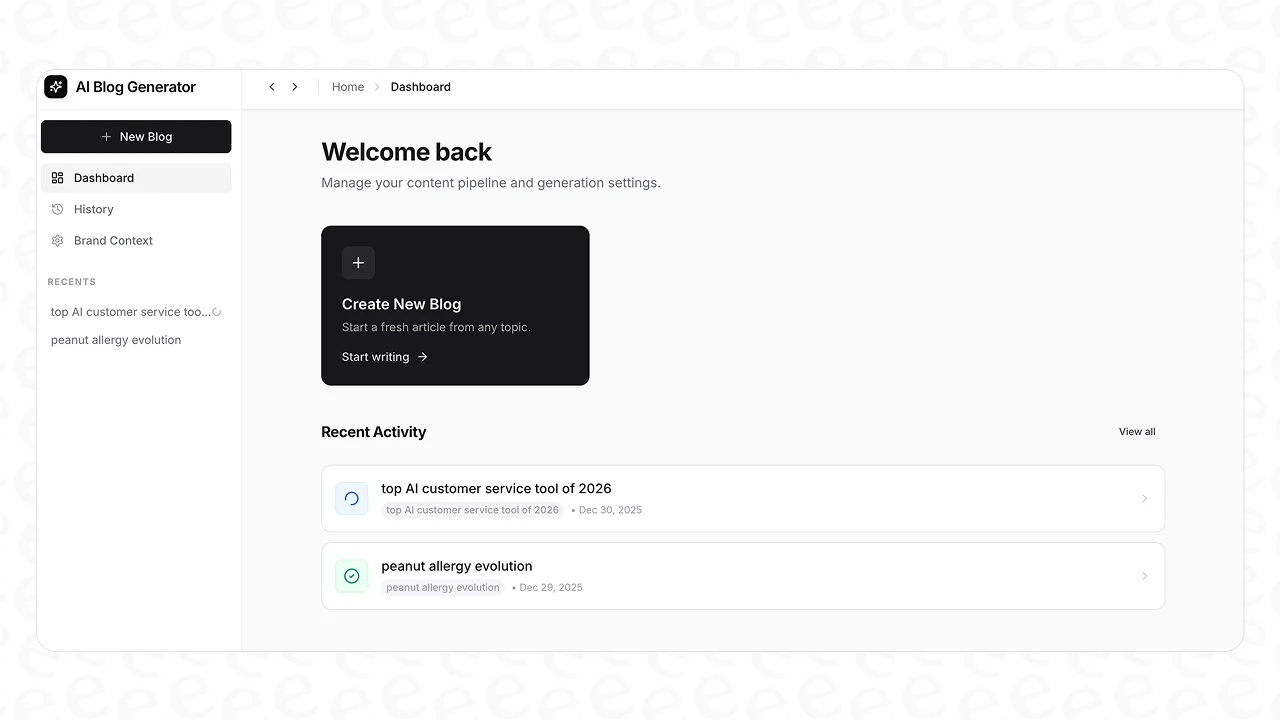
The eesel AI blog writer is designed to deliver a complete first draft. Here’s what makes it different:
- Automatic asset creation: It doesn't just write text. It generates and adds relevant images, infographics, tables, and charts right into the post, saving you a ton of manual work.
- Context-aware research: The AI is smart enough to understand the type of post you're writing. For a comparison post, it'll find pricing and feature data. For a technical guide, it'll look for specs and instructions.
- Social media and community integration: To make the content feel more human and trustworthy, it automatically finds and embeds relevant YouTube videos and real quotes from Reddit threads. This grounds your content in actual conversations people are having.
- Answer Engine Optimization (AEO): The content is structured not just for Google's blue links but also for AI answer engines like Perplexity and Google’s AI Overviews, ensuring you’re visible in the next wave of search.
At eesel AI, we used this exact tool to grow our blog impressions from 700 to 750,000 per day in just three months by publishing over 1,000 optimized blogs. You can try it for free and generate your first complete blog post to see how different the output is for yourself.
When to choose Writesonic vs Bramework
The choice between Writesonic and Bramework really boils down to what you're trying to do. Neither one is universally "better"; they just solve different problems for different people.
Choose Writesonic if:
- You’re on a marketing team at a B2B or SaaS company.
- Your main concern is tracking and improving your brand's visibility in AI search answers (GEO).
- You need a flexible tool that can generate all sorts of marketing copy, not just blog posts.
- You have a budget of at least $199/month to access the powerful GEO features.
Choose Bramework if:
- You’re a solo blogger, freelance writer, or run a small content agency.
- Your main goal is to consistently produce high-quality, long-form SEO blog posts.
- You prefer a guided, step-by-step process for research, outlining, and writing.
- You’re working with a smaller budget and want a tool that is 100% focused on blogging.
At the end of the day, Writesonic is for the brand strategist thinking about the future of search, while Bramework is for the content creator focused on winning at traditional SEO today.
For a deeper dive into how these tools stack up against other market leaders, this video offers a helpful comparison, focusing on the core features that matter for content creators.
This video offers a helpful comparison between Writesonic and Jasper AI, providing more context on AI writing tools.
Final thoughts
The AI writing space isn't one-size-fits-all. Writesonic provides a powerful, strategic platform for businesses ready to compete in the new world of AI search, while Bramework offers a focused, efficient workflow for dedicated bloggers and content writers. Your choice really depends on your role, goals, and budget.
For those looking to automate the entire process from a single keyword to a finished post, the eesel AI blog writer offers a direct path. It automates the entire process, so you can focus on hitting "publish" and promoting your content.
Frequently Asked Questions

Share this post
Article by
Stevia Putri
Stevia Putri is a marketing generalist at eesel AI, where she helps turn powerful AI tools into stories that resonate. She’s driven by curiosity, clarity, and the human side of technology.