A complete guide to white label SEO services

Stevia Putri

Stanley Nicholas
Last edited February 2, 2026
Expert Verified

Running a digital agency feels like a constant juggling act, doesn't it? You're trying to keep clients happy, find new ones, and somehow scale your business, all without letting overhead costs spiral out of control. One of the biggest challenges is expanding your services. You know you need to offer SEO to be a true one-stop shop, but building an in-house SEO team from scratch is a massive investment of time, money, and resources.
That's the exact problem white label SEO services are designed to solve. It’s a strategy that lets you offer expert-level SEO to your clients under your own brand, without hiring a single new person. It’s about working smarter, not harder.
This guide will walk you through everything you need to know: how the model works, what it costs, the good and the bad, and how to find a partner that feels like a true extension of your team. And since great content is the engine of any solid SEO strategy, we'll also touch on how you can keep full control over your content quality. Tools like the eesel AI blog writer can turn a single keyword into a complete, publish-ready article, making sure your client's brand voice is always on point.
What are white label SEO services?
In simple terms, a white label SEO service is a partnership. Your agency hires a specialized SEO company (the provider) to handle all the detailed SEO work for your clients. The provider operates completely behind the scenes, and all the work, from the initial audit to the monthly reports, is presented to your client with your agency's branding.
Think of it this way: your agency is the storefront. You manage the client relationship, the big-picture strategy, and the billing. The white label provider is the workshop in the back, handling all the technical execution, content creation, and link building. Your client never knows they exist; as far as they're concerned, you're the full-service SEO powerhouse delivering amazing results.
You might hear this called "SEO reselling" or "private label SEO," but it all points to the same model. It’s a huge help for web design firms, marketing consultants, PPC agencies, and anyone else looking to add SEO to their service list. It lets you become indispensable to your clients, which is a great way to increase their lifetime value.
How the model for white label SEO services works
Jumping into a partnership like this might seem like a huge commitment, but the process is actually quite simple. Here’s a look at what you can expect, from how you’ll pay to how campaigns get rolling.
Common pricing models
First off, pricing isn't a one-size-fits-all deal. Most providers offer flexible models to suit different agency needs. Based on some great analysis by Agency Platform, you'll likely encounter one of these structures:
- Fixed Pricing: This is the most straightforward model. You pay a set monthly fee for a specific package of services. It’s predictable and makes budgeting easy.
- Custom Pricing: For clients with unique or more complex needs, this model lets you build a tailored plan. You can pick and choose different services to create the perfect strategy.
- Tiered Pricing: Some providers offer different plans based on your client volume. For instance, a company like Third Marble has a "Growth Plan" for agencies starting out and a "Partner Plan" for those with a larger client base.
From client intake to campaign launch
Once you’ve picked a partner and a pricing plan, getting a new client campaign started follows a clear path:
- Intake & Discovery: Your provider will kick things off by gathering all the important details about your client, including their business goals, target audience, and main competitors.
- Audit & Strategy: Next, they’ll do a deep SEO audit of your client's website. This helps uncover technical issues, content gaps, and opportunities. The findings from this audit form the blueprint for the entire SEO strategy.
- Onboarding: This is the setup phase. Your client’s assets, like their Google Analytics and Search Console accounts, are connected to the provider's systems so they can track progress and collect data.
- Campaign Activation: With everything set up, the provider starts executing the agreed-upon SEO tasks.
Core delivery and reporting
So what kind of work is actually happening behind the curtain? Most packages cover the essential pillars of a successful campaign:
- Technical & On-Page SEO: This involves website audits, improving site speed, and optimizing on-page elements like titles, meta descriptions, and headers.
- Content Creation & Optimization: This is a big one. Your provider will develop blog posts, landing pages, and other content designed to rank for target keywords. Many are now also focusing on optimizing content for new formats like AI Overviews and language models.
- Link Building: They’ll work on getting high-quality backlinks from reputable sites to build your client's domain authority and credibility with search engines.
- Local SEO: For clients with physical locations, this means managing their Google Business Profile, building local citations, and making sure they appear in "near me" searches.
Of course, doing the work is only half of it. You need to show your clients the results. The best providers offer a white label SEO dashboard that you can fully customize with your agency's logo and branding. Tools like DashThis and Whatagraph are often used to create these dashboards, pulling data from Google Search Console, Ahrefs, and Semrush. You can even host the dashboard on your own domain, giving your clients a completely professional and branded experience.
The pros and cons of using white label SEO services
Like any business decision, outsourcing your SEO has its ups and downs. Let's look at both sides so you can make the right choice for your agency.
How white label SEO services fuel agency growth
- Scale without hiring: This is the main attraction. You can instantly add a full SEO department to your agency without the cost and hassle of recruiting, hiring, and training.
- Boost profitability: The financial model is simple. According to an analysis by SEO Locale, most agencies aim for a 40-60% gross margin. This typically means applying an 80-150% markup on the provider's wholesale price.
- Pro TipLet's say a local SEO package from a provider like 'Third Marble' costs your agency $299/month. You could charge your client $598/month (a 100% markup), netting you a $299 profit with a 50% profit margin. Not bad for just managing the relationship.
- Access specialized expertise and tools: You're not just getting more people; you're getting experts who live and breathe SEO. Plus, you get access to their expensive suite of tools (like Ahrefs or Semrush) without paying for the subscriptions yourself. Some providers, like The HOTH, even offer bulk buyer bonuses.
- Focus on what you do best: With the technical work handled, your team can focus on its core strengths: building client relationships, closing new deals, and developing high-level strategy.
- Improve client retention: When you offer more essential services, you become harder to replace. By becoming a full-service agency, you can reduce client churn and increase their lifetime value.
Potential challenges and how to mitigate them
But it's not without its potential downsides. There are a few things you need to watch out for.
You're putting your client's results, and by extension your reputation, in someone else's hands. This is why choosing a partner with a transparent, real-time reporting dashboard is an absolute must. Having a dedicated account manager you can actually talk to is also key to mitigating this loss of direct control.
Let's be honest, not all providers are the same. The quality of work can vary a lot from one company to another. To avoid inconsistent quality, do your homework. Vet potential partners thoroughly by looking for companies with a long track record and plenty of positive reviews. A good approach is to start with a small pilot project for one client to test their work before committing more business.

Sometimes, a third-party provider might not fully grasp your client's specific brand voice or business goals. To avoid communication gaps, look for partners who emphasize a detailed discovery and onboarding process. The more they know upfront, the better the results will be.
Finally, there's brand risk. If your provider cuts corners and uses unethical "black-hat" SEO tactics, your client's site could get penalized by Google. That would be a disaster for your agency's reputation. Be direct and ask potential partners about their strategies for link building and content creation to ensure they are 100% committed to white-hat techniques.
How to choose the right partner
Finding the right partner is the most important part of this whole process. You're not just hiring a vendor; you're essentially adding a new department to your company. You need a team that feels like an extension of your own.
Key evaluation criteria
As you look at potential partners, keep these criteria in mind:
- Proven Results & Reputation: Look for providers who have been around for a while and have a solid history of success. For example, a partner like The HOTH mentions they've served over 200,000 businesses and have a 4.9/5 rating from over 4,000 reviews. That kind of social proof is hard to ignore.
- Transparency and Reporting: You need to know what’s happening at all times. Do they provide a clear, easy-to-understand reporting dashboard? Will you have a dedicated account manager you can actually speak with?
- Communication Channels: A good partnership relies on good communication. Find out how they prefer to communicate. Do they offer shared Slack channels for quick questions or schedule regular strategy calls?
- Scalability and Flexibility: Your agency will grow, and your partner needs to be able to grow with you. Make sure they can handle an influx of new clients, whether you bring them one new account or ten in a single month.
- Ethical Practices: This is a big one. You need to be certain they stick to white-hat SEO techniques. This protects your clients and your agency from any potential fallout from Google penalties.
Using partner platforms to find providers
Googling "white label SEO provider" will give you thousands of results, which can be overwhelming. A better way to go is using platforms designed to connect with vetted partners.
The Semrush Agency Partners platform is a great resource for this. It's a curated marketplace where you can find and filter potential partners by the services they offer, the industries they specialize in, your budget, and even their location.
You can also use its proprietary "Agency Score" and read verified client reviews to get a real sense of an agency's skills and reliability before you even reach out. It takes a lot of the guesswork out of the vetting process.
The role of AI in streamlining white label SEO services
AI is changing the SEO game, especially when it comes to content. Content is still incredibly important, but producing high-quality, original articles consistently is a huge time commitment.
One of the common frustrations with outsourced content is that it can feel a bit generic. It might be slow to arrive, or it might not perfectly capture your client's unique brand voice. This is an area where your agency can step in and add a ton of value, taking back control of content quality without having to do all the writing yourselves.
Scaling high-quality content with eesel AI
This is where a tool like the eesel AI blog writer can make a huge difference for agencies. It’s designed to solve the exact problem of creating top-tier content at scale.
Its value is that it goes beyond drafting text. You give it a single keyword, and it produces a complete, SEO-optimized, and media-rich blog post that is ready to publish. This isn't just a claim. It's the exact tool we used at eesel AI to grow our own blog from 700 to 750,000 daily impressions.
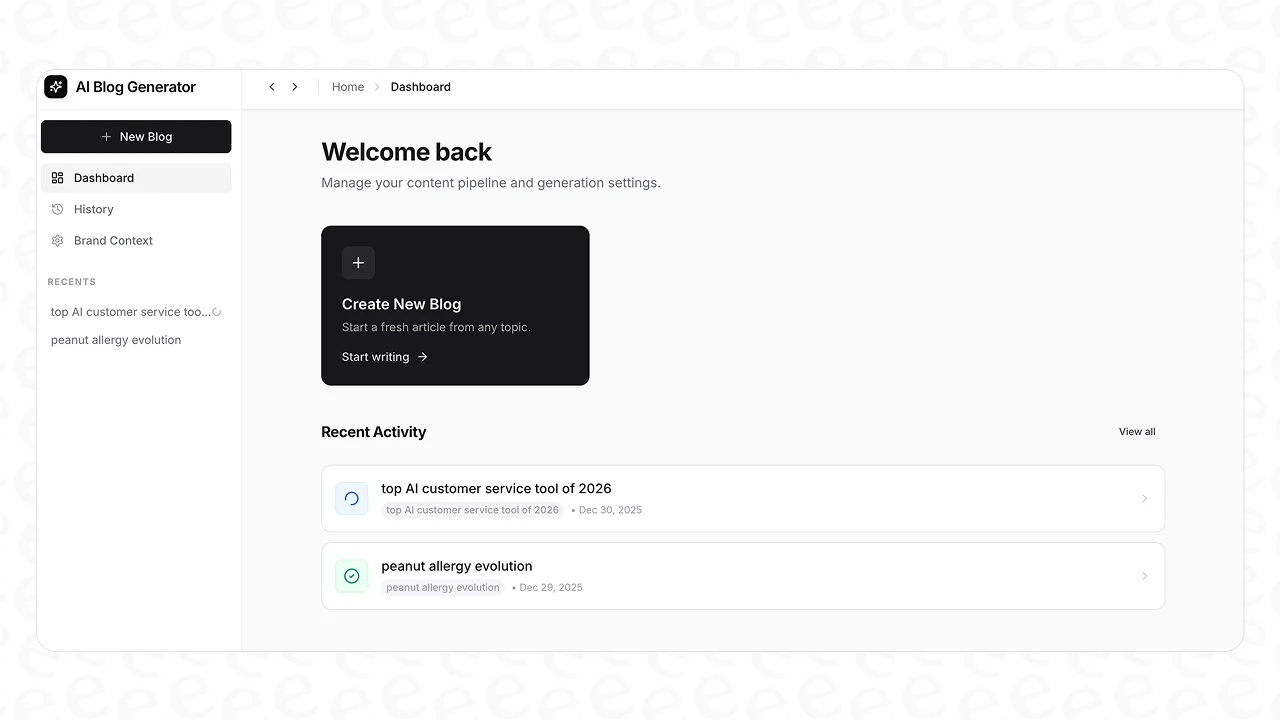
Here are a few features that directly address the pain points of generic outsourced content:
- Context-Aware Research: It doesn't just spin words. It automatically researches the topic to make sure the content is deep, accurate, and genuinely helpful, not just shallow AI filler.
- Automatic Assets: It generates images, tables, charts, and infographics to go with the text, saving your team hours of manual design work.
- Social Proof Integration: To make content feel more authentic and trustworthy, it can automatically embed relevant Reddit quotes and YouTube videos, adding real human voices to the article.
It can be used to complement a white label partnership. Let your partner handle technical SEO and link building, while you use eesel AI to maintain control over content quality and voice.
Hearing directly from agency owners who have navigated this path can provide valuable insights. The following video explores the pros and cons of partnering with a white label provider, helping you weigh the decision for your own business.
A video from Osborne Digital Marketing explaining the pros and cons of using white label SEO services for agencies.
Are white label SEO services right for your agency?
So, what’s the final word? White label SEO services are a proven and efficient way for digital agencies to grow their revenue and service offerings. It allows you to deliver great results for your clients without the massive overhead of building an in-house team.
But success really comes down to one thing: choosing the right partner. You need a team that is transparent, communicates well, and is focused on delivering measurable results. When you find that fit, it’s a powerful engine for growth.
For agencies ready to take that next step, vetting a potential white label partner through a trusted platform like Semrush Agency Partners is a smart move. And when it comes to mastering the all-important content piece of the puzzle, there's no reason not to see what's possible. Go ahead and generate your first blog for free and see the difference for yourself.
Frequently Asked Questions

Share this post
Article by
Stevia Putri
Stevia Putri is a marketing generalist at eesel AI, where she helps turn powerful AI tools into stories that resonate. She’s driven by curiosity, clarity, and the human side of technology.