What is an AI blog writer? A practical guide

Stevia Putri
Last edited January 14, 2026
Content marketing is changing quickly. AI tools aren't just a fun new thing anymore; they're a regular part of how writers and marketers get work done. With this change comes a ton of new tools, all claiming to make creating content a breeze. But it can also be pretty confusing.
It all boils down to one question: What is an AI blog writer, and is it really any different from something like ChatGPT?
This guide will give you a straight answer. We’ll get into what these tools do, what features you should actually care about, and how to use them to create good content that people will find and read. Specialized tools, like the eesel AI blog writer, are made to give you the speed of AI without sacrificing the human touch your audience wants.
What is an AI blog writer?
Simply put, an AI blog writer is a tool built to create a full, long-form article from just a topic or keyword. The goal is to handle the tedious parts of blogging for you, like the research, outlining, first draft, and some basic SEO work.
This is the main difference between it and a general AI chatbot. You can tell ChatGPT to write a blog post, but it’s really made to answer all sorts of questions. An AI blog writer is designed for one job: content marketing. It has features for building a proper article structure, optimizing for search, and keeping your brand voice consistent, which a general tool doesn't focus on.
The main thing to remember is the final product. A general AI gives you a chunk of text. A real AI blog writer gives you a finished article with an intro, headings, a conclusion, and maybe even an FAQ section. It’s like getting a ready-to-eat meal instead of just a bag of groceries. The infographic below breaks down the key differences.
Core components of an AI blog writer
Not all AI blog writers are the same. A good tool does more than just spit out words. To find one that will help you create more content without lowering the quality, you need to look for a few key things that set modern platforms apart.
From simple prompts to structured outlines
Planning content takes a lot of time. A good AI blog writer helps with that. You give it a keyword, and it creates a logical flow for the article with headings (H2s, H3s) and relevant points. This gives you a solid foundation to start with, saving you hours of brainstorming. The AI knows how articles are typically structured and builds a story that makes sense.
SEO and AEO optimization features
A blog post is useless if no one can find it. Modern AI blog writers are built to help with search visibility. They fit target keywords into headings, titles, and the body of the text naturally, so it doesn't sound forced.
But it’s not just about old-school SEO anymore. The best tools now optimize for Answer Engine Optimization (AEO). As search engines like Google use AI to create summaries, AEO is becoming more important. According to industry research, AEO helps your content become the direct source for things like Google's AI Overviews and voice search answers. This is a big deal now that more people are getting answers directly on the search results page without clicking any links.
Tone and voice customization
You can usually spot generic AI text. It’s often bland, too formal, and has no personality. That’s why being able to customize the tone and voice is so important. A good AI blog writer lets you pick a specific tone, like educational, conversational, or confident. This helps the content match your brand’s voice and feel more authentic.
Context-aware research capabilities
This is a huge difference between basic text generators and more advanced platforms. Many AI tools write using a fixed set of old data, which can result in outdated or generic info. A context-aware tool does real-time research based on the prompt you give it.
It knows that a product comparison post needs a pricing table, while a tutorial needs step-by-step instructions. This ability to adjust its research based on the search intent behind your keyword is what separates shallow AI content from something genuinely useful.
Automatic asset and media integration
Text is only one piece of the puzzle. Visuals are key for keeping readers engaged. While many tools just give you words, the best ones create a complete package. This means automatically generating and adding relevant assets like AI-generated images, infographics, and data tables right into the article. Some can even find and embed relevant YouTube videos, which adds credibility and makes the content more interesting.
Popular AI blog writing tools
The market is full of AI writing tools, but they don't all do the same thing. Here’s a look at a couple of common options to see what they’re best for and where they might not be the right fit for producing full blog posts.
Honestly, I use Gemini, ChatGPT, and Copilot for each of their strengths. I actually used all three simultaneously to brainstorm the best ways to use them and develop a process. Gemini has better keyword insights so it’s can be a great resource to brainstorm title ideas, headers, long tail keywords, etc. as well as build initial outlines. This is where I’ll take it to ChatGPT. ChatGPT is better for creativity and access to search and review links... I’ve found that Copilot has generated the best quality images when I brainstorm with ChatGPT and have it generate the image prompt.

Jasper AI
What it is: Jasper AI is a flexible platform for marketers who need to automate different kinds of content. It’s not just for blogs; it has a wide range of templates for creating social media posts, ad copy, emails, and more.
Strengths: Jasper is good at maintaining brand consistency with its "Jasper IQ" feature, which can learn a company's specific voice and product details. Its flexibility makes it a handy all-in-one tool for marketing teams.
Limitations: For long-form content, its output often serves as a first draft that requires human editing to add detail and check facts. Also, blogging features like the Surfer SEO integration and Copyscape plagiarism checker are available as paid add-ons. Many of its advanced features are included in its custom-priced Business plan.
Pricing: The Pro plan starts at $59 (billed annually), which includes two brand voices and five knowledge assets.
Grammarly
What it is: Grammarly is primarily a grammar and style checker. While it includes AI writing features, its core function is to polish existing text, not generate entire articles from scratch.
Strengths: It excels at ensuring writing is clear, correct, and professional. Its real-time suggestions are useful for catching errors and improving readability.
Limitations: Grammarly's blog post generator is a secondary feature. It produces a simple text draft and is not designed for creating deeply researched, SEO-optimized, and media-rich articles.
Pricing: The free plan includes 100 AI prompts a month. The Pro plan is $12 per member per month (billed annually) and increases the limit to 2,000 AI prompts.
eesel AI: Creating publish-ready content
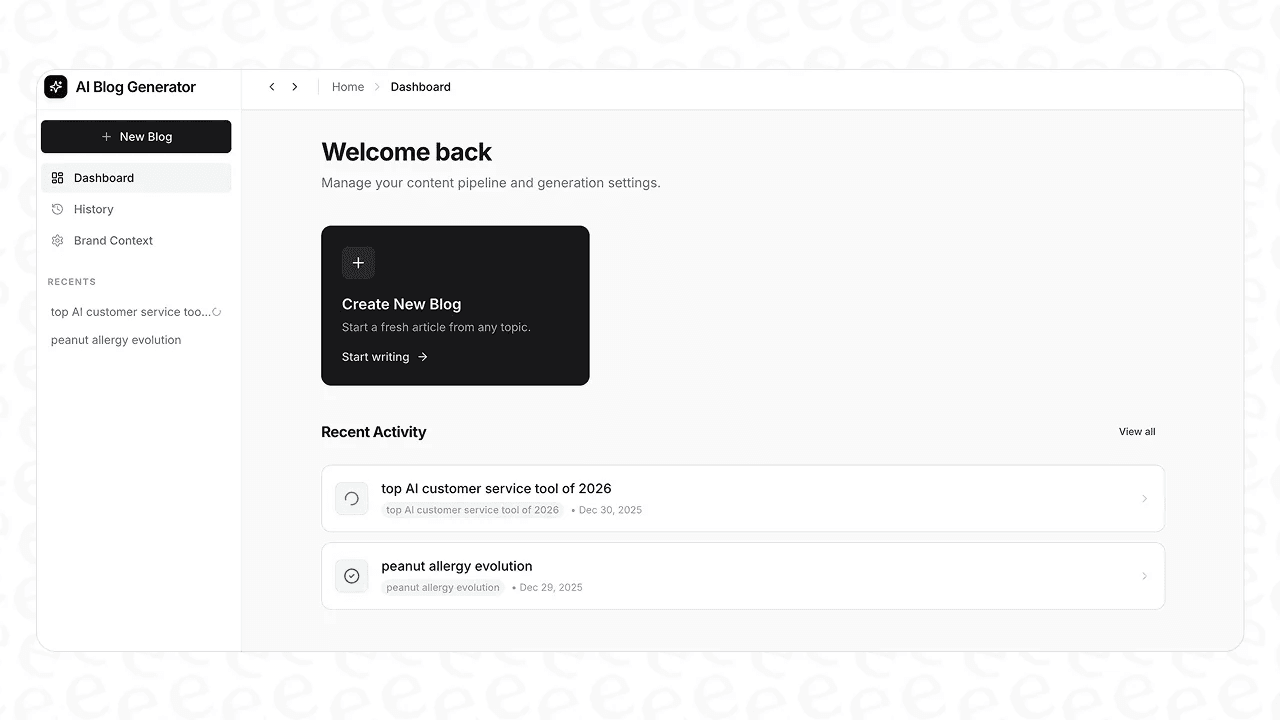
It’s designed to handle the whole workflow, not just the writing. Here are a few things that help it produce a finished product:
- Context-Aware Research: It automatically figures out the type of content you need. If you're writing a product review, it finds specs and pricing. For a thought leadership piece, it pulls in data and quotes. It changes its research based on your keyword's intent.
- Automatic Asset Generation: It doesn't just write. It creates and embeds relevant AI images, data tables, and infographics directly into the post. This saves you from having to manually find or create visuals.
- Social Proof Integration: To add a human touch that AI content often lacks, it can pull in real Reddit comments and YouTube videos. This adds credibility and different perspectives to your articles.
This is the tool we used at eesel AI to grow our organic traffic from 700 to 750,000 impressions in just three months by publishing over 1,000 optimized blogs. It’s built to produce content that reads well and performs in search.
How to use an AI blog writer effectively
No matter which tool you pick, you'll get the best results by putting a human first. AI is a great partner, but it can't replace a skilled content creator. Here are a few tips to get the most out of any AI blog writer.
- Garbage in, quality out: The AI's output depends entirely on your input. A clear topic, a specific audience, and some context will always give you better results than a vague prompt. The more guidance you give, the better the article will be.
- Always be the editor-in-chief: Treat the AI-generated text as a draft from a very fast junior writer. It's your job to fact-check all data and claims. AI can get things wrong, and you need to check its work to maintain your credibility.
I write blog posts myself and run Grammarly on it. When they are ready, I copy-paste the entire post into ChatGPT and ask it to challenge the post... I tell it to be honest and give constructive feedback about everything that is wrong with the post, with the goal of me becoming a better writer. I ask it to check factual and grammar errors, readability, depth of the topic, etc. Using AI as an assistant for writing instead of relying 100% on it to write posts is much better in my experience.
For a deeper dive into creating high-quality blog content with AI, the following video offers a step-by-step walkthrough of the process, from initial idea to final polish.
Final thoughts
A dedicated AI blog writer is more than just a text generator. It’s a tool designed to help you create more content, taking you from a keyword to a nearly finished article in minutes. The best platforms handle research, writing, SEO, and even create visuals for you.
Think of AI as a partner. It takes care of the time-consuming drafting work, so you can focus on strategy, creativity, and adding the human insights that make content truly great.
Ready to see what a context-aware AI can do? Generate your first blog with the eesel AI blog writer and turn a keyword into a publish-ready article.

Frequently Asked Questions
Share this article

Article by
Stevia Putri
Stevia Putri is a marketing generalist at eesel AI, where she helps turn powerful AI tools into stories that resonate. She’s driven by curiosity, clarity, and the human side of technology.