
So, you're the one everyone hits up for fantasy league tips or game-day predictions? Sounds like you've got the makings of a sports blogger. The online sports world is huge, and fans are always hungry for fresh takes that you just don't get from the big media outlets. A blog is your ticket to creating a space for people who are just as obsessed with your favorite teams as you are.
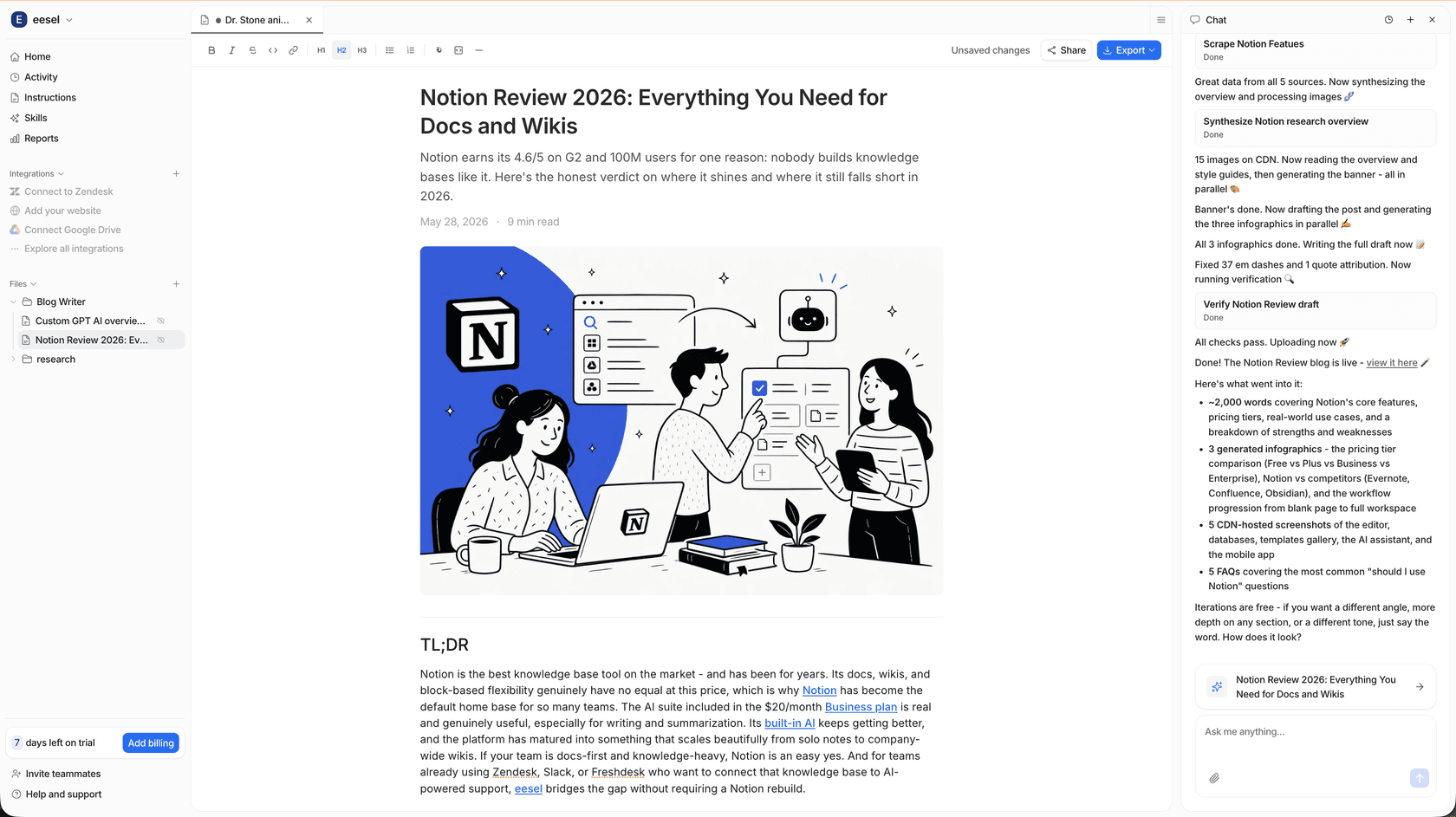
The best part? Getting started is easier than you think. Tools today can do a lot of the grunt work, so you can stick to what you love: talking sports. We actually used the eesel AI blog writer to take our own blog from 700 to over 750,000 daily impressions in about three months. This guide will give you the full playbook, from setting up to cashing in.
What is a sports blog?
A sports blog is more than a collection of articles. It's a hub for analysis, conversation, and community. Big sports sites have to cover everything, but your blog can be different. You can go super deep on one specific thing.
Want to write a whole blog about the defensive schemes in the NFC North? You can. Feel like breaking down every single draft pick your team has ever made? Go for it. It's your corner of the internet to connect with fans who get it.
Step 1: Laying the groundwork
Before you start writing, a bit of prep will save you headaches later. Getting these first steps right gives your blog a solid foundation to build on.
Find your niche
Trying to be the next ESPN is a rookie mistake. The internet is a crowded place, and a focused blog is the best way to build a loyal audience. When you narrow down your niche, you become the go-to source for a specific group of people, which also makes it way easier to make money down the road.
Don’t start it with the end goal of monetizing it. Start it with a passion for sports writing and hone your blogging craft first. Identify what advantage your insight has over ESPN and nbcsports and expand on it. Whatwould differentiate you from every other sports blog out there? Ultimately, people aren’t going to visit your blog to read about sports. They are going to visit your blog because of your unique perspective and insight on it. YOU are the product. Not sports.

Here are a few ideas to get the wheels turning:
- Retail & Apparel: You could focus on a single team's gear from a site like Fanatics or review the latest sneaker drops from Nike.
- High-Ticket Equipment: If you're into fitness, you could write reviews of home gym equipment like Peloton bikes or fancy golf simulators.
- Fantasy Sports & Betting: Offer deep analysis for platforms like DraftKings or FanDuel. Just be sure to check the regulations in your area first.
- Performance Tech: This is a booming market. You could cover wearables from brands like Garmin or recovery gadgets like Therabody.
Choose the right blogging platform
Your blogging platform is your home field. It impacts how your site looks, feels, and costs. While there are tons of options, most people end up choosing between WordPress, Squarespace, or Wix.
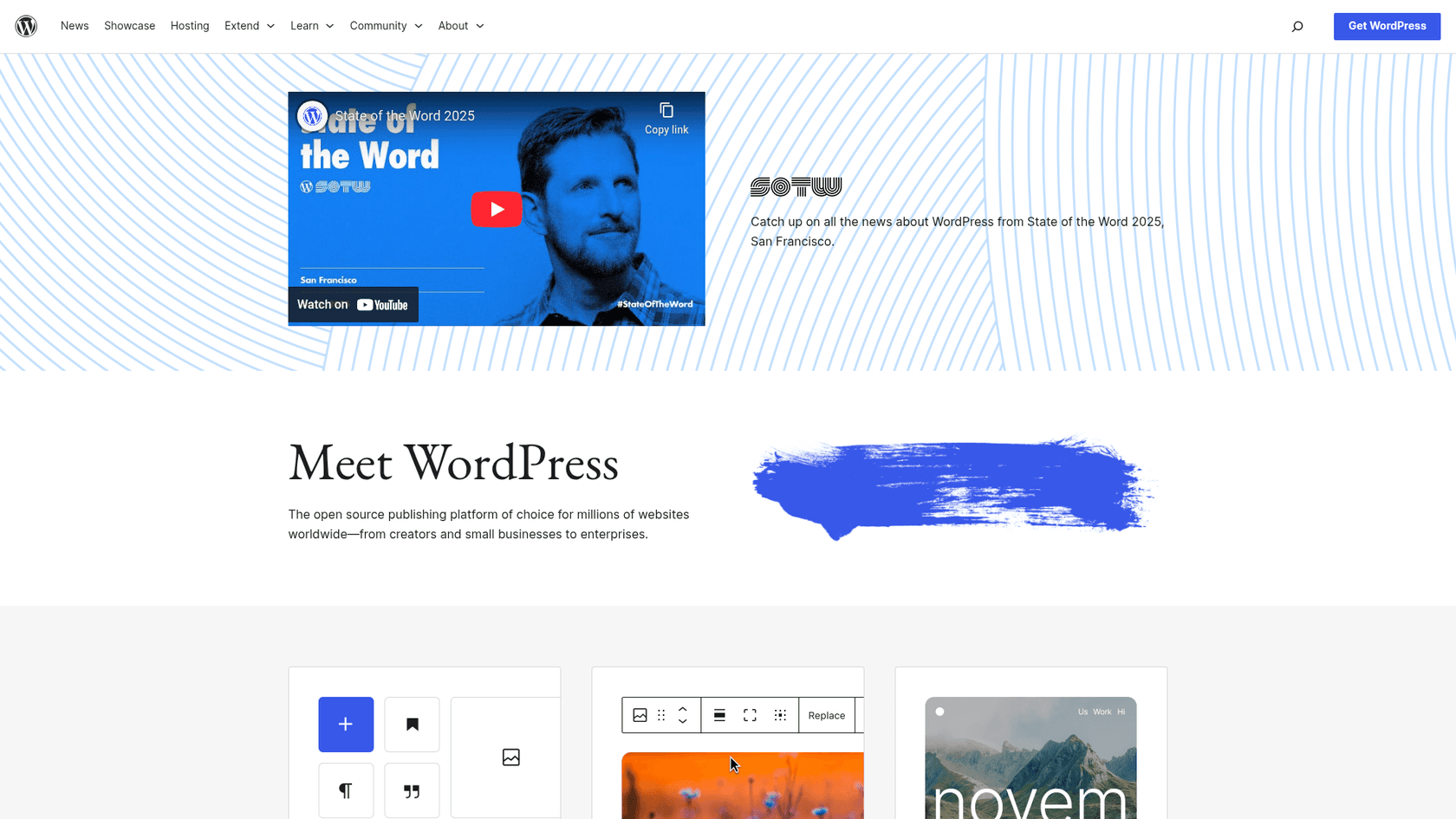
WordPress is a popular choice for blogging platforms, and it comes in two different versions.
- WordPress.org (Self-Hosted): This is the free software that gives you complete control. You can install any theme or plugin you want, which means unlimited customization. The only catch is that you need to buy your own domain name and hosting from a provider like Bluehost or Pressable. It takes a bit more effort to learn, but it's a strong choice if you're serious about growing your blog.
- WordPress.com (Hosted): This is the all-in-one package with hosting included. It's much simpler for beginners, but it has its limits. The free and personal plans don't let you install your own plugins, and you can't get rid of their branding without upgrading.
Squarespace and Wix are known for being incredibly user-friendly. They use "what you see is what you get" (WYSIWYG) editors, so you can see your design changes as you make them.
- Squarespace is known for its sleek, professional templates, which are great if your blog will have a lot of high-quality photos. It’s like buying pre-assembled furniture; it looks good right away.
- Wix offers more creative freedom with its drag-and-drop editor and a massive app market. Think of it as IKEA furniture; you get a solid foundation that you can customize to your heart's content.
Here’s a quick table to help you compare:
| Feature | WordPress.org | WordPress.com | Squarespace | Wix |
|---|---|---|---|---|
| Ease of Use | Steeper learning curve | Very beginner-friendly | Easy, but more rigid | Very easy, drag-and-drop |
| Plugins/Apps | 60,000+ plugins | Only on Business plan+ | Limited "Extensions" | Large App Market |
| Customization | Unlimited control | Limited by plan | Good, but structured | High design freedom |
| Cost | Hosting + Domain | Free plan available | Starts at ~$16/mo | Free plan available |
| Best For | Serious bloggers wanting full control | Hobbyists and beginners | Visually-driven blogs | Small businesses, maximum ease |
Set up your site for a professional look
After you've picked your platform, it's time to make it look professional.
- Domain Name: Pick a name that’s easy to remember, relevant to your niche, and simple to spell. Some Reddit users suggest using Namecheap to buy your domain, noting that they don't seem to engage in price hiking on search queries.
- Theme: Your theme is your blog's design. Choose one that's clean, easy to read, and looks good on mobile phones. Magazine-style themes often work well for sports blogs because they handle lots of headlines and images nicely.
- Essential Pages: To build trust with both readers and search engines, you need a few core pages. According to Google AdSense requirements, these are must-haves if you want to monetize:
- Homepage: This is the front door to your blog. Make it look good.
- About Us: Tell your story. What makes you so passionate about this topic?
- Contact Us: Give readers a way to reach you.
- Privacy Policy & Disclaimer: These are required for credibility and for using most monetization tools.
Step 2: Creating winning content
With your blog all set up, it's time to focus on the content. A strong content game is what turns a hobby into a high-traffic site.
Develop a smart content strategy
Just posting whenever inspiration strikes isn't going to work. You need a game plan. Start by creating an editorial calendar (a simple spreadsheet works fine) to plan your posts and keep a consistent schedule. Search engines really like consistency.
It's also a good idea to mix up your content formats to keep things interesting. Don't get stuck in a rut. Try a combination of:
- News recaps and game analysis
- Player interviews or profiles
- Opinion pieces and hot takes
- Evergreen "how-to" guides (like "how to choose the right golf driver")
Scale content production
Coming up with ideas is one thing, but turning them into well-researched, polished articles is where many bloggers hit a wall. The eesel AI blog writer is a platform built to help you execute your content plan at scale. It handles the whole process from a single keyword to a publish-ready post.
It is designed to help you rank and connect with readers. Here's how:
- Deep Research with Citations: It finds and includes links to external sources and your own internal pages, which helps build authority with Google.
- Automatic Assets: The tool automatically adds AI images, infographics, and data tables to make your content easier to scan and more engaging.
- Authentic Social Proof: For a more human feel, it pulls in real quotes from Reddit threads and embeds relevant YouTube videos, adding credibility and diverse viewpoints.
- Brand Context: Just give it your website URL, and it learns your brand's voice. This lets it drop in natural mentions of your brand where it makes sense, without being salesy.
This is the very tool we used to get our own blog going, and you can try it completely free to generate a few posts and see the quality for yourself.
How to write posts fans want to read
Even with great tools, you still need to know the basics of good writing. Here are a few quick tips:
- Write like you talk. Keep your language conversational and avoid being too formal.
- Use short paragraphs. Break up big blocks of text to make your content less intimidating, especially for people reading on their phones.
- Create catchy headlines. Your headline is often the only thing people see. Make it compelling.
- Include visuals. Add images, screenshots, or videos to every post. It breaks up the text and keeps people engaged.
- Link out. Don't be shy about linking to other websites. Citing authoritative sources builds your own credibility, and linking to your other posts keeps people on your site longer.
Step 3: Growing your audience and making money
Publishing your post is just the beginning. Now you have to get it in front of people and start building a community. This section covers how to promote your blog and eventually turn it into an income stream.
Master blog promotion
You can't just write and hope for the best. You need to be proactive.
- SEO: Search Engine Optimization is all about helping Google find your stuff. Start with the basics: use a tool like Google Keyword Planner to see what people are searching for, then include those keywords in your post title, headings, and meta description.
- Social Media: Share your posts on platforms like X (formerly Twitter), Facebook, and Instagram. Jump into real-time conversations during games and use relevant hashtags to get more eyes on your content and drive traffic back to your blog.
- Email Marketing: Start an email list from day one. It's the only audience you'll ever truly own. An email list gives you a direct line to your most dedicated readers, which is perfect for sending out newsletters with your latest articles.
Build a thriving fan community
A great blog is more than just a website; it's a community hub.
- Foster discussion: Encourage people to leave comments on your posts and always take the time to reply. It shows you're engaged and that you value their input.
- Create a dedicated space: Think about starting a forum on your site or a Facebook Group where your readers can connect with one another.
- Collaborate: Connect with other bloggers or influencers in your niche. You could write guest posts for each other or do joint interviews to introduce your audiences to each other.
Explore ways to monetize
Once you've got a steady flow of traffic, you can start thinking about making money. Just remember, you need to build the audience first.
- Advertising:
_ The simplest way to start is with Google AdSense. They put relevant ads on your site, and you get paid when people see or click on them.
_ To get approved, you'll typically need: 1. Unique, High-Quality Content: Try to have at least 15-20 quality posts published before applying. 2. Essential Pages: As mentioned before, you absolutely need an About Us, Contact Us, and Privacy Policy page. 3. Be 18 or Older: AdSense requires all applicants to be at least 18.So just for your reference moving forward, on Ad Sense alone, so earning ad revenue, you would need 250,000 visitors per month to earn $500. Adding additional streams like affiliate marketing, some endorsements, that kinda thing will bring you up dramatically, but then you will start to seem very salesy. Tough balance to find!
- Affiliate Marketing:
- This is where you recommend products and get a commission for any sales you drive. It's a natural fit for sports blogs.
- Some of the top affiliate programs for sports bloggers are:
- Retail: Fanatics, Nike, Under Armour, Dick's Sporting Goods.
- Fantasy & Betting: DraftKings, FanDuel, PrizePicks.
- Streaming: ESPN+, FuboTV.
- You can also join big affiliate networks like Impact and ShareASale, which give you access to thousands of brands in one place.
- Selling Your Own Products:
- Further down the road, you could create your own merchandise like t-shirts and hats, or sell digital products like fantasy sports guides or e-books.
For those who prefer a visual walkthrough, this video offers a step-by-step guide on setting up a sports blog and exploring monetization strategies from the ground up.
Your game plan
And there you have it! Starting a successful sports blog boils down to three things: finding a niche you're genuinely passionate about, creating great content on a regular basis, and actively promoting your work to build a community. Your love for the game is the engine, but a solid strategy and the right tools are what will carry you across the finish line.
So, what are you waiting for? Take that first step and turn your fandom into a platform. To get your first high-quality article done in minutes, give the eesel AI blog writer a try for free.





