A practical guide to simple blog writing that drives results

Amogh Sarda
Last edited January 20, 2026
Blogging can sometimes feel like you're trying to solve a puzzle with half the pieces missing. Between keyword research, SEO rules, drafting, editing, and promotion, it’s easy to get bogged down. Before you know it, that consistent publishing schedule you aimed for is a distant memory.
A lot of marketers try using AI to speed things up, but using generic tools like ChatGPT for long-form content often just creates a different kind of headache. You end up in a loop of outlining, prompting section by section, and then spending ages editing a clunky draft into something that actually sounds human. As people on forums like Reddit have mentioned, getting a decent first draft this way is rarely simple.
IMO opinion, AI is like most tools. Garbage in, garbage out. You can’t throw a Kw at it and expect a week written article. You still need to research proper KWs. You need to study the SERPs. You still need to perfect a great outline. Once all that is done, AI is a crutch, it can assist you.

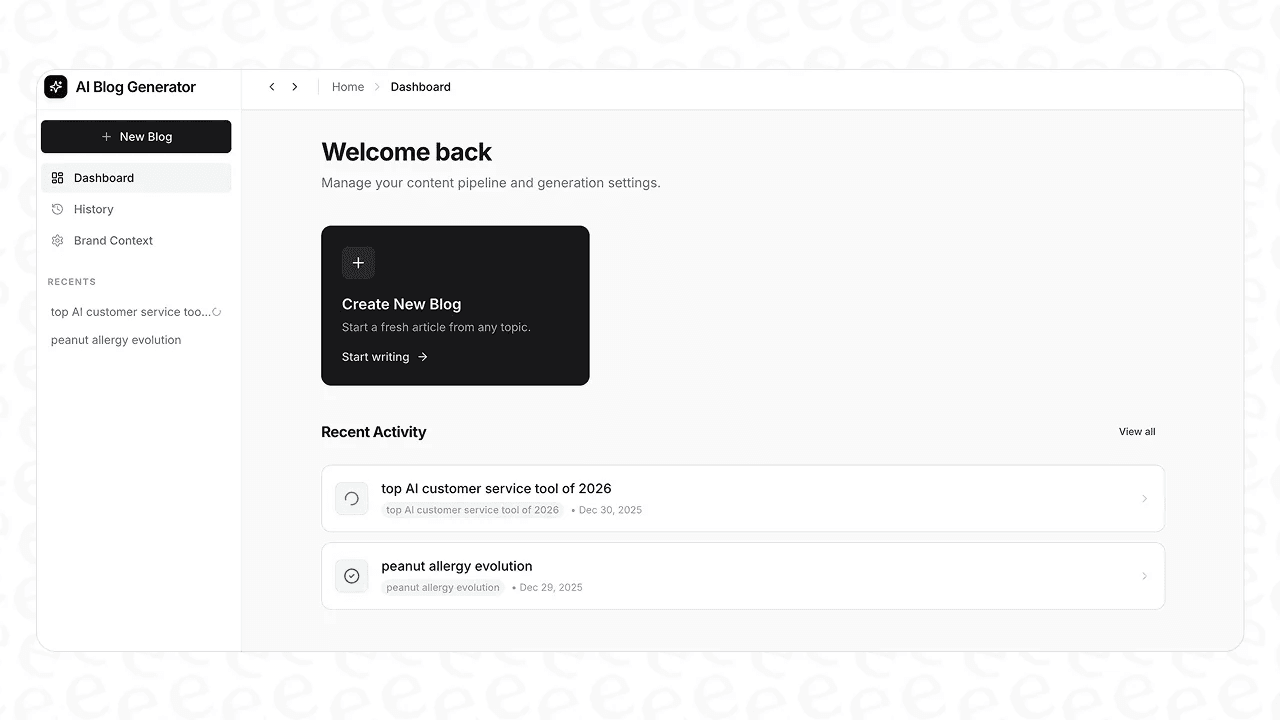
This is where a "simple blog writing" approach can make a huge difference. It's a focused, efficient way of working that prioritizes clarity and what the reader actually wants. And now, modern tools can automate almost the entire process. At eesel AI, we used our own eesel AI blog writer to scale our content, and the results were pretty wild: we grew our blog impressions from 70,000 to over 750,000 in just three months by turning a single keyword into a complete, publish-ready post.
What exactly is simple blog writing?
When I say "simple," I don't mean low-quality or dumbed-down. Simple blog writing is all about streamlining your process to produce great content without the usual friction. It's about getting from an idea to a published post as directly as possible, skipping the endless prompting and heavy manual editing that often comes with general AI assistants.
It really comes down to a few key ideas:
- Be clear, not clever: The goal is to be understood, not to show off your vocabulary. Writing in a direct, conversational tone makes your content easier and more enjoyable to read.
- Focus on what the reader wants: Every piece of content should answer the user's main question without a ton of filler. As Google’s own guidelines suggest, creating genuinely helpful content is how you rank well.
- Have an efficient process: Using a repeatable framework and the right tools helps cut down on manual work, so you can publish consistently without burning out.
This contrasts with more manual methods where writers piece together AI-generated paragraphs, a process that can sometimes lead to repetitive or unfocused drafts. The goal of simple blog writing is to consistently publish helpful, well-researched content that ranks, builds an audience, and doesn't give you a headache.
The three phases of a simple blog writing workflow
We can break the whole thing down into three straightforward phases: planning, drafting, and polishing. Think of it as a recipe you can use to create great content every single time.
Phase 1: Building a foundation for simple blog writing
A little planning goes a long way. Getting your foundation right before you type a single word makes the actual writing part feel so much smoother.
Choosing the right topic
Instead of guessing what people want to read, focus on solving a specific problem for your audience. The best ideas often come straight from the source. Pay attention to the questions your customers are asking, check out what topics your competitors are covering, and browse online forums like Reddit and Quora. These places are goldmines for finding out what people are actually struggling with.
Simple keyword research with "People Also Ask"
You don't need expensive, complicated tools to get started with keyword research. One of the best free methods is right there on the Google search results page: the "People Also Ask" (PAA) section.
As noted by content experts, PAA shows you the exact follow-up questions real users are searching for. This gives you a direct look into what they want to know and helps you understand what related subtopics they care about. Use these questions to lock down a primary topic and figure out all the angles you should cover in your article.
Creating a quick outline
An outline is your roadmap. It keeps you on track and makes sure your post flows logically. This is especially important if you're using AI to help with drafting, as it stops the model from losing focus or repeating itself, a common frustration for creators of long-form content.
Your outline doesn't need to be complex. A simple list of H2s and H3s based on the PAA questions you found is all you need. This structure ensures you'll cover all the key points without rambling, creating a complete resource that fully answers the reader's question.
Phase 2: Drafting with clarity
With a solid plan ready, it's time to write. This phase is all about getting into a flow and focusing on readability.
Embrace the "crappy first draft"
Seriously. The biggest thing that holds writers back is trying to be perfect on the first go. Just get your ideas down without stopping to edit every sentence. The goal here is to get the main message out of your head and onto the page. You can clean it up later. This simple change in mindset is one of the best ways to beat writer's block and get moving.
My two cents is yes. I use Active Inspiration (A.I.) software to 'break me out' of the blank page freeze. The issue is when the content is 70% AI or more. AI should really be used as an Assistive Interface for writing great content, not producing mechanical bastardized word slop by running and rerunning paragraphs through GPT-3.
Structure for skimmability
Most people don't read blog posts word-for-word; they scan. You need to structure your content to make it easy for them to find the key information.
- Use short paragraphs, maybe 2-4 sentences max.
- Break up long walls of text with descriptive headings (H2s and H3s).
- Use bullet points and numbered lists for steps or key features.
- Use bold text to highlight important takeaways that someone can catch while scanning.
Maintain a conversational voice
Write like you talk. Imagine you're explaining the topic to a friend. Use contractions (like "it's" and "you're") and feel free to ask questions to engage the reader. Avoid jargon when you can. If you have to use a technical term, just take a second to explain it simply. This makes your writing feel much more human and relatable.
Incorporate visuals
Visuals are a scanner's best friend. They break up the text, make complicated ideas easier to digest, and make your post more engaging. Manually add relevant images, screenshots of your product, or embed helpful YouTube videos that show your points in action. A good visual can often explain something better than a hundred words. For a complete visual walkthrough of the process, this video breaks down how to approach simple blog writing from the initial idea to the final published piece.
Phase 3: Polishing for maximum impact
You've written the draft. Awesome! Now it's time for the final polish to make sure it shines and gets seen.
Editing and proofreading
The best tip for editing is to step away from your draft for a little while. As writing experts at Grammarly suggest, coming back with fresh eyes makes it much easier to spot errors and awkward sentences.
When you're ready, read the entire post out loud. This is a fantastic trick for catching clunky sentences and typos that your brain might otherwise glide right over. For a final check, run your text through a free tool like Grammarly to catch any last spelling and grammar mistakes.
Basic on-page SEO
You don't need to be an SEO expert to handle the basics. Just check for these things:
- Your target keyword appears naturally in your H1 title, the URL, and at least one H2 heading.
- You write a clear, interesting meta description (under 160 characters) that sums up the article and makes people want to click.
- You add descriptive alt text to all your images. This helps with accessibility and gives search engines more context about your content.
Add internal and external links
Links are important for building authority. Include one or two internal links to other relevant posts on your own blog. This helps readers find more of your content and shows search engines that you have expertise on a topic. Also, add one or two external links to authoritative, non-competing sources to back up any claims you make. This builds credibility and shows your content is well-researched.
Publish and promote simply
That's it. Hit publish! You don't need to share your new post on every social media platform out there. Just share it on the one or two channels where your audience actually spends their time.
How the eesel AI blog writer makes simple blog writing even simpler
While the manual three-phase process is a great way to stay organized, a specialized AI tool can automate nearly the entire workflow. This is the best way to do simple blog writing at scale.
The eesel AI blog writer was designed around this simple, end-to-end approach. It takes the entire three-phase process and handles it for you.
Here’s how it automates each phase:
- Phase 1 (Planning): You just give it a keyword and your website URL. That's it. The eesel AI blog writer does the deep research and automatically generates a comprehensive, SEO-optimized outline. This helps avoid the tedious, multi-prompting workflow often associated with using general AI tools like ChatGPT or Claude for long-form content.
- Phase 2 (Drafting): It doesn't just give you a block of text. It generates a complete, human-sounding draft with a natural, conversational tone. It also automatically creates and embeds assets like AI-generated images, finds relevant YouTube videos, and even pulls real quotes from Reddit to add social proof to your post.
- Phase 3 (Polishing): The article it generates is already optimized for SEO. Keywords are placed correctly in headings, a meta description is ready to go, and sources are cited. This cuts your editing and polishing time down from hours to just minutes.
The key difference is this: generic AI tools give you a text file of ingredients and leave the rest to you. The eesel AI blog writer delivers a finished product—a publish-ready article with all the assets, formatting, and SEO already included.
Final thoughts on your simple blog writing strategy
Simple blog writing isn’t about cutting corners or creating mediocre content. It's about focusing on a clear, repeatable process—plan, draft, and polish—that works every single time.
This approach removes all the unnecessary complexity, helps prevent burnout, and makes content creation a sustainable part of your growth strategy. By focusing on what really matters, you can spend less time struggling with the process and more time publishing content that your audience will actually want to read.
Ready to stop struggling and start publishing? Try the eesel AI blog writer for free and generate your first complete, SEO-optimized blog post in minutes.

Frequently Asked Questions
Share this article

Article by
Amogh Sarda
CEO of eesel AI. Amogh Sarda is obsessed with making the ultimate AI for customer service teams. He lives in Sydney, Australia and has previously worked at Atlassian and Intercom. Outside of work he’s usually surfing or on stage doing improv.