SEO.ai vs Wordtune: Which AI writing tool is right for you?

Stevia Putri

Stanley Nicholas
Last edited January 18, 2026
Expert Verified

The world of AI writing tools is expanding, with new options emerging frequently, making it challenging to determine the best fit for your workflow. This involves comparing features, prices, and the specific problems each tool solves. Usually, it comes down to one main question: are you trying to write something new, or make existing text better?
This is the core of the SEO.ai vs Wordtune discussion. One tool is designed to generate SEO-friendly content from a keyword, while the other focuses on polishing text you've already written.
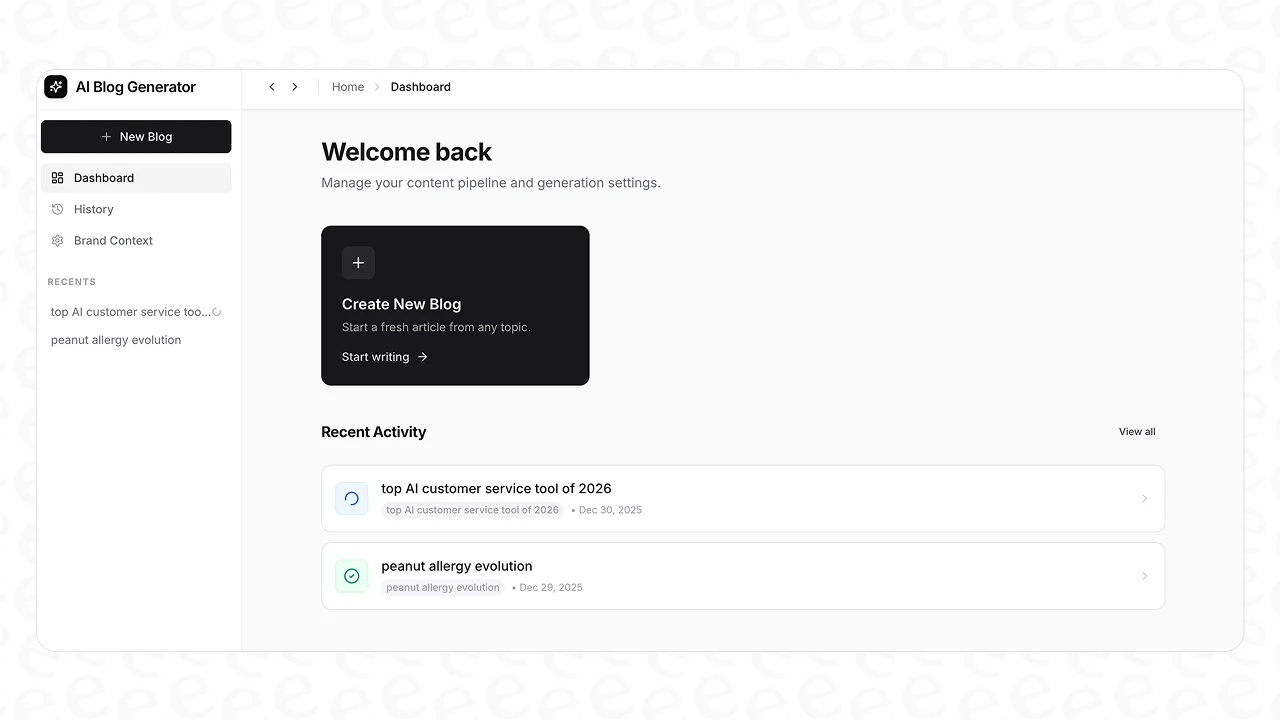
In this post, we'll explore the main differences between SEO.ai and Wordtune, including their features, target audiences, and pricing. We'll also discuss an alternative, the eesel AI blog writer, which is designed to produce complete, publish-ready articles with visuals.
What is SEO.ai?
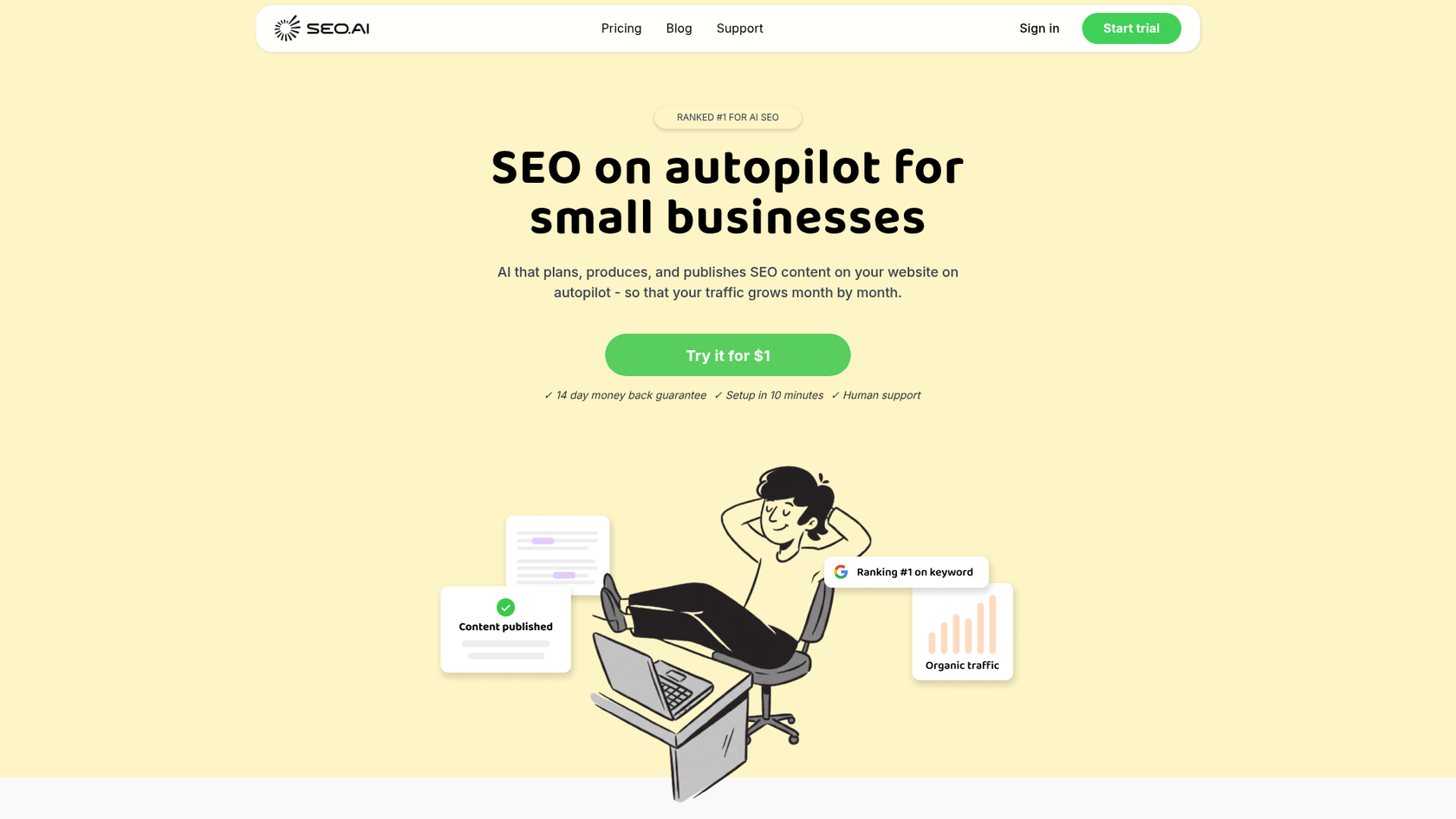
SEO.ai is an AI platform designed for creating long-form content optimized for search engines. The concept is that you provide a target keyword, and it generates a structured article draft for you.
It serves as a launchpad for your content. You can feed it a keyword like "best project management software," and it will produce an outline with headings and some initial text, all geared towards ranking on Google. The main goal is to speed up the first, often challenging, step of content creation.
It's a useful tool for SEO specialists, busy content marketers, or agencies aiming to increase their article output. The value is in its blend of AI generation speed with a basic layer of SEO, giving you a framework to build on instead of a blank page.
What is Wordtune?
Wordtune takes a different approach. It's not for creating content from scratch. Instead, it's an AI writing assistant that helps you improve the clarity, tone, and style of text you've already written. Think of it less as a content generator and more as a writing partner.
Its primary function is to analyze your sentences and suggest better ways to phrase them. You can use it to fix awkward wording, change your tone from casual to formal, or shorten or expand on your ideas. It integrates into your browser, so it works in Google Docs, Gmail, and other writing platforms.

This tool is well-suited for writers, students, or professionals who have their ideas down but need assistance in refining their writing for better connection with their audience. It doesn't generate new content, but it refines what you have, making your message clearer.
A head-to-head comparison of SEO.ai vs Wordtune
Even though both tools use AI for writing, they address different parts of the content creation process. One helps you get started, and the other helps you refine the final product. To make these differences clear, the following infographic breaks down their core functionalities side-by-side.
Core functionality
This is the biggest distinction between the two.
- SEO.ai is a generative tool. You give it a keyword, and it creates brand new content for you. It’s all about producing that first draft.
- Wordtune is a refinement tool. You have to bring your own text to the table. It takes what you've written and helps you improve it. It can't generate an article from scratch.
You can think of it like this: SEO.ai is the architect who draws up the initial blueprints for a house. Wordtune is the interior designer who comes in later to pick out paint colors and arrange the furniture to make everything look just right.
SEO optimization capabilities
As their names suggest, SEO capabilities are a key differentiator. SEO.ai is built with search engine optimization as a priority. It includes features like SERP analysis to check what's already ranking and keyword integration to ensure your terms are included. It also generates content structures (like H2s and H3s) that are SEO-friendly.
Wordtune does not include built-in SEO features. While making your writing easier to read can indirectly help with SEO, as search engines prefer content that users enjoy, it won't perform keyword research, analyze competitors, or structure your blog post for ranking.
User experience and workflow
The way you use these tools day-to-day is also completely different.
With SEO.ai, your process is fairly linear: log in, enter a keyword, adjust a few settings, and wait for it to generate a draft. After that, you export the text into another editor. This is where the manual work begins, such as editing, fact-checking, incorporating brand voice, and adding visuals like images, charts, or videos.
The Wordtune workflow is much more integrated into your existing process. You write in your usual editor, like Google Docs or WordPress. Then, you use the Wordtune browser extension to highlight sentences or paragraphs you want to tweak. It provides a list of suggestions, and you choose the one you like. It’s an interactive, sentence-by-sentence process.
Target audience
Given their different functions, they are intended for different users.
- SEO.ai is for content teams that need to scale the drafting part of their SEO work. If your biggest bottleneck is getting the first version of an article written, it can be a significant help.
- Wordtune is for individuals who are comfortable with their own research and writing but want an AI partner to help polish the final text. It’s for turning good writing into great writing.
SEO.ai vs Wordtune: Pricing comparison
Cost is always a factor. Here’s how the two compare.
SEO.ai pricing
SEO.ai has a few plans based on usage:
- Starter Plan: $49 per month for 15,000 words and 15 articles.
- Business Plan: $99 per month, which increases to 50,000 words and 50 articles.
- Enterprise Plan: Custom pricing for larger teams with higher volume needs.
Wordtune pricing
Wordtune is more accessible and has a free option:
- Free Plan: Gives you 10 rewrites per day, which is a good way to try it out.
- Plus Plan: Starts at $9.99 per month (billed annually) for unlimited rewrites and basic features.
- Unlimited Plan: Starts at $14.99 per month (billed annually) and adds features like summarizing and AI writing.
- Business Plan: Custom pricing for teams, with more advanced controls.
At-a-glance comparison table
| Feature | SEO.ai | Wordtune |
|---|---|---|
| Primary Use Case | Generating SEO drafts | Rewriting & polishing text |
| Starts With | A keyword | Existing text |
| SEO Features | Yes | No |
| Free Plan | 7-day free trial | Yes (limited rewrites) |
| Ideal User | SEO & Content Teams | Writers & Professionals |
Understanding the scope of each tool
Both SEO.ai and Wordtune are designed to handle specific parts of the content creation process, which means there are additional steps required to get a blog post ready for publication.
SEO.ai's scope: It provides a text-only draft. The content often requires significant human editing to match your brand voice, verify facts, and make it engaging. Additionally, the user is responsible for creating and adding all media. You have to find images, build infographics, search for relevant videos, and create tables. The draft is just the beginning.
Wordtune's scope: It does not assist with initial content creation. It only comes in at the end to help with polishing. Its utility is in refining existing text, not generating it. This workflow requires a manual effort to bridge the gap between an AI-assisted draft and a final, media-rich article ready for publication.
An alternative for end-to-end content generation: eesel AI blog writer
For users looking for an end-to-end solution, the eesel AI blog writer is designed to generate a complete article from a single keyword.
It is built to be a comprehensive solution that handles the entire process. You provide a keyword, and it generates a complete, SEO-optimized, and media-rich article that is ready for publication, not just a plain text draft.
It includes features that address other parts of the content workflow:
- Automatic Assets: It creates and inserts relevant images, infographics, and tables directly into the article.
- Media Embeds: To make content more engaging, it automatically finds and embeds relevant YouTube videos and real quotes from Reddit discussions.
- Context-Aware Research: The eesel AI blog writer conducts deep research to create content that is genuinely valuable.
- AEO Optimization: It is also optimized for AI Answer Engines (AEO), structuring content for platforms like Google AI Overviews and Perplexity.
The eesel AI team used this tool to grow its blog from [700 to 750,000 daily impressions](https Tufan Bat-Cilik - Website Analytics (4).png) in three months. It is free to try.
SEO.ai vs Wordtune: Which tool should you choose?
So, which tool is the right one for you? It really depends on the problem you're trying to solve.
Choose SEO.ai if: You need to quickly produce text-only first drafts for SEO and have a process in place for editing, fact-checking, and adding visual assets.
Choose Wordtune if: You have a writing and research process and need an AI assistant to help polish your final text for clarity and professionalism.
Choose the eesel AI blog writer if: You are looking for an end-to-end solution to generate a researched, written, optimized, and media-rich blog post from a keyword.
For a more hands-on look at how these tools function, especially for text refinement, the video below provides a detailed review of Wordtune's capabilities, showing its features for expanding, shortening, and rewriting sentences in action.
A video review of Wordtune's features, providing context for the SEO.ai vs Wordtune debate.
The choice between SEO.ai and Wordtune comes down to whether you need a tool for content generation or text refinement. Both are valuable for specific parts of the content workflow, but each requires additional steps to create a complete, publish-ready article. A content strategy often involves balancing production speed with quality, and the right tool can help scale output while maintaining reader engagement. For those looking to explore an end-to-end solution, you can try generating a blog post with the eesel AI blog writer.
Frequently Asked Questions

Share this post
Article by
Stevia Putri
Stevia Putri is a marketing generalist at eesel AI, where she helps turn powerful AI tools into stories that resonate. She’s driven by curiosity, clarity, and the human side of technology.