A strategic guide to SEO for FMCG brands

Stevia Putri
Last edited January 27, 2026
In the world of fast-moving consumer goods (FMCG), the fight for a shopper's attention has gone digital. It's moved from the crowded supermarket aisles to the top of Google's search results. It’s a huge shift. These days, shoppers look up just about everything online before they buy, whether it's the ingredients in a snack or the best soap for sensitive skin. If your brand doesn't show up the moment they search, you're basically giving that sale to your competition.
This guide is here to walk you through the SEO for FMCG brands strategy. We'll cover what makes it so different, the core strategies that actually work, and how you can get started.
We'll also get real about the biggest challenge: creating a ton of great content without a massive team. It’s a problem we know inside and out. Modern tools like the eesel AI blog writer are designed for this exact situation. It's what we used to grow our own search impressions from a humble 700 to over 750,000 per day in just three months.
What is SEO for FMCG brands and why is it different?
When we talk about SEO in the FMCG space, we mean optimizing your digital presence. It's not just about your website; it's your listings on retailer sites, your social media, everything. The main goal is to be there the second a consumer searches for the kind of everyday products you sell.
But here's the catch: unlike SEO for, say, B2B software or a luxury car, FMCG SEO has its own rulebook. It's all about impulse, convenience, and a high volume of searches. Someone buying a bag of chips isn't going to read a 10-page whitepaper. They want a quick solution to a simple problem.
| Factor | General SEO | SEO for FMCG Brands |
|---|---|---|
| Search Intent | Often research-heavy, focused on long-term solutions. | High-volume, low-consideration, and problem-focused, like "healthy snacks for kids". |
| Sales Cycle | Longer, with multiple touchpoints and deep research. | Short and often impulsive. Decisions are made in seconds. |
| Content Needs | In-depth guides, whitepapers, and case studies. | High-velocity content: listicles, recipes, quick tips, and seasonal updates to match frequent product launches. |
| Digital Presence | Primarily focused on the brand's own website. | Omnichannel: Must optimize for Amazon, Walmart, Instacart, and other third-party retailers where sales happen. |
| Key Goal | Lead generation and nurturing. | Driving immediate discovery, brand recall, and quick conversions (online or offline). |
Core pillars of a winning strategy for SEO for FMCG brands
To build a solid organic presence in the crowded FMCG market, you need to focus on a few key things. Let's get into what really makes a difference.
Foundational keyword and content strategy
Success here starts with getting inside your customer's head and understanding the real-world problems that lead them to search. It’s less about your product’s technical specs and more about the "why" behind their query.
You need to target keywords that mirror how real people talk about their daily needs. Based on consumer search behavior, this usually falls into a few categories:
- Problem-based queries: These are direct and to the point. Think "shampoo for dry scalp," "how to remove coffee stains," or "lactose-free ice cream."
- Use-case keywords: This is all about the occasion. People search for things like "best chips for a party," "quick breakfast ideas," or "post-workout protein shake."
- Ingredient-focused searches: Health-conscious shoppers are all over this. They're looking for "sugar-free energy drinks," "organic baby food," or "gluten-free pasta."
- Branded vs. non-branded: You need both. Optimizing for "GlowCare soap" helps your loyal customers find you, while targeting "paraben-free soap" helps new people discover your brand.
On-page and technical SEO
If you've got hundreds of products, your website's technical health isn't just a nice-to-have, it's a must. If your site is slow, hard to navigate, or broken on mobile, you're losing customers before they even see what you're selling.
Here are the on-page basics to get right:
- Product page optimization: Every single product page needs a unique title, a compelling description that highlights the benefits (not just a list of features), and good-quality images with descriptive alt text. This is your digital shelf appeal.
And on the technical front, these are non-negotiable:
- Mobile-first design: The vast majority of FMCG research happens on a smartphone, often while someone is literally standing in a store aisle. Your site has to work perfectly on mobile to capture those crucial "near me" searches.
- Fast page speed: Shoppers have zero patience. A site that takes more than a few seconds to load is a recipe for abandoned carts and lost sales.
- Structured data (Schema): This is some simple code you add to your site that helps search engines understand your content. Using Product Schema can make your items pop in search results with rich snippets. Google says you need to include the
nameproperty and at least one of these three:review,aggregateRating, oroffersto be eligible for things like star ratings, prices, and availability right there on the results page.
Scaling content production for SEO for FMCG brands with the eesel AI blog writer
Okay, let's talk about the elephant in the room. The biggest headache for any FMCG content plan is volume. You need a never-ending stream of fresh, relevant content to keep up with new products, seasonal trends, and all the questions consumers have. Trying to do this manually is a huge drain on your time and budget.in corporations it’s like steering an oil tanker and culturally they frown upon what they see as an idea 'failing' even though iterative testing is the best way to adapt.

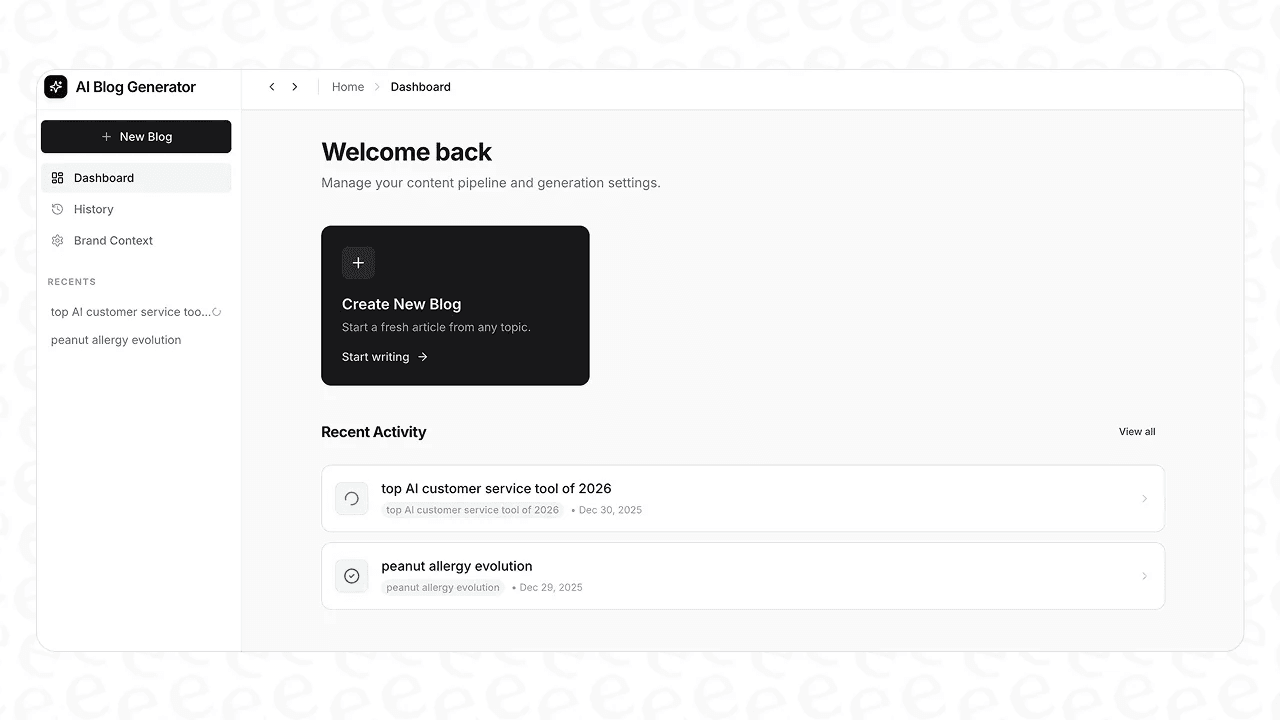
This is the exact reason we built the eesel AI blog writer. It’s a tool made to solve this problem, and it's how we grew our own search impressions from 700 to 750,000 per day in three months.
Here’s how it helps FMCG brands win the content game:
- From keyword to a complete post: You can give it a simple topic like "easy weeknight dinner recipes," and it will generate a full, publish-ready blog post with an intro, headings, and a conclusion.
- Automatic asset creation: Visuals are a big deal in FMCG. The tool automatically creates relevant images, infographics, and tables that make your content more engaging and scannable.
- Brand-aware content: Just pop in your website URL, and the eesel AI blog writer learns about your brand. It then weaves in natural product mentions that feel helpful, not like a pushy sales pitch.
- A genuinely human tone: Let's be real, a lot of AI content sounds robotic. Our tool avoids that by pulling in insights from real Reddit discussions, creating content that people actually want to read.
Beyond your website: Local and e-commerce SEO for FMCG brands
For FMCG brands, a lot of the action happens away from your website. Your SEO strategy needs to follow your customers to the platforms where they actually discover and buy your products.
Winning "near me" searches with local SEO
Getting people into physical stores is still a huge part of the FMCG world. With almost half of all local intent Google searches, you can't afford to sleep on local SEO.
Here are a few key moves:
- Optimize your Google Business Profile (GBP): Even if you don't have your own stores, a verified GBP helps Google link your brand to the retailers that carry your products.
- Create geo-targeted landing pages: Build pages on your site like "Where to Buy [Your Brand] in Chicago" to catch those location-specific searches.
- Check your listings: Make sure your products are listed correctly in local directories and on the store locator pages of your retail partners.
Optimizing the digital shelf
Marketplaces like Amazon, Walmart, and Instacart are basically their own search engines. Showing up on the first page of their results is everything. In fact, a massive 70% of products added to a cart come from that first page.
Here are some practical tips for retailer SEO:
- Keyword-rich titles and descriptions: Write your product listings to match how shoppers search. A good title might look like: "GlowCare Face Wash for Oily Skin – 150ml, Sulfate-Free."
- High-quality visuals: Your images are your digital packaging. Use several high-res photos and give them descriptive, keyword-optimized alt text.
- Backend keywords: On platforms like Amazon, make use of the hidden keyword fields. Add terms you couldn't fit in the title, like common misspellings, related products, or even regional slang.
- Reviews and Q&A: This is huge. Actively manage your reviews and answer customer questions. This user-generated content has a big impact on both your rankings and sales.
An infographic with four tips for optimizing the digital shelf on e-commerce platforms, a crucial part of SEO for FMCG brands.
Measuring success with your SEO for FMCG brands
You can't fix what you don't measure. Tracking the right metrics is the only way to know if your strategy is actually working and where you need to pivot.
Instead of just getting hung up on rankings, focus on these key performance indicators (KPIs):
- Organic traffic to your most important product and category pages.
- Click-through rate (CTR) from search results to see if your titles and descriptions are grabbing attention.
- Share of Search: This is a big one. Track how visible your brand is for core category keywords compared to your competitors. It's often a good predictor of market share changes and overall brand health.
- Conversion actions: This could be direct online sales, clicks on "buy now" buttons that link to a retailer's site, or uses of your "find a store" feature.
To see these strategies in action, the following video offers a deep dive into how leading FMCG brands are navigating the digital landscape to drive growth.
Your brand’s future is on the SERP
So, let's wrap this up. A solid SEO for FMCG brands strategy isn't just a nice extra anymore; it's vital for survival and growth. It requires a real understanding of what your customers are looking for, a commitment to creating useful content quickly, and an omnichannel view that includes your own site, local search, and third-party retailers.
The main challenge is, and will likely continue to be, scaling up that content creation without letting quality slide or losing your brand's voice.
Ready to scale your content and start winning on the digital shelf? Try the eesel AI blog writer for free and generate your first publish-ready article in just a few minutes.

Frequently Asked Questions
Share this article

Article by
Stevia Putri
Stevia Putri is a marketing generalist at eesel AI, where she helps turn powerful AI tools into stories that resonate. She’s driven by curiosity, clarity, and the human side of technology.
