
Let's be honest, at some point, every marketer has heard the advice to just "write great content." It sounds simple, but what does that actually mean? You can stuff an article with keywords, but if it's boring, unhelpful, or a pain to read, it’s not going to rank. And it's certainly not going to convert anyone.
Successful SEO content writing is a blend of art and science. It’s about figuring out what someone is really looking for when they type a query into Google, structuring your answer in a way that makes sense, and providing real value that connects with both people and search algorithms.
What makes content stand out?
- Search intent alignment: This is the big one. The content has to directly solve the user's problem or answer their question. If someone searches for "best running shoes for beginners," they want a comparison of specific shoes with pros and cons, not a philosophical take on the history of running. It’s about giving people what they came for.
- Clear structure and readability: Nobody likes a wall of text. The best content is easy to scan. That means clear H2s and H3s, short paragraphs, bullet points, and bolded text to highlight key information. People read differently online; they skim first, then dive in if something catches their eye. Your formatting should accommodate that.
- E-E-A-T (Experience, Expertise, Authoritativeness, and Trustworthiness): This is Google's acronym for "content you can trust." According to Google's own guidance, they want to see that your content is credible. You can demonstrate this by citing expert authors, using original data, or linking out to other trustworthy sources. It's about proving you know your stuff.
- Strategic keyword integration: Keywords still matter, but the goal is to weave them in naturally. They should appear in your title, headings, and throughout the text without sounding robotic. If it reads awkwardly, you're doing it wrong. The focus should always be on writing for a human first.
When writing an article for your website, first things to think about are: 'Do my reader have a problem? Can I help them solve that problem ? Can I answer their questions?' By building up articles in a way that a real living human would like to read it - and actually share it with their social network - you will please Google and the other search engines.

Our criteria for selecting these examples
To make sure we're looking at the best of the best, we chose these five examples based on a few key criteria:
- Proven rankings: No theories here. Each of these examples ranks on the first page of Google for some seriously competitive keywords. They’re winning in the real world.
- Actionable takeaways: Every example showcases a specific strategy you can learn from and apply to your own work. It's not just about admiring their success; it's about understanding how to replicate it.
- Audience value: This content isn't just written for algorithms. It's genuinely helpful and interesting to its target audience. You can see it in their engagement and social shares.
- Diverse strategies: There's no single "right" way to do SEO content. We picked examples that show different paths to success, from large-scale AI generation and programmatic SEO to deep, data-driven research.
Comparison of top SEO content writing examples
Here's a quick look at the strategies we're about to break down.
| Example | Primary Strength | Content Type | Key Takeaway |
|---|---|---|---|
| eesel AI blog writer | Scalability & Automation | AI-Generated Blog Posts | How to produce high-quality, asset-rich SEO content at scale. |
| Backlinko | Authority & Link Building | Data-Driven Studies | Using original research to build authority and earn high-quality links. |
| Nerdwallet | Trust & Freshness | Evergreen "Best of" Listicles | How to dominate SERPs with constantly updated, high-value comparison content. |
| Zapier | Long-Tail Dominance | Programmatic Landing Pages | Capturing high-intent traffic with thousands of automated, specific pages. |
| Calm | Brand Building | Pain-Point Educational Posts | Building trust by solving user problems with top-of-funnel content. |
5 SEO content writing examples to learn from
Alright, let's get into the details. Here are five examples of killer SEO content and what makes them tick.
1. eesel AI blog writer

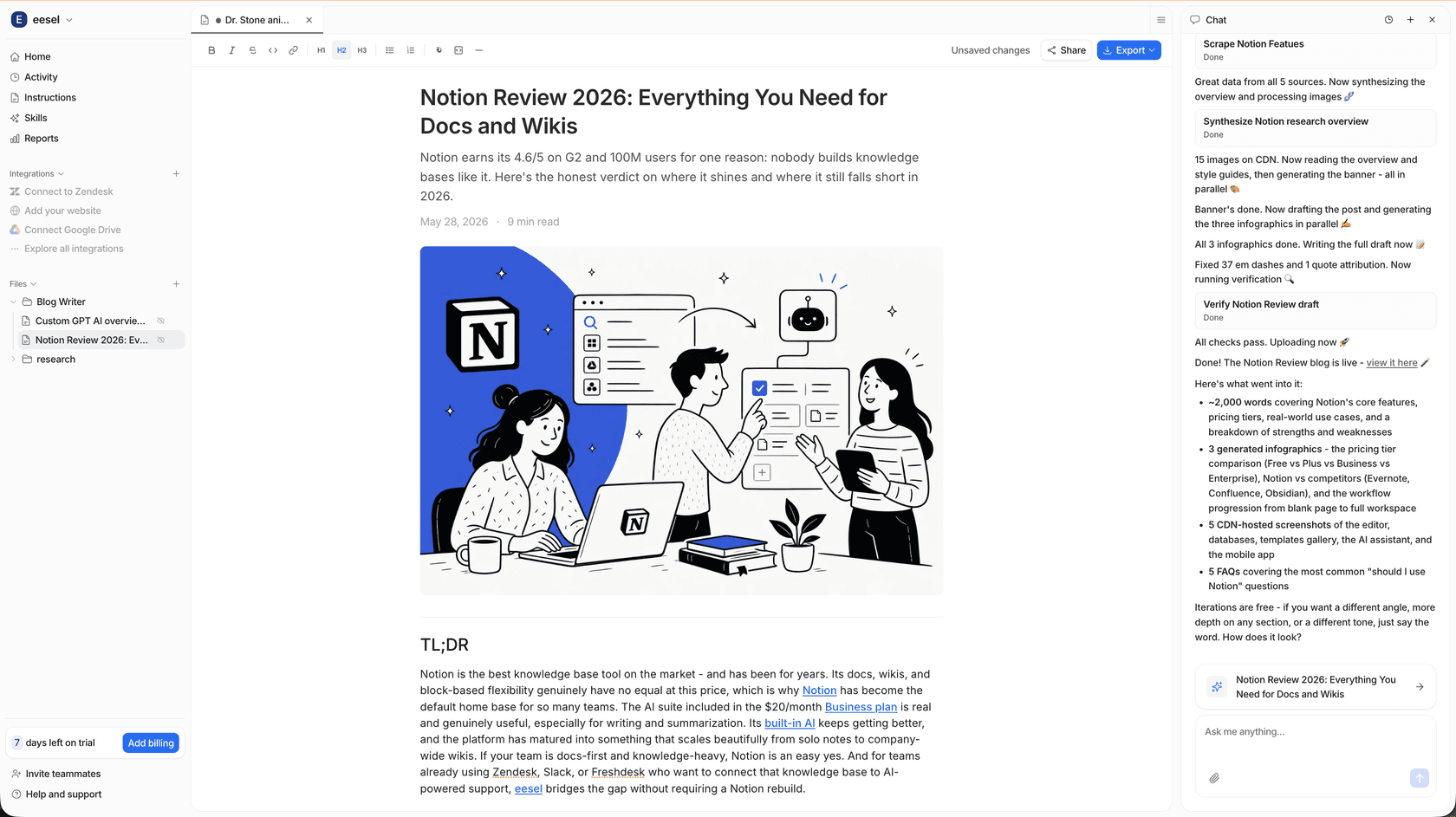
Description: The eesel AI blog writer is an SEO content engine. It’s built to take a single keyword and turn it into a complete, ready-to-publish article. But it's not just text; it's packed with elements that help a post rank: AI-generated images, data tables, relevant YouTube videos, and even quotes from Reddit. This approach was used to grow the eesel AI blog from 700 to 750,000 daily impressions in just three months by publishing over 1,000 optimized articles.
Pros: The biggest advantage here is speed and scale. The AI handles the heavy lifting, such as deep research, structuring the post, and automatic asset generation, which is usually what eats up all your time. It performs context-aware research, which helps generate specific and relevant content. Plus, it's optimized for modern AI Answer Engines (AEO) like Google's AI Overviews. It also integrates social proof by pulling in relevant quotes from Reddit threads, adding a layer of human experience.
Cons: While the output is high-quality, we always recommend a final human pass. It’s a chance to add your own unique brand stories or personal insights. Honestly, that’s a best practice for any piece of content, whether it comes from an AI or a human writer.
Pricing:
- It's completely free to try. You can generate your first full blog post without putting down a credit card.
- Paid plans start at $99 for 50 blog generations per month.
Why it's on the list: This example shows how you can create top-tier SEO content at a scale that would be impossible to do manually. It proves you don't have to sacrifice quality, structure, or rich media to get things done quickly.
2. Backlinko

Description: Backlinko is a high standard for creating content that demonstrates authority. Brian Dean and his team are masters of data-driven studies that become the definitive resource on a topic. Their articles, like their famous Google Ranking Factors study, often involve analyzing millions of search results to uncover insights you can't find anywhere else. This makes their content a magnet for backlinks.
Pros: This strategy is excellent for building E-E-A-T. When you publish original research, you're not just commenting on the conversation; you are the conversation. The content becomes a go-to source that other blogs cite for years, giving it incredible long-term SEO value. They also stay ahead of the curve on emerging topics like Generative Engine Optimization (GEO).
Cons: This approach is a significant undertaking. It's incredibly resource-intensive, requiring a ton of time, deep expertise, and often a budget for data analysis. It’s just not a feasible strategy for most small businesses.
Pricing: Not applicable (content strategy).
Why it's on the list: Backlinko is the perfect example of creating "link bait" that isn't clickbait. They build a powerful backlink profile and establish undeniable authority by doing the hard work of original research that no one else is willing to do.
3. Nerdwallet
Description: Nerdwallet holds high rankings for some of the most competitive financial keywords, and they do it with their "best of" listicles. Take their guide to the "Best Business Credit Cards." The secret is that they treat their content like a living document. It's constantly being updated. You'll always see a recent "Last updated" date at the top, which signals to both users and Google that the information is fresh and trustworthy.
Pros: This evergreen strategy captures a steady flow of high-intent traffic. These are people who are close to making a decision, and Nerdwallet is there to guide them. By relentlessly keeping their content up-to-date, they build massive trust and hang onto their top rankings year after year. Their credibility is backed by a team of over 100 experts who review products.
Cons: This is the opposite of "set it and forget it." It requires a dedicated team to constantly monitor the market, update product details, and ensure everything is 100% accurate. It's a significant and ongoing investment.
Pricing: Not applicable (content strategy).
Why it's on the list: Nerdwallet is a masterclass in how to achieve competitive search results with evergreen content. They show that a long-term commitment to maintenance and trustworthiness is a powerful SEO moat.
4. Zapier
Description: Zapier’s approach to SEO content is incredibly effective. They use programmatic SEO to create thousands of landing pages for every app integration they offer. Think pages for "Connect Google Sheets to Webflow" or "Connect Slack to Trello." Each page targets a super-specific, long-tail keyword with high commercial intent, all powered by their database of over 8,000+ integrations.
Pros: This method is unbelievably scalable and captures a massive volume of bottom-of-the-funnel traffic. When someone searches for these terms, they have a specific problem they're trying to solve: a problem Zapier's product is built for. This leads to sky-high conversion rates. The strategy is so effective that they even published their own blog post about it, using themselves as the prime example.
Cons: This isn't something you can just spin up overnight. It requires serious technical SEO knowledge and development resources to build the templates and manage the database. If done poorly, you risk creating thousands of pages that Google sees as "thin" or low-value content, which can hurt your site.
Pricing: Not applicable (content strategy).
Why it's on the list: Zapier perfectly demonstrates that SEO content can be more than just blog posts. They leverage their product's data to create thousands of valuable entry points from organic search, turning their integration directory into a powerful customer acquisition machine.
5. Calm
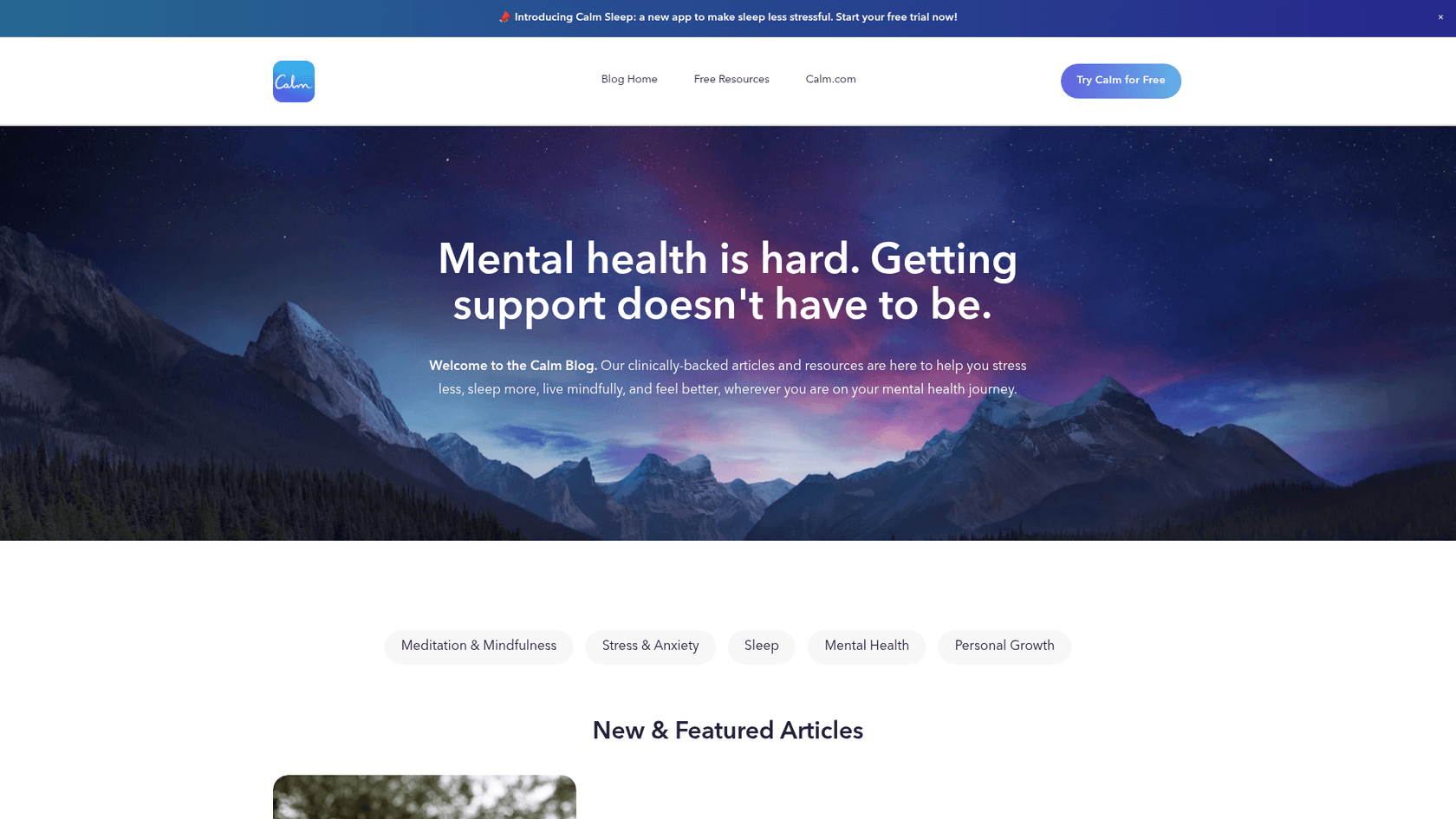
Description: The meditation app Calm uses its blog to directly address the core problems its audience is facing. They create helpful, top-of-funnel content targeting keywords like "how to fall asleep fast." Their article, "Here's how to fall asleep faster," gives genuine, actionable advice without aggressively pushing the app. The app is then presented as a natural next step for someone who wants more guided assistance.
Pros: This "pain-point SEO" strategy is fantastic for building a strong brand connection. By meeting users where they are and offering a solution first, they build trust and introduce their product in a helpful, non-intrusive way. The blog becomes an effective top-of-funnel channel. They also tackle other user problems directly with content like their Relieve Anxiety with Mindfulness meditations.
Cons: The journey from reading a blog post about sleep to becoming a paying subscriber for a meditation app is a long one. This makes it hard to measure the direct ROI of this content strategy. It's more of a long-term brand-building play.
Pricing: Not applicable (content strategy).
Why it's on the list: Calm perfectly illustrates the power of providing value first. By focusing on solving their audience's problems, they build a loyal community that trusts their brand when they're ready to commit.
Tips for creating your own high-ranking SEO content
Feeling inspired? Here are a few actionable tips you can pull from these examples and apply to your own content strategy today:
- Start with pain points: Just like Calm, think about the real problems your audience is trying to solve. Brainstorm all the questions they might have and create content that provides clear, helpful answers. This is the fastest way to build trust.
- Structure for skimmers and search engines: Always use clear headings, short paragraphs, and bold text. It makes your content easier for people to read and helps search engines understand what your page is about.
- Go beyond text with rich assets: Don't just rely on words. Use custom images, data tables, charts, and embedded videos to make your content more engaging. This can be a lot of work, but it makes a huge difference.
- Treat content as a living document: Your job isn't done when you hit "publish." As Nerdwallet shows, the most valuable content is often the stuff you update regularly. Set a reminder to refresh your best-performing posts every few months with new info to keep them relevant.
- Leverage original data: If you have the resources, try conducting your own small survey or analysis like Backlinko. Even a small piece of original data can set you apart, earn you valuable backlinks, and position you as an authority.
For those who prefer a visual walkthrough, this video offers a great tutorial on how to approach SEO content writing from scratch, covering everything from ideation to the final published post.
Start creating better SEO content today
As we've seen, great SEO content writing isn't one-size-fits-all. It can be a deep-dive data study, a constantly updated listicle, or a helpful guide that solves a common problem. The one thing all these examples have in common is a relentless focus on providing real value to the reader.
The challenge is that creating this kind of high-quality content consistently, with great structure, engaging assets, and proper SEO optimization, is incredibly time-consuming. It’s often the job of a whole team.
This is exactly why we built the eesel AI blog writer. It’s designed to let you apply all the principles from these examples, such as great structure, rich assets, and search intent alignment, at a scale that's simply not possible manually. You can go from a single keyword to a publish-ready blog post in minutes, not days. Why not see for yourself? You can try it for free and generate your first article right now.