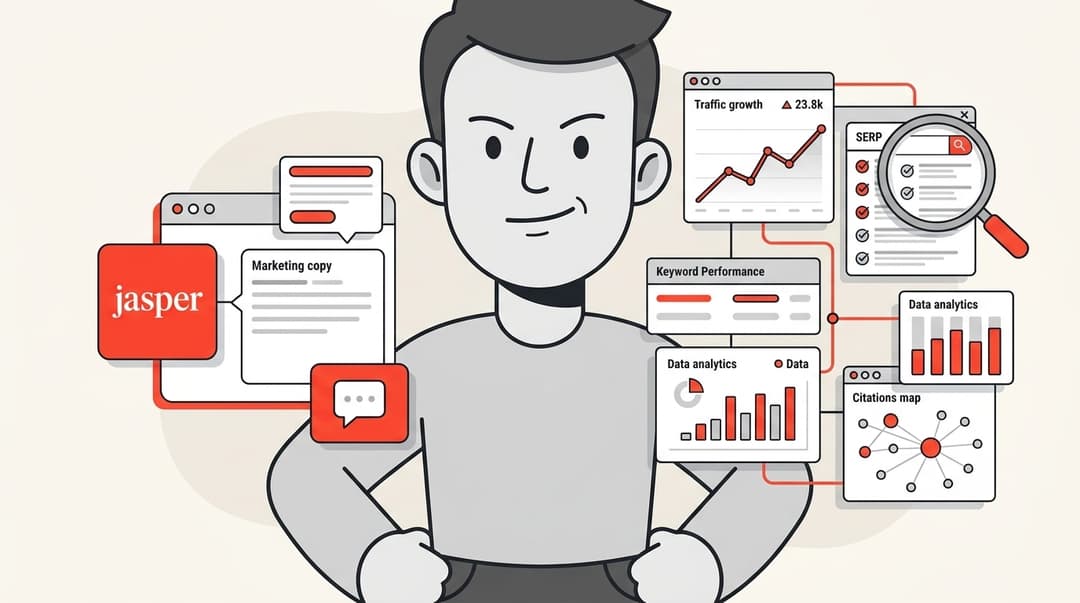
It's frustrating when your blog traffic just stops growing. You've published great stuff, but the numbers are flat. Often, the problem is buried in your existing content: small technical glitches, old information, or a simple mismatch with what your audience is searching for. Tackling this with an SEO content audit is the right move, but who has time to manually check hundreds of posts?
What is an SEO content audit tool?
An SEO content audit tool is diagnostic software for your website's content. This software scans all your pages to see how they're performing in search engines, and it's much more than a spell check. It crawls your site to find all sorts of things that might be hurting your rankings.
Our criteria for selecting the best tools
To find the best tools, we didn't just read through feature lists. We got our hands dirty and judged each platform on a few things that actually matter:
- Actionable insights: Does the tool just throw data at you, or does it tell you what to do with it? We looked for tools that give clear, prioritized recommendations.
- Depth of analysis: We wanted tools that could dig deep into technical SEO, on-page factors, content quality, and even user experience signals.
- Ease of use: A powerful tool is useless if it's a pain to navigate. We preferred platforms with clean interfaces that marketers can use without needing a developer on standby.
- Value for money: We checked out tools at various price points to find the best mix of features, performance, and cost, including some decent free options.
A comparison of the top SEO content audit tools
Here’s a quick look at the tools we tested, highlighting their main strengths and who they're a good fit for.
| Tool | Best For | Key Features | Pricing |
|---|---|---|---|
| eesel AI blog writer | Proactively creating optimized content | AI-powered content generation, automatic assets, SEO/AEO optimization | Free to try, then $99 for 50 blogs |
| Semrush | All-in-one SEO & content marketing | Site Audit with 140+ checks, AI Search Health analysis, integrated toolkits | Starts at $139.95/month |
| Ahrefs | Technical SEO and backlink analysis | Site Audit with 170+ checks, backlink data, free for verified sites | Starts at $129/month |
| Screaming Frog | In-depth technical site crawling | Detailed crawl analysis, finds broken links, audits redirects, analyzes metadata | Free for up to 500 URLs, paid at $279/year |
| SEOptimer | Small businesses and agencies | White-label reports, embeddable audit tool, easy-to-understand recommendations | Starts at $29/month |
The best SEO content audit tools
Alright, let's get into the nitty-gritty. Here's a full breakdown of the best tools I found.
1. eesel AI blog writer
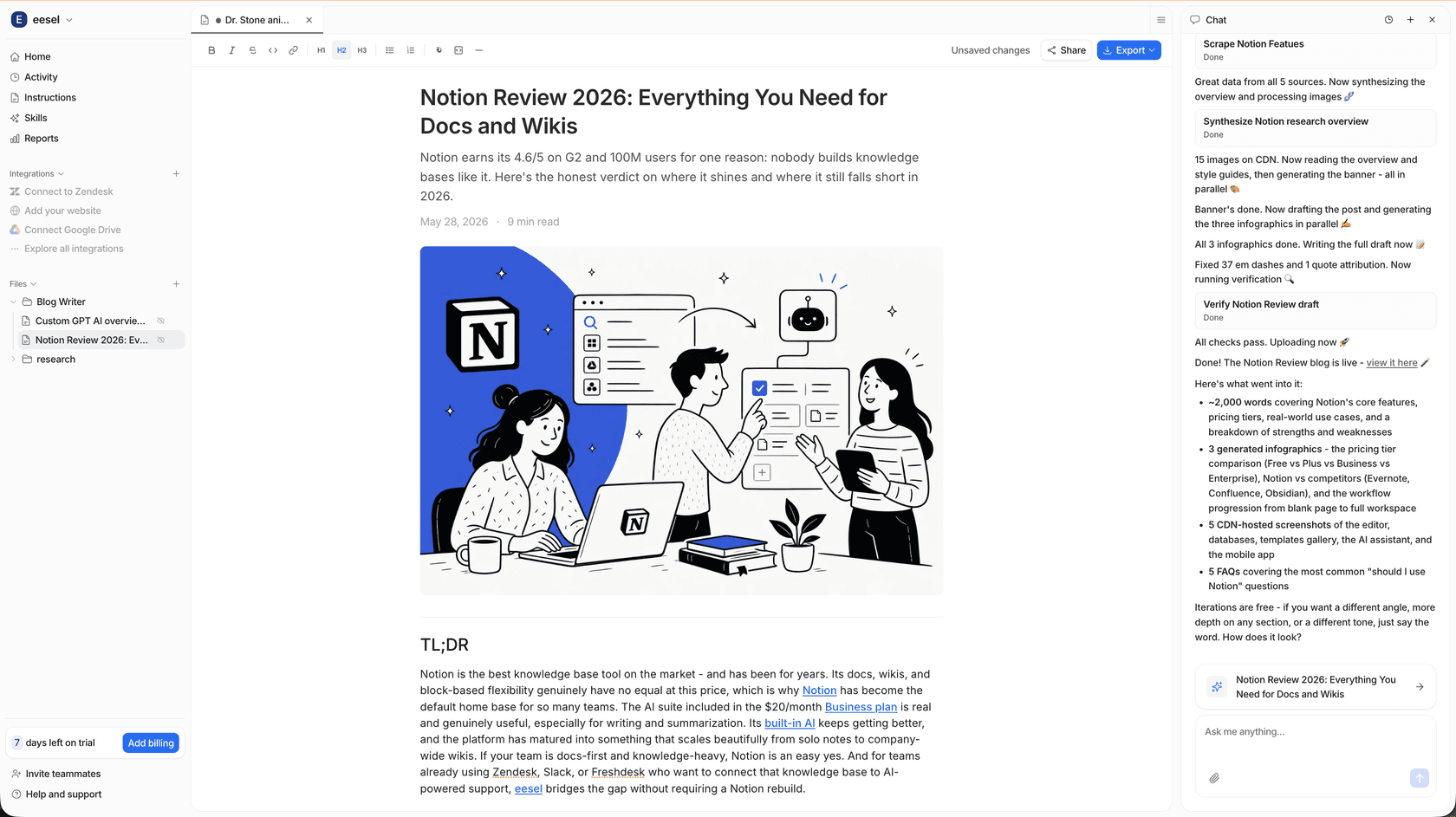
While many tools on this list help audit existing content, the eesel AI blog writer takes a different approach by helping you create optimized content from the start. This allows users to be proactive about SEO rather than reactive. By generating high-quality, fully optimized content from day one, it reduces the need for extensive audits later on.
Pros: It’s more than a text generator. It automatically adds assets like AI-generated images, infographics, tables, and even finds relevant YouTube videos and Reddit quotes to embed. This results in media-rich content that appeals to both readers and search engines. Its context-aware research ensures the content is deep and matches user intent, while its optimization for AI Answer Engines (AEO) prepares you for the future of search.
Cons: This is a content creation tool, not a traditional site crawler. If you need to diagnose deep technical problems like broken links or redirect chains across thousands of old pages, you'll want to pair it with something like Screaming Frog.
Pricing:
- You can generate your first few blogs completely free to check out the quality.
- Paid plans are credit-based, starting at $99 for 50 blog generations, with no monthly subscription.
Why we chose it: It shifts your workflow from reactive fixing to proactive creation, saving a huge amount of time. By generating high-quality, fully optimized content from day one, it reduces the need for painful audits later on.
2. Semrush
Semrush is a comprehensive platform in the SEO world. It offers a massive suite of tools covering everything from keyword research to competitor analysis. Its Site Audit tool is incredibly detailed, scanning for over 140 technical and on-page SEO mistakes. One neat feature is the AI Search Health widget, which scores how well your site is optimized for generative AI platforms like ChatGPT and Google AI Overviews.
Pros: The platform's biggest plus is its integration. You can find a problem in the Site Audit, discover keyword opportunities, and track your fixes' impact on rankings, all in one place. The thematic reports provide deep dives into things like crawlability and site performance.
SEMrush will do a site health audit of any website or subfolder you specify. It can identify a multitude of technical / content issues, so that's a good place to start.

Cons: The sheer number of features can be a lot for a beginner to handle, and the price is steep for many small businesses. The free plan is also pretty limited, with a crawl limit of just 100 pages per month.
Pricing: The SEO Toolkit plans are:
- Pro: $139.95/month
- Guru: $249.95/month
- Business: $499.95/month
Why we chose it: For businesses and agencies needing one tool to manage their entire SEO workflow, Semrush is hard to beat. Its Site Audit feature is very robust and a great place to start any content audit.
3. Ahrefs
Ahrefs is another major platform in the industry, known for its extensive backlink data. Its Site Audit tool is top-notch, scanning for over 170+ technical and on-page SEO issues. It’s incredibly fast and provides granular data on everything from performance and HTML tags to duplicate content.
Hrefs is by far the best for backlink checks.
Pros: Ahrefs has a surprisingly generous free plan through Ahrefs Webmaster Tools, letting you crawl up to 5,000 pages per month on verified sites. Because it can execute JavaScript while crawling, it can accurately analyze modern websites.
Cons: Like Semrush, Ahrefs is pricey and might be overkill if you only need a content audit. While powerful, its interface can feel less intuitive than some others, so expect a bit of a learning curve.
Pricing:
- Lite: $129/month
- Standard: $249/month
- Advanced: $449/month
- Enterprise: Starts at $1,499/month with an annual commitment.
Why we chose it: If your content audit needs to be heavily influenced by backlink data and deep technical analysis, Ahrefs is a fantastic option. It's a favorite among SEO professionals for good reason.
4. Screaming Frog SEO Spider
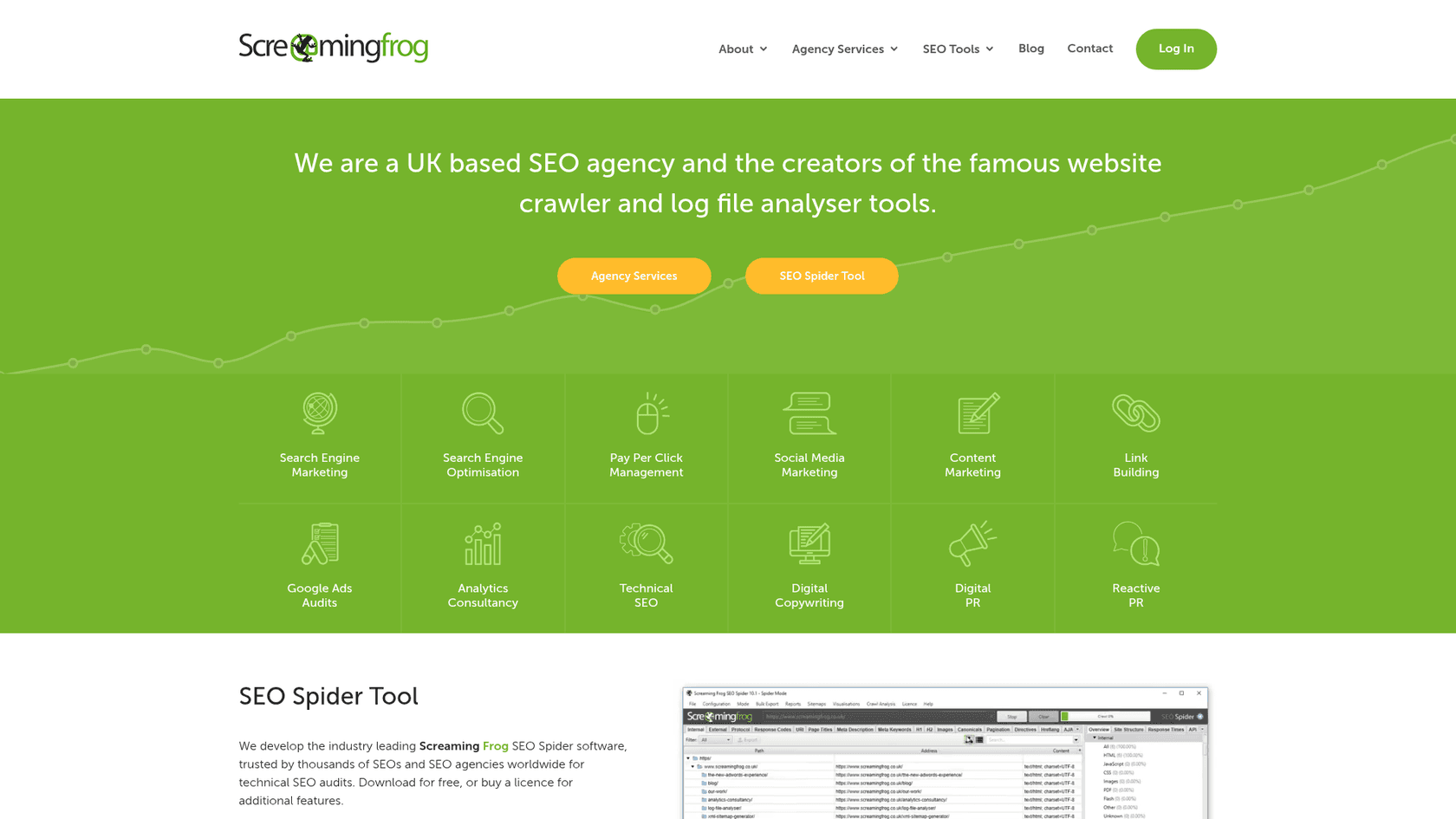
Screaming Frog is the go-to desktop crawler for technical SEOs. While its spreadsheet-style interface can be complex, it provides a high level of detail. You can use it to find broken links, audit redirects, analyze page titles and metadata, find duplicate content, and even generate XML sitemaps.
For technical SEO, you go with a native crawler hands down. **Screaming Frog** is my go to because you can connect APIs and the crawl configs are unparalleled.
Pros: The free version is very generous, letting you crawl up to 500 URLs, which is often enough for small websites or targeted audits. It's highly customizable and connects with Google Analytics, Search Console, PageSpeed Insights, and even AI models like OpenAI and Gemini.
Cons: It's purely a crawler, not an all-in-one SEO platform. The interface isn't very friendly for beginners, and since it's a desktop app, it can eat up your computer's memory. It gives you the raw data, but it's up to you to interpret it and figure out what to do.
Pricing:
- Free: Up to 500 URLs
- Paid: $279/year for unlimited crawling and advanced features.
Why we chose it: For deep, technical audits, Screaming Frog is essential. It's perfect for finding the foundational problems that can stop great content from ever ranking.
5. SEOptimer
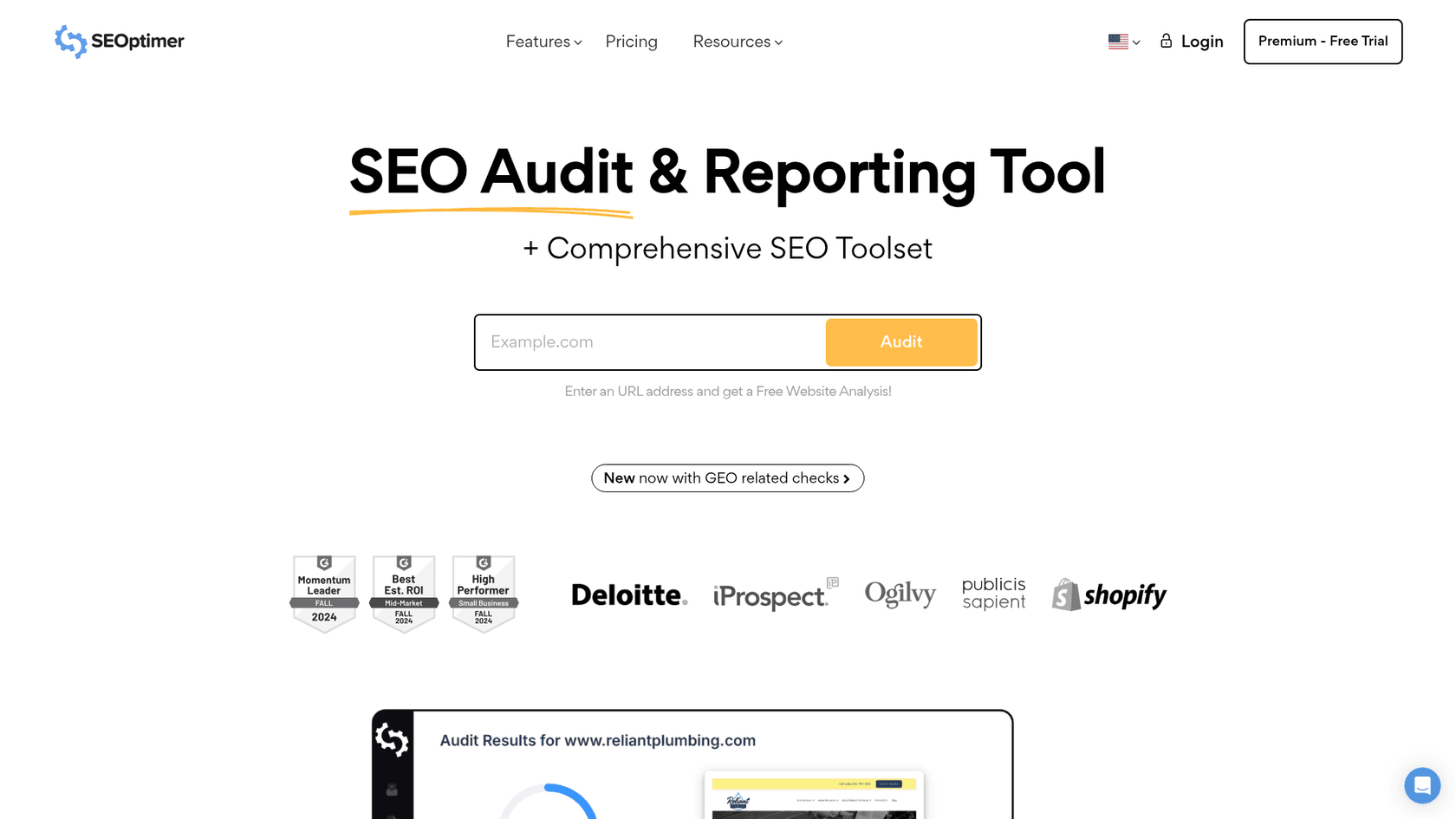
SEOptimer is a great tool for small business owners, agencies, and freelancers who need a simple, fast, and affordable way to audit a website. It provides a clear, actionable checklist to improve on-page SEO, usability, performance, and even social media presence.
Pros: It’s incredibly easy to use and presents information in a digestible, report-card style. The white-label reporting and embeddable audit tool are big wins for agencies looking to generate leads. It also offers a bunch of useful free tools, like a meta tag generator and a robots.txt generator.
Cons: It simply doesn't offer the depth of data that enterprise tools like Semrush or Ahrefs do. It's great for a high-level audit but might not be enough to diagnose complex technical SEO issues on large sites.
Pricing:
Why we chose it: It's the most accessible and budget-friendly tool on our list, making it a perfect starting point for anyone new to SEO or for agencies that need to create professional client reports quickly.
How to get the most from your SEO content audit tool
- Prioritize by impact and effort. Don't try to fix everything at once; you'll get overwhelmed. Start with high-impact, low-effort fixes, like repairing a broken link on a high-traffic page.
- Look for patterns. Are all your blog posts missing meta descriptions? Is your site slow because of huge images? Finding these patterns helps you fix problems at scale.
- Update, merge, or delete. Your audit will probably reveal three kinds of content: pages that need a simple update, similar posts that should be combined into one comprehensive article, and low-value content that's better off deleted.
- Make it a process, not a one-off project. An SEO audit isn't something you do once and forget. Schedule a quick check-in every quarter to catch new issues before they become big problems.
For a more hands-on look at the auditing process, the video below walks through a complete SEO content audit, showing you how to apply the insights you get from these tools.
Beyond auditing: Creating optimized content from the start
Running an SEO content audit is a key step toward improving your website's performance. The tools we've covered will give you the insights you need to find problems and build a solid foundation. But a solid long-term strategy is to shift from constantly fixing old content to creating high-quality, optimized content from the very beginning.
Instead of spending your time on endless audits, you can use a tool like the eesel AI blog writer to generate publish-ready articles designed to rank from day one. It's completely free to try, so you can see for yourself how easy it is to scale your content marketing without sacrificing quality.