Scalenut vs Semrush: Which SEO and content tool is right for you?

Stevia Putri
Last edited January 19, 2026
Picking the right SEO tool in 2026 is a bigger deal than ever. With AI answers and something called Generative Engine Optimization (GEO) changing the rules, your old strategies might not be enough. Two names you’ll hear a lot are Scalenut and Semrush, but they come at the problem from completely different directions.
Scalenut markets itself as a complete GEO platform designed for the entire AI content lifecycle, from planning and writing to optimizing. Then you have Semrush, the industry heavyweight. It’s a massive, data-rich marketing platform with toolkits for just about everything, including SEO, PPC, and social media.
What is Scalenut?
Scalenut is an AI-powered platform built to manage your entire content workflow, with a sharp focus on what it calls Generative Engine Optimization (GEO). The main idea is to help your content get discovered not just on Google, but also inside AI platforms like ChatGPT and Perplexity.
It’s built around a few key components:
- GEO Core: This is the main workspace for planning, writing, and optimizing your articles.
- GEO Watchtower: A tool to monitor your brand’s visibility in AI search answers.
- Social UpReach: This feature keeps tabs on brand mentions and conversations about you on Reddit.
- Backlinks Marketplace: A simple platform where you can buy backlinks from a list of approved websites.
Scalenut is aimed at content marketers, bloggers, and agencies who need to scale up high-quality content production for the new world of AI-driven search.If you're in need of a single SEO application that covers advanced keyword research, SERP analysis, and competition analysis, then look no further than Scalenut. ... Now, Scalenut serves as my all-in-one solution, saving me time and stress.

What is Semrush?
Semrush isn't just one tool; it's a powerful, all-in-one digital marketing suite. It's known for its incredibly deep data and analytics that cover almost every marketing channel you can imagine.
Its biggest advantage is its huge database, which contains over 27 billion keywords and 43 trillion backlinks. This allows for some serious competitor analysis. The platform is organized into different toolkits, offering specialized features for SEO, AI Visibility, Content, Advertising, Social Media, and Local SEO.
Benefits: Offers a comprehensive suite of tools for keyword research, competitive analysis, and site audits. Good for tracking rankings and backlink analysis. Disadvantages: Can be expensive for small businesses.
Semrush is the standard for SEO professionals, digital marketing agencies, and larger companies that need a full picture of their online presence and what their competitors are doing.
Core differences: Scalenut vs Semrush
Here’s a quick summary:
| Feature | Scalenut | Semrush |
|---|---|---|
| Primary Focus | AI-First Content Workflow (GEO) | All-in-One Marketing Analytics |
| Key Strength | Streamlined content creation from keyword to optimized article | Unmatched data depth and competitive intelligence |
| Ideal User | Content creators, affiliate marketers, SaaS companies | SEO agencies, enterprises, data-driven marketers |
| Unique Feature | GEO Watchtower for AI visibility | Vast database with historical data |
Feature comparison: Scalenut vs Semrush
The right tool for you really depends on what you spend most of your time doing. Are you trying to create content efficiently, or are you trying to analyze market data? Let’s get into the features.
Content creation
This is where the two platforms really show their different approaches.
Scalenut’s entire workflow is built into its GEO Core. Its most notable feature is Cruise Mode, a guided process that takes you from a single keyword to a full blog draft in minutes. The output is specifically optimized for both traditional search engines and Large Language Models (LLMs), which is a big advantage in 2026.
Semrush, on the other hand, provides a Content Toolkit with tools like an Article Generator and an SEO Brief Generator. These are useful, but they feel more like a collection of separate tools rather than the single, smooth workflow you get with Scalenut's Cruise Mode.
Verdict: Scalenut is made for people whose primary job is to produce content. Semrush's tools are better for analyzing content opportunities and providing optimization tips. If you need to write and publish quickly, Scalenut has the upper hand.
Keyword research
When it comes to raw data, Semrush is a powerhouse. It's an industry leader with one of the world's largest marketing databases, giving you incredible detail on keyword volume, difficulty, and competition. If you want to dive deep into every aspect of a keyword, Semrush is the place to do it.
Scalenut has a more strategic approach. Instead of just spitting out a list of keywords, it helps you build topic clusters and prompt-led topics. The idea is to establish your authority in a niche, which is becoming crucial for ranking in AI-generated answers. It’s less about mining for individual keywords and more about owning a whole conversation.
Verdict: Semrush is easily superior for raw data and in-depth competitor keyword research. Scalenut is more effective for building a smart, long-term content plan around specific topics and the types of questions people ask AI.
Technical SEO capabilities
For technical SEO, Semrush offers more comprehensive features.
Its Site Audit tool is incredibly thorough, checking for over 140 technical and on-page SEO issues, including a new category just for AI search optimization. It crawls your entire site and gives you a prioritized list of fixes, from broken links to hreflang tag problems.
Scalenut has a Content Audit feature, which is useful for what it does. It looks at your existing content, helping you identify articles to update and fix on-page elements. However, it doesn't do the kind of deep, site-wide technical crawls that Semrush is famous for.
Verdict: For technical SEO, Semrush is the clear winner.
Backlink features
Here again, the two platforms aren't really playing the same game.
Semrush is a leader in backlink analysis. Its tools let you dig deep into your own backlink profile and, more importantly, your competitors'. You can see who is linking to them, find opportunities for your own outreach, and track your link-building campaigns.
Scalenut offers something totally different: a Backlinks Marketplace. It's a platform where you can directly purchase backlinks from a list of vetted publishers. This approach skips the outreach process completely. It's a transactional platform, not an analytical one.
Verdict: If you want to analyze backlink profiles and build an outreach strategy, Semrush is what you need. If you'd rather just buy links to save time, Scalenut offers a direct path to do that.
Pricing breakdown: Scalenut vs Semrush
Scalenut pricing
Scalenut's monthly "GEO Max" plans are tied directly to the number of articles you can create. You can see all the details on their official pricing page.
- Essential Max: $49/month for 5 articles and 5 keyword clusters.
- Growth Max: $103/month for 30 articles, plus access to GEO Watchtower and Social UpReach.
- Pro Max: $193/month for 75 articles, more user seats, and advanced features like content cannibalization detection.
The pricing is straightforward: the more you write, the more you pay.
Semrush pricing
Semrush recently updated its plans to "Semrush One," which bundles the core SEO and AI Visibility toolkits. The prices, which you can find on their pricing page, reflect access to their massive data sets.
- Starter: $199/month, letting you track 500 keywords and 50 prompts.
- Pro+: $299/month, which increases your limits to 1,500 keywords and 100 prompts, and includes historical data.
- Advanced: $549/month for 5,000 keywords, 200 prompts, and API access for heavy users.
The higher price tag is for the sheer number of tools and the unparalleled data access you get.
Who should use Scalenut vs Semrush?
So, who should pick which?
For Bloggers & Content-Focused Businesses: Choose Scalenut. If your main goal is to scale your content production without getting lost in data, Scalenut is a solid choice. Its streamlined workflow from keyword to a publish-ready draft and its more affordable starting price give you a faster path to getting articles published.
For SEO Agencies & Large Enterprises: Choose Semrush. If you're managing complex campaigns for multiple clients or need a deep, data-driven view of the market, Semrush is a must-have. Its powerful site audits, deep competitor analysis, client management features, and multi-channel toolkits are built for professional SEOs.
For a Hybrid Approach: Honestly, many teams could benefit from using both. You could use Semrush for high-level strategy, keyword research, and technical audits, then use Scalenut to execute the content creation part of that strategy.
For a deeper dive into how these tools stack up in a real-world scenario, this video provides a detailed walkthrough, comparing the user interfaces and feature sets of both Scalenut and Semrush.
An alternative for the writing bottleneck: eesel AI
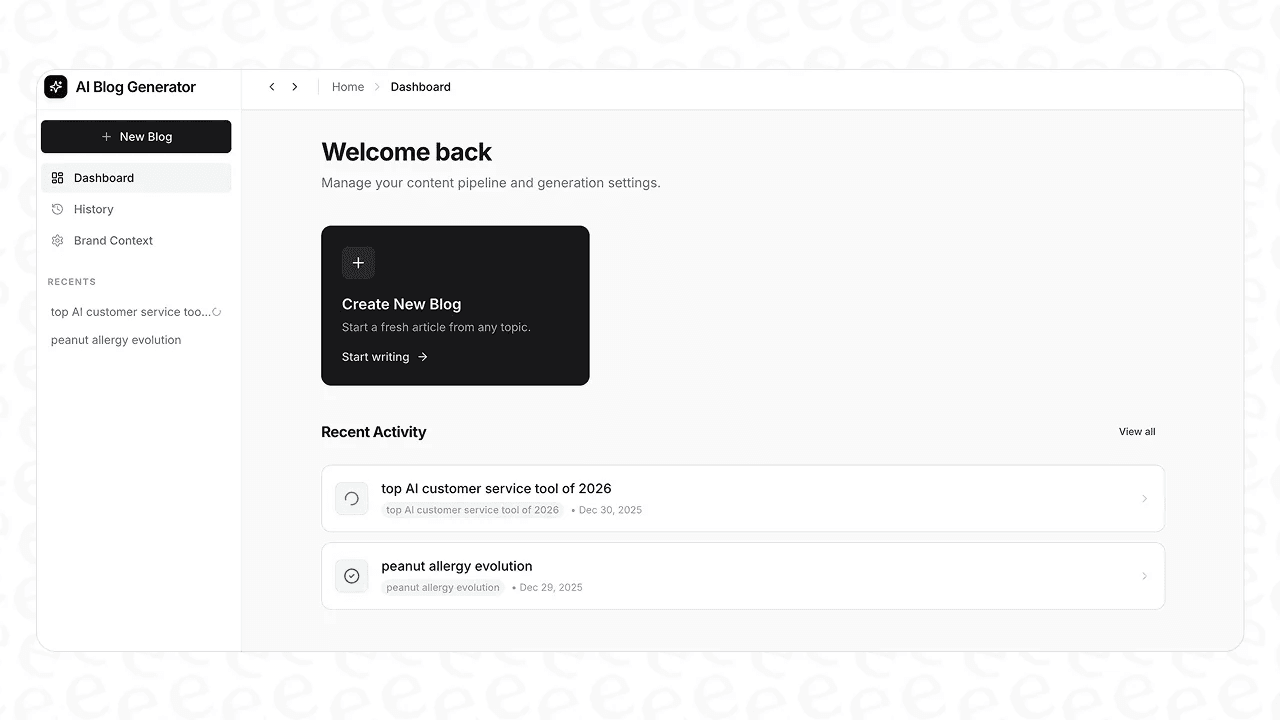
It offers several features to streamline this process:
- Proven Growth: It’s the same tool we used to grow our blog from 700 to 750,000 daily impressions in just three months.
- Automatic Assets: It doesn't just give you a wall of text. It automatically generates and includes images, charts, tables, and infographics to make your content more engaging and valuable.
- Authentic Social Proof: This is a big one. It automatically finds and includes relevant Reddit quotes and embeds YouTube videos. This adds a layer of credibility and human insight that most generic AI content just doesn't have.
The best part? It’s completely free to try. You can generate your first full, asset-rich blog post with no commitment and see the quality for yourself.
Final thoughts
At the end of the day, the Scalenut vs Semrush decision comes down to what your main job is.
Choose Scalenut if your world is all about planning, creating, and optimizing content as efficiently as possible. It’s built to help you build topical authority and succeed in the modern, AI-driven search landscape.
Choose Semrush if you need a data powerhouse for deep competitor analysis, technical SEO, and managing broad digital marketing strategies across multiple channels.
And if your biggest headache isn't the research but the time it takes to actually write, a specialized tool like the eesel AI blog writer might be the most direct solution to turn all that great research into real, organic growth.

Frequently Asked Questions
Share this article

Article by
Stevia Putri
Stevia Putri is a marketing generalist at eesel AI, where she helps turn powerful AI tools into stories that resonate. She’s driven by curiosity, clarity, and the human side of technology.