7 common SaaS SEO mistakes that kill growth in 2026 (and how to fix them)

Stevia Putri

Katelin Teen
Last edited February 2, 2026
SEO for SaaS is a big deal, but getting it right can feel like you're constantly chasing a moving target. You spend time and money creating content, only to see a flat traffic graph and a few sign-ups. It's frustrating, to say the least.
The issue is that most companies stumble into the same preventable traps. These aren't just minor slip-ups; they're strategic blunders that can cost you thousands in lost revenue.
This guide will walk you through the seven most common SaaS SEO mistakes we see over and over. More importantly, we'll give you clear, actionable ways to fix each one. We'll also show you how the eesel AI blog writer helps you avoid these pitfalls by creating high-quality, optimized content at scale. It's the same tool that took our own blog from 700 to over 750,000 impressions in just three months.
What are SaaS SEO mistakes?
When we talk about SaaS SEO mistakes, we’re not just talking about a few typos or broken links. We mean the big strategic errors that prevent qualified customers from ever finding your product.
These mistakes result in attracting the wrong audience, painfully low conversion rates, and essentially wasting your marketing budget. The point of SEO isn't just to get more clicks, it's to build a dependable pipeline and grow your revenue.
Avoiding these common blunders means aligning your strategy with what people are actually looking for and what search engines, including the new AI-powered ones, value most.
How we chose these common SaaS SEO mistakes
We didn't just pull these seven mistakes out of a hat. We selected them based on a few key factors to make this guide as useful as possible.
- Frequency: These are the errors we constantly see, from brand-new startups to established SaaS companies.
- Impact: Each mistake has a direct and pretty serious negative effect on qualified traffic and lead generation.
- Actionability: The fixes we're about to discuss are straightforward. You can start putting them into practice without a huge budget or a team of developers.
Comparison of the top SaaS SEO mistakes
Here’s a quick overview of the mistakes we’re about to cover, the problem they create, and how to solve them.
| Mistake | Core Problem | The Fix |
|---|---|---|
| Ignoring User Intent | Attracting high traffic but low-quality leads. | Align content with TOFU, MOFU, and BOFU stages. |
| Publishing Thin Content | Content doesn't rank, build authority, or engage. | Create in-depth content with unique data and insights. |
| Neglecting Technical SEO | A poor user experience hurts rankings and indexation. | Conduct regular site audits to fix Core Web Vitals. |
| Ignoring Generative Engine Optimization (GEO) | Invisibility in AI Overviews and chatbots. | Get cited in listicles, review sites, and forums. |
| Having No Link Strategy | Content lacks authority to rank for competitive terms. | Build links with valuable assets and strong internal linking. |
| A Misaligned Content Funnel | Gaps in the buyer's journey lose potential customers. | Map content to awareness, consideration, and decision stages. |
| Treating SEO as a Project | Rankings decay as content becomes stale over time. | Implement an ongoing process of monitoring and updating. |
The 7 biggest SaaS SEO mistakes to fix in 2026
Ready to get into the details? Let's break down each of these mistakes and get you on track to fixing them.
1. Focusing on keywords instead of user intent
It’s easy to get obsessed with high-volume keywords. You see a term with thousands of monthly searches and immediately think, "I need to rank for that!" But this is a classic trap. Targeting broad, top-of-funnel (TOFU) keywords without considering why someone is searching for them just leads to high bounce rates. The content doesn't match what the user actually needs.
One mistake I made was targeting high-volume keywords without considering user intent. It brought traffic, but not the right kind. Now, I focus on long-tail keywords that match what users are actually searching for.

How to fix it:
Start thinking about intent. Where is the user in their buying journey?
- Top-of-Funnel (TOFU): For awareness, target problem-aware, long-tail keywords like "how to reduce customer churn." These people know they have a problem but aren't aware of solutions yet.
- Middle-of-Funnel (MOFU): For consideration, pursue comparison keywords like "best Salesforce alternatives." These users are actively comparing their options.
- Bottom-of-Funnel (BOFU): For the decision stage, focus on keywords with clear purchase intent, like "Dropbox Dash pricing." They're ready to buy.
A good strategy is to flip the funnel. Start by creating BOFU and MOFU content first. It targets a smaller audience, but they're much closer to purchasing, which often leads to a quicker ROI.
2. Publishing thin content
The pressure to "just publish" is intense. But this often leads to a wave of "AI slop", generic articles that repeat the same information you can find everywhere else. This kind of content doesn't build trust or engage anyone, and Google's algorithms are getting smarter at spotting and down-ranking it.
How to fix it:
Always choose quality over quantity. Your goal should be to make every article the best possible resource on that topic. That means including things like:
- Original data or research.
- Quotes from experts in your industry.
- Real customer stories or case studies.
- Practical, step-by-step instructions.
On top of that, make sure your content is readable. Use short paragraphs, clear headings, and visuals to break up the text.
Using automation to create quality content
Solving the quality vs. quantity dilemma is a common challenge in content creation. This is where tools like the eesel AI blog writer come in. They aim to produce genuinely helpful, publish-ready content that avoids the thin content trap.
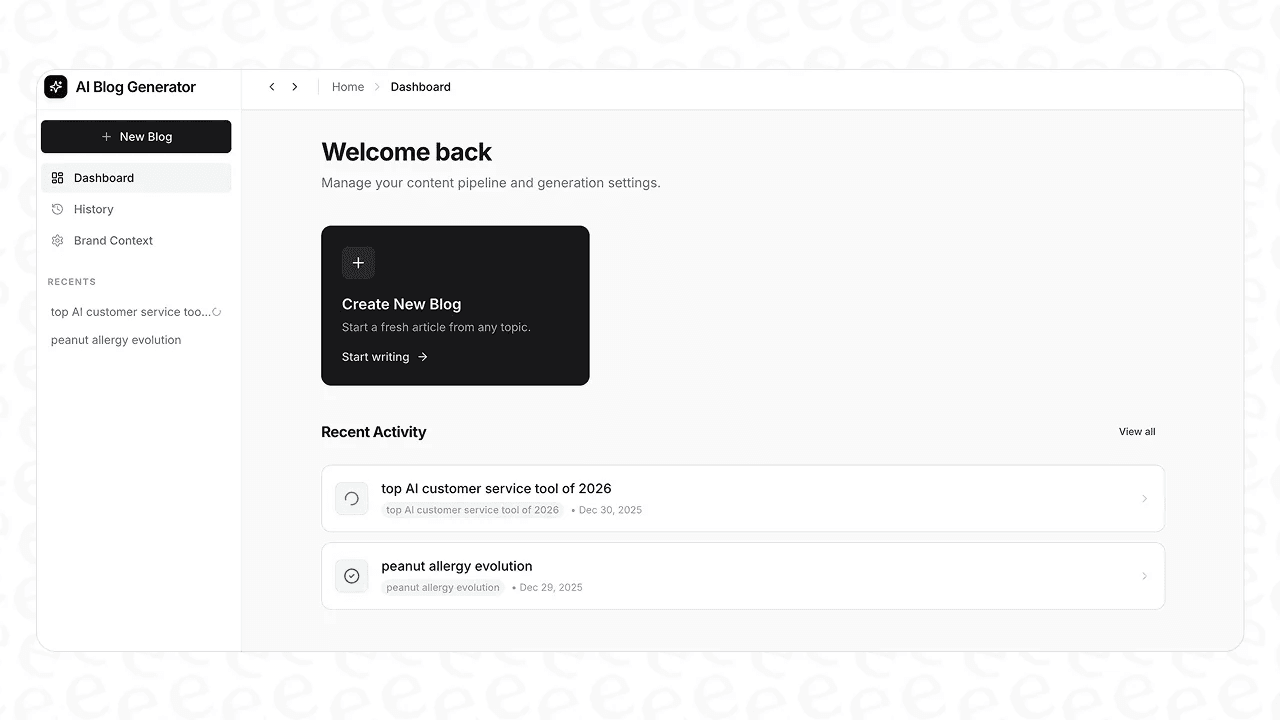
Here's how such a tool helps you create great content, based on our own results:
- Deep Research with Citations: Instead of just summarizing top search results, it performs context-aware research and automatically adds relevant internal and external links to build authority from the start.
- Automatic Asset Generation: A wall of text can be unengaging. The eesel AI blog writer automatically embeds relevant YouTube videos, infographics, charts, and tables to make your posts more interesting and increase time on page.
- Authentic Social Proof: To add a human element and credibility, it finds and integrates real quotes from discussions on Reddit and other forums. This gives your content a layer of authenticity that generic AI content can't replicate.
3. Neglecting technical SEO
You could write the best blog post in the world, but if your website is a technical wreck, it won't rank. It's a tough pill to swallow. Common problems like slow page speeds, broken links, a poor mobile experience, or crawl errors can torpedo your SEO efforts before they even begin. These issues directly affect your Core Web Vitals, which are Google’s main metrics for user experience.
How to fix it:
Make it a habit to run regular technical SEO audits. You can use tools like Screaming Frog or simply check the Core Web Vitals report in your Google Search Console. Pay close attention to these three metrics:
- Largest Contentful Paint (LCP): How long it takes for the main content of a page to load. Aim for under 2.5 seconds.
- Interaction to Next Paint (INP): How quickly your page responds to user interactions. You want this to be under 200 milliseconds.
- Cumulative Layout Shift (CLS): Measures visual stability (for example, if things jump around as the page loads). Aim for a score below 0.1.
4. Ignoring GEO
In 2026, traditional search isn't the only game in town. Google's AI Overviews and chatbots like ChatGPT are becoming popular sources for software recommendations. As one Reddit discussion on GEO noted, these AI models don't crawl the web in real-time; they generate answers from their training data. If your brand isn't mentioned in the trusted sources they were trained on, you're effectively invisible.
How to fix it:
You need to start thinking about Generative Engine Optimization (GEO). Simply put, this means getting your product mentioned in the right places. Focus on:
- Getting featured in high-quality listicles ("best X for Y").
- Building a strong presence on review sites like G2 and Capterra.
- Participating in relevant discussions on forums like Reddit, which AI models use heavily for conversational data.
5. No link strategy
There's a common belief in SaaS that if you create great content, backlinks will just show up. While that can happen, it's a slow and unreliable strategy. Backlinks are still one of the strongest signals to search engines that your content is authoritative and trustworthy.
How to fix it:
You need a proactive link-building strategy. A great way to do this, as mentioned in an enterprise SEO audit guide, is to create "linkable assets." These are valuable resources that other people will want to link to, such as:
- Original research reports with unique data.
- Free tools or calculators.
- In-depth data studies or industry benchmarks.
Just as important is building a solid internal linking strategy. Make sure you're linking from your high-performing pages to your most important "money" pages (like your pricing or product pages) to pass that authority along.
6. A misaligned content funnel
Creating content without a plan is like throwing darts in the dark. A common mistake is creating content randomly or focusing all your efforts on just one part of the funnel. This leaves big gaps in the B2B SaaS marketing funnel, causing you to attract visitors who aren't ready to buy or lose potential customers who are.
Honestly, I think the biggest mistake most SaaS companies make is not having a real content strategy that covers the *whole* funnel. Startups especially tend to jump straight into pushing feature pages, demos, or comparison posts, but they skip the part where they actually generate demand. If your product is new, people don’t even know they should be searching for it yet.
How to fix it:
Map your content to each stage of the user journey. Think about what a potential customer needs at each step:
- Awareness (TOFU): They have a problem. Help them understand it with "how-to" guides, educational blog posts, and helpful infographics.
- Consideration (MOFU): They're looking for solutions. Help them compare their options with "alternatives" posts, "vs." comparison articles, and detailed case studies.
- Decision (BOFU): They're ready to choose. Make it easy for them with a clear pricing page, product demos, and a simple free trial sign-up.
7. Treating SEO as a project
SEO is a process, not a project. You can't just optimize a page, publish it, and expect it to rank forever. Search algorithms change, new competitors emerge, and user expectations shift. A post that’s ranking #1 today could be on page three in six months if you don't keep it fresh.
How to fix it:
Treat SEO as a continuous cycle.
- Schedule regular content audits to find pages that are underperforming.
- Refresh and update your existing blog posts with new data, better examples, and fresh insights every 6-12 months.
- Keep a close eye on your keyword rankings and traffic. If you see a sudden drop, figure out why and fix it quickly.
Pro tips for avoiding common SaaS SEO mistakes
Pro tip
Start with the bottom of the funnel: Before you spend months writing broad, top-of-funnel content, focus on [capturing high-intent traffic](https://uproer.com/articles/what-saas-companies-get-wrong-about-seo/). Go after those 'alternatives' and comparison keywords first. These users are actively looking to buy, which means a much faster return on your content.
Pro tip
Focus on business outcomes, not vanity metrics: A #1 ranking means nothing if it doesn't drive sign-ups or demo requests. Always connect your SEO efforts to real business goals.
Pro tip
Leverage Reddit and forums for GEO: These platforms are goldmines. They tell you exactly what your customers' pain points are in their own words. Plus, AI search engines love them. Participate authentically to build authority and get your product recommended.
For a deeper dive, this video from Sam Dunning breaks down some of the most costly SEO mistakes that SaaS companies make and how you can fix them to improve your lead generation.
Build your growth engine by avoiding these SEO mistakes
Successful SaaS SEO in 2026 isn't about gaming the algorithm. It's about taking a user-focused approach that consistently provides real value.
They write for Google, not users.
By understanding user intent, creating outstanding content, getting the technical basics right, and adapting to the new world of generative engine optimization, you can build a powerful and predictable growth engine for your business.
Of course, consistently creating high-quality, optimized content is a huge challenge. The eesel AI blog writer was built to solve this problem. It turns a single keyword into a complete, publish-ready blog post with all the assets, research, and social proof you need to rank.
Try it for free today and see how quickly you can scale your content strategy while avoiding common pitfalls.

Frequently Asked Questions
Share this article

Article by
Stevia Putri
Stevia Putri is a marketing generalist at eesel AI, where she helps turn powerful AI tools into stories that resonate. She’s driven by curiosity, clarity, and the human side of technology.