Rytr vs Scalenut: Which AI writer is the right choice for you?

Stevia Putri

Katelin Teen
Last edited January 18, 2026
Trying to scale up your content creation can feel like a never-ending task. You know you need a steady stream of quality blog posts, social media updates, and ad copy to keep up, but the time and effort involved are huge. This is where AI writing assistants like Rytr and Scalenut step in, promising to make the whole process faster.
Both are popular tools, but they're made for different kinds of jobs. Rytr is great for whipping up short-form copy in a flash, while Scalenut is built to help you create long, SEO-friendly articles. In this post, we’ll compare them directly to help you decide which one makes sense for you.
However, a common challenge with many AI writers is that they produce a first draft that requires significant post-writing work, including editing, formatting, and sourcing assets. An emerging category of tools aims to address this by generating more complete, publish-ready articles. One example is the eesel AI blog writer, which we’ll explore later in this article.
What is Rytr?
Rytr is an AI writing assistant that’s all about speed and simplicity. Think of it as your handy tool for getting quick copy done without any headaches. Its biggest asset is its massive library of templates, which it calls "use cases." Whether you need a product description, a friendly email, a new social media bio, or some ad copy, Rytr has a template ready to go.
It's a great choice for marketers, copywriters, and entrepreneurs who are juggling multiple writing tasks. Instead of staring at a blank screen, you just pick a use case, give it a little context, select a tone (like casual or convincing), and Rytr gives you a few options in seconds. It’s built for efficiency, especially for that short-form content that can take up so much of your day.
What is Scalenut?
On the other side of the coin, you have Scalenut. This is more than just a writing assistant; it’s a complete content marketing platform driven by AI. Scalenut is designed for SEO pros, content strategists, and marketing teams focused on creating long-form articles that will rank high in search engines.
Scalenut’s strength is that it brings the entire content creation process into one place. It helps with keyword research, groups keywords into topic clusters to build your site's authority, and creates detailed content briefs based on what’s already ranking at the top. Its main feature, "Cruise Mode," can take you from a single keyword to a full first draft in about five minutes. As you write, the editor gives you live feedback and suggests NLP terms to ensure your content is fully optimized for your target keyword. It’s less about quick copy and more about building a strategic, SEO-focused content engine.
Rytr vs Scalenut: A head-to-head feature comparison
Content generation capabilities
Rytr is the star when it comes to short-form content. With over 40 use cases, it’s like a Swiss Army knife for copy. You can generate everything from Facebook ads and interview questions to song lyrics and story plots. Its ability to quickly create multiple versions in different tones is perfect for brainstorming and A/B testing copy without sinking hours into it. It’s all about speed and variety.
Scalenut, however, is focused on long-form content. Its "Cruise Mode" is built to create a structured blog post draft, complete with an outline and initial text, from just one keyword. The real value, though, is in its AI-powered content briefs. These briefs analyze top competitors and tell you exactly which headings, keywords, and questions to include. The editor also gives you real-time suggestions for NLP (Natural Language Processing) terms to help you cover the topic thoroughly, which is a huge advantage for on-page SEO.
SEO and content planning features
This is where the two tools really show their differences.
Rytr has almost no native SEO features. It offers a "Blog Idea & Outline" use case that can help with brainstorming, but it doesn't provide any deep strategic tools. You can't do keyword research, analyze competitors, or get real-time optimization tips. It's a pure writing assistant, not an SEO platform.
Scalenut is the exact opposite. It comes with a full SEO suite. You can do keyword research and use its "Topic Clusters" feature to map out your content strategy and build topical authority. It also analyzes SERP data to give you a content grade, showing how your article stacks up against the competition. For teams trying to grow their organic traffic, these features are essential.
| Feature | Rytr | Scalenut |
|---|---|---|
| Primary Use Case | Short-form copy | Long-form SEO content |
| Keyword Research | Basic | Advanced |
| Topic Clusters | No | Yes |
| AI Content Briefs | No | Yes |
| Real-time SEO Score | No | Yes |
Integrations and workflow
Rytr provides a useful Chrome extension that lets you use its AI writing features directly in your browser. This works whether you're in Gmail, LinkedIn, or Google Docs. It keeps things simple and focuses on making writing faster, wherever you happen to be doing it.
Scalenut also has a Chrome extension but offers more powerful integrations designed for content marketing. It connects with Copyscape to check for plagiarism right inside the editor and has a WordPress publisher that lets you send finished articles straight to your website. This helps streamline the entire process from writing to publishing.
User experience and content quality
A tool can have all the features in the world, but it’s useless if it’s clunky or the output is bad.
Jasper and Scalenut are the best I've used, but you won't be just hitting a few buttons and pushing out 30 posts per day. You will need to do a lot of editing and feeding them information to get the most out of them.

Ease of use and interface
Rytr is incredibly easy to get started with. Its interface is clean, simple, and intuitive. You can sign up and start generating content in less than a minute. The straightforward, template-based system means there’s basically no learning curve, making it accessible to anyone.
Scalenut has a more complex interface, which makes sense given all its features. While it's organized well, it can feel a bit much at first. There’s a learning curve to getting the hang of all its SEO and planning tools. It's built for power users who are willing to spend some time learning how to use it to its full potential.
Output quality and customization
Both platforms give you a decent first draft. The AI-generated text is usually coherent and grammatically sound, but it always needs a human editor. You'll have to tweak it for your brand's voice, add specific examples, check facts, and put in your own unique insights to make the content truly great.
While you can adjust the tone in both tools, the output can sometimes feel a bit generic. This just goes to show that these tools are best used as assistants to help you get past writer's block and speed up drafting, not as a complete replacement for a human writer.
Pricing breakdown
Rytr pricing plans
Rytr’s pricing is simple and affordable, making it a solid option for individuals and small teams.
- Free Plan: $0/month. Lets you generate up to 10,000 characters (not words) per month.
- Saver Plan: $9/month. Bumps the limit up to 100,000 characters per month.
- Unlimited Plan: $29/month. Gives you unlimited character generation, a dedicated account manager, and priority support.
Scalenut pricing plans
Scalenut’s pricing reflects its status as a more comprehensive platform. It's based on AI word credits and the number of SEO articles you can create.
- Essential: $39/month. Includes 100,000 AI words and lets you create 5 SEO articles.
- Growth: $79/month. Offers unlimited AI words and 30 SEO articles.
- Pro: $149/month. Provides unlimited AI words, 75 SEO articles, and extra features like a dedicated success manager.
An alternative for complete posts: The eesel AI blog writer
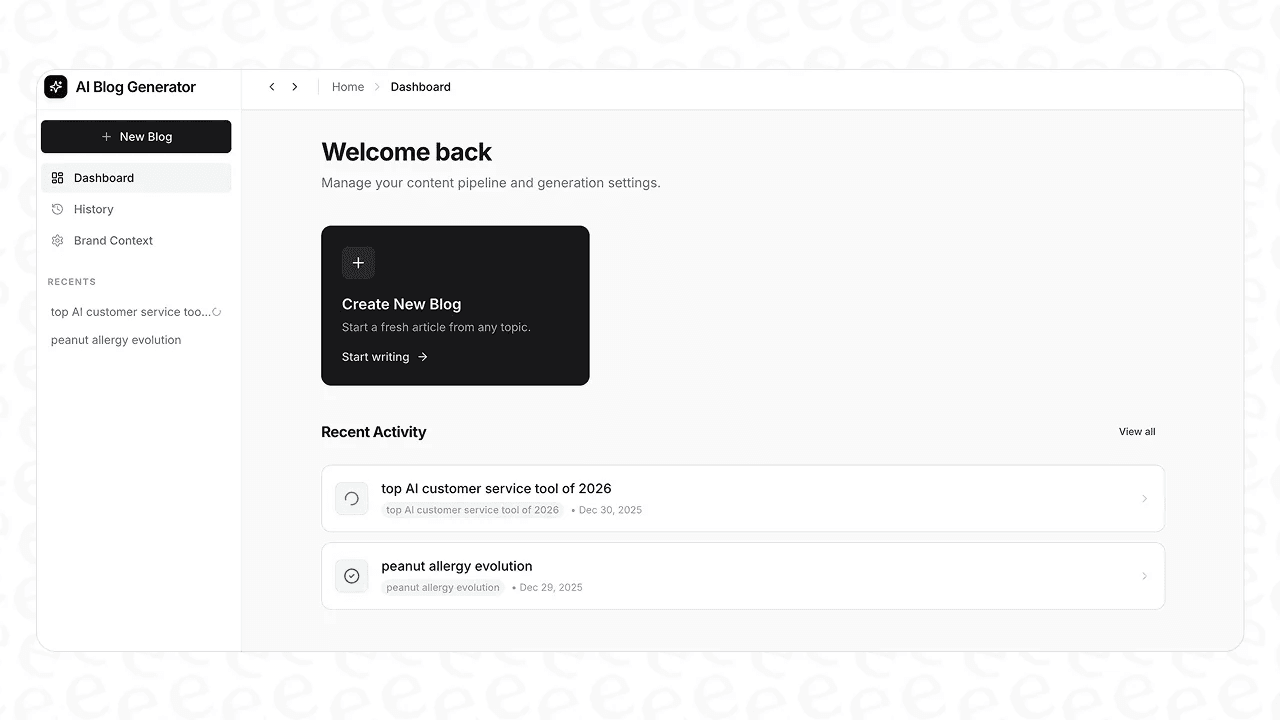
The eesel AI blog writer is designed to address these post-drafting steps by producing a more complete, publish-ready article from a keyword. Instead of only generating text, it builds an entire blog post. Here’s how it approaches this process:
- Generates a full post: You get a complete structure with an intro, logical headings, a conclusion, and an FAQ section, all formatted correctly.
- Automatic asset creation: It creates and embeds relevant AI-generated images, infographics, and tables right into the article. No more hunting for stock photos or messing with design software.
- Built-in social proof: To add authority and a human element, it automatically finds and includes relevant YouTube videos and real quotes from Reddit discussions.
- Answer Engine Optimization (AEO): The content isn't just optimized for traditional SEO. It's also structured to rank well in Google's AI Overviews and other answer engines, which is becoming more and more important.
A workflow diagram illustrating how the eesel AI blog writer creates a complete post from a single keyword, an alternative in the Rytr vs Scalenut discussion.
We used this exact tool to grow our own eesel AI blog from 700 to 750,000 daily impressions in just three months by publishing over 1,000 optimized posts. The results speak for themselves.
Pro tip
Much of the time spent on content creation occurs after the initial draft is written. Tools that generate complete articles with visuals and sources included, such as the eesel AI blog writer, can help reduce the time spent on these post-drafting tasks.
For a more visual comparison, here's a video review that walks through the features and user experience of both Rytr and Scalenut, showing how they perform on similar tasks.
Final thoughts: Rytr vs Scalenut, which should you choose?
So, which one is right for you? It’s pretty clear when you break it down.
- Choose Rytr if… you need a cheap, super easy-to-use tool for generating short-form copy for ads, social media, emails, and product descriptions. It's a great creative assistant for a wide range of formats.
- Choose Scalenut if… your main goal is to create long-form, SEO-driven content. If you need an all-in-one platform that handles keyword research, content planning, writing, and optimization, Scalenut is a solid choice.
If your workflow would benefit from reducing the manual work of formatting, research, and asset creation, a solution like the eesel AI blog writer is designed to produce more complete articles and may be a suitable option.
Ready to turn a keyword into a complete blog post in minutes? Generate your first blog for free.

Frequently Asked Questions
Share this article

Article by
Stevia Putri
Stevia Putri is a marketing generalist at eesel AI, where she helps turn powerful AI tools into stories that resonate. She’s driven by curiosity, clarity, and the human side of technology.