Rytr vs Article Forge: A detailed comparison of AI writing tools

Stevia Putri

Katelin Teen
Last edited January 22, 2026
Expert Verified

AI content generators are everywhere, all promising to make marketing and SEO simpler. They usually fall into two categories: AI writing assistants that help you write and polish copy, and automatic AI writers that try to do the whole job for you. Today, we’re looking at two popular tools, one from each camp.
Rytr is a top-notch AI writing assistant, great for quickly creating short-form copy. On the other hand, you have Article Forge, an automatic AI article writer made for churning out long-form content. This post will compare their features, best uses, and pricing to help you decide which one, if any, is the right fit for you.
While these tools are useful for getting a first draft down, a new generation of platforms is taking things a step further. Tools like the eesel AI blog writer are built to create complete, publish-ready content, saving you from spending hours on edits.
What is Rytr?
Rytr is an AI writing assistant designed for speed and creativity, especially with short-form copy. Think of it as a creative sidekick for marketers, copywriters, and entrepreneurs who need to generate quality text for emails, ads, social media posts, and product descriptions in seconds.
Its biggest advantage is its simplicity. You pick from over 40 templates (like "Facebook Ad" or "Blog Idea & Outline"), provide a little context, choose from more than 20 tones, and it gives you a few options. One of its neatest features is "MyVoice," which can analyze a sample of your writing to learn and copy your unique style. Plus, its browser extension lets you use it pretty much anywhere you write online.
What is Article Forge?
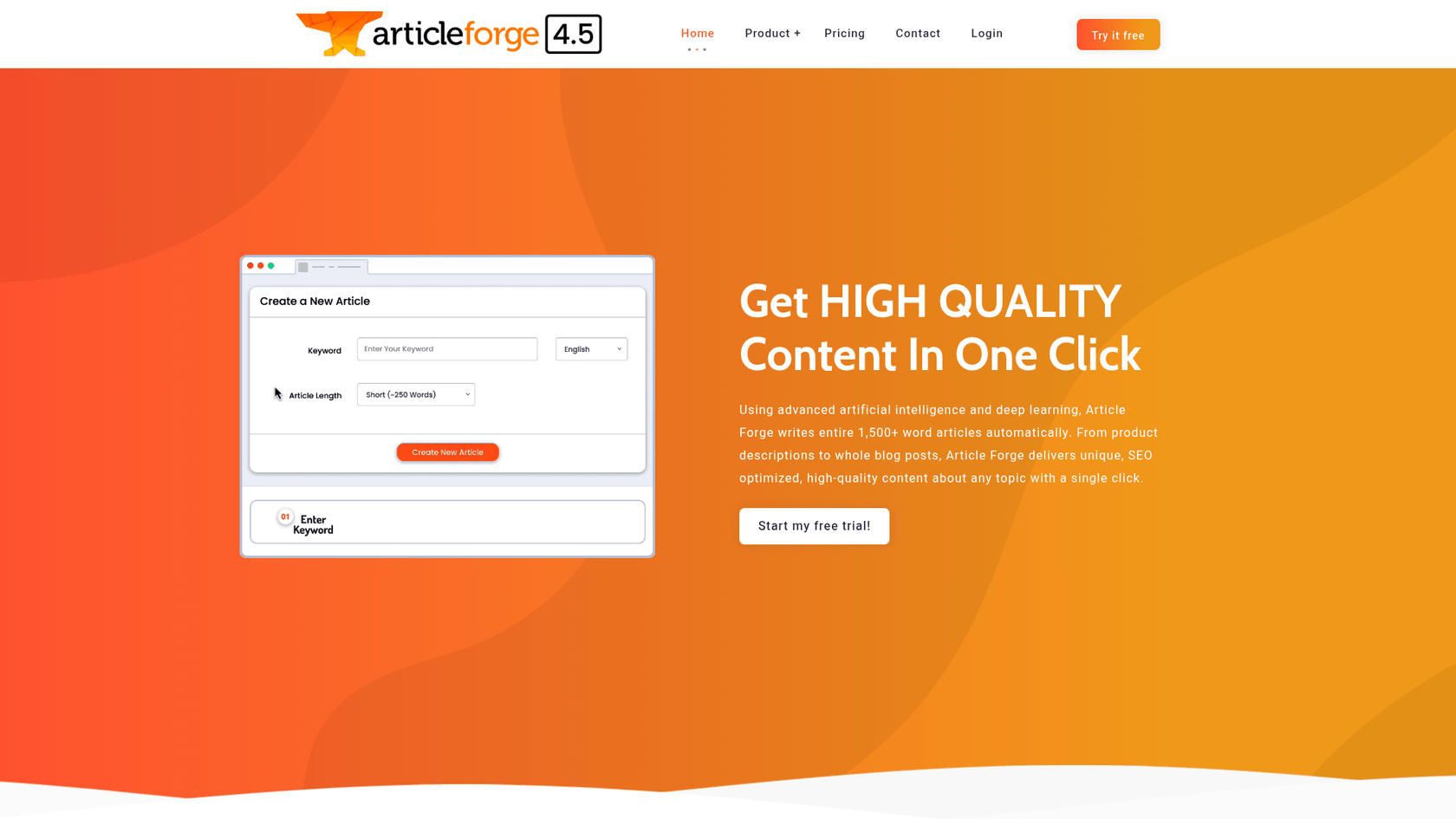
Article Forge is a completely different tool. It's a fully automatic AI article writer that does one thing: generates long-form SEO content from a single prompt. Its main promise is to automate the entire content creation workflow, turning a keyword into a complete, 1,500+ word article.
It uses deep learning models trained on millions of articles to research, plan, and write unique content that’s designed to pass Copyscape. The platform markets itself as a direct replacement for hiring freelance writers, claiming it can produce factually accurate content without all the back-and-forth. You just give it a keyword, and it does the rest.
Rytr vs Article Forge: Core features and capabilities
To really get the difference between these two, you have to look at how they handle content creation. They’re built for fundamentally different tasks, as this comparison shows.
Content generation
Rytr: This is what you’d call a classic AI writing assistant. It's interactive and uses templates. You're in control, choosing a use case, giving it some context, and getting back short pieces of text. From there, you can edit, expand, or ask for a rephrase. This hands-on approach is great for creative work where you want to guide the AI to the perfect result.
Article Forge: This is a true AI writer. The process is almost completely automated. It’s made for end-to-end article generation. You give it a keyword and a few basic instructions, and the AI handles the research, outlining, and writing, delivering a full first draft in about a minute.
SEO optimization and automation
Article Forge: SEO is the whole point here. The platform is designed to create content that search engines will like, complete with LSI keywords and a logical heading structure. It can also automatically add relevant titles, videos, images, and links to make the content more engaging and closer to being publish-ready.
Rytr: SEO isn't its primary focus. While it has templates for things like SEO meta titles and descriptions and can help you brainstorm keywords, it lacks the deep, long-form SEO automation you get with Article Forge. It’s more of a helper for SEO-related copywriting than a full-on SEO content machine.
Integrations and accessibility
Article Forge: Its integrations are all about SEO automation. It connects with tools like WordAi, RankerX, and SEO AutoPilot. The real power move is its direct WordPress integration, which lets you automatically schedule and publish posts to your blogs. This makes it possible to run a content operation with very little manual work.
Rytr: Rytr is more accessible for daily tasks. Its browser extension is a huge plus, letting you generate copy right inside Gmail, Google Docs, Twitter, or almost any other platform. It also has a built-in plagiarism checker powered by Copyscape, which is nice for ensuring your content is original.
Language support
Rytr: This is where Rytr really stands out. It supports over 40 languages, making it an incredibly useful tool for global marketing teams or anyone creating content for non-English audiences.
Article Forge: Its language support is much smaller. It can write content in seven languages. While that covers some major markets, it doesn't come close to what Rytr offers.
Rytr vs Article Forge: Ideal use cases
After comparing the features, it's obvious these tools are for different people with different needs.
When to choose Rytr
Rytr is the perfect partner for marketers, social media managers, and copywriters who need to create a lot of short-form content quickly. If your day is filled with drafting ad copy, writing email campaigns, thinking up social media captions, or brainstorming product descriptions, Rytr will feel like a superpower. Its wide language support also makes it an easy choice for international campaigns.
When to choose Article Forge
Article Forge is made for SEO specialists, affiliate marketers, and content agencies focused on producing long-form content at scale. If you're starting a new blog and need dozens of articles to build a foundation, managing a private blog network (PBN), or just want to add automated, keyword-focused posts to your content strategy, Article Forge is designed for exactly that.
Rytr vs Article Forge: Pricing comparison
Let’s talk money. Both platforms offer different pricing structures based on how much content you plan to create.
Rytr pricing plans
Rytr's pricing is based on the number of characters you generate each month.
- Free Plan: You get 10,000 characters per month with access to all features. It's a great way to try it out.
- Saver Plan: Costs $9/month for 100,000 characters per month.
- Unlimited Plan: For $29/month, you get unlimited characters, a dedicated account manager, and priority support.
If you pay for a year upfront, you get two months free, which is a solid deal.
Article Forge pricing plans
Article Forge's pricing is based on word count.
- Standard Plan: Starts at $27/month (paid monthly) for 25,000 words. This price drops to $13/month if you pay for the whole year.
- Business Plan: If you need more than 500,000 words a month, they offer custom pricing that includes features like custom user accounts and a dedicated account manager.
Article Forge also offers a 5-day free trial to generate a few articles and a 30-day money-back guarantee if you decide it’s not for you.
An alternative for publish-ready content: eesel AI blog writer
Rytr's output is designed for short-form content and may require assembly for a full blog post, while Article Forge's automated articles often serve as a first draft that needs human editing. This creates a gap for users who want a more complete, publish-ready piece from the start.
That’s where the eesel AI blog writer fits in. It’s designed to fill that gap by turning a single keyword into a complete, SEO-optimized, and media-rich blog post that’s ready to go live.
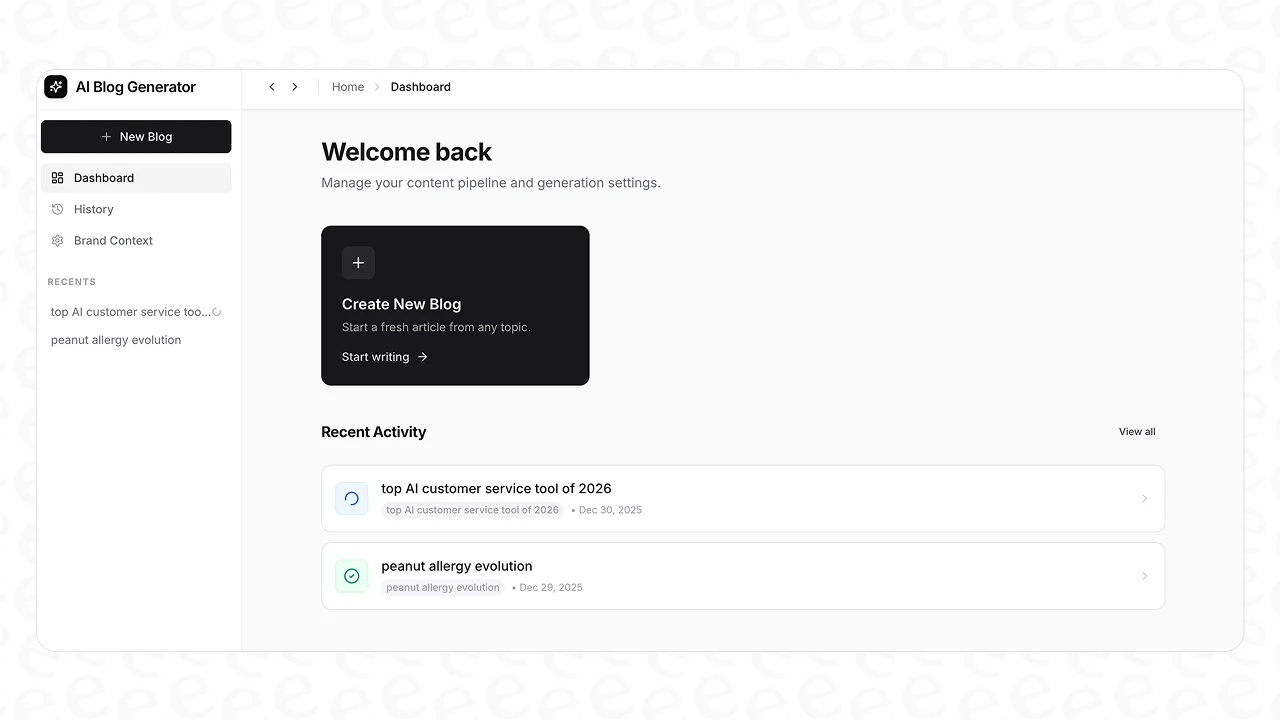
Here’s how it approaches content generation differently:
- Complete assets included: It doesn’t just give you a wall of text. It automatically adds AI-generated images, tables, and infographics to make the post more engaging and easier to read.
- Authentic social proof: This is a big one. It searches the web to embed relevant YouTube videos and finds real quotes from Reddit on your topic. This adds a layer of authority and a human touch that other AI tools can't match.
- Deep research and optimization: It does more than basic SEO. The content is well-researched with citations and optimized for AI Answer Engines (AEO), which means it's structured to appear in places like Google AI Overviews and Perplexity.
We used this exact tool to grow our own blog from 70k to over 750,000 impressions in just three months. The best part? It's completely free to try, so you can see the quality of the blog posts for yourself.
For a more detailed look at how these tools compare, check out this video review that breaks down the pros and cons of both Rytr and Article Forge.
A video review comparing Rytr vs Article Forge, exploring the pros and cons of each AI writing tool.
Final verdict: Rytr vs Article Forge
Which tool is the right choice? It really comes down to what you need.
- Rytr is the clear winner for versatility and short-form creative work. If you need a powerful AI assistant for everything from ad copy to social media posts in dozens of languages, it’s the best choice.
- Article Forge is the go-to for pure automation. It’s great at generating a high volume of long-form SEO articles with minimal effort, making it perfect for large-scale content strategies.
But both tools typically give you a starting point, not a finished piece. You’ll almost always need a person to review, edit, and polish the content to match your brand's voice and quality standards.

If your goal is to cut down on that editing time and go from a keyword to a publish-ready post as fast as possible, then giving the eesel AI blog writer a try is a logical next step.
Frequently Asked Questions

Share this post
Article by
Stevia Putri
Stevia Putri is a marketing generalist at eesel AI, where she helps turn powerful AI tools into stories that resonate. She’s driven by curiosity, clarity, and the human side of technology.