Quillbot vs Anyword: An in-depth comparison

Katelin Teen
Katelin Teen
Last edited January 26, 2026
Trying to pick the right AI writing tool can feel a bit overwhelming. The market is flooded with options, and every single one promises to completely change how you work. Two names you’ll see a lot are Quillbot and Anyword, but they’re actually built for very different things.
Quillbot is more like a Swiss Army knife for writers. It’s a full platform with tools to help you refine, check, and polish text you’ve already got. Anyword, on the other hand, is a data-driven copywriter, built from the ground up to generate marketing copy that actually gets results.
So, how do you pick? This post will give you a straightforward, side-by-side look at their features, who they’re for, and how much they cost to help you figure out which one makes sense for you. While these tools are great for general writing and marketing, a new wave of specialized platforms is popping up. For teams that are all-in on scaling SEO content, tools like the eesel AI blog writer can turn a single keyword into a full, ready-to-publish blog post.
What is Quillbot?
Quillbot calls itself an AI-powered writing partner that helps you write "better, faster, and smarter." It’s less of a content creator and more of a really smart editor that’s there for you at every step, whether you're rewording a clunky sentence or making sure your work is original.
It's a big hit with students, academics, professional writers, and anyone who just wants to improve their writing. If English isn't your first language, it can be a huge help in making your text sound more natural and professional. It isn't just one tool; it's a whole suite of them that work together.
- Paraphraser: This is Quillbot’s main attraction. It rewrites your text in different styles, like Fluency, Academic, or Creative, to help you find just the right words.
- Grammar Checker: A simple tool that catches grammar, spelling, and punctuation errors.
- Plagiarism Checker: Scans your document against a huge online database to flag any content that isn't original.
- Summarizer: Takes long articles, papers, or documents and boils them down to the most important points.
- Citation Generator: A massive help for students and researchers, this tool creates citations in over 1,000 styles, including APA, MLA, and Chicago.
- AI Detector & Humanizer: Helps you spot AI-generated text and then tweak it to make it sound more natural.
- Translator: Translates your text into over 50 different languages.
What is Anyword?
Anyword is a different beast altogether. It's a data-driven AI copywriting platform made specifically for marketing and go-to-market teams. Its entire purpose is to generate content that drives business results, whether that means more clicks, sign-ups, or sales.
The big thing that sets Anyword apart is its use of predictive analytics. It doesn't just write copy; it tells you how well it thinks that copy will perform before you even hit publish. This makes it a really useful tool for marketing teams, advertisers, social media managers, and e-commerce businesses that want to get the most out of their budget.
Here are some of its main features:
- Data-Driven Editor: This is where you create and score your marketing copy. You can generate a bunch of variations for ads, emails, or landing pages and see which one is most likely to click with your audience.
- Predictive Performance Score: This is Anyword’s secret sauce. It analyzes your copy and gives it a score, predicting its effectiveness with a claimed 82% accuracy.
- Blog Wizard: A tool for generating SEO-optimized blog posts from a simple brief.
- Copy Intelligence Platform: This feature connects to your marketing channels (like Google or Meta) to learn from your past campaigns. This helps the AI generate new copy that’s in line with what has already worked for you.
- Brand Voice: Makes sure all the content it generates stays consistent with your company’s specific tone and style.
Quillbot vs. Anyword: A detailed breakdown
Core features and capabilities
This is where you can really see the difference between the two platforms.
Quillbot: The writer's all-in-one toolkit
Quillbot’s main strength is its collection of connected tools for refining and checking your writing after the first draft is done.
The Paraphraser is the star of the show. The free version gives you Standard and Fluency modes, but the Premium plan unlocks nine unique modes. This lets you tweak the tone for any situation, from a formal academic paper to a creative short story. Its free Citation Generator is also super useful for anyone in academia, supporting more than 1,000 citation styles.
The Plagiarism Checker is a Premium feature that scans your text in over 100 languages, giving you a detailed report on any potential problems. Just know that it has a limit of 25,000 words per month, which might be a little tight if you're a heavy user.
Anyword: The performance marketer's co-pilot
Anyword is all about generating fresh marketing copy that converts. Performance is the name of the game.
Its most impressive feature is the Predictive Performance Score. This tool basically "grades" your copy based on how likely it is to engage your target audience. It lets you test different headlines, calls to action, and body copy to see what works best before you spend a single cent on an ad campaign. The Copy Intelligence Platform takes this a step further by connecting directly to your ad accounts on platforms like Meta, Google, and LinkedIn. It analyzes your past top-performing ads to train a custom AI model on your brand’s winning formula.
The Blog Wizard is their tool for long-form content, helping you create original, SEO-optimized articles. It also includes a built-in plagiarism checker to make sure the content is unique.
Verdict: It's pretty straightforward. Quillbot is a versatile assistant for improving and checking writing you've already created. Anyword is a specialized tool for generating and optimizing new marketing copy.
Who are they for?
So, who should use which tool? Let's break it down.
Quillbot is best for:
- Students and academics: It's perfect for paraphrasing research to avoid accidental plagiarism and for using the free Citation Generator to get references right.
- Content editors and proofreaders: A great tool for quickly rewriting awkward sentences to improve flow and for running final checks with the Grammar and Plagiarism Checkers.
- Non-native English speakers: It’s a huge help for making sure your grammar is correct and your phrasing sounds natural, especially with the Paraphraser and Humanizer tools.
Also, did you ever try Quillbot with any of these? I used to use Grammarly and Quillbot together for everything, but now more professors at my place are running stuff through detectors, so I’m kinda paranoid.

Anyword is best for:
- Performance marketers: If your job is to run A/B tests and squeeze every last drop of performance out of your ad spend, Anyword’s Predictive Performance Score is made for you.
- Content marketing teams: Useful for creating SEO-friendly blog posts and website copy that stays on-brand and is optimized for marketing goals.
- Enterprise GTM teams: For bigger companies, Anyword helps maintain brand consistency across all marketing channels and uses data to boost campaign performance.
Pricing comparison
Let's talk money. Here’s how the two platforms compare on cost.
Quillbot Pricing:
- Free Plan: Gives you limited access to the tools. You can paraphrase up to 125 words at a time, use two writing modes, and summarize up to 1,200 words. It’s a good way to see if you like it.
- Premium Plan: This unlocks everything. You get unlimited words in the Paraphraser, all nine writing modes, and access to the Plagiarism Checker (25,000 words/month). It costs $19.95 per month, but the annual plan is $99.95 for the year, which works out to a much more reasonable $8.33 per month.
Anyword Pricing:
- 7-Day Free Trial: Anyword lets you try out its paid plans for a week to see if it's a good fit.
- Starter Plan: This starts at $49/month (or $39/month if you pay annually). It includes unlimited copy generation, one brand voice, and 50 performance predictions per month.
- Data-Driven Plan: Starting at $99/month ($79/month billed annually), this plan gives you more predictions (100/month), three user seats, and real-time performance scores.
- Business & Enterprise Plans: These have custom pricing and are for teams that need advanced features like custom AI models, full API access, and private large language models.
Verdict: Quillbot is very affordable, making it an easy choice for individuals, students, and writers on a budget. Anyword’s pricing is clearly aimed at businesses and marketing teams who view it as an investment that will pay for itself.
Limitations and downsides
No tool is perfect. Here's where each one has some room for improvement.
Quillbot:
- It’s not really designed to be a content generator, especially for long-form marketing content like blog posts. Its value is in refining and checking, not creating from scratch.
- The Plagiarism Checker is a Premium feature with a monthly word limit. For high-volume users like publishers or academic institutions, 25,000 words a month might not cut it.
- While it has a great set of tools, it completely lacks the deep, data-driven performance analytics that modern marketers need to optimize their campaigns.
Anyword:
- The price can be a big obstacle for freelancers, solo bloggers, or small businesses that aren't spending a lot on paid advertising.
- Although its Blog Wizard can generate full articles, the output often needs a fair amount of human editing to add unique insights and personal stories, and a truly authentic voice.
- The platform is laser-focused on marketing. This makes it less useful for academic writing, creative writing, or general-purpose text editing.
A blog-focused alternative: eesel AI blog writer
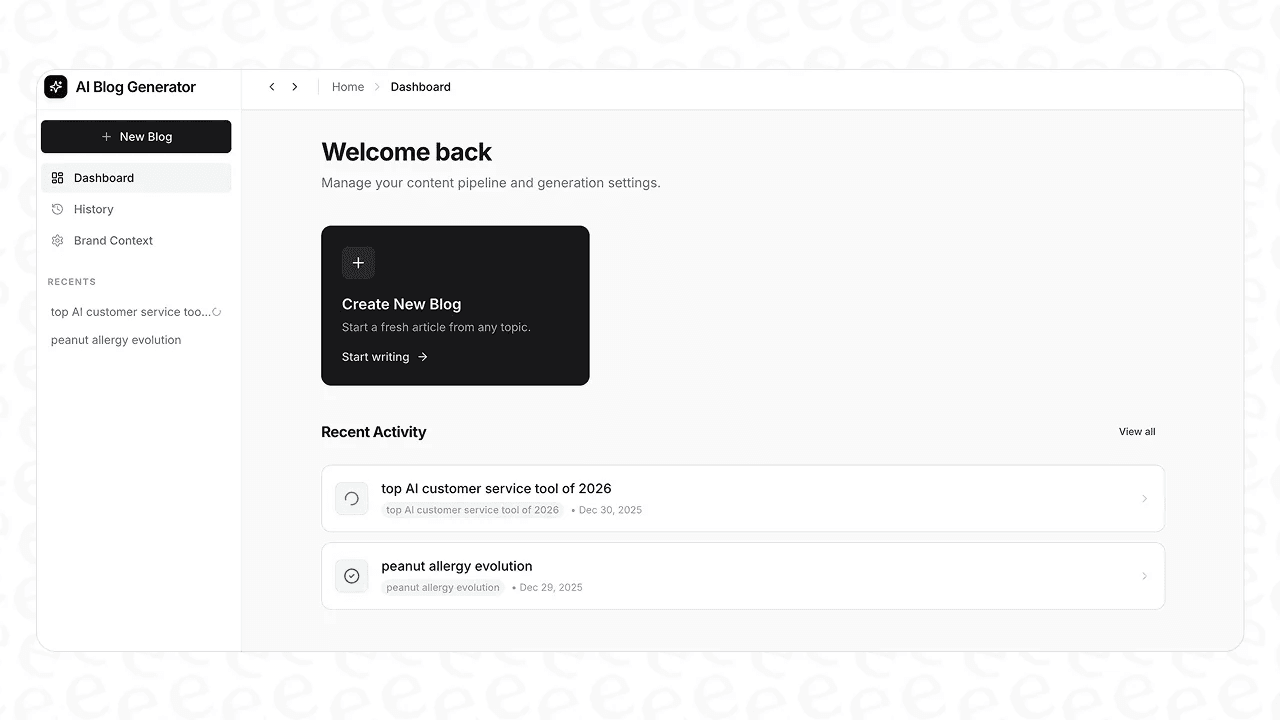
If your main goal is to scale organic traffic through content, you'll get the best results with a tool built specifically for that. The eesel AI blog writer is designed to do one thing extremely well: turn a single keyword into a complete, publish-ready blog post.
It's the exact same platform we used at eesel AI to grow our daily impressions from just 700 to over 750,000 in only three months by publishing more than 1,000 optimized blogs.
While Quillbot helps you polish your text and Anyword helps you optimize ad copy, eesel AI automates the entire blog creation process from start to finish. Here’s what makes it different:
- Automatic media assets: It doesn't just spit out a wall of text. Each article comes with AI-generated images, infographics, and tables to make your content more visually interesting and easier to digest.
- Social proof and media integration: To add depth and credibility, it automatically finds and embeds relevant YouTube videos and real quotes from Reddit forums right into your post.
- AEO (Answer Engine Optimization): SEO is important, but the game is changing. eesel AI structures content so it's easily picked up by AI-driven search results, like Google's AI Overviews, helping you rank in this new era of search.
- Context-aware research: It actually understands the type of blog you're creating. If you're writing a comparison post, it will pull in relevant data like features and pricing. If it's a product review, it can find technical specs.
The best part? It's completely free to try, so you can generate your first full blog post and see the difference for yourself.
Quillbot vs. Anyword: A summary
Let's boil it all down into a simple table.
| Criteria | Quillbot | Anyword |
|---|---|---|
| Best For | Refining, checking, and enhancing existing text | Generating and optimizing performance marketing copy |
| Core Function | All-in-one writing toolkit | AI copywriting with predictive analytics |
| Key Feature | Paraphraser with 9 modes | Predictive Performance Score |
| Pricing | Starts free, Premium at $8.33/mo (annual plan) | Paid plans from $49/mo, with a 7-day free trial |
| Primary Limitation | Lacks marketing-specific performance analytics | Higher cost, specialized for marketing teams |
The main takeaway here is that your choice really depends on what you're trying to do. If you need to polish, check, and perfect your existing work to make it clearer and more original, go with Quillbot. If you need to create brand new marketing copy that’s backed by data and designed to convert, choose Anyword.
To see how these tools fit into the broader AI writing landscape, it's helpful to watch them in action. The video below explores how different platforms, including Anyword and Quillbot, can be used to create various types of content, giving you a better sense of their practical applications.
Making the final call
Both Quillbot and Anyword are powerful AI tools, but they solve very different problems for very different people. There isn't a single "better" one, just the one that's a better fit for the job you need to get done.
Quillbot is the versatile and affordable assistant for writers, students, and editors who need to perfect their writing. Anyword is the data-driven specialist for marketers and advertisers who need to create copy that delivers real results.
And for those of you focused specifically on growing organic traffic, a purpose-built tool is the most direct path to success. See how the eesel AI blog writer can help you generate complete, SEO-optimized, and media-rich blog posts in just a few minutes.

Frequently Asked Questions
Share this article

Article by
Katelin Teen
Katelin is an operations specialist at eesel where she uses her psychology training and education experience to optimize B2B SaaS processes. Outside of work, she unwinds with story-driven games, writing, and keeping up with latest tech innovations.