Neuroflash vs Copy.ai: Which AI platform is right for your team?

Stevia Putri

Katelin Teen
Last edited January 26, 2026
Choosing the right AI platform for your team can feel like a full-time job these days. What started as simple text generators have blown up into complex workflow engines that claim to automate just about everything. It's a lot to sort through.
Two names you'll see a lot are Neuroflash and Copy.ai, but they're built for very different things. Neuroflash is an AI content suite for marketing teams, especially in Europe. Copy.ai, however, has branded itself as the go-to AI platform for your entire Go-to-Market (GTM) team, covering sales, marketing, and ops.
So, which one is it? In this guide, we'll compare them head-to-head.
What is Neuroflash?
Neuroflash is a big name in Europe, known as a top-rated AI content platform built specifically for marketing teams. Their main pitch is helping you create on-brand, high-quality marketing copy and images in multiple languages, all while being fully GDPR-compliant.
It's not just a text generator, it's a whole toolkit for the content creation process.
Yes I do. There is a lot of research before writing, because I work as a SEO marketeer. After that, I let the AI start to write the blog post and I will take that as a foundation. The start is often the most difficult part for me, so it makes me a lot faster.

Here's a peek at what you get:
- Content Creation Suite: You get an AI assistant with over 100 different text templates, a smart editor with built-in SEO analysis, and a plagiarism checker to keep your work original.
- Brand Hub: This is where you park your brand’s voice, company knowledge, and style guides. It makes sure every piece of content the AI generates actually sounds like it came from you. It also has a neat "Audiences" feature, letting you create specific target personas for more tailored copy.
- PerformanceFlash: This is Neuroflash's ace in the hole. It’s a unique tool that predicts the performance and emotional impact of your short-form copy (like headlines or ads) before you publish it.
- ChatFlash & Image Generator: It has a chat interface that can tap into different models like GPT, Gemini, and Claude, plus a tool for creating copyright-free AI images on the spot.
A major draw, especially for EU businesses, is their focus on data security. Neuroflash is GDPR compliant and hosts its data on German servers, which is a huge deal for companies dealing with strict data privacy regulations.
What is Copy.ai?
Copy.ai has grown far beyond its early days as a simple content tool. It now bills itself as the "First AI-Native Go-to-Market (GTM) Platform." The goal isn't just to help you write stuff, but to automate and connect your entire revenue engine, from sales and marketing to operations.
The main idea is to get rid of "GTM bloat," a tangled mess of disconnected tools and processes that slows everybody down. Copy.ai aims to be the single source of truth for your whole GTM strategy.
Here are the main parts of the platform:
- Workflows: This is the core of Copy.ai. You can build multi-step, automated processes with a no-code builder. It's like snapping together LEGOs to automate tasks like sales prospecting, content creation, or handling inbound leads.
- AI Agents: This is where it gets really interesting. AI Agents are built to make autonomous, goal-oriented "micro-decisions" inside a workflow. They can look at data and figure out the next logical step, kind of like a human would, but at a much larger scale.
- Infobase & Brand Voice: Just like Neuroflash, Copy.ai has a central knowledge base called Infobase where you can dump all your company data, product info, and case studies. You can also set your Brand Voice to keep all AI-generated text consistent.
- LLM Agnostic: The platform isn't locked into one large language model. It can pick the best model for the job, whether it’s from OpenAI, Anthropic, or Google’s Gemini.
Copy.ai is all about replacing a dozen different tools with one secure, unified platform. It's also SOC 2 Type II compliant, making it a reliable choice for companies with serious security needs.
Core feature comparison
Now that we have a feel for each platform, let's put their key features side-by-side to see how they measure up.
Content generation vs. process automation
This is where you can really see the core difference between the two platforms.
- Neuroflash is focused on structured content creation for marketers. It’s a template-driven platform. You get over 100 specific text types for things like blog posts, social media updates, and ad copy, all backed by built-in SEO analysis to help your content rank. It’s built to make producing individual pieces of content as smooth as possible.
- Copy.ai is a workflow-driven platform for GTM automation. Instead of just templates, it gives you a no-code builder to chain together "Actions" (like scraping a website, enriching a lead, or writing text) into complex, repeatable workflows. This allows it to automate entire processes that go way beyond content, like personalizing thousands of sales emails or enriching a list of new leads.
Brand consistency and audience targeting
Both platforms understand that AI-generated content needs to sound like it came from your brand.
- Neuroflash uses its Brand Hub to store your brand voice, style guides, and company info. Its most interesting feature here is the dedicated Audiences tool. This lets you create detailed target personas, so you can generate content that speaks directly to different customer segments. It's a very organized way to handle audience-specific messaging.
- Copy.ai handles brand consistency with its Brand Voice and Infobase features. The Infobase is a central knowledge repository that you can reference in your prompts, making sure the AI always uses correct, up-to-date company information. It’s a solid way to ground the AI in your company’s facts.
Comparison: Both platforms do a good job here. Neuroflash's "Audiences" feature is particularly useful for marketing teams that regularly create content for multiple, distinct personas.
Unique differentiators
Every platform has that one thing that makes it special.
- Neuroflash's standout feature is PerformanceFlash. It provides predictive analytics on how your short-form copy will perform and what emotions it will evoke. For marketers trying to squeeze every bit of performance out of ads and headlines, this is a big deal. It lets you test your copy before you spend any money. Its strong European focus with GDPR compliance is another key selling point.
- Copy.ai's main differentiator is its whole GTM AI Platform design, powered by customizable AI Agents. The platform’s goal isn't just to help you create things; it’s to automate your entire revenue engine. It connects your teams, data, and processes in one spot, from finding prospects to closing deals.
| Feature | Neuroflash | Copy.ai |
|---|---|---|
| Standout Capability | Predictive Performance Analytics (PerformanceFlash) | GTM Workflow Automation (AI Agents) |
| Primary Goal | Optimize the quality & impact of marketing content | Automate and unify the entire GTM engine |
| Security Focus | GDPR Compliance & German Servers | SOC 2 Type II Compliance |
| Special Feature | Dedicated "Audiences" for persona targeting | Embeddable AI Agents for decision-making |
Ideal use cases and target audiences
So, who are these platforms really for? Let's figure out the ideal user for each one.
Who should use Neuroflash?
- Primary Audience: Marketing teams, content creators, copywriters, and SEO managers. It’s a particularly good fit for companies based in or targeting Europe because of its strong multi-language support and GDPR compliance.
- Key Use Cases:
- Creating a lot of SEO-optimized, brand-consistent content like blogs, social media posts, and website copy.
- Teams that want to test and optimize the emotional impact and performance of their ad copy and headlines beforehand.
- Companies that need high-quality content in multiple languages, especially German and other European languages.
- Limitation: While it's great for marketing content, Neuroflash isn't built to automate the operational workflows of sales teams or larger GTM organizations.
Who should use Copy.ai?
- Primary Audience: Go-to-Market (GTM) teams, including sales development reps (SDRs), account executives (AEs), marketers, and revenue operations (RevOps) professionals.
- Key Use Cases:
- Automating sales prospecting and personalizing outreach on a massive scale.
- Streamlining inbound lead enrichment and follow-up.
- Running complex account-based marketing (ABM) campaigns that need sales and marketing to be in sync.
- Unifying processes to reduce tool sprawl and get everyone working from the same playbook.
- Limitation: Its main focus is on automating the entire GTM process. If you're a team that just needs a powerful content generator, you might find it's more complex than you need.
Pricing and plans compared
Price is often the deciding factor, and these two platforms have very different approaches.
Neuroflash pricing
Neuroflash has a pretty standard tiered pricing model based on word counts and feature access. Just a heads-up, the pricing is in Euros.
- Free Plan: You can get started for free with a limited number of words and features.
- Starter: Costs about €30 per month and is meant for individual users.
- Essential: Is around €80 per month and is aimed at startups and entrepreneurs.
- Pro: This plan is roughly €200 per month and is built for small teams.
- Business: You’ll have to chat with their sales team for custom pricing for larger teams.
The plans are built around word and image limits, and access to premium features like PerformanceFlash is usually for the higher tiers.
Copy.ai pricing
Copy.ai's pricing is made to scale across entire GTM organizations. It’s based on seats and "workflow credits" instead of word counts, which shows its focus on process automation.
- Chat: Starts at $29 per month for 5 seats and gives you unlimited chat usage.
- Growth: This is a big jump, starting at $1,000 per month (billed annually) for 75 seats and includes 20,000 workflow credits.
- Expansion & Scale: These are tiered plans at $2,000/mo and $3,000/mo for more seats and credits.
- Enterprise: You’ll need to contact them for custom pricing if you’re a large organization that needs API access and help with implementation.
The pricing model makes it obvious that Copy.ai is going after larger teams and entire departments, not just individual writers.
An alternative: The specialized blog writer
While Neuroflash and Copy.ai offer comprehensive platforms, some teams may prefer a tool focused on a specific task. For teams where the main growth channel is SEO and content marketing, that job is scaling the blog.
eesel AI: An alternative for blog creation
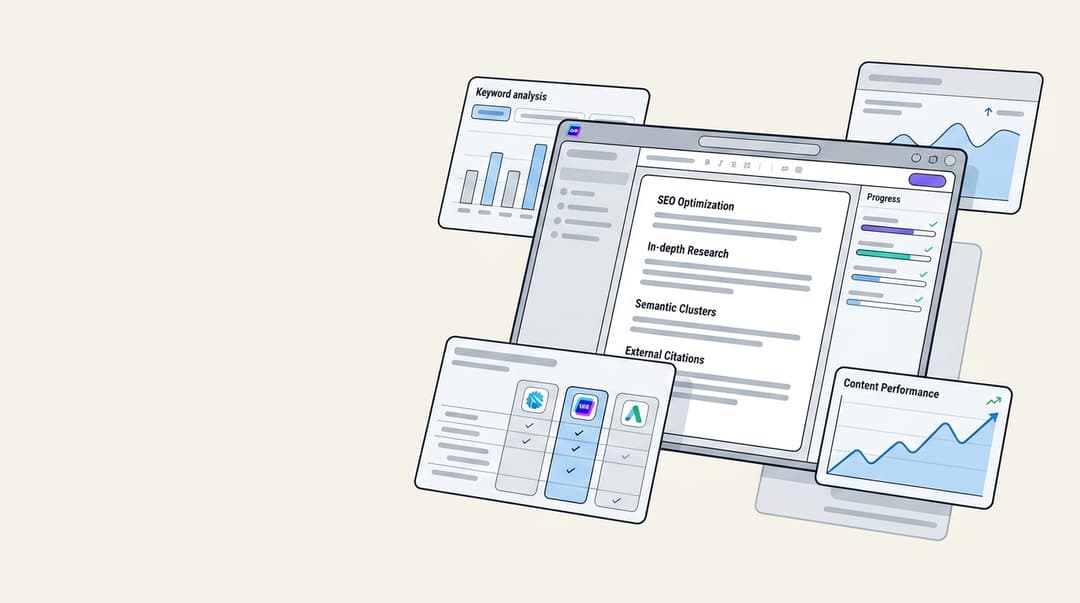
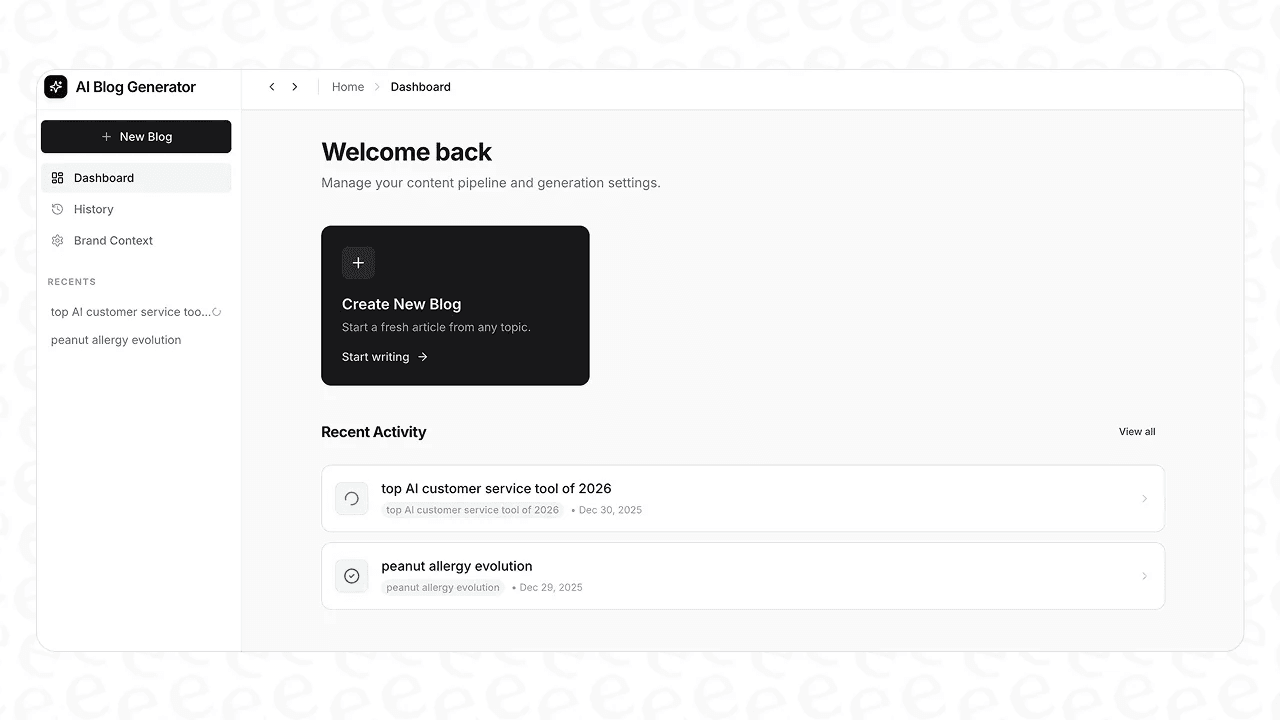
It's different from broader platforms because it handles the whole content creation process, from research to formatting.
Here’s what makes it stand out:
- Automatic Rich Media: It doesn’t just give you a wall of text. It actually researches and embeds AI-generated images, tables, and infographics right into the post, saving you hours.
- Built-in Social Proof: To add authority and a human element, it automatically finds and includes relevant YouTube videos and real Reddit quotes. This makes your articles more engaging and trustworthy.
- Optimized for AI Search: The content is structured not just for old-school SEO but also for modern Answer Engine Optimization (AEO). This helps you show up in new search experiences like Google's AI Overviews.
This is the exact tool we used at eesel AI to grow our own traffic from 700 to 750,000 daily impressions in just three months.
Making the right choice
So, what’s the final call in the Neuroflash vs Copy.ai debate? It all comes down to the job you need to get done.
- Choose Neuroflash if you're a marketing-focused team, especially one in Europe. It's the right choice if you need to produce a high volume of on-brand, multi-language content and like the idea of predicting your copy's performance before it goes live.
- Choose Copy.ai if you're part of a larger GTM organization that wants a single platform to automate complex workflows across both sales and marketing. It’s ideal for teams that are focused on building an efficient revenue engine, not just generating content.
The best tool is always the one that’s built for your specific goal.
To see how these two platforms stack up in a direct comparison, especially for creating long-form content, check out this detailed video review.
If your main goal is to scale your blog and drive organic traffic, a specialized tool can be a direct path to achieving that. You can see just how quickly you can go from a simple keyword to a complete, media-rich article by generating your first post for free with the eesel AI blog writer.

Frequently Asked Questions
Share this article

Article by
Stevia Putri
Stevia Putri is a marketing generalist at eesel AI, where she helps turn powerful AI tools into stories that resonate. She’s driven by curiosity, clarity, and the human side of technology.