MarketMuse vs Grammarly: Which is the right choice for content?

Stevia Putri
Last edited January 26, 2026
Getting your content noticed feels like a two-part battle. First, you have to figure out what on earth to write about with a smart, data-backed plan. Then, you have to actually write the thing, making sure it’s clear, professional, and doesn't have any of those typos that make you want to crawl under a rock. It’s the age-old struggle of strategy vs. execution.
In one corner, you've got a tool like MarketMuse, the content strategist. It crunches SEO data to help you map out your content and build real authority. In the other corner is Grammarly, the writing coach that sits on your shoulder, polishing your grammar and style in pretty much every app you use.
Or maybe you don't have to choose. Some newer AI platforms are starting to do both. Take the eesel AI blog writer, for instance. It’s built to take a single keyword and turn it into a full-blown article that’s both strategically sound and ready to publish.
What is MarketMuse? The content strategy side
MarketMuse is an AI-powered platform for people who are serious about content planning and optimization. Its entire reason for being is to help businesses create content that doesn't just get published, but also performs well in search rankings and competes effectively.
Instead of just giving you a list of keywords, it uses its AI technology to analyze your whole website. It figures out what topics you already have authority on, where the gaps are, and what you should write about next to become a go-to resource in your field. It’s kind of like having an SEO consultant on call 24/7.
Here are its standout features:
- Content Inventory: MarketMuse automatically goes through your entire site, finding content gaps and highlighting opportunities based on the authority you've already established.
- Topic Modeling: This goes way deeper than basic keywords. The platform analyzes a topic from all angles to ensure your content is comprehensive and covers all the sub-topics search engines want to see.
- Personalized Difficulty: This is a big one. Instead of a generic difficulty score, MarketMuse tells you how hard it will be for your site specifically to rank for a topic, which is a lot more practical.
- Content Briefs: It creates incredibly detailed outlines for your writers. The Strategy plan alone has nine different brief types, so you can get tailored guidance for articles, comparison posts, or how-to guides.
MarketMuse is for SEOs, content strategists, and marketing teams who are in it for the long haul with organic growth. It’s about building a sustainable content engine, not just knocking out a few articles here and there.
What is Grammarly? The writing polish side
You've probably seen Grammarly everywhere. It's an AI-powered writing assistant designed to make your writing better and clearer as you type, no matter where you are. It’s trusted by over 40 million people and 50,000 organizations, and for good reason: it’s simple and it works.
I run all my final drafts through Grammarly to polish grammar, clarity, and tone. Even after using AI tools, it always catches something I missed.

It may have started as a simple spell checker, but it's grown into something much more capable.
Here’s what it brings to the table now:
- Core Writing Assistance: This is the classic Grammarly you know. It flags grammar, spelling, and punctuation mistakes on the fly.
- Advanced AI Features: The Pro plan gives you full-sentence rewrites for clarity, tone adjustments to match your audience, and suggestions to make your writing sound more natural.
- Generative AI: You can get up to 2,000 AI prompts per month on the Pro plan, which can help you brainstorm ideas, write text from scratch, or build outlines.
- Plagiarism Checker: The Pro version comes with a plagiarism checker that compares your text against billions of web pages to ensure your work is original.
Grammarly is for everyone. Writers, students, professionals, basically anyone who wants to make sure their daily communication is sharp and error-free. It’s a tool for execution, not for high-level strategic planning.
Core differences: Content strategy vs. writing polish
The easiest way to understand the difference between MarketMuse and Grammarly is to think about when you’d use them. One helps you design the house, and the other helps you paint it.
I've tried out MarketMuse. I found it a little complex and definitely has a learning curve. Grammarly is great - user friendly and intuitive.
When to use MarketMuse for data-driven content strategy
MarketMuse is all about the "before you write" stage. It's the tool you open up before a single word hits the page. Its main value is saving you from hours of manual research and making sure every article you create serves a clear, strategic purpose.
Here are a few times you’d lean on MarketMuse:
- Building out a content plan around high-value topic clusters to cement your site's authority.
- Analyzing SERP heatmaps to find content gaps your competitors have overlooked.
- Generating super-detailed, SEO-optimized briefs for your writers so they know exactly what needs to be included.
- Auditing your existing content to find old articles you can update for a performance boost.
When to use Grammarly for clear and polished writing
Grammarly, on the other hand, is your go-to during the "writing and editing" phase. It’s that final quality check that refines your text and makes sure your message lands the way you want it to.
You’d use Grammarly when you need to:
- Proofread a final blog draft to catch any last-minute typos before hitting "publish."
- Tweak the tone of an email to sound more confident or friendly.
- Rewrite a long, clunky paragraph to be more direct and readable.
- Keep everyone on your team consistent with the company's voice using the style guide feature.
A side-by-side feature comparison
To make it even clearer, here’s a simple table breaking down what each tool does and doesn't do. It’s a quick way to see where they really shine.
| Feature | MarketMuse | Grammarly |
|---|---|---|
| Primary Goal | Content Strategy & SEO Planning | Writing Assistance & Proofreading |
| SEO Optimization | Core feature; provides topic models, content briefs, and personalized ranking difficulty. | Not a feature. Focuses on writing quality, not search ranking. |
| Grammar & Spell Check | Not a primary feature. | Core feature; provides advanced suggestions for grammar, punctuation, and style. |
| Content Generation | Generates data-driven content briefs and outlines. Has a generative AI component in its Optimize application. | Generates text, outlines, and rewrites with AI prompts (e.g., 100/month on Free plan). |
| Tone Analysis | No. | Yes, with suggestions to adjust tone for different audiences and contexts. |
| Competitor Analysis | Yes, analyzes SERPs and competitor content to find topic gaps. | No. |
| Ideal User | SEO Strategist, Content Manager | Writer, Editor, Student, Professional |
| Workflow Stage | Planning & Pre-writing | Writing & Editing |
Pricing: A clear cost breakdown
Budget is always a consideration, and these two tools have completely different pricing models that say a lot about who they're for.
MarketMuse pricing
MarketMuse is aimed at the enterprise market, and its price tag reflects that.
- Free Plan: You get limited access to their tools with 10 queries per month. It’s enough for a test drive, but not for running a full content operation.
- Optimize, Research, & Strategy Plans: These are the paid tiers where the real power is, unlocking things like site inventories, tracked topics, and detailed content briefs.
You'll notice that MarketMuse doesn’t list its prices publicly. You have to get in touch with their sales team for a quote. This is typical for high-end, practitioner-built SEO tools that target larger companies with big content budgets. It’s a serious investment, not a casual subscription.
Grammarly pricing
Grammarly's pricing is transparent and affordable, making it accessible to just about anyone.
- Free Plan: This is where most people start. It covers basic grammar, spelling, and punctuation checks and gives you 100 generative AI prompts a month.
- Pro Plan: This unlocks all the good stuff. It starts at $12 USD/member/month if you pay for a year upfront, or $30 if you go month-to-month. This gets you the full-sentence rewrites, tone adjustments, plagiarism detector, and 2,000 AI prompts.
- Enterprise Plan: For bigger teams, there's a custom plan that adds features like SAML SSO and dedicated support.
Grammarly's friendly pricing and incredibly useful free plan make it an easy choice for individuals and teams of any size.
Is there a tool that combines both strategy and writing?
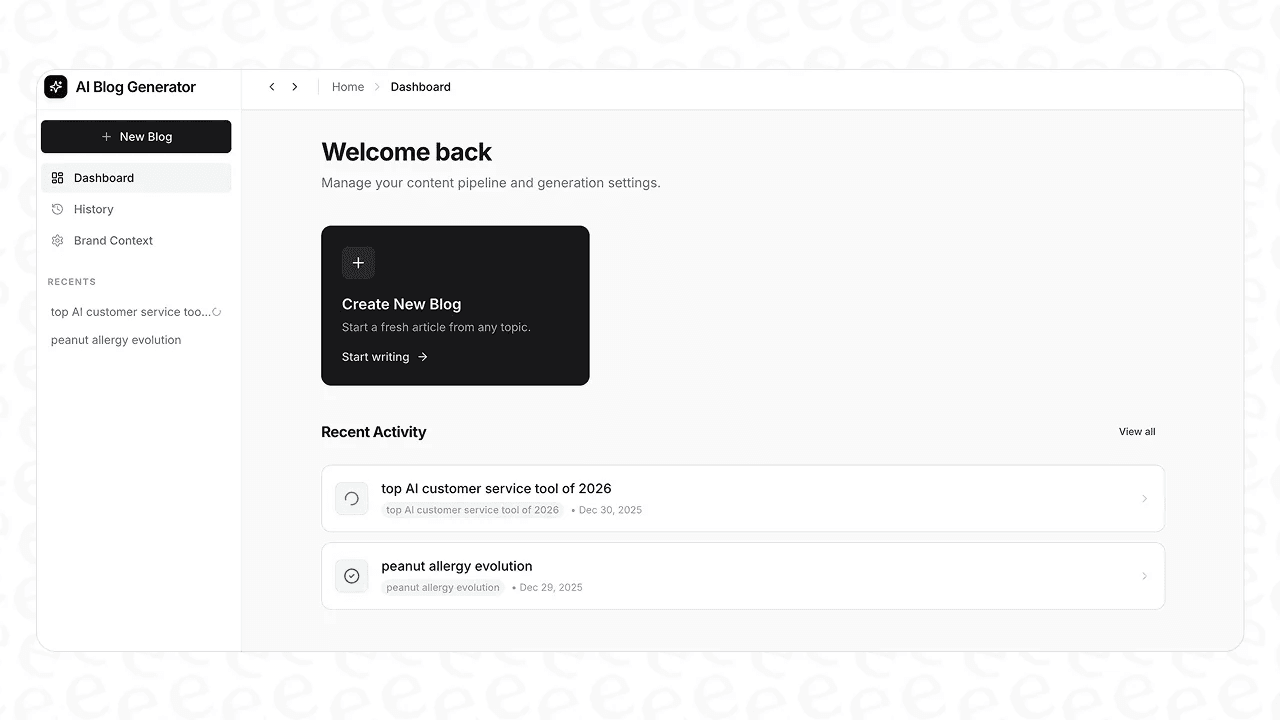
It handles both sides of the coin in the following ways:
- Built-In SEO Strategy: When you give it a keyword, it researches search intent, finds related keywords, and structures the content correctly. It's even optimized for AEO (AI Engine Optimization) to show up in places like Google AI Overviews.
- Polished, Human-Like Writing: The AI is trained to write in a natural, conversational tone. The goal is to create content that people find readable and engaging.
- Complete Asset Generation: It automatically includes AI-generated images, infographics, and tables. It can also pull in relevant YouTube videos and Reddit quotes to add more depth and social proof.
- Context-Aware Research: The AI does deep research based on the kind of blog you're writing. For a comparison post like this one, it would pull pricing and feature data. For a product review, it would find technical specs. This automates the strategic research that is often done manually in other tools.
We used this tool to grow our own organic traffic at eesel AI, going from 700 to 750,000 daily impressions in just three months. This approach is about scaling strategic, high-quality content efficiently.
Final verdict: Which tool should you choose?
So, which tool is right for you? It really boils down to your role, your budget, and what you’re trying to accomplish.
-
Choose MarketMuse if: You're a full-time SEO strategist or part of a large content team with a healthy budget. Your main job is deep content planning, auditing a huge library of content, and building topical authority from the ground up.
-
Choose Grammarly if: You're a writer, editor, student, or any professional who just needs a top-notch, real-time proofreader. Your goal is to make sure your day-to-day writing is clear, professional, and error-free everywhere you type.
-
Choose the eesel AI blog writer if: You're a founder, marketer, or on a content team that needs to scale up high-quality content without the massive overhead. You want an all-in-one tool that handles the SEO research, writing, editing, and asset creation in one go, saving you time and money.
For additional perspectives on how these tools fit into a modern marketing workflow, this video from Neil Patel offers a broader look at the digital marketing tools that can complement your strategy.
Streamlining your workflow
To wrap it all up, MarketMuse helps you draw the blueprint, and Grammarly inspects the final build to make sure it’s solid. They’re both excellent at what they do, but they’re specialists for different parts of the content creation process.
Alternatively, the eesel AI blog writer is a platform that serves as an all-in-one tool, managing the process from initial keyword to final article. Instead of juggling tools, you can focus on publishing content that gets results.
Generate your first SEO-optimized blog for free with eesel AI

Frequently Asked Questions
Share this article

Article by
Stevia Putri
Stevia Putri is a marketing generalist at eesel AI, where she helps turn powerful AI tools into stories that resonate. She’s driven by curiosity, clarity, and the human side of technology.
