Grammarly vs MarketMuse: Which content tool is right for you?

Stevia Putri
Last edited January 18, 2026
Let's be honest, creating good content over and over is tough. Content teams are always being pushed to produce top-notch, SEO-friendly articles that people will actually read. Sometimes it feels like you need a dozen different tools just to publish a single blog post.
This article is a simple breakdown of Grammarly vs MarketMuse. We’ll get into what each one does, who should use it, and how they compare. By the end, you should have a clear idea of which one (or both) makes sense for you.
And while these tools are excellent for planning and editing, another approach involves using a single platform to manage the entire workflow. Tools like the eesel AI blog writer are designed for this, a topic we'll explore later.
What is Grammarly?
Think of Grammarly as your AI writing assistant. Its main purpose is to take what you've already written and clean it up. It’s a seriously good proofreader and style editor, catching everything from awkward typos to clunky sentences that can lose a reader's attention.
It’s also important to know what it doesn't do. Grammarly isn’t going to help you decide on a topic, pick keywords, or structure your post for SEO. It’s all about improving the words you’ve already written.
Key features
- Grammar, spelling, and punctuation: This is its core function. It gives you real-time checks to catch all the small mistakes that are easy to miss.
- Clarity and conciseness: It does more than just fix errors. It offers suggestions to make your writing more direct and easier to follow. No more long, winding paragraphs.
- Tone detection: Not sure if you sound friendly, confident, or maybe a little too formal? Grammarly looks at your word choice to help you match your intended tone and connect with your audience.
- Plagiarism checker: This is a must-have. It scans your text against a huge database to make sure your content is original.
- Style guide (Business plan): For teams, this is a huge help. You can create your own rules to maintain brand consistency, like how to spell certain terms or what tone to stick to.
Who is Grammarly for?
Grammarly is useful for just about anyone who writes. It’s a great fit for individual writers, editors, students, marketers, and any professional who wants their emails, reports, or articles to be clear and error-free. It's the final polish before you publish.
What is MarketMuse?
If Grammarly is the final check, MarketMuse is the strategic plan you start with. It's an AI platform for content strategy that helps you plan and optimize your content to actually rank on search engines.
MarketMuse is used in the pre-writing and optimization phases of your work. It's made to answer the big questions that decide if your content will succeed or just get lost on the tenth page of Google. Questions like, "What should we write about?" and "How do we structure this article to beat our competitors?"
Key features
- Content research: It analyzes a target keyword and tells you all the important topics, subtopics, and questions you need to cover to be seen as an authority.
- Content briefs: This is a major feature. It creates detailed outlines that serve as a roadmap for your writers, guiding the structure, word count, and depth of the article.
- Competitive analysis: MarketMuse checks out the top-ranking content for your keyword, showing you what they’re doing well and where you can find content gaps to fill.
- Content optimization: It has a text editor that gives you a real-time "Content Score" as you write, suggesting terms and topics to include to improve your SEO.
Who is MarketMuse for?
MarketMuse is for SEO managers, content strategists, and marketing teams who are serious about building a content strategy based on data. If your main goal is to outrank competitors and increase organic traffic, this is the kind of research and planning tool you need.
Grammarly vs MarketMuse: A detailed comparison
The simplest way to look at it is "editor versus architect." One refines the final product, while the other designs the whole structure from the beginning. Both are important, but they work at opposite ends of the content creation process.
I've tried out MarketMuse. I found it a little complex and definitely has a learning curve. Grammarly is great - user friendly and intuitive.

Core purpose: Polishing vs planning
Grammarly is all about quality control after the writing is done. You write the draft, and then Grammarly helps you improve the mechanics, style, and clarity. It’s focused on making what’s already there better.
MarketMuse, however, is all about pre-writing strategy. It creates the SEO blueprint for an article, making sure it’s comprehensive and built to rank before a writer even starts typing.
In fact, many content teams use both tools in order:
- Use MarketMuse to research a topic and create a content brief.
- Have a writer use that brief to write the first draft.
- Use Grammarly to polish and proofread the final draft before it goes live.
A workflow diagram showing how to use MarketMuse for planning and Grammarly for editing in a content strategy.
SEO capabilities
This is where the two tools are completely different.
Grammarly has no direct SEO features. Yes, making your content more readable can improve user experience, which is a small, indirect ranking signal. But it won't guide you on keyword strategy, topic clusters, or internal linking. It just wasn't made for that.
MarketMuse is the exact opposite. It's an SEO tool from top to bottom. Its whole purpose is to give you data-driven advice to help your content rank higher in search results. Every feature is designed with SEO in mind.
Feature comparison table
| Feature | Grammarly | MarketMuse |
|---|---|---|
| Primary Goal | Improve writing quality & clarity | Plan & optimize content for SEO |
| Core Function | Real-time editing assistant | Content strategy & intelligence |
| Key Features | Grammar check, tone detection, plagiarism | Content briefs, topic research, scoring |
| Ideal User | Writers, editors, professionals | SEOs, content strategists, marketers |
| Workflow Stage | Final editing & proofreading | Research & planning |
| Pricing Model | Freemium with affordable paid plans | Freemium with high-ticket pro plans |
An end-to-end alternative: The eesel AI blog writer
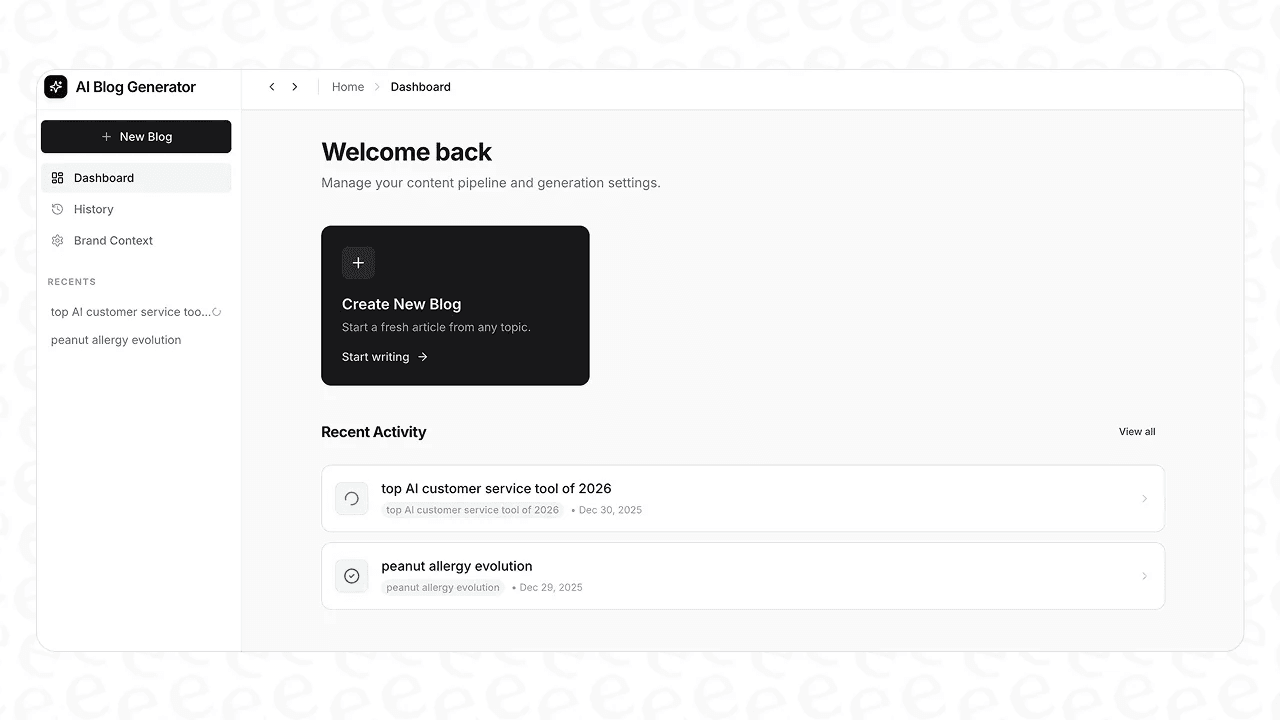
This is where a complete solution like the eesel AI blog writer fits in. It is designed to manage the entire workflow, from a single keyword to a finished article that's ready to publish.
From planning to publish-ready content
The eesel AI blog writer doesn't just plan or polish; it researches, outlines, writes, and formats a full blog post. It combines the strategic elements of a tool like MarketMuse with writing capabilities to produce content in minutes.
At eesel AI, we used this tool to publish over 1,000 optimized blogs, which contributed to growing our organic impressions from 700 to 750,000 per day in three months.
Automatic assets and social proof
Here’s something that sets a full content platform apart from a simple writer. The eesel AI blog writer does more than just create text.
It automatically generates and includes relevant visuals, like AI-generated images, custom infographics, and tables, to break up the content and explain your points.
It also finds and adds relevant YouTube videos and insightful Reddit quotes from real people talking about your topic. This adds a layer of credibility that generic AI content can't provide.
Context-aware research and AEO optimization
This isn't just surface-level AI writing. The eesel AI blog writer does context-aware research based on the kind of blog you need.
For example, if you're writing a comparison post, it will automatically find pricing data and feature lists. If it's a product review, it will look for technical specs. This helps create genuinely useful content that matches what people are searching for.
Plus, it's already optimized for AI Answer Engines (AEO). That means the content is structured to do well in the new age of search, including platforms like Google AI Overviews and Perplexity.
To see how these tools fit into a broader digital marketing toolkit, it's helpful to hear from experts. Many marketers use a combination of specialized platforms to cover all their bases, from research to final polish.
Grammarly vs MarketMuse: Which tool is right for you?
To sum it all up, Grammarly acts as a digital proofreader, helping to refine final drafts. MarketMuse serves as an SEO strategist, providing a plan to compete for search rankings.
They are both good tools that solve specific problems. But neither of them writes the content for you.
For teams looking to scale the creation of SEO-optimized content, an end-to-end AI content platform can be a useful solution. The eesel AI blog writer is a tool designed to handle the process from research and writing to including assets and optimization, allowing teams to focus on strategy.
You can generate a complete article for free with the eesel AI blog writer to see how an integrated platform can simplify content creation.

Frequently Asked Questions
Share this article

Article by
Stevia Putri
Stevia Putri is a marketing generalist at eesel AI, where she helps turn powerful AI tools into stories that resonate. She’s driven by curiosity, clarity, and the human side of technology.