Picking the right AI model in 2026 can feel like a massive commitment, especially if you write for a living. Meta and OpenAI are in a constant arms race, dropping powerful new updates that make it hard to know which way to turn. The two heavyweights are Meta’s Llama family, the champ of open-source, and OpenAI’s ChatGPT, which is now powered by the very impressive GPT-5 models.
So, which one is actually better for writing?
That's the big question we're tackling here. We're going to dive into the Llama vs ChatGPT debate, looking at everything from creative writing to technical documentation to help you choose your corner. However, for specialized tasks like creating SEO content, a dedicated tool like the eesel AI blog writer can offer a more focused workflow.
What is Llama?
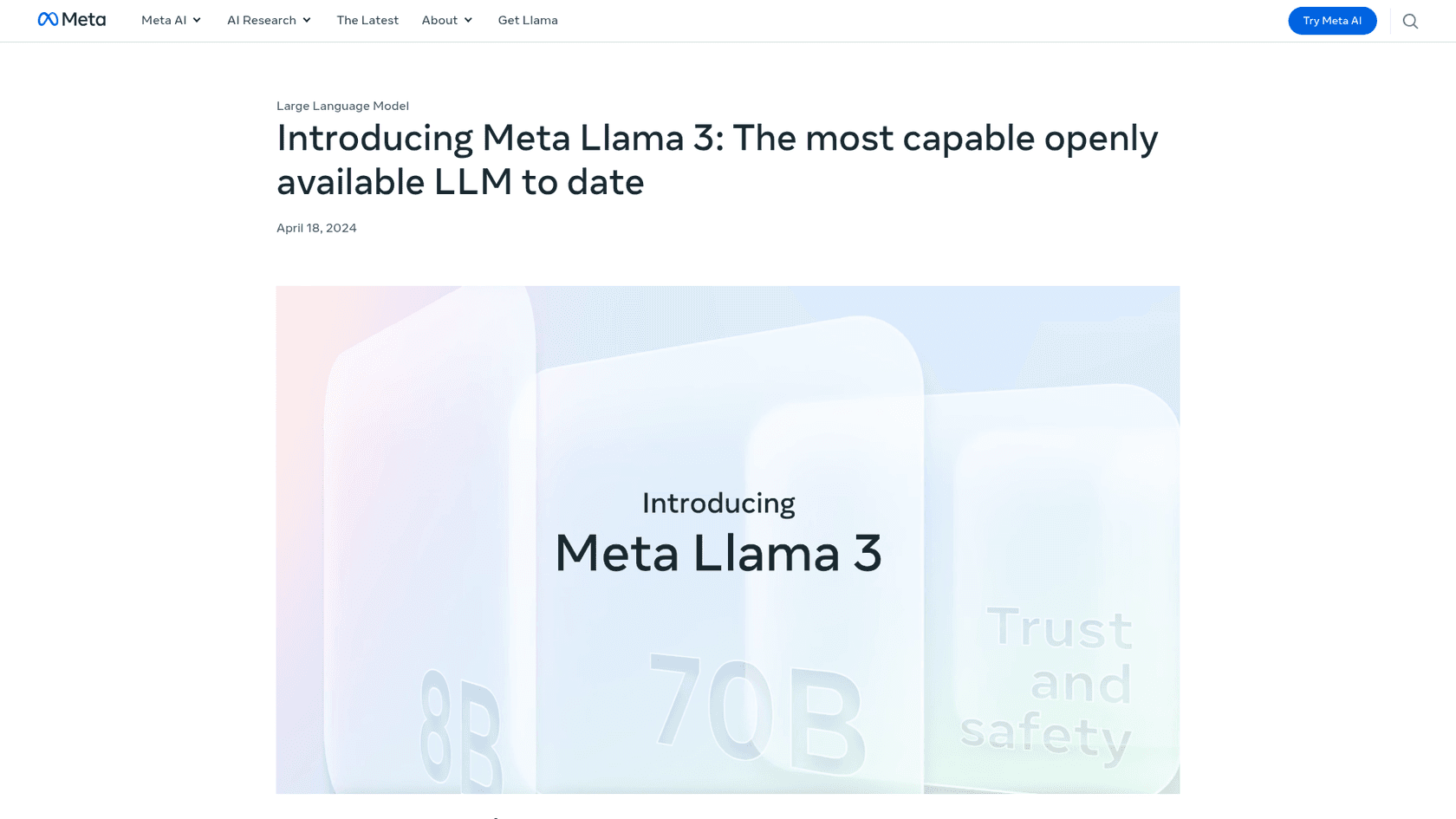
Llama, or Large Language Model Meta AI, is a family of AI models from Meta. Their main selling point is that they're openly accessible, which means they are free for both research and commercial use. That is a significant feature for developers or anyone wanting to build custom AI tools without being tied to a specific platform.
The whole idea behind Llama is control. It’s less of a ready-made app and more of a powerful engine you can tinker with. You've got different sizes, from the smaller Llama 3 models (8B and 70B parameters) that can run on regular computers, to the powerful Llama 3.1 (405B), which is really pushing what open-source AI can do.
Being open-source gives Llama some distinct advantages:
- Control: You can run it on your own computer or server, giving you total control over your data. This is a huge win for privacy. You can even train it on internal documents to create a bot that truly understands your business.
- It's a building block: Llama is a foundational model, so you can adapt it for very specific jobs. It's not a one-size-fits-all tool; it's something you build upon.
- Recent upgrades are solid: The latest versions have some nice new features, like a 128K context window (which is a ton of memory) and support for eight languages.
What is ChatGPT?
You've probably used ChatGPT already. It's the super user-friendly AI assistant from OpenAI that basically went viral overnight. Its main goal is to make powerful AI easy for anyone to access, whether you're drafting an email, writing a poem, or debugging some code.
ChatGPT is now running on OpenAI’s latest GPT-5 family of models, which is a clever system. It has a smart router that figures out the right tool for your request. Ask a simple question, and it uses a quick, efficient model. Give it a complex problem, and it brings out a more powerful "deeper reasoning model."
Here’s what makes ChatGPT popular:
- Ease of use: You go to the website or open the app and start typing. There’s no technical setup, which makes it perfect for pretty much anyone.
- Multimodality: ChatGPT can understand and generate text, audio, images, and even video. This feature has been rolling out to users, turning it into a really flexible creative partner.
- It's a managed service: ChatGPT is a closed-source product. OpenAI manages the backend infrastructure, including the hardware, the updates, and the security. For businesses, this is backed by compliance standards like SOC 2 Type 2, which offers some peace of mind.
Feature comparison: Llama vs ChatGPT for writing
Accessibility and ease of use
ChatGPT is all about speed and simplicity. It’s a true "plug-and-play" tool. You can be generating content seconds after signing up, which is ideal for writers, marketers, and anyone who needs to get stuff done without any hassle.
Llama is more of a developer's playground. It’s an engine, not a fully built car. To use it, you need a bit of technical skill to run it on your own machine or set it up through a cloud service. It's not for beginners, but the reward is complete control.
Customization and data control
Llama offers extensive customization. Since you have the source code, you can fine-tune the model on your own private data. Imagine an AI that has read every document your company has ever written and can perfectly mimic your brand voice. That's what Llama can do. Plus, you can run it locally, so your data never has to leave your servers.
ChatGPT offers some customization through its app, but you’re still playing in OpenAI's world. While they have strong privacy commitments for business users, your data is still processed on their servers, which could be a non-starter for some companies.
Multimodality and integrations
ChatGPT excels in this area. With models like GPT-4o and GPT-5, it can jump between text, audio, and images without breaking a sweat. You could show it a design and ask for marketing copy, or have it analyze a chart and write up a summary. It's incredibly versatile.
Llama is mostly a text-based model. It's improving, but its core strength is still language processing. If you want to connect it to other tools or data sources, you'll need a developer to code those integrations by hand.
Here's a quick cheat sheet to sum it up:
| Feature | Llama | ChatGPT |
|---|---|---|
| Model Type | Open-source | Proprietary |
| Primary Audience | Developers, researchers, custom private AI | General users, content writers, businesses |
| Ease of Use | Requires technical setup | Ready to use instantly |
| Customization | Highly customizable and fine-tunable | Limited to in-app features |
| Privacy | High (can be run locally for full control) | Data processed on OpenAI servers |
| Multimodality | Primarily text-based | Native text, image, audio, and video |
Performance comparison: A practical test of writing skills
Benchmarks are one thing, but how do these models actually hold up on real writing tasks? Community feedback and tests often paint a clearer picture, especially with many users on platforms like Reddit getting skeptical of claims based only on benchmarks.
Creative writing and content generation
ChatGPT really excels at creating polished, conceptually rich content. The new GPT-5 model can produce writing with a real "literary depth and rhythm," which is great for marketing copy, blog posts, and stories where you need a strong, compelling voice.
Llama tends to generate more personal and immersive stories, especially with dialogue. Its output often feels more emotionally connected and can follow complex plots in a way that feels surprisingly human.
I believe it should both should have similar performance in many tasks. The only thing is llama3 8b sounds much more interesting and does not sound like gpt slop. Llama3 8b is going to be far faster as well and cheaper so probably recommend that.

Factual accuracy and summarization
Llama is highly effective for tasks that require precision. Its instruction-tuned models are very reliable for generating concise, business-focused summaries and have performed well in factual accuracy tests. If you need a straightforward summary of a technical document, Llama is a solid pick.
ChatGPT creates insightful, easy-to-read summaries. The GPT-5 model is reportedly 45% less likely to have factual errors than older versions, which is a significant step in reducing AI "hallucinations." That said, it can sometimes get a little creative with constraints like word counts, preferring a good explanation over sticking to the rules.
Coding and technical writing
ChatGPT is widely regarded as a capable coding assistant. The latest GPT-5 model is especially good at complex front-end generation. It's also fantastic for writing technical documentation and explaining code in plain language.
Llama is also a strong contender in the coding space. Some users have even reported that Llama 3.1 can outperform GPT-4 in coding accuracy. It might be a bit less creative with its comments or documentation, but for pure code generation, it's incredibly capable.
For python programming I find that llama3 8B is better at writing the correct code the first time but Chatgpt 3.5 is better at applying requested edits to its previous code.
Pricing and availability
Llama's pricing model
The Llama models themselves are free to download and use for both research and commercial projects. The costs come from how you decide to run them:
- Cloud Hosting: You can use an API provider like Groq, Fireworks, or Deepinfra. This is often much cheaper than proprietary models, with some tests showing it can be over 19 times more cost-effective.
- Hardware: If you want to run it locally for maximum privacy, you’ll need to invest in some beefy hardware, like high-performance GPUs. This can be a hefty upfront cost.
ChatGPT's pricing model
OpenAI has a tiered subscription model, so you can choose the plan that makes sense for you:
- Free: Gives you limited access to the flagship GPT-5.2 model.
- Go ($8/month): An affordable plan for more messages and image creation, though it may include ads.
- Plus ($20/month): Unlocks advanced reasoning with models like GPT-5.2 Thinking, the Codex agent for coding, and Sora for video generation.
- Pro ($200/month): Full access to the most powerful model, GPT-5.2 Pro, with unlimited messages and the largest context window.
- Business ($25/user/month): Adds a secure workspace, admin controls, and a guarantee that your data won’t be used for training.
- Enterprise: Custom pricing for large organizations that need top-tier security and unlimited access.
Specialized tools for SEO content: An alternative approach
Llama and ChatGPT are both seriously powerful general-purpose writing tools. But when the goal is to create high-ranking blog content at scale, a generalist AI may require additional steps to achieve the desired outcome. You may need a specialized tool that’s built for one job and does it well.
Limitations of general models for SEO content
Using a general-purpose model like ChatGPT or Llama for blog posts can involve several manual steps. Here’s why:
- They produce unstructured drafts. A model might output a wall of text. It's on you to add headings, formatting, lists, and all the other things that make a post readable and SEO-friendly.
- You have to create your own assets. Images, infographics, tables, and video embeds are essential for engaging content. General AIs leave you to source or create all of that yourself.
- The research can be shallow. The output can feel generic and lack the depth, citations, and real-world insights (like quotes from social media) needed to rank for competitive keywords.
How the eesel AI blog writer streamlines content creation
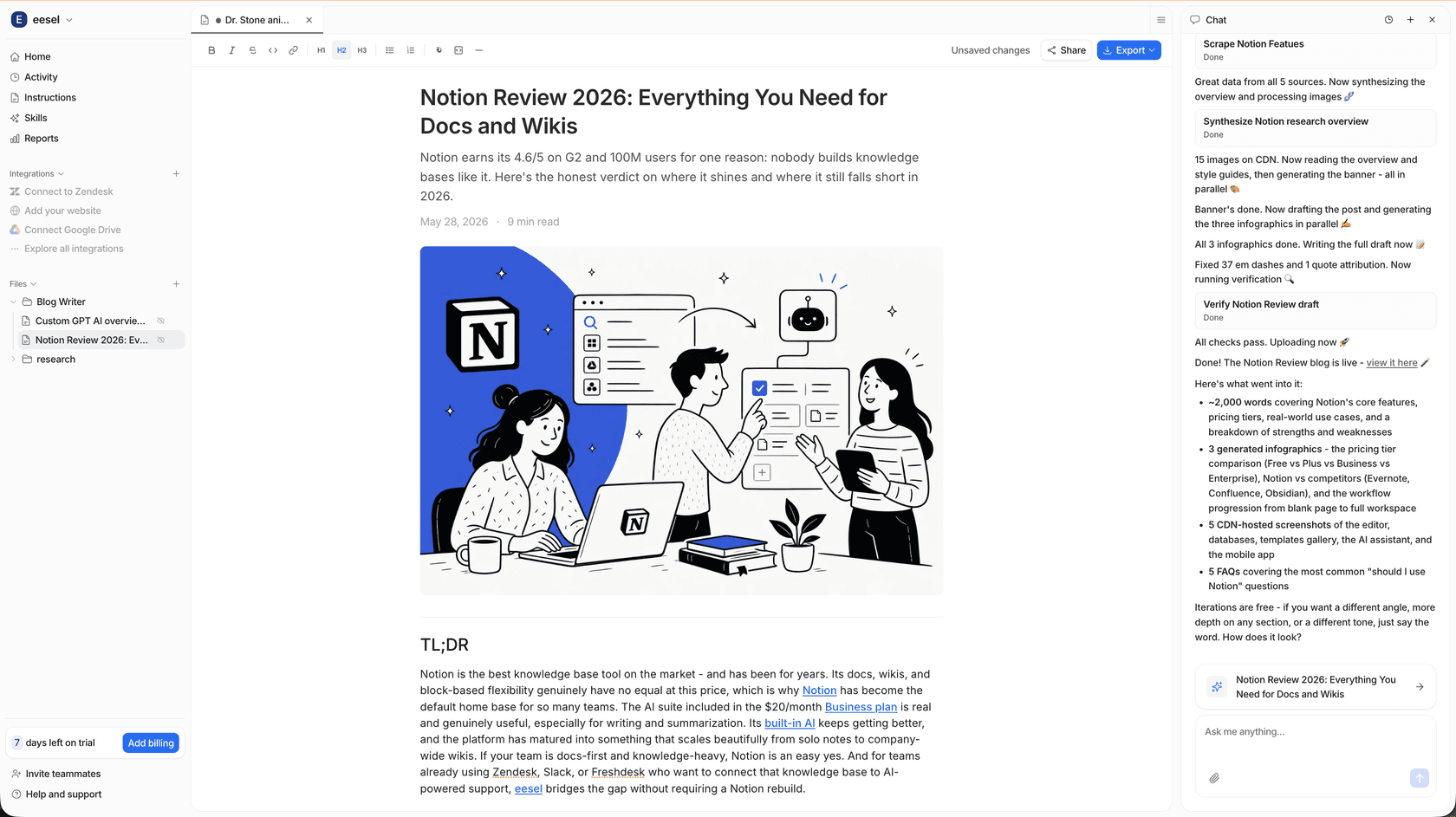
- Automatic Asset Generation: It doesn't just write text; it creates and embeds relevant images, tables, and infographics right into the post, saving you hours of boring work.
- Deep, Context-Aware Research: It goes beyond surface-level info by pulling in real Reddit quotes and relevant YouTube videos. This adds authority and a human touch that both readers and search engines appreciate.
- SEO & AEO Optimized: The structure, headings, and meta descriptions are automatically optimized not just for Google search but also for AI Answer Engines like Google AI Overviews.
- Natural Brand Integration: Just give it your website URL, and it learns your brand context, letting it weave in product mentions that feel helpful, not like a cheap ad.
The best part is you can generate your first blog completely free to see the quality for yourself.
Final verdict on Llama vs ChatGPT for writing
So, what’s the final call? It really boils down to who you are and what you're trying to accomplish.
Choose Llama if: You're a developer, researcher, or a business that needs a highly customizable, private, and affordable AI engine. You're okay with doing the technical work to build a writing tool that's perfectly tailored to your needs.
Choose ChatGPT if: You need a versatile, powerful, and incredibly easy-to-use AI assistant for a wide range of tasks. You want to brainstorm ideas, draft content, and get polished answers quickly without any technical setup.
For a more visual breakdown of how these AI models perform on specific writing tasks, the following video offers a direct comparison that can help you see them in action.
But if your main goal is to grow your business with organic traffic, neither is the best choice. For writers, marketers, and founders focused on scaling their content strategy, the right move is a specialized platform built for that specific mission.
Why not see the difference for yourself? You can generate your first complete, SEO-optimized blog post with the eesel AI blog writer for free.