Understanding link building services cost: A complete guide for 2026

Amogh Sarda

Katelin Teen
Last edited February 1, 2026
If you've ever shopped around for link building services, you've probably seen some wild price differences. One quote might be a few hundred dollars, while the next is over $20,000 a month. It's enough to make your head spin and leave you wondering what a "fair" price even looks like, let alone how to set a budget.
But here's the deal: you're not just buying a link. You're investing in your website's authority, making your brand more visible, and setting yourself up for long-term organic traffic. The price reflects the strategy, the quality of the links, and the sheer amount of work that goes into earning a valuable backlink.
In this guide, we’ll get into all of it. We'll look at what drives the cost, the different ways services are priced, whether it's smarter to hire an agency or build your own team, and how to tell if you're getting your money's worth.
What really influences the link building services cost?
Your industry and how tough the competition is
Some niches are just harder (and more expensive) to build links in. It usually comes down to how competitive the field is and how open other site owners are to linking out.
- Low-cost industries: If you're in a niche like hobbies, video games, or non-profits, you're in a good spot. Bloggers and community sites are often happy to link to good content for free. Research from LinkBuilder.io shows that earning links in these areas can be much more affordable.
- High-cost industries: On the other hand, if you're in a competitive or regulated industry like finance, gambling, legal, or loans, be prepared to pay more. The editorial standards are incredibly high, and it's not uncommon for sites to ask for a "placement fee."
Basically, the more competitive your industry, the more you should expect to invest to get results.
As a point of reference, rehab niche, we're spending around $2000 per 10 links.

Link quality and authority metrics
Most services use metrics like Domain Rating (DR) or Domain Authority (DA) as a quick way to judge a site's quality, and they often base their prices on these numbers.
Here’s a rough idea of what you might pay, based on data from Stellar SEO:
- DR 30-49: $250 - $399
- DR 50-69: $400 - $600
- DR 70+: $750 - $1,250+
But there's a big catch: these metrics can be manipulated. A high DR doesn't automatically mean a link is valuable. Some people run "link farms" with inflated metrics that provide no real benefit. As multiple link building experts have said, you should always choose sites with real traffic, relevance to your topic, and strong editorial standards over a simple vanity metric.
Content and creative asset needs
Good link building relies on good content. The cost of making that content is a huge chunk of what you pay for. A simple guest post on someone else's blog is always going to be cheaper than a big campaign built around a data study, an original survey, or a slick interactive tool.
A breakdown of pricing models
Per-link pricing
This is as simple as it gets: you pay a fixed price for each backlink the service gets for you. The price is usually tiered based on metrics like DR or a site's monthly traffic.
Ahrefs found the average cost of buying a single link is about $361, but this can vary a lot. For a top-tier placement secured through digital PR, you could be looking at $800 to $1,200 per link.
Assuming you’re going for real sites with real traffic (ie: without faked search or link stats) that aren’t oversold and trying to keep it within a reasonable budget (ie. If you don’t have huge resources) then you’re probably looking at $100 to $300 per link. So 100 links would need a budget of $10k to $30k.
- Pros: It's predictable. You know exactly what you're getting for your money, which makes budgeting simple.
- Cons: This model can sometimes lead to a focus on quantity over quality. If you're not careful, you might end up with a vendor using low-quality "guest post farms" just to meet a quota.
Monthly retainers
This is the most common model, especially with agencies. You pay a monthly set fee for an ongoing link building campaign. In fact, over 78% of SEO providers use this approach.
Costs can be anywhere from $3,000 to $15,000+ per month. For a specialized digital PR agency, the average retainer is around $5,458.
- Pros: It allows for a long-term strategy that focuses on building relationships and a natural, steady stream of links over time.
- Cons: You have less direct control over the cost of each link. It requires a lot of trust in the agency's process and their transparency.
Project-based or campaign pricing
With this model, you pay a fixed price for a specific campaign with a clear start and end date. This is common for big digital PR pushes, like promoting a new data study or a piece of seasonal content.
You can expect to pay from $5,000 to $30,000 for a single campaign from a digital PR agency.
- Pros: It's great for creating a lot of buzz and getting high-impact results tied to a specific launch or business goal.
- Cons: The upfront cost is higher, and there's usually no guarantee on the exact number of links you'll get.
Comparison of pricing models
Here’s a quick table to help you compare your options.
| Model | Typical Cost | Best For | Key Consideration |
|---|---|---|---|
| Per-Link | $300 - $1,200+ per link | Targeting specific pages or filling known link gaps. | Risk of low-quality links if not vetted carefully. |
| Monthly Retainer | $3,000 - $15,000+ / month | Businesses seeking steady, long-term authority growth. | Success depends on the agency's strategy and transparency. |
| Project-Based | $5,000 - $30,000+ per project | Launching link-worthy assets like research or tools. | Higher upfront cost with no guaranteed number of links. |
In-house vs. outsourcing: A cost comparison
The cost of an in-house link building team
Let's break down what it might cost to build a small, effective in-house team, using detailed data from LinkBuilder.io.
- Personnel Costs (Annual Estimates):
- Link Building Manager: ~$60,000
- Link Building Assistants (x2): ~$30,000 each
- Content Writer: ~$50,000
- Tool & Link Acquisition Costs (Annual Estimates):
- SEO suites (Ahrefs/Semrush), outreach software, email finders: ~$6,000
- Budget for paid placements or content promotion: ~$25,000
The grand total? You're looking at roughly $177,000 a year for a team that might get you around 360 links. That works out to about $491 per link, and that's before you factor in overhead like benefits and office space.
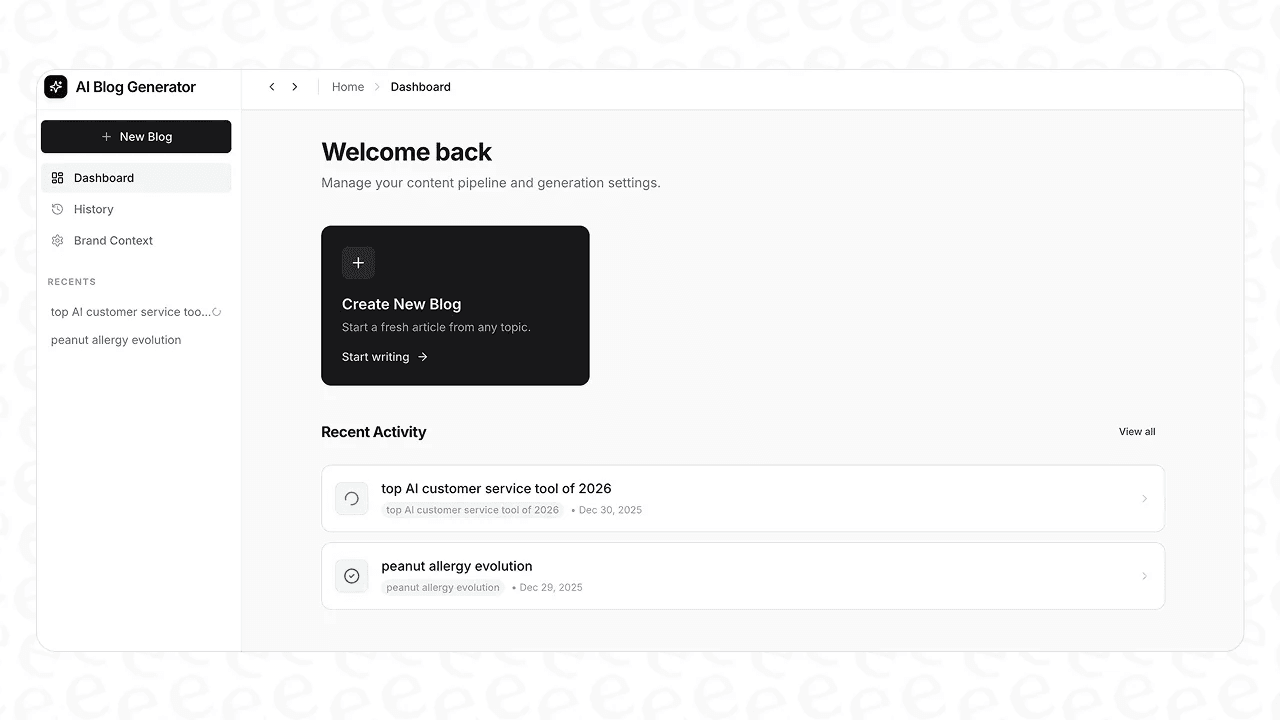
Tools like the eesel AI blog writer can make a big dent in the content creation costs for an in-house team, which can easily top $50,000 a year.
The cost of outsourcing to an agency or freelancer
When you outsource, you're paying for expertise and efficiency without the overhead of hiring.
- Specialist Link Building Agencies: These usually charge $3,000 - $15,000+ per month. It's often more cost-effective than building a team from the ground up, and you get immediate access to their established processes, relationships, and knowledge.
- Freelancers: You can find freelancers for $50 - $100 per hour, according to LinkBuilder.io, though the average rate is closer to $71. You'll also have to cover the cost of tools and any paid placements. This is a flexible option for smaller projects, but a single freelancer often doesn't have the resources for a long-term, high-volume campaign.
- Digital PR Agencies: These agencies focus on landing top-tier media placements and typically charge $5,000 - $20,000+ per month or per campaign. They're great for building brand authority, but the cost per link can be high, often averaging between $800-$1,200.
For a deeper dive into how different factors play into the final price, this video offers a great visual breakdown of what to expect when you start shopping for link building services.
How to budget for link building and measure ROI
It's time to change the question from "how much does it cost?" to "what is it worth?" A smart link building strategy isn't just an expense; it's an investment in a long-term revenue. Here’s a quick way to set a budget and figure out your ROI.
Setting a realistic budget
A good starting point is to see what your competition is up to. Use a tool like Ahrefs to check how many links the top-ranking pages for your target keywords have and their "link velocity" (how many new links they're getting each month).
To start climbing in the search results, your budget should aim to match or, even better, exceed your competitors' link velocity. And be patient, link building takes time. Plan for at least 3-6 months before you start to see a real impact on your rankings and traffic, as it takes a while to show results.
Measuring link building ROI
- The Traffic Value Model: This calculates what you would have paid in Google Ads for the same amount of organic traffic. The formula is: (Incremental Organic Traffic x Keyword CPC = Monthly Traffic Value).
- The Conversion Model: This is the most direct method. It connects your improved rankings directly to revenue. The formula is: (Additional Organic Visitors x Conversion Rate x Average Customer Value = Revenue Lift).
Once you have your revenue numbers, you can use the standard ROI formula to report on performance: ROI (%) = [(Revenue from Link Building – Cost) ÷ Cost] × 100. This frames the conversation around business results, not just SEO metrics.
Focus on value, not just the cost
So, what's the main takeaway? The cost of link building is all over the place for good reason. The price depends on your industry, the quality of links you're aiming for, and the strategy used to get them. At the end of the day, the return on your investment is much more important than the cost-per-link.
And remember, the foundation of any successful link building strategy is high-quality, link-worthy content. Instead of jumping straight into a multi-thousand-dollar agency retainer, a smarter first step is to build a solid base of content that attracts links on its own and makes any future outreach campaigns much more effective.
Tools like the eesel AI blog writer, which is free to try, can help with this. It can generate a complete, SEO-optimized, and asset-rich blog post from a single keyword. This approach addresses the content creation bottleneck, letting you build a library of valuable assets before you start spending on outreach.

Frequently Asked Questions
Share this article

Article by
Amogh Sarda
CEO of eesel AI. Amogh Sarda is obsessed with making the ultimate AI for customer service teams. He lives in Sydney, Australia and has previously worked at Atlassian and Intercom. Outside of work he’s usually surfing or on stage doing improv.