A practical guide on how to write engaging blog content

Amogh Sarda
Last edited January 19, 2026
Let's be honest, standing out online is tough. The internet is overflowing with content, and it feels like everyone is shouting to be heard. The secret isn't just to publish more; it's to create content that actually connects with people.
Engaging content is the kind that solves real problems, answers nagging questions, and slowly turns a first-time visitor into a loyal fan. It’s the difference between someone leaving your page in five seconds and someone who sticks around, clicks a few links, and maybe even subscribes.
This guide will walk you through a practical framework for creating content that people genuinely want to read. We'll cover everything from the initial idea to the final, polished article.
We know this process works because we live it. At eesel AI, we followed these same principles, using the eesel AI blog writer to scale our own content creation. This approach took us from 700 to over 750,000 daily impressions in just three months. It’s proof that you can have both quality and scale, without one hurting the other.
What is engaging blog content, really?
"Engaging" is a word that gets thrown around a lot, but what does it actually mean? It’s not just a buzzword. It’s a measure of how well your content grabs and holds a reader's attention by giving them something genuinely useful.
- Value: It has to be useful. It should solve a specific problem, answer a question, or teach the reader something they didn't know before.
- Readability: It has to be easy to read. That means it’s simple to scan and understand, whether your reader is on a big screen or their phone.
- Connection: It feels human. It speaks to the reader in a relatable tone that builds trust and makes them feel like you get them.
- Action: It inspires the reader to do something: think about a topic differently, leave a comment, share the post, or click a link to learn more.
The pre-writing phase: Laying the foundation
The best blog posts don't start with a blank page and a blinking cursor. The most engaging content is built on a solid foundation of research and planning. Getting this part right makes sure your article is relevant, targeted, and brings something new to the conversation.
Understand who you’re writing for
Before you write a single word, you need to know who you're talking to. I don't just mean basic demographics like age or location. You need to get inside their heads. What are their biggest headaches? What are their goals? What questions are they typing into Google in the middle of the night?
When you have this deep understanding of your reader, everything else just falls into place. Your topic, your tone of voice, and the angle you take will all feel like they were made just for them, because they were.
Research topics, not just keywords
The game has changed. It's no longer about stuffing a specific keyword into your post as many times as you can. Search engines have gotten a lot smarter, and the focus has shifted from matching exact keywords to covering topics in a complete way. Google's helpful content update is all about rewarding content that is genuinely useful to people.
So, how do you find these topics?
- Start with free tools like Google Keyword Planner. You can plug in a broad term and see what people are actively searching for. Think of these results as a brainstorming list, not a strict set of phrases you have to use.
- Check out your competitors. Look at their top-performing blog posts to see what's clicking with their audience (which is probably your audience, too). Look for content gaps, are there topics they haven't covered, or angles you could explore in more detail? This helps you add to the conversation instead of just repeating it.
Craft a headline that demands a click
Your headline is the single most important part of your blog post. You could write the most amazing article in the world, but if the headline is bland, no one will ever read it. It’s the front door to your content, and it has to do the heavy lifting of earning that click.
Here are a few simple tips for writing headlines that work:
- Use numbers and lists: There's a reason headlines like "7 Ways to..." or "5 Mistakes to Avoid..." are everywhere. They promise a structured, easy-to-read article.
- Ask a question: A question can spark curiosity and make the reader feel like you’re about to solve a puzzle for them (e.g., "Are You Making This Common Blogging Mistake?").
- Promise a clear benefit: Tell the reader exactly what they'll get from reading your post. Be specific about the solution you're offering.
- Incorporate your main topic naturally: Your target topic should fit into the headline smoothly, without sounding clunky or forced.
The writing phase: Core techniques for engagement
With your research done and a killer headline ready, it’s time to actually write the thing. This is where you turn your plan into a compelling article that keeps people scrolling from the first sentence to the last.
Hook readers with a powerful introduction
You have about three seconds to grab a reader's attention. Your intro needs to work hard to convince them to stick around. Don't waste this space with boring background information.
Instead, start with something that has a bit of punch. It could be a relatable story, a surprising stat, or a direct question that makes them think. Once you have their attention, clearly state what they're going to learn and why it matters to them. Set the expectation that their time will be well spent.
Write in a conversational tone and tell stories
Nobody wants to read a textbook. The best blog posts feel like a conversation with a smart friend. Write as if you're talking to one person. Using words like "you" and "I" creates a direct, personal connection that formal, corporate jargon just can't.
As the experts at Grammarly note, your word choice, punctuation, and sentence structure all shape your tone. Pick a tone that fits your audience, whether that’s friendly and encouraging or direct and to the point, and stick with it.
Whenever you can, weave in personal stories or real-world examples. Storytelling is an incredibly powerful tool. It makes abstract ideas feel real and helps build a memorable, human connection that makes your content stand out.
Make your content scannable and easy to read
Here’s a hard truth: most people skim online content. Before they commit to your whole article, they'll scan the page to see if it’s worth their time. Your job is to structure your content to make it as easy as possible for them to find what they're looking for.
Paragraphs should have less than 3 sentences. Any time there is a long list of items, I immediately delete and make it a list because it’s much easier on the eyes.

- Short paragraphs: Keep your paragraphs to 2-4 sentences, max. This avoids those intimidating "walls of text" and gives your content room to breathe.
- Clear headings: Use descriptive H2 and H3 subheadings to break up your content into logical sections. This creates a clear roadmap for the reader.
- Bulleted lists: When you need to break down a series of steps or key points, use bullet points or numbered lists. They're incredibly easy to scan.
- Bold text: Use bolding to make important words or phrases pop. This helps guide a skimming reader's eye to the most critical information.
Incorporate visuals and multimedia
Content isn't just about words. Visuals like images, infographics, charts, and videos are essential for breaking up long blocks of text and explaining complex ideas simply. They make your content more dynamic, more engaging, and can seriously increase how long people spend on your page.
But here’s the problem: creating high-quality, relevant visuals for every single post is a massive bottleneck for most content teams. It’s often slow, expensive, and requires design skills that many writers just don't have.
The post-writing phase: Scaling content with automation
Creating one great blog post is an achievement. Consistently creating a stream of them is how you build a real growth strategy. The final piece of the puzzle is figuring out how to move from a manual, one-off process to a scalable content engine.
Edit ruthlessly but recognize the bottleneck
Every great piece of content needs a thorough edit. Checking for clarity, flow, grammar, and typos is non-negotiable for maintaining your credibility. A sloppy article doesn't reflect well on your brand.
However, the hours spent editing, proofreading, and sourcing all those assets for every single article really add up. This manual grind is often what makes it so hard for teams to scale their content output without quality taking a nosedive.
Using the eesel AI blog writer for scale
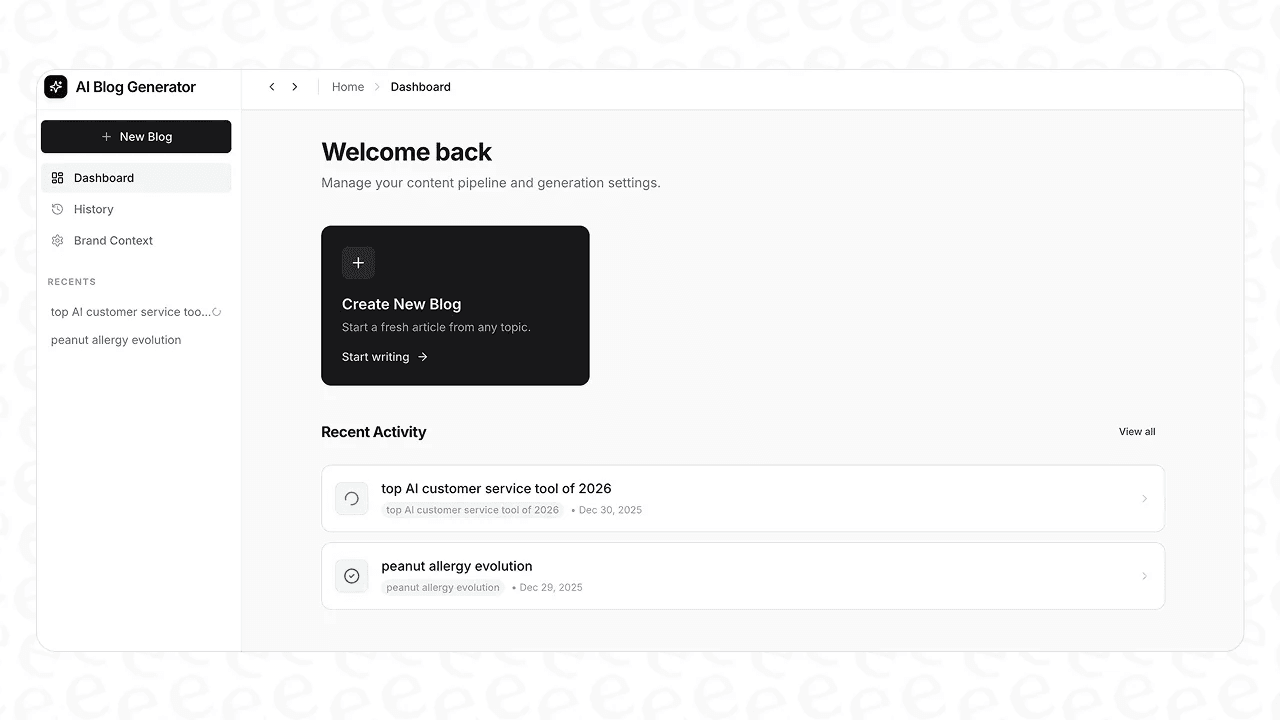
Here’s how it helps create engaging content automatically:
- Context-Aware Research: It performs context-aware research and understands the intent behind your topic. If you need a comparison post, it finds pricing data. For a product review, it pulls technical specs. This ensures the content is valuable and well-researched from the start.
- Automatic Asset Creation: It helps address the visual content problem. The tool automatically generates relevant images, infographics, and data tables to break up the text and make your posts more visually engaging. No design skills needed.
- Authentic Social Proof: To add a human touch and build credibility, it finds and embeds relevant quotes from Reddit discussions and helpful videos from YouTube, right into your article.
- Built-in SEO and AEO: Every piece of content is structured to rank in traditional search engines. It's also optimized for AI answer engines like Google’s AI Overviews, which is important since Gartner predicts these new search formats will reduce organic search volume by 25% by 2026.
IMO opinion, AI is like most tools. Garbage in, garbage out. You can’t throw a Kw at it and expect a week written article. You still need to research proper KWs. You need to study the SERPs. You still need to perfect a great outline. Once all that is done, AI is a crutch, it can assist you.
This approach lets you shift your role from writer to editor-in-chief. Instead of getting bogged down in the manual work, you can focus your time on high-level strategy and refining the final product.
Seeing these principles in action can make them easier to apply. For a visual walkthrough of how to structure a blog post for maximum engagement, from the headline to the conclusion, the video below offers a great step-by-step guide.
Turn engagement into growth
Creating engaging blog content isn't some mystical art; it's a repeatable process. It all comes down to understanding your audience, mastering the fundamentals of good writing, and using the right tools to execute your strategy efficiently.
By consistently focusing on providing value and making your content a pleasure to read, you can turn casual visitors into a loyal community and a powerful engine for growth.
The best way to learn is by doing. Why not give it a shot? You can try creating your first piece of fully optimized, engaging content for free with the eesel AI blog writer and see for yourself how quickly you can turn a simple topic into a publish-ready article.

Frequently Asked Questions
Share this article

Article by
Amogh Sarda
CEO of eesel AI. Amogh Sarda is obsessed with making the ultimate AI for customer service teams. He lives in Sydney, Australia and has previously worked at Atlassian and Intercom. Outside of work he’s usually surfing or on stage doing improv.